
Hopper heat built for Foster County's 9,494 heating degree days.
From Carrington out to the farmsteads along Highway 281, a pellet stove sized right can carry a Foster County home through a Zone 7 winter without babysitting a woodpile. I'll match you with a local dealer who can size it correctly and get it installed.
Every Project Starts From One of These Five Situations
Consistent, low-maintenance heat for a genuinely hard winter.
Foster County sits in Climate Zone 7, with average winter lows near 0°F and roughly 9,494 heating degree days a year—a load comparable to Fargo or Bismarck, and heavier than most of the country ever sees. With a population under 2,500 spread across Carrington and the surrounding farmland, a lot of homes here are older farmhouses or ranch-style builds that need dependable, even heat through long stretches of subzero nights, not just an occasional evening fire.
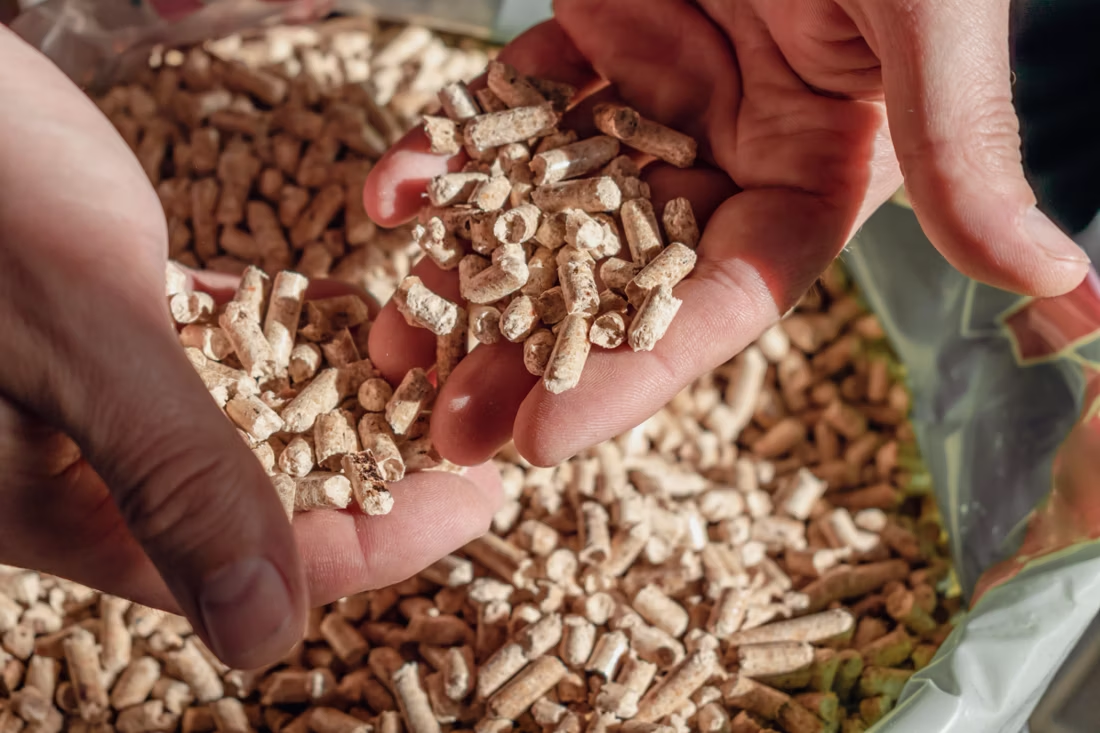
Pellet stoves fit that need well: a full hopper burns for 24 hours or more on a thermostat-controlled setting, ash output is minimal compared to cordwood, and there's no felling, splitting, or seasoning of oak, cottonwood, or ash to manage on top of everything else a working farm or rural property demands. Regional pellet supply runs through brands like Lignetics and Indeck Energy Services, both of which distribute into North Dakota, so fuel isn't hard to find even this far from a major metro. The tradeoff is that pellet stoves need electricity to run the auger and blower—worth planning around given how exposed rural power lines can be during a Foster County ice storm.
Three steps. No salesperson until you're ready.
Tell us about your project
Your zip code, your situation, and the fuel you're leaning toward—or let the answers point you to one.
See what's actually available
The brands dealers within 100 miles genuinely carry—real options, never a catalog mirage.
Get your dealer & Project Guide
A trusted local dealer, plus the free Project Guide & Parts List that names every component of the job.
Frequently Asked Questions
How much does a pellet stove installation cost in Foster County?
Pellet stove and insert installations in Foster County typically run in the same general range seen across rural North Dakota—most projects land between $3,000 and $6,500 depending on the unit, whether venting has to be run through an exterior wall versus an existing chimney, and whether any electrical work is needed for a dedicated circuit. Older Carrington-area homes without existing chimney infrastructure usually need a through-wall vent kit, which is a simpler and often cheaper install than a masonry retrofit. A local dealer can give you a firm number after seeing your home's layout.
What size pellet stove do I need for a Foster County winter?
With average winter lows near 0°F and close to 9,500 heating degree days a year, Foster County demands more from a pellet stove than a milder Zone 5 or 6 location would. For a drafty older farmhouse acting as primary heat, size toward the larger end of a manufacturer's range for your square footage—the same stove that comfortably heats 1,800 square feet in a moderate climate may only manage 1,200-1,400 here on the coldest nights. For supplemental heat in a well-insulated newer home, a mid-size unit is usually enough. A local dealer will walk your home and size it based on insulation, ceiling height, and layout rather than square footage alone.
Will a pellet stove keep working if the power goes out?
No—this is the one honest tradeoff to plan around. Pellet stoves rely on an electric auger to feed fuel and a blower to distribute heat, so a power outage stops the stove regardless of how full the hopper is. In rural Foster County, where ice storms and high winds can knock out power for hours or longer, that matters. Some homeowners pair a pellet stove with a small battery backup or generator sized to keep the stove running through a short outage; others keep a wood-burning option as a true off-grid backup. It's worth discussing your specific outage risk with a local dealer before you commit to pellet as your sole heat source.
Where can I buy pellets in or near Foster County?
Pellet fuel isn't produced locally in Foster County, but regional distribution through brands like Lignetics and Indeck Energy Services reaches North Dakota retailers, and farm supply and hardware stores in the Carrington area commonly stock bagged pellets by the ton, especially heading into fall. Buying early in the season is worth doing here—rural retailers sometimes see limited stock once cold weather sets in and demand spikes across the region. A local hearth dealer can also point you toward the most reliable nearby supplier for your specific stove's pellet requirements (some units are picky about ash content and pellet hardness).
Do I need a permit to install a pellet stove in Foster County?
Most pellet stove installations require a building permit, primarily to confirm the venting and clearances meet code—even though pellet stoves vent through smaller, simpler pipe than a wood stove's Class A chimney. Requirements are handled at the county or city level depending on where the home sits; within Carrington city limits versus unincorporated Foster County, the permitting contact differs. Most local installers pull the permit as part of the job, so you generally don't have to navigate it yourself.
What's the difference between a pellet stove and a pellet insert?
A pellet stove is a freestanding unit that sits on its own base and vents through an exterior wall or existing chimney—it works in homes with or without a fireplace already in place. A pellet insert is built to slide into an existing masonry fireplace opening, using the existing chimney chase (with a proper liner) as part of the venting path. For the older farmhouses common around Foster County that already have a masonry fireplace, an insert is often the more straightforward retrofit. For homes without an existing fireplace, a freestanding stove is the simpler option.
How often does a pellet stove need to be cleaned and serviced?
Pellet stoves need more frequent light maintenance than wood stoves but far less heavy cleaning. Plan on emptying the ash pan every few days during heavy winter use, cleaning the burn pot weekly to keep airflow clean, and a full professional service once a year—typically checking the auger motor, exhaust blower, gaskets, and venting for a stove running near-daily through a Foster County winter. Given how much load a pellet stove carries here as either primary or heavy supplemental heat, staying current on the annual service catches wear before it turns into a mid-winter breakdown.
Are pellet stoves cheaper to run than a wood stove out here?
It depends on your access to firewood. Foster County's common species—oak, cottonwood, and ash—are all viable firewood if you or a neighbor have land to cut from, and self-cut wood is close to free apart from time and equipment. Bagged pellets, by contrast, are a purchased commodity with regional pricing tied to distributors like Lignetics and Indeck Energy Services, so the cost comparison really comes down to whether you have a reliable, low-cost wood source. For homeowners without easy access to cut wood, or who want to avoid splitting and stacking through a Zone 7 winter, pellet's convenience often outweighs the modest premium in fuel cost.
Pellet stove vs. wood stove—which makes more sense for my home?
Wood stoves work without electricity, which matters in a rural county where outages happen, and they pair well with self-cut oak, cottonwood, or ash if you have access to a woodlot. Pellet stoves trade that off-grid resilience for consistent, thermostat-controlled heat, minimal ash, and no splitting or stacking—a real advantage for anyone managing a farm operation on top of heating a home. In a Zone 7 climate with lows near 0°F, both fuels are genuinely standard choices here; the decision usually comes down to whether backup power is in place and how much manual wood handling you're willing to take on each winter. A local dealer can walk through both options against your specific setup.
Why is my open fireplace making my house colder?
Open fireplaces suck—literally. As the fire burns, it consumes air your furnace already paid to heat and pulls it out through the chimney, so the house is actually colder after the fire goes out than before you lit it. An insert fixes this: it seals the chimney, puts fixed glass across the front, and turns that hole in your house into a real heat source.
What's the difference between an insert and a zero-clearance fireplace?
An insert is a fireplace that slides into a pre-existing wood-burning fireplace—if you don't have one, there's nothing to insert it into. A zero-clearance fireplace is built into a framed wall, which makes it the answer for remodels and new construction. Simple test: existing masonry fireplace means insert; blank or framed wall means zero-clearance.
Can a fireplace actually lower my heating bill?
Yes—by creating a comfort zone. A furnace heats every square foot of the house just to warm the one room you're in; a gas fireplace on low burns roughly a sixth of the gas a typical furnace does. Set the furnace around 55–60 degrees as a baseline, then heat the rooms your family actually uses. Families who heat this way commonly save $20–$60 a month.
What is an in-home preview and do I need one?
It's a visit where a hearth professional measures your space, confirms the model you picked actually works in your home, and walks the specs—framing, gas line, venting, finish work—before anything is ordered. Some details you just can't know until you see the house. Never make a down payment without one; it's the single most-skipped step that burns buyers.
Pellet Brands Stocked Around Foster County
Manufacturers will point you to the nearest stocking dealer.
Get matched with a Foster County pellet dealer.
Tell me about your home and I'll match you with a trusted local dealer and send over a free Project Guide & Parts List—sized for your space, with the exact vent kit and parts your Foster County installer will need.
Find Your Fireplace →