
Pellet stoves are rare in Eddy County, but not impossible.
Eddy County sits in Climate Zone 7 with 9,262 heating degree days and an average winter low near -2°F—conditions where propane and electric heat carry most homes. Pellet stoves show up here as a supplemental choice, not a primary one, and finding an installer takes some legwork.
Every Project Starts From One of These Five Situations
Propane and electric heat carry this county, not pellets.
Eddy County is home to about 1,643 people, centered on New Rockford along the Sheyenne River. The winters here are among the harshest in the country—Climate Zone 7, 9,262 heating degree days, and an average low around -2°F, numbers that track closely with Fargo just down the interstate. Homes in this stretch of the prairie were built around propane forced-air furnaces and electric heat, and that infrastructure is what most Eddy County households still rely on for their primary heat source.
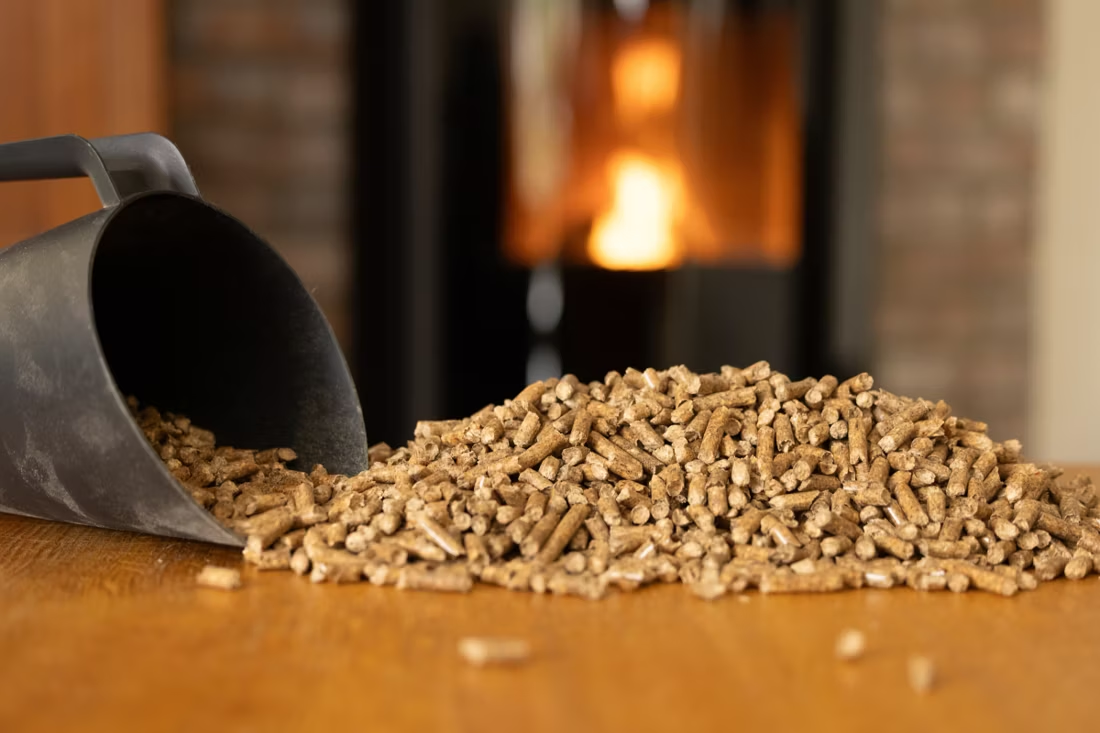
Pellet stoves depend on a constant electric feed to run the auger and combustion blower, and rural North Dakota blizzards regularly knock out power for a day or more at a time—a real liability when it's -2°F outside and your only backup is a bag of pellets that a stove can't burn without electricity. That's part of why pellet fuel sits in not-applicable territory for most Eddy County homes, even though regional pellet brands like Lignetics and Indeck Energy Services supply the broader upper Midwest market. If a pellet stove still makes sense for your situation—a heated shop, a supplemental unit paired with a generator, a secondary living space—a local matchmaking process still helps you find someone who can install it correctly and size a backup power plan around it.
Three steps. No salesperson until you're ready.
Tell us about your project
Your zip code, your situation, and the fuel you're leaning toward—or let the answers point you to one.
See what's actually available
The brands dealers within 100 miles genuinely carry—real options, never a catalog mirage.
Get your dealer & Project Guide
A trusted local dealer, plus the free Project Guide & Parts List that names every component of the job.
Frequently Asked Questions
How much does a pellet stove installation cost in Eddy County?
Because there's no dedicated hearth retailer based in Eddy County itself, most installs run through a dealer traveling from Devils Lake, Fargo, or Grand Forks, and pricing typically lands in the $3,500 to $6,500 range once travel and any hearth pad or venting work are factored in. That's roughly in line with pellet install costs across the rest of North Dakota, but expect a wider quote spread here simply because fewer installers regularly work this corner of the state.
Why aren't pellet stoves more common in Eddy County?
Eddy County's climate is severe—Zone 7, 9,262 heating degree days, and average winter lows near -2°F—and the housing stock here was built around propane forced-air systems and electric baseboard, both of which are already the established primary heat sources. Pellet stoves also need continuous electricity to run, and rural North Dakota blizzards can take down power for a day or more, which makes an auger-fed appliance a poor primary heat choice compared to propane, which many homes already have tanked and plumbed.
Where can I buy pellets near Eddy County?
There's no specialty hearth shop stocking pellets inside the county, so most owners either special-order through a dealer in Fargo or Grand Forks or pick up pallets through a farm supply or co-op store that carries regional brands like Lignetics. Regional upper-Midwest pricing generally runs in the $250 to $300 per ton range, though delivery to a rural Eddy County address can add to that depending on the supplier's route.
Will a pellet stove work as primary heat in this climate?
Not reliably. With 9,262 heating degree days and average lows around -2°F—similar to what Fargo sees most winters—a pellet stove can supplement a room or a shop, but leaning on it as your only heat source means betting on both a steady pellet supply and uninterrupted power through prairie blizzard season. Most Eddy County homeowners who install one pair it with an existing propane furnace rather than replacing it.
Wood is also uncommon here—why, given the local tree species?
Oak, cottonwood, and ash do grow along the Sheyenne River bottoms near New Rockford, but Eddy County is prairie, not forest—the harvestable acreage is thin compared to wooded regions, and there's no established cutting-permit culture or firewood supply chain like you'd find in a timber county. Combined with propane's head start as the default heat source, both wood and pellet stay niche choices here rather than mainstream ones.
Do I need a permit to install a pellet stove in Eddy County?
Yes—a solid-fuel burning appliance installation typically requires a building permit and inspection through the county building department, the same as it would for a wood stove. Because installers who work in Eddy County are often coming from Devils Lake, Fargo, or Grand Forks, it's worth confirming upfront that they'll pull the permit and handle the inspection as part of the job rather than leaving that step to you.
What size pellet stove do I need for a home in this climate?
If you're installing one as a supplemental unit, size for the specific room or zone rather than the whole house—a mid-size hopper is usually enough for a living room or a heated outbuilding. If you're considering something closer to whole-home heat, talk to your installer about hopper capacity and, just as important, a backup power plan, since a generator large enough to keep the auger and blower running through a multi-day outage is part of making a pellet stove workable in a Zone 7 climate like this one.
Are there regional pellet brands available near Eddy County?
Lignetics and Indeck Energy Services both supply the broader upper-Midwest and North Dakota market, and dealers in Fargo, Grand Forks, or Devils Lake typically carry one or both. There isn't a specialty pellet retailer operating inside Eddy County itself, so plan on ordering ahead of the heating season rather than picking up bags on short notice.
Pellet vs. propane—which is right for my Eddy County home?
Propane is the established primary fuel across rural Eddy County for good reason—it doesn't depend on the power staying on, most homes already have a tank and gas line in place, and it heats the whole house rather than a single zone. Pellet stoves offer real ambiance and zone heating, but they need steady electricity and a reliable pellet supply, which is a harder ask through a North Dakota winter. Most Eddy County homeowners who add a pellet stove treat it as a supplement to their propane system, not a replacement for it.
Why is my open fireplace making my house colder?
Open fireplaces suck—literally. As the fire burns, it consumes air your furnace already paid to heat and pulls it out through the chimney, so the house is actually colder after the fire goes out than before you lit it. An insert fixes this: it seals the chimney, puts fixed glass across the front, and turns that hole in your house into a real heat source.
What's the difference between an insert and a zero-clearance fireplace?
An insert is a fireplace that slides into a pre-existing wood-burning fireplace—if you don't have one, there's nothing to insert it into. A zero-clearance fireplace is built into a framed wall, which makes it the answer for remodels and new construction. Simple test: existing masonry fireplace means insert; blank or framed wall means zero-clearance.
Does a fireplace add value to my home?
On average, a fireplace adds back to the home about the same amount you spent installing it. Add the monthly savings from heating the rooms you actually use instead of the whole house—often hundreds of dollars a year—and the value case is strong before you even count what a fire does for how your family uses the room.
Can a fireplace actually lower my heating bill?
Yes—by creating a comfort zone. A furnace heats every square foot of the house just to warm the one room you're in; a gas fireplace on low burns roughly a sixth of the gas a typical furnace does. Set the furnace around 55–60 degrees as a baseline, then heat the rooms your family actually uses. Families who heat this way commonly save $20–$60 a month.
Pellet Brands Stocked Around Eddy County
Manufacturers will point you to the nearest stocking dealer.
See if a pellet stove fits your Eddy County home.
Tell us about your home and how you'd use a pellet stove, and we'll be straight with you about whether it fits your situation—then match you with a trusted local dealer and a free Project Guide & Parts List, including the exact vent kit and equipment your project needs.
Find Your Fireplace →