
Add real warmth to Eddy County's long, cold winters.
From New Rockford to Sheyenne, Warwick, and Brantford, Eddy County averages 9,262 heating degree days a year and winter lows near -2°F. Electric fireplaces won't replace your furnace here, but they add clean, no-venting zone heat and ambiance to any room. Find the right unit and connect with a trusted local dealer.
Every Project Starts From One of These Five Situations
Electric warmth for a climate that doesn't let up.
Eddy County sits in north-central North Dakota's open prairie, home to about 1,643 people spread across New Rockford, Sheyenne, Warwick, and the farmland between them. This is Climate Zone 7 territory—one of the coldest building-code classifications in the country, with 9,262 heating degree days a year, on par with International Falls, MN, and well beyond what most of the Lower 48 ever sees. Average winter lows run around -2°F, and stretches well below zero are routine from December through February. In a county this open, mature hardwood stands are scarce, which is why wood and pellet appliances aren't a realistic heating strategy here—most homes lean on propane or fuel-oil furnaces for primary heat, with electricity filling in the gaps.
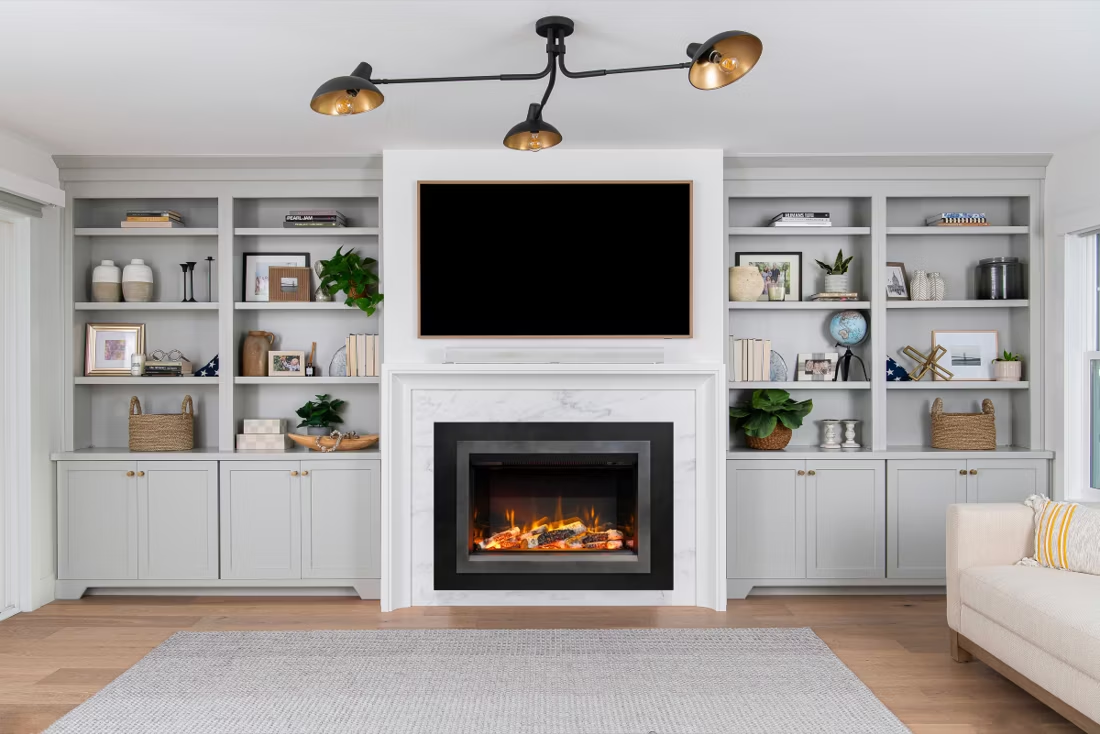
That's exactly where electric fireplaces earn their place. They don't need a chimney, a gas line, or a woodpile—just a 120-volt outlet for smaller units or a dedicated 240-volt circuit for larger built-ins, both of which a licensed electrician can wire into an existing wall in an afternoon. For Eddy County homes served by KEM Electric Cooperative out of New Rockford, an electric fireplace makes sense as supplemental heat in a bedroom, basement, or three-season addition—not as the thing standing between your family and a subzero night. Installed cost typically runs $300 to $2,500 depending on whether you're adding a simple plug-in insert or a full built-in unit with custom framing and trim.
Three steps. No salesperson until you're ready.
Tell us about your project
Your zip code, your situation, and the fuel you're leaning toward—or let the answers point you to one.
See what's actually available
The brands dealers within 100 miles genuinely carry—real options, never a catalog mirage.
Get your dealer & Project Guide
A trusted local dealer, plus the free Project Guide & Parts List that names every component of the job.
Frequently Asked Questions
How much does an electric fireplace installation cost in Eddy County?
Most electric fireplace installs in Eddy County run $300 to $2,500. A basic plug-in insert or wall-mount unit that just needs an existing outlet sits at the low end. A built-in electric fireplace that requires new framing, a dedicated 240-volt circuit, and finish trim work runs toward the higher end. Because there's no venting or gas line to run, electric installs are consistently the fastest and least invasive fireplace project available in the county—most are done in a single day, including the electrical work.
Can an electric fireplace heat my whole home in Eddy County's winters?
No, and any dealer worth trusting will tell you the same thing. With average winter lows near -2°F and 9,262 heating degree days a year, Eddy County's cold is well past what resistance-heat electric units are designed to handle as a whole-house solution. Most local homes rely on a propane or fuel-oil furnace for primary heat, with an electric fireplace used for supplemental zone heat in a specific room—a bedroom that runs cold, a finished basement, or an addition that's harder for the main furnace to reach—plus the ambiance of a real-looking flame without any smoke or combustion byproducts.
Do I need a permit to install an electric fireplace in Eddy County?
It depends on the scope. A plug-in electric fireplace that uses an existing outlet typically doesn't require a permit. If the installation involves running a new dedicated circuit—common for larger built-in units—that electrical work should go through a licensed electrician and may require a permit through the county's building office. Most local dealers coordinate the electrician as part of the installation, so you're not left tracking down the paperwork yourself.
Will my electric fireplace still work during a power outage?
No—electric fireplaces are entirely dependent on grid power, which is worth knowing in a rural county where winter storms can knock out lines for hours at a time. If backup heat during an outage matters to you, plan around a portable generator sized to run your furnace and key circuits, or talk to a local dealer about a propane or gas-fired unit as a second heat source. Electric fireplaces are best understood as everyday comfort and ambiance, not emergency heat, for Eddy County homes.
What's the difference between an electric insert, built-in, and freestanding stove?
An electric insert drops into an existing fireplace opening—useful if a home in New Rockford or Sheyenne has an old, unused masonry fireplace that's just collecting dust. A built-in electric fireplace is designed to be framed into a wall like a window, giving a clean, flush look for new construction or remodels. A freestanding electric stove sits on the floor like a wood stove and can go anywhere near an outlet, no fireplace opening required. For most Eddy County homes without an existing fireplace, the freestanding stove or a simple wall-mount unit is the easiest path.
Where can I put an electric fireplace in my house?
Almost anywhere, which is the main advantage over gas or wood. Because there's no combustion, no venting, and no clearance-to-combustibles requirement in the same way, electric units can go on an interior wall, in a bedroom, in a finished basement, or in an addition that's tricky to vent. The only real constraint is electrical—make sure the circuit you're using can handle the unit's draw, especially for larger built-ins that need a dedicated 240-volt line. A local dealer will walk your space and confirm placement before anything gets installed.
How much does it cost to run an electric fireplace in Eddy County?
Most electric fireplaces draw around 1,500 watts on the heat setting, which works out to roughly 15 cents to 25 cents an hour depending on your KEM Electric Cooperative rate. Run several hours a day through a cold stretch and that adds up to a modest monthly bump—noticeably less than heating an entire room with your furnace alone, which is the appeal for supplemental use. Flame-only mode with the heater off draws only a few watts, so ambiance without heat costs next to nothing.
Electric vs. gas fireplace—which is right for my Eddy County home?
Gas fireplaces, running on propane since natural gas mains are limited in a county this size, deliver real heat output high enough to matter on a subzero night and can be configured with battery-backup ignition to run during a power outage. Electric fireplaces install faster, cost less upfront, and can go in rooms where running a gas line isn't practical, but they can't keep up with true cold and go dark the moment the power drops. For a bedroom, den, or finished basement where convenience and low install cost matter most, electric is a strong fit. For a primary living space where you want serious backup heat, propane gas is usually the better call—talk to a local dealer about which room you're solving for.
Why isn't wood heat more common in Eddy County?
Eddy County is open prairie farmland, not forest—mature stands of oak, cottonwood, and ash exist mostly along river bottoms and windbreaks, not in the volume that supports widespread residential wood heating the way a timbered region would. Combined with a climate this severe, where a wood stove alone struggles to keep pace with -2°F average lows and 9,262 heating degree days, most county households built around propane or fuel-oil furnaces generations ago and never looked back. Electric fireplaces fit naturally into that setup as clean, low-maintenance supplemental heat and ambiance, without asking anyone to source or split firewood on the prairie.
Does an electric fireplace need a vent or chimney?
No—that's its superpower. An electric fireplace needs a wall and an outlet, period. No vent pipe, no gas line, no clearances to design around, which is why it works in bedrooms, offices, apartments, and walls where venting a gas or wood unit would be impractical or impossible. Installation is typically the simplest and least expensive of any fireplace type.
Do electric fireplaces actually produce heat?
Yes—most put out around 4,800–5,000 BTUs from a standard outlet, which comfortably warms a bedroom, office, or den as a comfort-zone heater. What they won't do is carry a whole house the way wood, gas, or pellet can. Think of electric as ambiance-first with honest supplemental heat: flames on with no heat in July, flames plus warmth in January.
Can a fireplace actually lower my heating bill?
Yes—by creating a comfort zone. A furnace heats every square foot of the house just to warm the one room you're in; a gas fireplace on low burns roughly a sixth of the gas a typical furnace does. Set the furnace around 55–60 degrees as a baseline, then heat the rooms your family actually uses. Families who heat this way commonly save $20–$60 a month.
Does a fireplace add value to my home?
On average, a fireplace adds back to the home about the same amount you spent installing it. Add the monthly savings from heating the rooms you actually use instead of the whole house—often hundreds of dollars a year—and the value case is strong before you even count what a fire does for how your family uses the room.
Find your electric fireplace in Eddy County.
Tell us about your home and where you're trying to add warmth, and we'll put together a free Project Guide & Parts List—the right unit, the exact electrical specs and mounting hardware, and a trusted local dealer near New Rockford to install it.
Find Your Fireplace →