
Reliable heat that keeps up with 9,284 heating degree days.
From Valley City to Wimbledon and every farmstead in between, Barnes County winters push deep into the negatives. A properly sized pellet stove or insert delivers steady, thermostat-controlled heat without the wood-splitting labor—and I'll match you with a trusted local dealer who can size, permit, and install it right.
Every Project Starts From One of These Five Situations
Automated warmth built for Zone 7 winters.
Barnes County sits in the Sheyenne River valley of southeastern North Dakota, anchored by Valley City—the self-proclaimed 'City of Bridges'—with smaller communities like Litchville, Rogers, Wimbledon, and Dazey spread across the surrounding farmland. This is IECC climate zone 7, one of the coldest classifications in the continental United States, with 9,284 heating degree days a year and an average winter low of -2°F. That's colder, on paper, than Duluth, Minnesota, and arctic air masses out of Canada can push actual lows well below -20°F for days at a stretch. Wood heat has deep roots here—oak, cottonwood, and ash pulled from the river bottoms have fueled farmhouse stoves for generations—but pellet appliances have become the practical choice for households who want that same radiant backup heat without the splitting, stacking, and daily tending that cordwood demands.
There's no air quality non-attainment designation or winter burn curtailment in Barnes County, which means a pellet stove or insert here runs on your schedule, not a county air board's. Lignetics and Indeck Energy Services both supply pellets to dealers across this part of North Dakota, and most stoves sold locally are EPA-certified units with hopper capacities built for long, hands-off overnight burns—a real advantage when a January cold snap keeps temperatures below zero for a week. Whether you're heating a farmhouse outside Wimbledon or an in-town home in Valley City, the right pellet appliance gives you automated, thermostat-driven heat that keeps running even when you're not around to feed a firebox.
Three steps. No salesperson until you're ready.
Tell us about your project
Your zip code, your situation, and the fuel you're leaning toward—or let the answers point you to one.
See what's actually available
The brands dealers within 100 miles genuinely carry—real options, never a catalog mirage.
Get your dealer & Project Guide
A trusted local dealer, plus the free Project Guide & Parts List that names every component of the job.
Frequently Asked Questions
How much does a pellet stove installation cost in Barnes County?
Most pellet stove and insert installations in Barnes County run in the $3,500 to $7,000 range, depending on the unit, whether you're inserting into an existing masonry fireplace, and how much venting work is required to route the exhaust through an exterior wall. Homes without an existing hearth—a straight freestanding stove install on a farmhouse or rural property—tend to land on the lower end once a hearth pad and simple wall-vent are accounted for. A trusted local dealer will walk your home and give you a firm number as part of the free Project Guide & Parts List, rather than a phone-quote guess.
What size pellet stove do I need for a Barnes County home?
With 9,284 heating degree days a year and winters that regularly bottom out well below zero, Barnes County homes need to size up compared to milder parts of the state. A mid-size pellet stove (rated for 1,500-2,000 sq ft) is the common choice for an average farmhouse or in-town Valley City home with reasonable insulation; larger, older farmhouses with drafty additions or high ceilings often need a stove rated closer to 2,500 sq ft to keep pace on the coldest nights. Hopper size matters just as much as heat output here—a larger hopper means fewer 3 a.m. refills when an arctic front rolls through. A local dealer will size both the unit and the hopper based on your actual square footage and insulation, not a generic chart.
Where can I find pellet stove dealers near Barnes County?
Barnes County itself is sparsely populated, so most residents drive to dealers in Valley City or make the trip to Fargo, about 60 miles east, where the dealer network is larger. I match Barnes County homeowners with trusted dealers who actually stock and install pellet appliances in this part of the Sheyenne Valley—not a big-box store that sells a stove in a box and leaves the venting and hopper sizing to you. That distinction matters more here than in milder climates, since an undersized unit or a poorly sealed vent run will struggle the moment temperatures drop into the negatives.
What's the difference between a pellet stove and a pellet insert?
A pellet stove is a freestanding appliance that sits on its own hearth pad and vents through an exterior wall or existing chimney—it can go almost anywhere in a room with the right clearances. A pellet insert is built to slide into an existing masonry fireplace opening, turning an old wood-burning fireplace into a sealed, high-efficiency pellet unit that vents up the original chimney with a stainless liner. For Barnes County farmhouses with an existing wood fireplace that's rarely used, an insert is often the simpler retrofit. For homes without an existing fireplace, a freestanding stove is the more common route.
Do I need a permit to install a pellet stove in Barnes County?
Yes—a building permit is typically required for any new solid-fuel appliance installation, including pellet stoves and inserts, through Barnes County's building department or, if you're inside Valley City limits, the city's permitting office. The permit process mainly confirms proper clearances, venting termination point, and hearth pad specifications. Most local dealers handle the permit application as part of the installation, so you're not filing paperwork yourself. Unlike some non-attainment counties in other states, Barnes County has no air quality restrictions on burning, so there's no curtailment schedule to work around once the stove is installed.
What's the best pellet stove for Barnes County's climate?
Look for an EPA-certified pellet stove with a large hopper—40 to 60 pounds is common in cold-climate models—so you're not reloading every few hours during a stretch of sub-zero weather. Brands like Harman, Enviro, and Kuma are frequently recommended by cold-climate dealers for their auger reliability and cold-weather startup performance, and pellets from regional suppliers like Lignetics or Indeck Energy Services are both readily available through dealers serving this part of North Dakota. A local installer will also want to confirm your electrical setup, since every pellet appliance depends on power to run the auger and combustion blower—worth pairing with a battery backup or small generator plan given how exposed rural Barnes County properties are to winter power outages.
How often does a pellet stove need cleaning and service?
Pellet stoves need more frequent light maintenance than wood stoves, but less heavy chimney work. Plan on cleaning the burn pot and ash pan every few days during heavy winter use, a full interior cleaning monthly, and a professional annual service that checks the auger, combustion blower, gaskets, and venting. For a Barnes County home running the stove as a primary or heavy supplemental heat source through a full Zone 7 winter, that annual service is worth scheduling in late summer before the first cold snap, rather than waiting until the unit is already in daily use.
Where can I buy pellets in or near Barnes County?
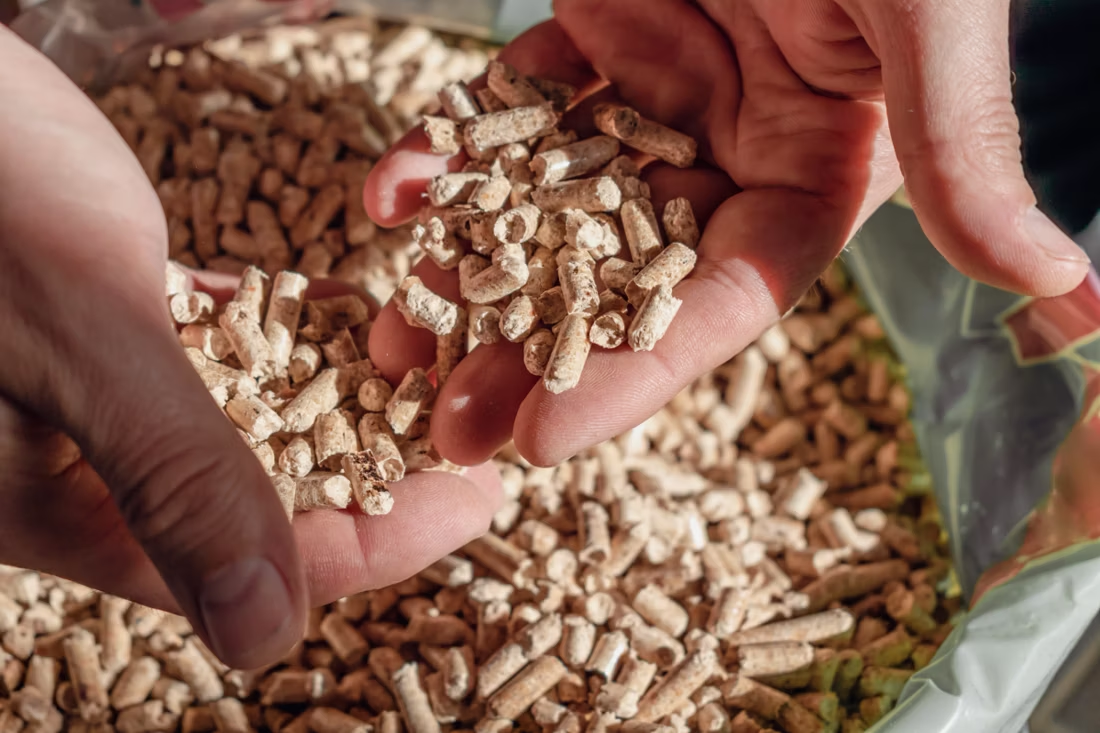
Lignetics and Indeck Energy Services both distribute pellets to dealers and farm supply stores across this region of North Dakota, and most pellet stove dealers in Valley City or Fargo sell bagged pellets by the ton alongside their stoves. Buying a full ton or more ahead of the season—and storing it somewhere dry, like a garage or outbuilding—is the common approach for rural Barnes County households who don't want to make repeat trips into town once winter roads get rough.
Pellet stove vs. wood stove—which makes more sense for my Barnes County home?
Wood stoves burn cordwood—oak, cottonwood, and ash are the common local species pulled from the Sheyenne River bottoms—and they keep working with zero electricity, which matters when a winter storm knocks out power on a rural line. Pellet stoves need electricity to run the auger and blower, but they offer thermostat-controlled, hands-off heat and don't require splitting, stacking, or seasoning wood. For an in-town Valley City home with reliable power, a pellet stove's convenience is hard to beat. For an outlying farmstead where outages are common and firewood is already on hand, a wood stove—or a pellet stove backed by a small generator—is often the safer bet. Either way, a local dealer can walk through both options against your specific property.
What's the difference between an insert and a zero-clearance fireplace?
An insert is a fireplace that slides into a pre-existing wood-burning fireplace—if you don't have one, there's nothing to insert it into. A zero-clearance fireplace is built into a framed wall, which makes it the answer for remodels and new construction. Simple test: existing masonry fireplace means insert; blank or framed wall means zero-clearance.
How often does a pellet stove need cleaning?
A clean pellet stove is a happy pellet stove. Plan on cleaning the burn pot about once a week when you're burning regularly—ash and clinkers gum up the air holes just like a pellet barbecue. Most pellet stove problems trace back to skipped cleaning that nobody explained up front. Some designs make it easy with a trapdoor burn pot: pull a lever and the gunk drops into the ash pan.
What is an in-home preview and do I need one?
It's a visit where a hearth professional measures your space, confirms the model you picked actually works in your home, and walks the specs—framing, gas line, venting, finish work—before anything is ordered. Some details you just can't know until you see the house. Never make a down payment without one; it's the single most-skipped step that burns buyers.
Does a fireplace add value to my home?
On average, a fireplace adds back to the home about the same amount you spent installing it. Add the monthly savings from heating the rooms you actually use instead of the whole house—often hundreds of dollars a year—and the value case is strong before you even count what a fire does for how your family uses the room.
Pellet Brands Stocked Around Barnes County
Manufacturers will point you to the nearest stocking dealer.
Find your pellet stove in Barnes County.
Tell me about your home and I'll match you with a trusted local dealer and send over your free Project Guide & Parts List—the exact appliance, vent kit, and installation plan sized for Barnes County's Zone 7 winters.
Find Your Fireplace →