
Zone heat that keeps up when Valley City drops below zero.
With 9,284 heating degree days and winter lows averaging -2°F, Barnes County sits in Zone 7—cold enough that electric heat plays a supporting role, not the starring one. I match you with a trusted local dealer who can size a real electric fireplace or insert for a bedroom, addition, or finished basement without a chimney, a gas line, or a permit fight.
Every Project Starts From One of These Five Situations
Heat you can add anywhere, no chimney required.
Barnes County spreads across the Sheyenne River valley in southeastern North Dakota, anchored by Valley City—known locally as the City of Bridges—with Wimbledon, Sanborn, Litchville, Rogers, and Dazey scattered through the surrounding farmland. At 9,284 heating degree days, this county runs colder longer than almost anywhere else in the country, in the same range as International Falls, MN. Most homes here carry their base heat load on propane, wood, or, in Valley City proper, natural gas where mains reach. Electric fireplaces fit into that picture as zone heat: a bedroom that runs cold at night, a finished basement without existing venting, a sunroom addition where running a flue through the roof isn't practical.
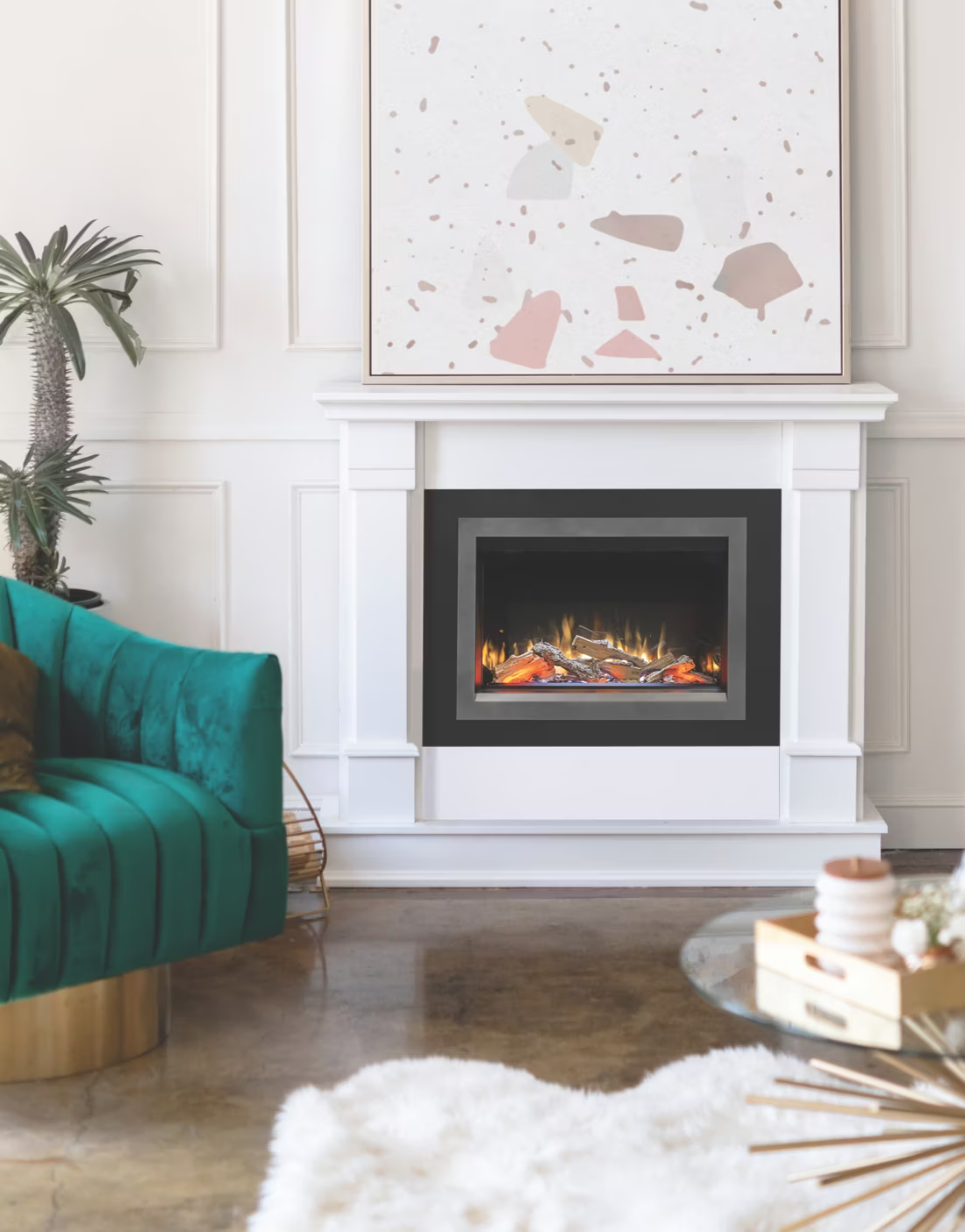
Straight resistance electric heat costs more per BTU than propane or wood over a winter this long, so almost nobody in Barnes County tries to run an electric fireplace as a home's only heat source—the numbers don't work at -2°F average lows. What does work is a 1,500 to 2,500-watt insert or built-in unit supplementing the furnace in one specific room, with no chimney sweep, no gas permit, and no combustion byproducts to vent. Whether your power comes through Cass County Electric Cooperative in the rural townships or Valley City's municipal utility in town, a local dealer can tell you whether your panel and wiring support a dedicated circuit before anything gets installed.
Three steps. No salesperson until you're ready.
Tell us about your project
Your zip code, your situation, and the fuel you're leaning toward—or let the answers point you to one.
See what's actually available
The brands dealers within 100 miles genuinely carry—real options, never a catalog mirage.
Get your dealer & Project Guide
A trusted local dealer, plus the free Project Guide & Parts List that names every component of the job.
Frequently Asked Questions
How much does an electric fireplace installation cost in Barnes County?
A plug-in electric insert or freestanding unit that uses a standard 120V outlet typically runs $300 to $800 installed, since there's no venting or gas line to run. A built-in wall unit or larger insert that needs a dedicated 240V circuit and some trim carpentry runs closer to $1,500 to $4,000, with the electrician's time for the new circuit making up a good chunk of that. Rural properties outside Valley City sometimes see a small trip charge if the installer is coming from town, but there's no chimney, hearth pad, or roof penetration to price in like there is with wood or gas.
Can an electric fireplace actually heat a room at Barnes County's winter lows?
A properly sized unit will comfortably heat a single room—most electric fireplaces put out around 4,600 to 5,100 BTU on high, enough for a bedroom, den, or finished basement with reasonable insulation. What it won't do is replace your furnace on a night when the temperature sits at -2°F or lower, which is a typical winter low here. Think of it as taking the edge off a cold room or letting you turn the thermostat down elsewhere in the house, not as your primary heat source for a 9,284-HDD winter.
Do I need a permit or an electrician to install an electric fireplace in Barnes County?
A simple plug-in unit generally doesn't require a permit—it's no different than plugging in a space heater. A built-in or wall-mount unit that needs a new dedicated circuit is electrical work, and that should go through a licensed electrician regardless of whether Barnes County's building office requires a formal permit for your specific township. If you're inside Valley City limits, check with the city before cutting into a wall for a built-in unit, since finish work near a stud bay can trigger an inspection even without gas or venting involved.
Electric vs. propane vs. wood—what actually heats homes in Barnes County?
Outside Valley City's natural gas footprint, propane and wood carry most of the heating load across the county's farmland, and that's not likely to change given how expensive straight electric resistance heat gets over a season this long. Wood cut from local oak, cottonwood, and ash is still common on rural properties as a backup or primary source, especially where propane delivery in a blizzard is a real concern. Electric fireplaces aren't competing with any of that—they're solving a different problem: adding heat and ambiance to one room without touching the existing furnace or chimney.
Will my electric fireplace work if the power goes out?
No—an electric fireplace stops working the moment the grid does, which matters in a county where winter storms can take down Cass County Electric Cooperative lines for hours at a time. If backup heat during an outage is a real priority for your household, a wood stove or a propane unit with battery-backed ignition is the safer primary choice, with an electric fireplace reserved for supplemental comfort on ordinary nights when the power is reliable.
What type of electric fireplace makes sense for a cold Barnes County home?
For a bedroom or den, a built-in wall unit or mantel-style insert with a 5,000 BTU heater covers most rooms without straining a household's wiring. For a finished basement—a popular retrofit in older Valley City homes without existing venting down there—a freestanding electric stove-style unit gives you the visual of a wood stove with none of the clearance or chimney requirements. A local dealer walking the room will tell you which wattage and cabinet style actually fits, rather than guessing off a box store display.
How much does it cost to run an electric fireplace through a Barnes County winter?
A 1,500-watt unit run a few hours a night on the coldest evenings adds a modest amount to a monthly bill—real numbers depend on your rate through Cass County Electric Cooperative or Valley City's municipal utility, but running one room's supplemental heat is far cheaper than trying to heat that same room with electric resistance baseboard around the clock. Most homeowners here use the fireplace selectively on cold nights rather than leaving it on continuously, which keeps the added cost manageable.
Where should I install an electric fireplace for the most benefit?
The best returns come in rooms that run cold relative to the rest of the house: a bedroom on an exterior wall, a finished basement without its own duct run, or a three-season addition that the furnace doesn't reach well. Installing in a room that's already well-heated by the main system mostly just adds ambiance rather than solving a real comfort problem, which is worth knowing before you spend on a built-in unit and dedicated circuit.
How much maintenance does an electric fireplace need?
Very little compared to wood or gas—there's no chimney to sweep and no burner to service. Plan to dust the unit and wipe down the glass front periodically, check that the fan or blower isn't picking up dust buildup, and replace the LED ember bed bulbs eventually since they're the main wear part on most models. That low-maintenance profile is part of why electric units are a popular add-on in rural Barnes County homes where the wood stove or propane furnace already gets the bulk of the seasonal upkeep attention.
Can I put a TV above my fireplace?
Yes—with an asterisk. Fireplaces are hot and TVs don't like heat. Either put a mantel between them to deflect rising warmth, or choose a fireplace with heat-management technology that creates a cool zone on the wall above—the wall stays around 125 degrees, barely warm, while the room still gets full heat. If you like clean lines and don't want a mantel, heat management is the answer.
What fireplace styles should I know before shopping?
Four cover most of the market: screen-front traditional (mesh front, open feel, fits craftsman homes), traditional door set (the classic look you grew up with), modern linear (wide, low, the statement piece for entertaining), and clean face contemporary (no trim—your tile or stone runs right to the fire's edge). Walk in knowing those four terms and you're ahead of most buyers.
What is an in-home preview and do I need one?
It's a visit where a hearth professional measures your space, confirms the model you picked actually works in your home, and walks the specs—framing, gas line, venting, finish work—before anything is ordered. Some details you just can't know until you see the house. Never make a down payment without one; it's the single most-skipped step that burns buyers.
Can I install a fireplace myself?
If you're putting a fire in your house on purpose, it's best to work with an expert. Unless you're genuinely experienced in framing, gas line, vent pipe, and the national code on clearances to combustibles, have a professional do it—and ideally the same company that sells you the fireplace, so warranty, service, and liability all live under one roof.
Get your free Project Guide & Parts List for an electric fireplace in Barnes County.
Tell me about the room, your panel, and how you plan to use it, and I'll match you with a trusted local dealer and send a free Project Guide & Parts List—the right unit, wattage, and circuit requirements for your electric fireplace project, no big-box guesswork.
Find Your Fireplace →