
Steady heat for Yancey County's mountain winters.
Pellet stoves and inserts sized for the Blue Ridge's cold snaps—from Burnsville to the base of Mount Mitchell. Find the right unit and get matched with a trusted local dealer.
Every Project Starts From One of These Five Situations
Convenient warmth built for Blue Ridge winters.
Yancey County sits high in the Blue Ridge Mountains of western North Carolina, anchored by Mount Mitchell—the tallest peak east of the Mississippi—and the small river towns of the Toe River valley, including the county seat of Burnsville. At climate zone 5A, with a winter heating season on par with places like Asheville's higher elevations and average winter lows around 26°F, the cold here isn't in the same league as Duluth, Minnesota or Burlington, Vermont, but the shoulder seasons run long, and a cold front dropping down through the Black Mountains can catch an underpowered stove off guard. Homes at higher elevations near Mount Mitchell State Park routinely see colder nights than the valley floor around Burnsville, and that swing matters when you're sizing a stove.
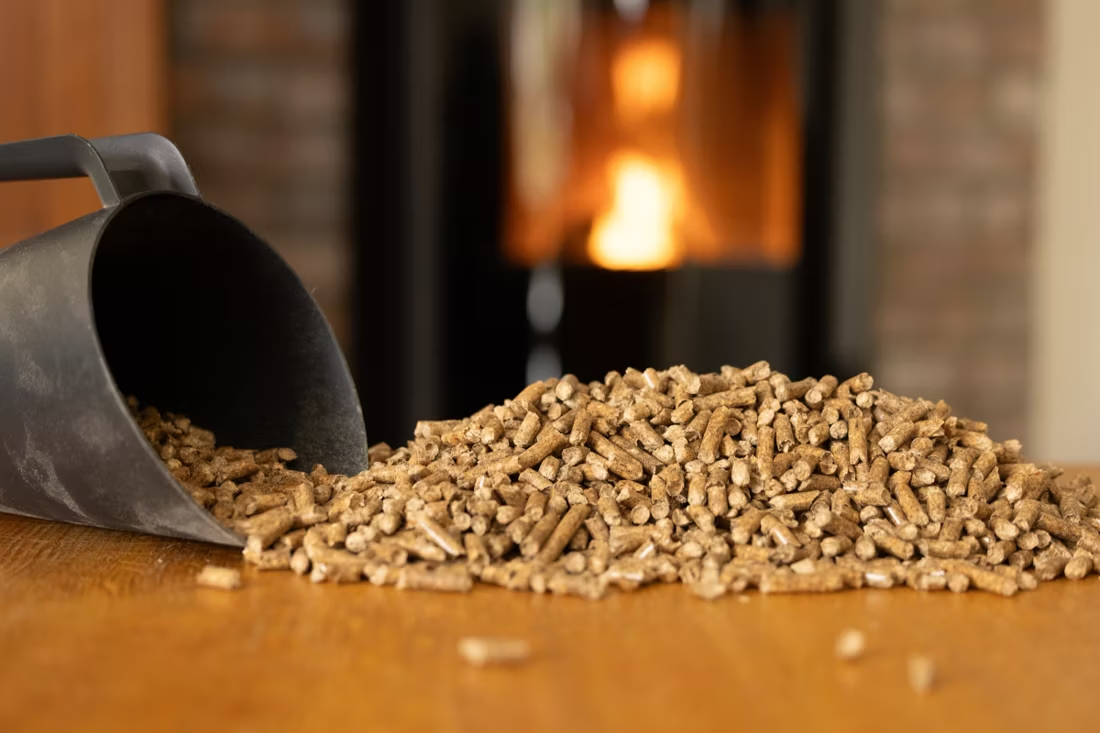
Pellet heat has found a real foothold here partly because of geography: Hamer Pellet Fuel manufactures pellets right in the region, and Lignetics and Greenway Renewable Energy both supply the western North Carolina market, so homeowners aren't relying on fuel trucked in from out of state. With no air quality non-attainment issues or wood-burning curtailment periods in Yancey County, pellet stoves compete on convenience rather than compliance—a thermostat-controlled, auto-igniting appliance that skips the splitting of oak and hickory rounds, though plenty of county residents still keep both: a wood stove for backup and ambiance, a pellet stove or insert for the day-to-day heat that holds a house in the 60s and 70s without constant tending.
Three steps. No salesperson until you're ready.
Tell us about your project
Your zip code, your situation, and the fuel you're leaning toward—or let the answers point you to one.
See what's actually available
The brands dealers within 100 miles genuinely carry—real options, never a catalog mirage.
Get your dealer & Project Guide
A trusted local dealer, plus the free Project Guide & Parts List that names every component of the job.
Frequently Asked Questions
How much does a pellet stove installation cost in Yancey County?
Most pellet stove installations in Yancey County run in the $3,000 to $6,500 range for a freestanding stove vented through an exterior wall, and pellet inserts into an existing masonry fireplace typically land between $4,000 and $7,500 once a chimney liner and hopper clearance work are figured in. Homes farther up mountain roads toward Celo or the base of Mount Mitchell can see slightly higher labor costs due to travel time. A local dealer will give you a firm number after seeing your hearth or wall setup in person.
What size pellet stove do I need for my home?
Sizing depends on square footage, ceiling height, and how much of Yancey County's elevation swing your home experiences. A small pellet stove (rated up to roughly 1,000-1,300 sq ft) suits a cabin or supplemental-heat setup; a medium unit (1,300-2,000 sq ft) covers most Burnsville-area homes; larger units make sense for bigger or less-insulated houses, especially higher up toward Celo or Mount Mitchell where winter lows run noticeably colder than the valley floor. A stove sized right for the valley can struggle to keep up at elevation, so tell your dealer roughly how high up you sit—it changes the recommendation.
Where can I find certified pellet stove installers near me?
Look for installers with NFI (National Fireplace Institute) pellet-specific certification—pellet appliances have their own venting and clearance rules, distinct from wood stoves, and not every wood-stove installer is equally comfortable with hopper placement, auger wiring, and horizontal pellet venting through a wall. Local hearth dealers serving Yancey County typically handle both the sale and the install, which keeps warranty coverage simple. If you're up a gravel road toward Celo or Pensacola, ask about a site-visit charge before scheduling.
What's the difference between a pellet stove, pellet insert, and pellet furnace?
A pellet stove is a freestanding appliance that vents through an exterior wall or existing chimney and sits on its own hearth pad—it can go almost anywhere with reasonable wall access. A pellet insert slides into an existing masonry fireplace opening, using the chimney (with a liner) as the vent path, which is a common upgrade for older Yancey County farmhouses with an unused fireplace. A pellet furnace is a whole-home ducted system tied into existing ductwork—less common here, but an option for homes already on forced air. Most local homeowners are choosing between a stove or an insert depending on whether they already have a working fireplace.
Do I need a permit to install a pellet stove in Yancey County?
Yes—a building permit is generally required for a new pellet stove or insert installation, issued through Yancey County's building inspections office. Because pellet appliances vent horizontally through a wall rather than up a full masonry chimney, inspection mostly focuses on wall clearance, exterior vent termination, and the electrical circuit for the hopper and blower. Most local dealers pull the permit as part of the installation, so you generally don't have to navigate it yourself.
What's the best pellet stove for Yancey County's climate?
For Yancey County's cold snaps, look for a pellet stove with a larger hopper (40+ lb capacity) so you're not refilling constantly during a multi-day cold stretch, and size the BTU output to your elevation—homes higher up toward Mount Mitchell or the Black Mountains should size up relative to a comparable home in Burnsville. Local dealers carrying regional brands like Lignetics and Hamer Pellet Fuel can usually match a stove to whatever fuel is easiest for you to source locally, since not every stove burns every pellet blend equally well.
Where can I buy pellets locally, and what do they cost?
Pellets are available locally, which is a real advantage in a rural county like this—Hamer Pellet Fuel is produced right in the region, and Lignetics and Greenway Renewable Energy pellets are both carried by dealers serving western North Carolina. Bagged pellets typically run somewhere in the $250 to $320 per ton range depending on brand and season, and buying a season's supply (roughly 2-3 tons for an average home) ahead of the coldest months is common practice, since demand can tighten up during a hard winter.
Will my pellet stove work during a power outage?
No—pellet stoves need electricity to run the auger, igniter, and combustion blower, so a power outage stops the stove even with a full hopper. This is worth planning around in Yancey County, where mountain ice storms can knock out power for days at a time, especially at higher elevations. Some homeowners pair a pellet stove with a small battery backup or generator sized to keep it running, while others keep a wood stove or fireplace specifically as outage backup. Ask your local dealer about the stove's power draw if backup power matters to you.
Pellet stove vs. wood stove—which is right for me?
Wood offers real fire, no electricity dependence, and access to abundant local oak, hickory, maple, and pine—including cutting permits through the Nantahala-Pisgah National Forests at $20 per cord during the May-to-October season. Pellet stoves trade that hands-on wood-splitting routine for thermostat control, auto-ignition, and a cleaner burn, at the cost of needing electricity and a steady pellet supply. For Yancey County homes without easy access to a woodlot or the time to season firewood, pellet is usually the easier day-to-day choice; for those who already have wood on hand and want heat that works when the power's out, wood still holds the edge.
How often does a pellet stove need cleaning?
A clean pellet stove is a happy pellet stove. Plan on cleaning the burn pot about once a week when you're burning regularly—ash and clinkers gum up the air holes just like a pellet barbecue. Most pellet stove problems trace back to skipped cleaning that nobody explained up front. Some designs make it easy with a trapdoor burn pot: pull a lever and the gunk drops into the ash pan.
Why is my open fireplace making my house colder?
Open fireplaces suck—literally. As the fire burns, it consumes air your furnace already paid to heat and pulls it out through the chimney, so the house is actually colder after the fire goes out than before you lit it. An insert fixes this: it seals the chimney, puts fixed glass across the front, and turns that hole in your house into a real heat source.
Does a fireplace add value to my home?
On average, a fireplace adds back to the home about the same amount you spent installing it. Add the monthly savings from heating the rooms you actually use instead of the whole house—often hundreds of dollars a year—and the value case is strong before you even count what a fire does for how your family uses the room.
Can I install a fireplace myself?
If you're putting a fire in your house on purpose, it's best to work with an expert. Unless you're genuinely experienced in framing, gas line, vent pipe, and the national code on clearances to combustibles, have a professional do it—and ideally the same company that sells you the fireplace, so warranty, service, and liability all live under one roof.
Stove and Fireplace Dealers in Yancey County
Pellet Brands Stocked Around Yancey County
Manufacturers will point you to the nearest stocking dealer.
Find your pellet stove in Yancey County.
Tell us about your home and elevation and we'll match you with the right pellet stove or insert—plus a free Project Guide & Parts List with the exact parts, including the vent kit, and a trusted local dealer to install it.
Find Your Fireplace →