
Find your pellet stove in Wayne County, NC.
Pellet heat is uncommon in Wayne County's mild coastal-plain winters, but a small number of homeowners around Goldsboro, Mount Olive, and Fremont still install one for backup heat, ambiance, or a vacation cabin up in the mountains. Here's what to know before you buy.
Every Project Starts From One of These Five Situations
Wayne County's winters rarely ask for it.
Wayne County sits in climate zone 3A with an average winter low around 35°F and a mild, short heating season—a fraction of what a place like Fargo, ND or Duluth, MN sees in a single season. Around Goldsboro, Seymour Johnson Air Force Base, Mount Olive, Fremont, and Pikeville, most homes rely on gas or electric heat pumps to handle the occasional cold snap, and that's reflected in what local dealers actually stock. Pellet stoves—which shine in places where a hopper of fuel needs to carry a home through weeks of sub-freezing nights—just don't get asked for very often here.
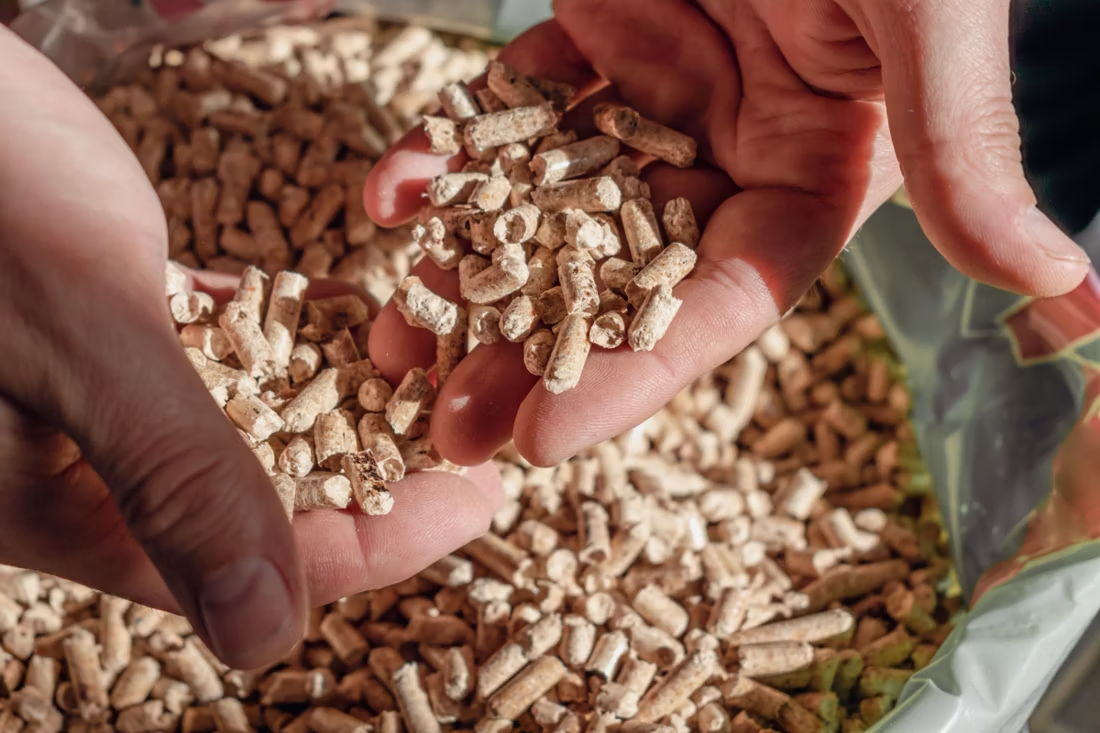
That doesn't mean pellet fuel is absent from the region. Companies like Lignetics, Hamer Pellet Fuel, and Greenway Renewable Energy distribute bagged pellets throughout eastern North Carolina, often sourced from the same oak, hickory, maple, and pine that fills the county's woodlots—but most of that supply moves through grills, smokers, and a handful of supplemental units rather than whole-home heating systems. If you still want a pellet stove—for a den, a workshop, a hunting camp, or genuine backup heat during a winter storm—a local dealer can order and install one, but expect fewer showroom options and less local demand than you'd find in a colder climate zone.
Three steps. No salesperson until you're ready.
Tell us about your project
Your zip code, your situation, and the fuel you're leaning toward—or let the answers point you to one.
See what's actually available
The brands dealers within 100 miles genuinely carry—real options, never a catalog mirage.
Get your dealer & Project Guide
A trusted local dealer, plus the free Project Guide & Parts List that names every component of the job.
Frequently Asked Questions
Are pellet stoves actually available in Wayne County?
Yes, but supply is thin. Because Wayne County's winters rarely drop below the mid-30s on average, most hearth retailers in the Goldsboro area lean their inventory toward gas and electric units, which match local demand. A handful of dealers can special-order pellet stoves and inserts, and Lignetics and Greenway Renewable Energy pellets are distributed through regional farm and hardware suppliers, but you'll likely be working from a smaller catalog than a homeowner in the mountains or Midwest would see.
How much does a pellet stove installation cost in Wayne County?
There isn't a well-established local price range because so few units get installed here each year. Nationally, a pellet stove or insert installation typically runs $3,000 to $6,000 depending on the unit, venting path, and whether a hearth pad or electrical outlet needs to be added—pellet stoves require power to run the auger and blower. In Wayne County, expect the estimate to skew toward the higher end of that range if a dealer has to special-order the unit or travel farther for the install.
Why don't more homes in Wayne County use pellet heat?
Pellet stoves earn their keep in climates where a homeowner needs to feed a hopper for weeks of continuous cold. With Wayne County's mild, short heating season and winter lows near 35°F, most homes only need supplemental heat on the coldest handful of nights—a job gas logs, a heat pump, or a small electric unit handles more cheaply and with far less equipment. Pellet heating tends to make more sense in places like Fargo, ND or Bozeman, MT, where the heating season stretches on for months.
Is a pellet stove a good idea for backup heat during power outages here?
This is worth thinking through carefully. Pellet stoves need electricity to run the auger, igniter, and combustion blower, so they won't function during a power outage unless paired with a battery backup or generator. If your main goal is emergency heat when Wayne County loses power in a hurricane or ice storm, a wood-burning unit or a battery-backed gas fireplace is a more reliable choice than pellet. Pellet makes more sense here as a convenience or ambiance option on a normal day, not as storm insurance.
Where can I buy pellet fuel in Wayne County?
Bagged pellets from brands like Lignetics and Hamer Pellet Fuel show up at farm supply stores and some hardware retailers around Goldsboro and Mount Olive, generally sold by the 40-pound bag rather than by the pallet, since whole-home pellet heating isn't common locally. If you install a stove, ask your dealer about setting up a standing order or seasonal bulk purchase—buying a full ton at once (Greenway Renewable Energy handles regional distribution) is usually cheaper than picking up bags as needed.
Do I need a permit to install a pellet stove in Wayne County?
Most vented, permanently installed heating appliances—including pellet stoves and inserts—require a building permit through your local building inspections department, and pellet units also typically need an electrical inspection for the dedicated outlet the auger and blower rely on. Because installations are infrequent here, it's worth asking your dealer up front whether they handle the permitting themselves; in counties with lower installation volume, that coordination matters more, not less.
What's the difference between a pellet stove and a wood stove for a Wayne County home?
A wood stove burns cordwood, needs no electricity, and can serve as genuine emergency heat during an outage—but wood heat is also rare in Wayne County's mild climate, so stove and firewood sourcing can be just as limited as pellet. A pellet stove burns compressed pellets, is easier to load and control, burns cleaner, but needs power to run. For most Wayne County homes, neither is a primary heat source; both tend to get installed for a specific room, a workshop, or ambiance rather than whole-home heating.
Should I get a pellet stove or just stick with gas or electric heat?
For most homes around Goldsboro, Mount Olive, and Fremont, gas or electric heat is the more practical and better-supported choice—both are standard fuel types in Wayne County with wide dealer availability, established service networks, and installation costs that reflect real local demand. A pellet stove is worth considering only if you specifically want the ambiance and radiant feel of a stackable-fuel appliance, have a detached space like a workshop or cabin to heat, or already have pellets on hand for other uses. It's a legitimate choice, just a niche one here.
If I still want a pellet stove, how do I find someone to install it?
Start by talking to a hearth dealer who explicitly lists pellet units among their offerings rather than assuming any gas or wood retailer stocks them—in a market this size, not all do. A dealer who regularly orders from Lignetics or Greenway Renewable Energy supply chains will know current lead times and can tell you honestly whether a pellet stove or insert makes sense for your specific space before you commit to buying one that's hard to service locally down the road.
Why is a fireplace insert so efficient?
An insert does two things: it seals the chimney completely, so you stop losing air you already paid to heat, and it radiates warmth into the room through the firebox and glass. Most add a heat-exchange fan that pulls cool room air underneath, wraps it around the hot firebox, and pushes it back out warm. Your home is more efficient before you've even lit the first fire.
Why is my open fireplace making my house colder?
Open fireplaces suck—literally. As the fire burns, it consumes air your furnace already paid to heat and pulls it out through the chimney, so the house is actually colder after the fire goes out than before you lit it. An insert fixes this: it seals the chimney, puts fixed glass across the front, and turns that hole in your house into a real heat source.
What is an in-home preview and do I need one?
It's a visit where a hearth professional measures your space, confirms the model you picked actually works in your home, and walks the specs—framing, gas line, venting, finish work—before anything is ordered. Some details you just can't know until you see the house. Never make a down payment without one; it's the single most-skipped step that burns buyers.
Can I install a fireplace myself?
If you're putting a fire in your house on purpose, it's best to work with an expert. Unless you're genuinely experienced in framing, gas line, vent pipe, and the national code on clearances to combustibles, have a professional do it—and ideally the same company that sells you the fireplace, so warranty, service, and liability all live under one roof.
Stove and Fireplace Dealers in Wayne County
Pellet Brands Stocked Around Wayne County
Manufacturers will point you to the nearest stocking dealer.
Find your pellet stove in Wayne County.
Tell us about your home and what you're hoping to heat, and we'll be straight with you about whether pellet makes sense here—then match you with a trusted local dealer and a free Project Guide & Parts List covering the exact parts, vent kit, and install plan for your Wayne County project.
Find Your Fireplace →