
Find your electric fireplace in Wayne County, NC.
With winter lows averaging around 35°F and just 2,657 heating degree days a year, Wayne County doesn't need a wood-burning setup to stay comfortable. An electric fireplace delivers real ambiance and supplemental warmth from Goldsboro to Mount Olive—no chimney, no venting, no gas line. Find the right unit and connect with a trusted local dealer.
Every Project Starts From One of These Five Situations
Electric fireplaces fit Wayne County's mild winters perfectly.
Wayne County sits in climate zone 3A—mild, humid winters where the coldest stretches rarely dip much below freezing and the heating season is short compared to the rest of the country. At roughly 2,657 heating degree days a year, this is nowhere close to a Fargo ND or Burlington VT winter, and it shows in how people heat their homes. Central HVAC handles the bulk of the work in most Goldsboro, Mount Olive, and Fremont homes, which leaves room for a fireplace that's chosen for atmosphere and zone comfort rather than survival heat.
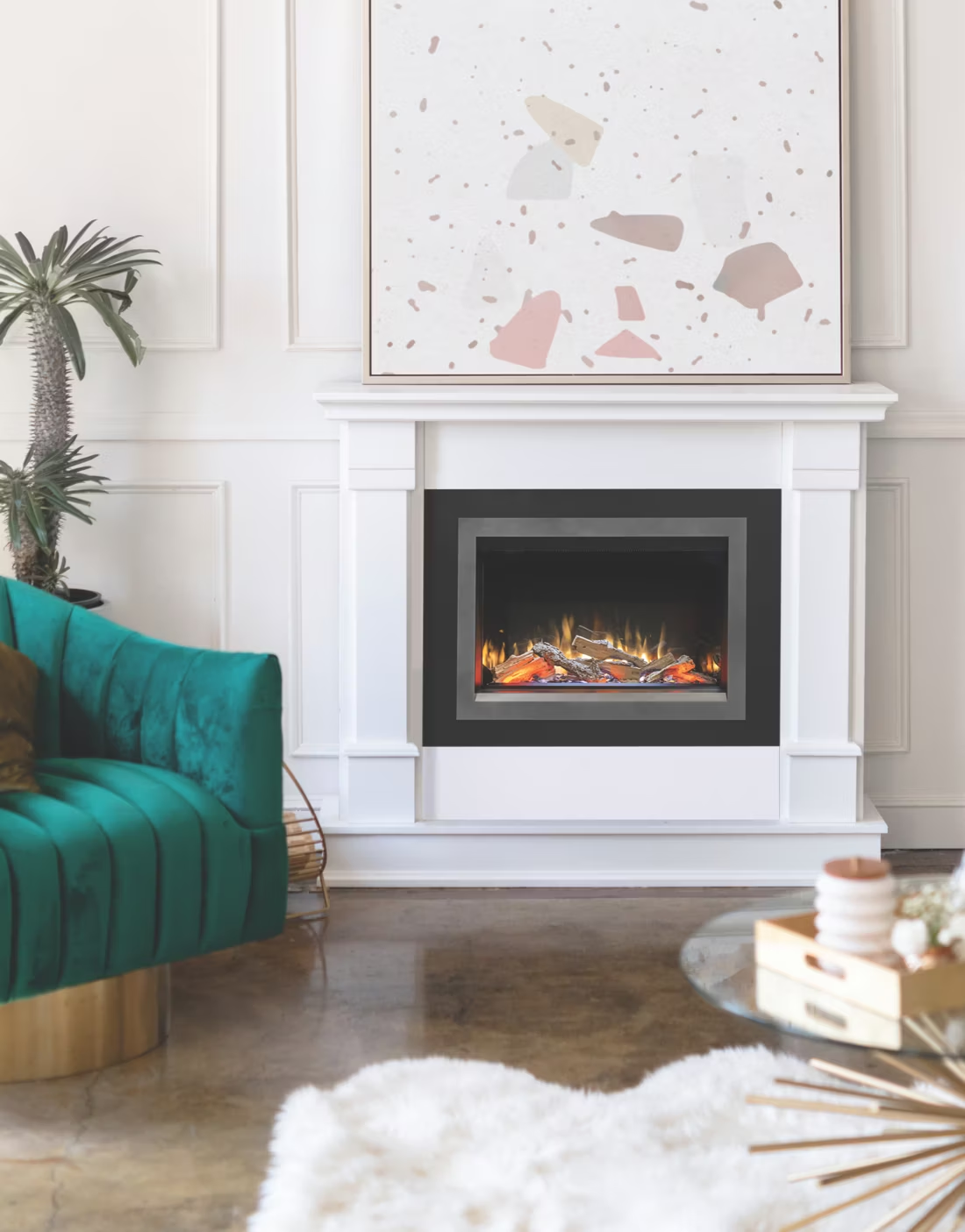
That's exactly where electric fireplaces excel. There's no chimney to build, no gas line to run, and no wood to season or store—an electrician can typically have a built-in unit or insert wired and running in an afternoon. Whether it's Duke Energy Progress in and around Goldsboro or Tri-County Electric Membership Corporation in the more rural parts of the county, electric service is reliable and widely available, which makes electric fireplaces one of the simplest upgrades a Wayne County homeowner can make—especially in newer construction, condos, and rental properties where a masonry fireplace was never in the plans.
Three steps. No salesperson until you're ready.
Tell us about your project
Your zip code, your situation, and the fuel you're leaning toward—or let the answers point you to one.
See what's actually available
The brands dealers within 100 miles genuinely carry—real options, never a catalog mirage.
Get your dealer & Project Guide
A trusted local dealer, plus the free Project Guide & Parts List that names every component of the job.
Frequently Asked Questions
How much does an electric fireplace installation cost in Wayne County?
Most electric fireplace projects in Wayne County run somewhere between $300 and $1,500 depending on the unit. A plug-in freestanding or wall-mount model with no electrical work needed sits at the low end. A built-in wall insert or a unit that requires a dedicated 120V or 240V circuit—common in Goldsboro homes without an existing outlet near the install location—runs higher once an electrician is involved. Because there's no venting or gas line to coordinate, electric installs are consistently the fastest and least expensive fireplace projects available, and local dealers can usually quote a firm number after a quick look at the wall and your electrical panel.
Do I need a permit to install an electric fireplace in Wayne County?
In most cases, no—a plug-in electric fireplace is treated like any other household appliance and doesn't require a permit. If your project involves running a new dedicated circuit or altering wiring behind a wall (common with built-in units), that electrical work typically does require a permit through Wayne County Building Inspections, or through the City of Goldsboro's Development Services office if the home is inside city limits. Licensed electricians who regularly install fireplace inserts will know which threshold applies and pull the permit as part of the job.
Will an electric fireplace actually heat my room, or is it just for looks?
Both, depending on the model. Most electric fireplaces include a built-in fan heater rated around 1,500 watts, which is enough to comfortably supplement heat in a single room—a den, bedroom, or home office—without running the whole-house HVAC system. Given Wayne County's mild winters, that's often plenty: a lot of homeowners in Goldsboro and Mount Olive use their electric fireplace as the primary heat source for a room they spend evenings in, saving on central heating costs during the shoulder seasons. If you want flame effect without heat output, most units let you run the LED flame independently of the heater—useful on the county's warmer winter days.
What's the difference between an electric insert, a wall-mount, and a freestanding electric fireplace?
An electric insert is built to slip into an existing masonry fireplace opening, which makes it a popular choice for older Wayne County homes with a wood-burning fireplace that's rarely or never used. A wall-mount unit hangs on the wall like a flat-screen TV and needs no existing fireplace at all—a good fit for newer construction or rooms without a hearth. A freestanding electric stove or mantel unit sits on the floor and plugs into a standard outlet, making it the simplest option for renters or anyone who wants zero permanent modification. All three run on standard household electric service, so the right choice usually comes down to the room layout rather than anything technical.
Can I convert my existing wood-burning fireplace to electric?
Yes, and it's a common project for older homes around Goldsboro and Fremont with a masonry fireplace that's gone unused for years. An electric insert slides into the existing firebox opening, and in most cases the chimney can simply be capped and left alone rather than removed. The job is far simpler than a gas conversion—there's no gas line, no venting, and no combustion byproducts to manage—which is part of why electric conversions are often the fastest fireplace upgrade a local dealer handles.
Are electric fireplaces a good fit for Wayne County's climate?
Yes—arguably a better fit here than in colder parts of the country. Wayne County's winter lows average around 35°F and the heating season is short, so homeowners aren't relying on a fireplace to survive a stretch of single-digit nights the way someone in International Falls MN or Duluth MN might. That means the tradeoffs of electric heat—lower BTU output than gas or wood—barely matter locally. What you get instead is a clean, low-maintenance source of ambiance and zone warmth that matches how mild the Wayne County winter actually is.
What about wood or pellet stoves—are those an option in Wayne County?
They're available, but not common as a primary heat source here. Wayne County's mild winters and low heating demand—under 2,700 heating degree days a year—mean most homeowners don't need the BTU output or the wood handling and ash cleanup that come with a wood stove. A small number of rural properties with access to local oak, hickory, or pine still burn wood for tradition or backup heat, and pellet stoves using regional brands like Lignetics or Hamer Pellet Fuel show up occasionally, but for the vast majority of Goldsboro-area homes, gas or electric fireplaces are the more practical and more common choice.
Will my electric fireplace still work if the power goes out?
No—electric fireplaces require power to run both the heater and the flame effect, so they'll shut off during an outage just like the rest of your home's electrical system. This is worth factoring in if you're weighing electric against gas: a battery-backup gas insert can still provide heat during a Duke Energy Progress or Tri-County EMC outage, while an electric unit can't. For most Wayne County homeowners this isn't a dealbreaker given how mild and short the winter season is, but it's a fair question to raise with your local dealer if backup heat matters to your household.
How long does an electric fireplace installation take?
A plug-in wall-mount or freestanding unit can be unboxed and running the same day—there's no permit, no venting, and no gas line to wait on. A built-in insert or a unit requiring a new dedicated circuit typically takes a licensed electrician a few hours to a full day, depending on wall access and panel location. Compared to a wood or gas fireplace project, which can involve permitting, chimney work, or gas-fitter scheduling that stretches over days or weeks, electric is consistently the fastest fireplace upgrade available to Wayne County homeowners.
Does an electric fireplace need a vent or chimney?
No—that's its superpower. An electric fireplace needs a wall and an outlet, period. No vent pipe, no gas line, no clearances to design around, which is why it works in bedrooms, offices, apartments, and walls where venting a gas or wood unit would be impractical or impossible. Installation is typically the simplest and least expensive of any fireplace type.
Can I put a TV above my fireplace?
Yes—with an asterisk. Fireplaces are hot and TVs don't like heat. Either put a mantel between them to deflect rising warmth, or choose a fireplace with heat-management technology that creates a cool zone on the wall above—the wall stays around 125 degrees, barely warm, while the room still gets full heat. If you like clean lines and don't want a mantel, heat management is the answer.
How much should I budget for a fireplace?
For an average home—covering the fireplace, the vent pipe, and basic installation—a budget between $3,900 and $5,500 gives you a lot of options across wood, gas, and pellet. By the time you add finish work, gas line, and electrical, the average complete installation lands between $5,000 and $12,000 all-in. In a remodel or new build, a good rule is to put about 2.5% of the total project cost toward the fireplace.
Can a fireplace actually lower my heating bill?
Yes—by creating a comfort zone. A furnace heats every square foot of the house just to warm the one room you're in; a gas fireplace on low burns roughly a sixth of the gas a typical furnace does. Set the furnace around 55–60 degrees as a baseline, then heat the rooms your family actually uses. Families who heat this way commonly save $20–$60 a month.
Stove and Fireplace Dealers in Wayne County
Get matched with an electric fireplace dealer in Wayne County.
Tell us a bit about your home and we'll send you a free Project Guide & Parts List—the exact unit, mounting or insert hardware, and your recommended local dealer for an electric fireplace project in Wayne County.
Find Your Fireplace →