
Keep Your Family Warm and Safe—No Matter What
Reliable radiant heat for the hills and hollows between Danbury and Walnut Cove—matched with a trusted local dealer who knows the terrain, the permits, and the venting.
Every Project Starts From One of These Five Situations
A working heat source in oak and hickory country.
Stokes County sits in the North Carolina Piedmont foothills, climate zone 4A, with a moderate heating season and winter lows averaging around 28°F. That's a moderate heating load compared to true cold-climate country like Duluth or Burlington, but it's enough that a well-sized wood stove earns its keep from November through March, especially in the county's older farmhouses and homes tucked along the Dan River and Sauratown Mountains foothills where propane and electric baseboard have long been the default backup.
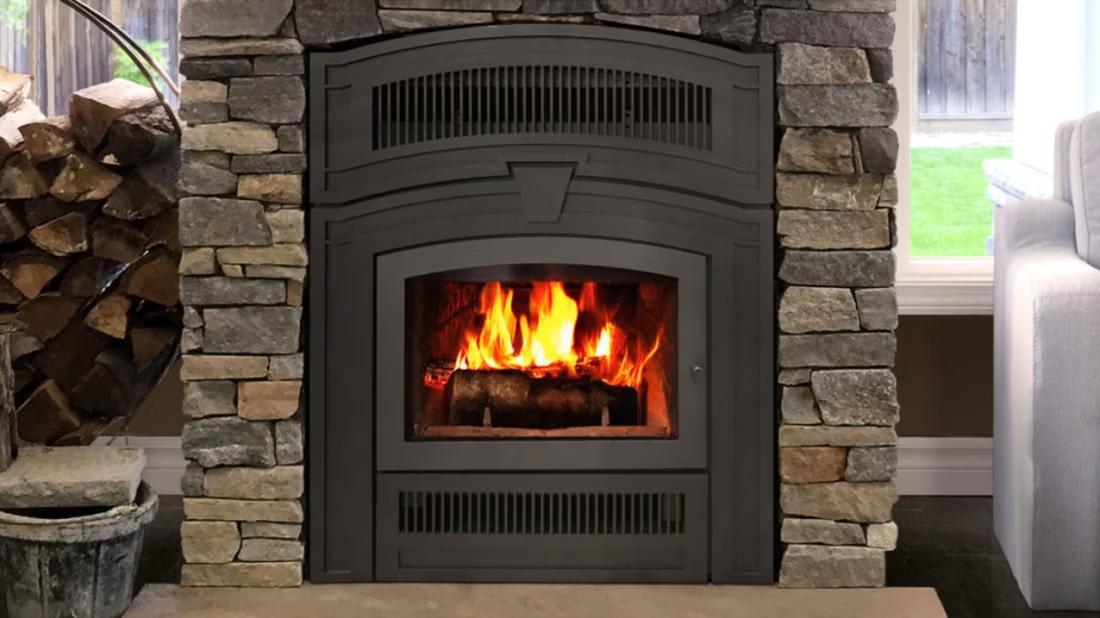
With no air quality non-attainment issues in Stokes County, wood burning here isn't complicated by inversion advisories or curtailment periods the way it is in parts of the West—it's simply a practical, low-cost heat source. The county's mixed hardwood forests supply oak, hickory, and maple that burn hot and long, with pine available for quick-starting kindling. A properly sized stove or insert from a local dealer gives homeowners a heat source that keeps working when an ice storm knocks out power along rural lines—a real consideration in a county where outages can stretch for a day or more after a bad winter storm.
Firewood Cutting Permits Near Stokes County
Three steps. No salesperson until you're ready.
Tell us about your project
Your zip code, your situation, and the fuel you're leaning toward—or let the answers point you to one.
See what's actually available
The brands dealers within 100 miles genuinely carry—real options, never a catalog mirage.
Get your dealer & Project Guide
A trusted local dealer, plus the free Project Guide & Parts List that names every component of the job.
Frequently Asked Questions
How much does a wood stove installation cost in Stokes County?
Wood stove and insert installations in Stokes County typically run in the $3,500 to $8,000 range depending on the unit, whether an existing masonry fireplace and chimney can be reused, and how much Class A pipe or liner work is needed. Homes with an existing fireplace opening—common in older farmhouses around Danbury and Francisco—tend to land on the lower end since an insert can use the existing chimney with a stainless liner. New construction or homes without an existing flue run higher once full chimney and roof penetration work is factored in. Local dealers will give a firm number after seeing the install site.
What size wood stove do I need for my home?
Stokes County's winter lows average around 28°F, which is a moderate heating load compared to the mountain counties to the west—most homes here do fine with a small to medium stove rated for 1,000 to 1,800 square feet, even accounting for older, less-insulated farmhouse construction common around Sandy Ridge and Pine Hall. Homes using wood as sole or primary heat, rather than supplemental, should size up slightly and look at models with a longer rated burn time. A local dealer can size the unit correctly during an in-home visit—oversizing leads to smoldering, low-temperature burns and creosote buildup, which is the more common mistake in this climate.
Where can I find certified wood stove installers near me?
Look for installers with NFI (National Fireplace Institute) or CSIA (Chimney Safety Institute of America) certification, which confirms training specific to wood-burning clearances and venting. Trusted local dealers serving Stokes County cover Danbury, King, Walnut Cove, and the more rural stretches toward Sandy Ridge and Francisco, sometimes with a modest travel charge for the more remote parts of the county. Skip general handyman installs for a wood unit—improper chimney clearances and liner sizing are the leading causes of chimney fires, and a certified installer will also handle the permit paperwork for you.
What's the difference between a wood stove and a wood insert?
A wood stove is a freestanding unit installed on a hearth pad with its own clearances, which makes it flexible for homes without an existing fireplace. A wood insert slides into an existing masonry fireplace opening and vents through the existing chimney via a stainless liner, turning a drafty open hearth into an efficient heat source. Many Stokes County homes—particularly older brick farmhouses around Danbury and Pine Hall—already have a masonry fireplace, which makes an insert the more cost-effective upgrade path. Homes without an existing chimney are better suited to a freestanding stove.
Do I need a permit to install a wood stove in Stokes County?
Yes—a building permit is typically required for new wood stove or insert installations in Stokes County, and the unit itself should meet current EPA emissions standards. Most local dealers handle the permit application as part of the installation, so homeowners usually don't have to navigate it themselves. There are no air quality curtailment periods or burn bans tied to non-attainment status in Stokes County, so day-to-day burning isn't restricted the way it can be in western states with winter inversion issues.
What's the best wood stove for Stokes County's climate?
With a moderate heating season and average winter lows near 28°F, Stokes County doesn't demand the extreme-cold catalytic performance that places like Bozeman or Fargo require, but a mid-size non-catalytic stove from a brand like Pacific Energy or Lopi handles the local hardwood mix—oak, hickory, and maple—efficiently and burns clean with minimal tending. For homes using wood as backup heat during ice-storm outages, a simple, reliable non-catalytic model is often preferred over a more complex catalytic unit. A local dealer can match a specific model to your square footage and whether you want primary or supplemental heat.
How often should my chimney be inspected and cleaned?
The CSIA recommends an annual inspection for any wood-burning chimney, ideally in late summer or early fall before the first cold snap. Given the local mix of oak and hickory, which burn hot and clean when properly seasoned, creosote buildup is generally slower than with softer woods—but pine, also common in Stokes County woodlots, burns faster and can build creosote more quickly if used unseasoned. Homes burning wood as a primary heat source through the winter should plan on an annual sweep at minimum, with a mid-season check if usage is heavy.
Where can I get firewood or a cutting permit in Stokes County?
Self-cut firewood permits for the region are available through the George Washington & Jefferson National Forest, running about $20 per cord during the May-to-October cutting season. Locally, oak, hickory, maple, and pine are the dominant species available for cutting or purchase from area suppliers. Seasoned hardwood typically needs six months to a year of drying time before it burns efficiently, so residents planning ahead often cut in late spring for the following winter's supply.
Wood stove vs. pellet stove—which is right for me?
Wood stoves burn cordwood, work without electricity—a real advantage in Stokes County when ice storms take down rural power lines for a day or more—and pair well with low-cost self-cut firewood permits through the George Washington & Jefferson National Forest. Pellet stoves, using brands like Lignetics or Hamer Pellet Fuel available regionally, are more convenient to load and burn cleaner, but they require electricity to run the auger and blower, so they go dark in the same outages where a wood stove keeps running. For Stokes County homes prioritizing storm-outage backup heat, wood is usually the better fit; for in-town homes prioritizing convenience with reliable grid power, pellet is a solid option.
Why is my open fireplace making my house colder?
Open fireplaces suck—literally. As the fire burns, it consumes air your furnace already paid to heat and pulls it out through the chimney, so the house is actually colder after the fire goes out than before you lit it. An insert fixes this: it seals the chimney, puts fixed glass across the front, and turns that hole in your house into a real heat source.
Why is a fireplace insert so efficient?
An insert does two things: it seals the chimney completely, so you stop losing air you already paid to heat, and it radiates warmth into the room through the firebox and glass. Most add a heat-exchange fan that pulls cool room air underneath, wraps it around the hot firebox, and pushes it back out warm. Your home is more efficient before you've even lit the first fire.
Does a fireplace add value to my home?
On average, a fireplace adds back to the home about the same amount you spent installing it. Add the monthly savings from heating the rooms you actually use instead of the whole house—often hundreds of dollars a year—and the value case is strong before you even count what a fire does for how your family uses the room.
Can a fireplace actually lower my heating bill?
Yes—by creating a comfort zone. A furnace heats every square foot of the house just to warm the one room you're in; a gas fireplace on low burns roughly a sixth of the gas a typical furnace does. Set the furnace around 55–60 degrees as a baseline, then heat the rooms your family actually uses. Families who heat this way commonly save $20–$60 a month.
Get your Stokes County wood stove Project Guide & Parts List.
Tell us about your home and we'll match you with a trusted local dealer and send a free Project Guide & Parts List—the right stove or insert, the correct vent kit, and a clear plan for your Stokes County installation.
Find Your Fireplace →