
Electric warmth for every corner of Stokes County.
From Danbury to King to Walnut Cove, electric fireplaces bring instant, no-venting heat to homes across Stokes County—plug-in convenience for manufactured homes, wall-mount style for new builds, and everything in between. Find the right unit and connect with a trusted local dealer.
Every Project Starts From One of These Five Situations
The easiest heat upgrade in the Piedmont foothills.
Stokes County sits in the Piedmont foothills of northwest North Carolina, running from the Dan River bottomlands near Danbury and Walnut Cove up into the Sauratown Mountains around Hanging Rock State Park. Winters here are moderate by national standards—Climate Zone 4A, an average winter low near 28°F, and roughly 3,956 heating degree days a year, cold enough to notice on the heating bill but nowhere near what a mountain county sees. That's exactly the range where electric fireplaces earn their keep: supplemental warmth for a den or bonus room, real ambiance for a living room, and a heat source that doesn't require a flue, a gas line, or any masonry work.
A meaningful share of homes in rural Stokes County are manufactured or modular, especially around Sandy Ridge, Pine Hall, and Lawsonville, and electric units are often the most realistic upgrade for those homes since there's no roof penetration or clearance-to-combustible work involved. Duke Energy serves much of the county's more built-up areas while EnergyUnited's cooperative lines cover many of the rural stretches—either way, a typical 1,500-watt electric fireplace runs on a standard household circuit with little or no electrical work. Plenty of Stokes County households still burn oak, hickory, and pine cut under a Forest Service permit for primary heat; electric tends to fill in the rooms the wood stove doesn't reach.
Three steps. No salesperson until you're ready.
Tell us about your project
Your zip code, your situation, and the fuel you're leaning toward—or let the answers point you to one.
See what's actually available
The brands dealers within 100 miles genuinely carry—real options, never a catalog mirage.
Get your dealer & Project Guide
A trusted local dealer, plus the free Project Guide & Parts List that names every component of the job.
Frequently Asked Questions
How much does an electric fireplace installation cost in Stokes County?
Most electric fireplace projects in Stokes County land between $300 and $2,000. A plug-in freestanding or wall-mount unit that uses an existing outlet is on the low end—often just the cost of the unit itself plus mounting hardware. A built-in electric fireplace that needs a dedicated circuit run by an electrician, or an electric insert fitted into an existing masonry firebox around Danbury or Walnut Cove, typically runs $800 to $2,000 depending on the wiring involved. There's no chimney, flue, or gas line to price into the job, which is a big part of why electric tends to be the least expensive fireplace option countywide.
Do I need a permit for an electric fireplace in Stokes County?
A plug-in unit that runs off an existing outlet generally doesn't need a permit—it's treated like any other appliance. If your installer needs to add a new dedicated circuit or run wiring for a built-in unit, that work requires an electrical permit through the Stokes County Inspections Department, and it should be pulled by a licensed electrician. Most local dealers who handle electric fireplace installs will tell you upfront whether your unit needs new wiring, and if it does, they'll typically coordinate the permit as part of the job.
Can an electric fireplace actually heat a room, or is it just for looks?
A standard 1,500-watt electric fireplace puts out roughly 5,000 BTUs, enough to noticeably warm a room in the 400 to 1,000 square foot range—a bedroom, den, or sunroom, for instance. It won't replace central heat for a whole house, but for the mild winters typical of Stokes County (average lows around 28°F), it's genuinely useful as zone heat: warm the room you're actually in and dial back the thermostat elsewhere. For manufactured homes with a single-zone HVAC system, an electric fireplace in a bonus room or addition is a common and effective fix for the cold-spot problem.
What's the difference between an electric insert, a wall-mount unit, and a built-in electric fireplace?
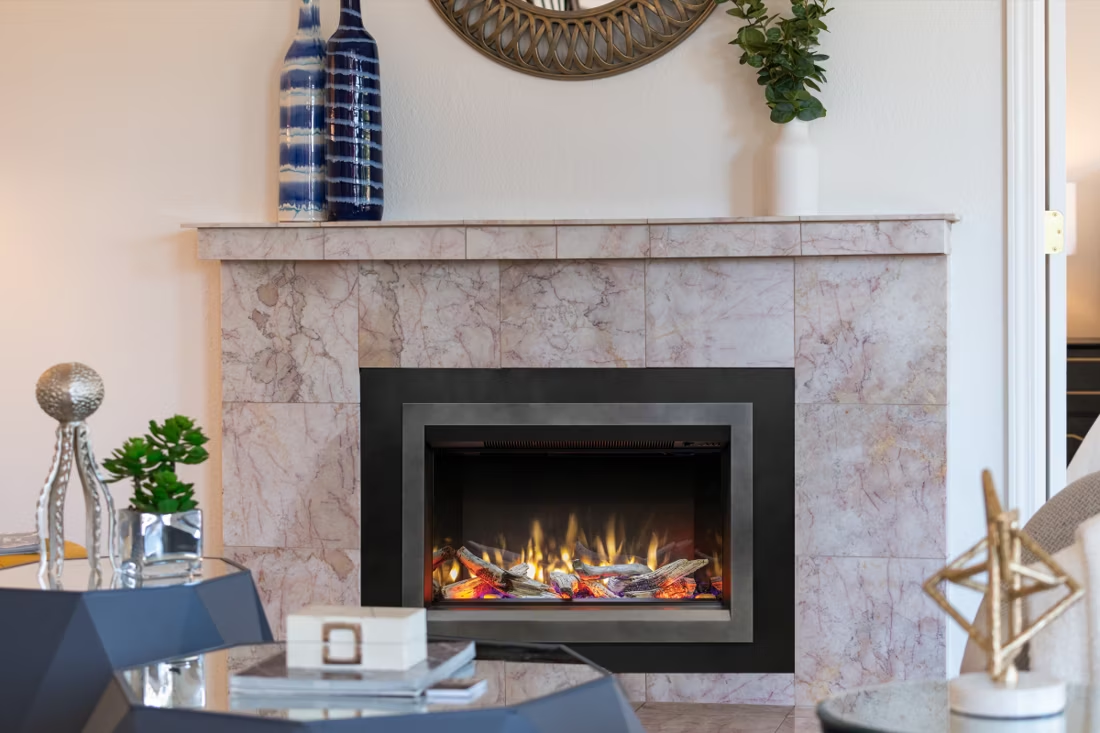
An electric insert is built to slide into an existing masonry firebox, useful for older homes in Danbury or Walnut Cove that already have a fireplace opening but want to retire the wood-burning setup. A wall-mount unit hangs on the wall like a flat-screen TV and needs only a nearby outlet—popular in newer builds and manufactured homes where there's no existing fireplace at all. A built-in electric fireplace is framed into a wall or cabinetry during a remodel, giving the most furniture-grade, custom look but usually requiring a dedicated circuit. Which one fits depends mostly on whether you're starting from an empty wall or an existing firebox.
Will my electric fireplace work during a power outage?
No—electric fireplaces need power to run, full stop, unlike a wood stove or a battery-backed gas unit. In the more built-up parts of Stokes County served by Duke Energy, outages tend to be short. In rural stretches covered by EnergyUnited's cooperative lines, storm-related outages can run longer, especially after ice events. If backup heat during outages matters to your household, plenty of Stokes County homes pair an electric fireplace for everyday convenience and ambiance with a wood stove or fireplace as the actual emergency heat source.
Electric vs. wood—which is right for my Stokes County home?
Wood offers real heat output, works with zero electricity, and is the traditional choice for primary heat across rural Stokes County—oak, hickory, and pine are all common locally, and a Forest Service cutting permit through the George Washington & Jefferson National Forest office runs about $20 per cord during the May-to-October season. Electric offers instant on-off convenience, no ash or chimney maintenance, and installation in almost any room without venting concerns—but no heat at all if the power goes out. For most households the honest answer is both: wood for the coldest nights and backup heat, electric for the rooms and days where convenience matters more than raw BTUs.
Can I convert my existing masonry fireplace to electric?
Yes—an electric insert is designed to fit directly into an existing masonry firebox, which is a common project in older Stokes County homes around Danbury and King that have a fireplace opening but want to stop dealing with wood, ash, and chimney upkeep. The insert plugs into a standard or dedicated outlet, and no venting or chimney liner work is needed since there's no combustion. It's one of the fastest fireplace upgrades available, often completed in an afternoon.
What's the best electric fireplace for a manufactured or mobile home in Stokes County?
For manufactured and modular homes common around Sandy Ridge, Pine Hall, and Lawsonville, a wall-mount or freestanding electric unit is generally the better fit than a built-in—it avoids any framing or wall-cavity modification that manufactured home construction can complicate. Look for a unit with a lower amperage draw if you're running off an existing outlet rather than adding a circuit, and confirm clearance-to-combustible specs since manufactured home wall materials sometimes differ from standard drywall. A local dealer can walk your specific home and recommend a model that fits without electrical upgrades.
How much does it cost to run an electric fireplace?
A typical 1,500-watt electric fireplace costs a few cents to about 20 cents an hour to run, depending on your electric rate and whether you're using the heater or just the flame effect (the flame alone draws very little power). At Duke Energy or EnergyUnited residential rates common in Stokes County, running the heater for a few hours a day through a mild winter typically adds somewhere in the range of $15 to $40 a month to the bill—far less than most homeowners expect, and a fraction of what running central heat to warm the same single room would cost.
Can I put a TV above my fireplace?
Yes—with an asterisk. Fireplaces are hot and TVs don't like heat. Either put a mantel between them to deflect rising warmth, or choose a fireplace with heat-management technology that creates a cool zone on the wall above—the wall stays around 125 degrees, barely warm, while the room still gets full heat. If you like clean lines and don't want a mantel, heat management is the answer.
Does an electric fireplace need a vent or chimney?
No—that's its superpower. An electric fireplace needs a wall and an outlet, period. No vent pipe, no gas line, no clearances to design around, which is why it works in bedrooms, offices, apartments, and walls where venting a gas or wood unit would be impractical or impossible. Installation is typically the simplest and least expensive of any fireplace type.
Can a fireplace actually lower my heating bill?
Yes—by creating a comfort zone. A furnace heats every square foot of the house just to warm the one room you're in; a gas fireplace on low burns roughly a sixth of the gas a typical furnace does. Set the furnace around 55–60 degrees as a baseline, then heat the rooms your family actually uses. Families who heat this way commonly save $20–$60 a month.
Can I install a fireplace myself?
If you're putting a fire in your house on purpose, it's best to work with an expert. Unless you're genuinely experienced in framing, gas line, vent pipe, and the national code on clearances to combustibles, have a professional do it—and ideally the same company that sells you the fireplace, so warranty, service, and liability all live under one roof.
Find your electric fireplace in Stokes County.
Tell us a bit about your home and we'll match you with the right electric fireplace, insert, or wall-mount unit—and connect you with a trusted local dealer who can get it installed correctly.
Find Your Fireplace →