
Consistent heat for Stanly County, without the wood-splitting.
With around 3,276 heating degree days and winter lows that average in the low 30s, Stanly County doesn't need a woodstove roaring around the clock—it needs steady, thermostat-controlled warmth for the shoulder months. I'll match you with a trusted local dealer who can size the right pellet stove or insert for your home.
Every Project Starts From One of These Five Situations
Steady, low-maintenance heat for Piedmont winters.
Stanly County sits in the North Carolina Piedmont, from Albemarle out through Locust, Oakboro, Badin, New London, Richfield, and the shoreline communities around Lake Tillery. Climate zone 3A means winters here are mild by national standards—an average winter low around 31°F and roughly 3,276 heating degree days, a fraction of what a mountain or upper-Midwest county sees. That's a very different equation than a place like Duluth or Burlington, where a stove has to carry the whole house through months of sub-zero nights. In Stanly County, pellet appliances are usually working as consistent zone heat for a den or open living area, or as the backup plan when the power blinks during an ice storm, rather than the sole source of heat for the whole house.
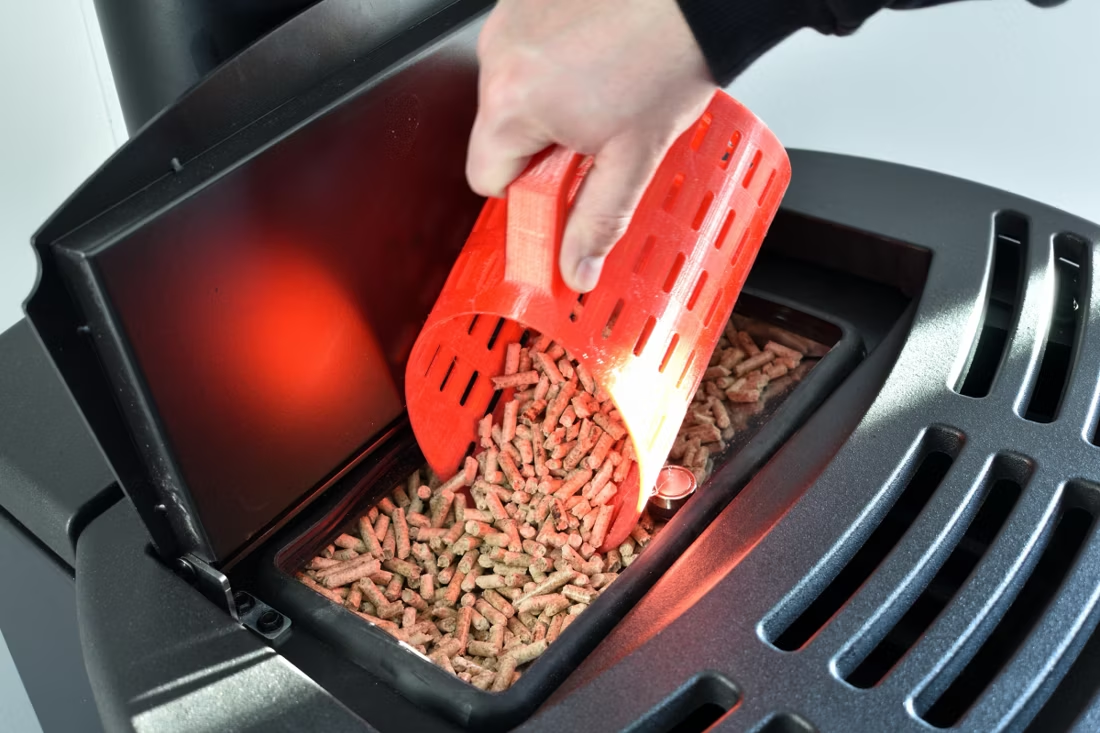
The county's hardwood-heavy timber—oak, hickory, and maple, mixed with pine—doesn't directly fuel a pellet stove the way it would a wood stove, but it does say something about the region: this is dense-hardwood country, and hardwood-blend and softwood bagged pellets are both easy to find locally through regional producers like Lignetics, Hamer Pellet Fuel, and Greenway Renewable Energy. With no air quality non-attainment issues or winter inversion concerns on record for the county, there's no burn-ban complexity to navigate here—just a straightforward install, a hopper to load, and a thermostat to set. For homeowners who want real flame and radiant warmth without hauling and stacking cordwood, that's the appeal.
Three steps. No salesperson until you're ready.
Tell us about your project
Your zip code, your situation, and the fuel you're leaning toward—or let the answers point you to one.
See what's actually available
The brands dealers within 100 miles genuinely carry—real options, never a catalog mirage.
Get your dealer & Project Guide
A trusted local dealer, plus the free Project Guide & Parts List that names every component of the job.
Frequently Asked Questions
How much does a pellet stove installation cost in Stanly County?
Freestanding pellet stove installations typically land in the $3,000 to $6,000 range, depending on the model, whether you need a new hearth pad, and how much horizontal or vertical venting your home requires. Converting an existing masonry fireplace to a pellet insert usually runs a bit higher—often $4,000 to $7,000—since it involves fitting the insert and liner into the existing firebox and chimney. Homes without an existing hearth or chimney will be on the higher end once framing and venting are factored in. A local dealer can give you a firm number after walking the space.
Is a pellet stove or a wood stove a better fit for a Stanly County home?
With winter lows averaging around 31°F and roughly 3,276 heating degree days, most Stanly County homes don't need the round-the-clock output of a wood stove burning oak or hickory—a pellet stove's lower, steadier BTU output is usually plenty for supplemental heat in a den, living room, or open floor plan. Pellet stoves also skip the splitting, stacking, and creosote maintenance that come with wood, running instead on bagged fuel you can pick up locally through dealers carrying Lignetics, Hamer Pellet Fuel, or Greenway Renewable Energy. The tradeoff is that pellet stoves need electricity to run the auger and combustion blower, so during an extended outage—which does happen here during ice storms—a wood stove or a pellet unit with a battery backup keeps you covered better than a standard pellet unit alone.
What size pellet stove do I need for my home?
Given Stanly County's mild winter profile, most homes are well served by a small to mid-size pellet stove—units rated for 1,000 to 1,800 square feet cover the majority of living areas here, since the goal is usually supplemental zone heat rather than whole-house primary heat. Larger, open-concept homes or those looking to offset a big chunk of their heating bill may want a stove rated closer to 2,000+ square feet. Insulation quality and ceiling height matter as much as square footage, so a local dealer's in-home walkthrough is worth more than any size chart.
Where can I buy pellet fuel in Stanly County?
Bagged pellets from regional producers—including Lignetics, Hamer Pellet Fuel, and Greenway Renewable Energy—are commonly stocked by hearth dealers and hardware retailers serving the Albemarle, Locust, and Oakboro areas. Buying by the ton (roughly fifty 40-lb bags) ahead of the heating season typically costs less per bag than buying individually through the winter, and it's worth confirming whether a dealer offers delivery, since a ton of pellets is heavy to move and store yourself. Stick with premium hardwood or softwood blends with low ash content—your dealer can point you to what burns cleanest in your specific stove.
Do I need a permit to install a pellet stove in Stanly County?
Yes—a new pellet stove or insert installation requires a building permit through Stanly County's building inspections office, and the installation must meet current clearance and venting code even though pellet appliances vent through smaller-diameter pipe than a wood stove. Most established local dealers handle the permit application and inspection scheduling as part of the installation, so you're not left coordinating it yourself. Because Stanly County has no air quality non-attainment designation, there are no burn-curtailment periods to plan around—once it's installed and inspected, you're free to run it.
Will my pellet stove work during a power outage?
A standard pellet stove won't run without electricity—the auger that feeds pellets and the blower that circulates heat both depend on power, so a normal outage means the stove goes cold. Some manufacturers offer battery-backup kits or DC-compatible models built for exactly this scenario, which matters in Stanly County given the ice storms that periodically knock out power across the Piedmont. If backup heat during outages is a priority, ask a local dealer about battery-backup options or consider pairing a pellet stove with a small wood-burning unit elsewhere in the house.
How often does a pellet stove need to be cleaned and serviced?
Pellet stoves need more frequent light cleaning than wood stoves but far less heavy chimney work. Plan to empty the ash pan and clean the burn pot every few days during regular use, and schedule a full professional service—including the venting, combustion blower, and gaskets—once a year, typically before the fall heating season starts. Because pellet fuel burns cleaner than cordwood, the venting doesn't build up creosote the way a wood chimney does, but the mechanical components (auger motor, blower, igniter) do wear over time and benefit from an annual check by a certified technician.
What's the best pellet stove for Stanly County's climate?
Given the county's mild winter averages—around 31°F lows and roughly 3,276 heating degree days—a mid-efficiency freestanding stove or insert in the 1,200 to 1,800 square foot range covers most homes here without needing top-tier BTU output. Look for a model with a variable-speed auger and multiple heat settings so you can dial output down on a 45-degree evening and up during a rare cold snap, rather than running a unit built for sustained sub-zero output like you'd see recommended in a mountain or northern-tier county. A local dealer can match a specific model to your square footage and how open your floor plan is.
Pellet stove vs. gas fireplace—which makes more sense for my home?
A pellet stove gives you real, visible flame and radiant heat from a renewable fuel, with the tradeoff of needing electricity for the auger and blower and periodic hopper reloading. A gas fireplace offers instant on-off convenience at the flip of a switch or remote, consistent output with no fuel handling, and—with the right ignition system—the ability to run during outages without a battery-backup add-on. In Stanly County, where natural gas and propane are both accessible depending on location, gas tends to win out for primary living-space installs where convenience is the priority, while pellet stoves are popular where homeowners want a live-flame look and don't mind loading fuel every day or two. Either fuel installs cleanly here since there's no air quality restriction complicating the choice.
How often does a pellet stove need cleaning?
A clean pellet stove is a happy pellet stove. Plan on cleaning the burn pot about once a week when you're burning regularly—ash and clinkers gum up the air holes just like a pellet barbecue. Most pellet stove problems trace back to skipped cleaning that nobody explained up front. Some designs make it easy with a trapdoor burn pot: pull a lever and the gunk drops into the ash pan.
Why is my open fireplace making my house colder?
Open fireplaces suck—literally. As the fire burns, it consumes air your furnace already paid to heat and pulls it out through the chimney, so the house is actually colder after the fire goes out than before you lit it. An insert fixes this: it seals the chimney, puts fixed glass across the front, and turns that hole in your house into a real heat source.
Does a fireplace add value to my home?
On average, a fireplace adds back to the home about the same amount you spent installing it. Add the monthly savings from heating the rooms you actually use instead of the whole house—often hundreds of dollars a year—and the value case is strong before you even count what a fire does for how your family uses the room.
How much should I budget for a fireplace?
For an average home—covering the fireplace, the vent pipe, and basic installation—a budget between $3,900 and $5,500 gives you a lot of options across wood, gas, and pellet. By the time you add finish work, gas line, and electrical, the average complete installation lands between $5,000 and $12,000 all-in. In a remodel or new build, a good rule is to put about 2.5% of the total project cost toward the fireplace.
Stove and Fireplace Dealers in Stanly County
Pellet Brands Stocked Around Stanly County
Manufacturers will point you to the nearest stocking dealer.
Find your pellet stove in Stanly County.
Tell us about your home and heating goals, and I'll match you with a trusted local Stanly County dealer plus a free Project Guide & Parts List—the exact stove or insert, vent kit, and installation plan for your space.
Find Your Fireplace →