
Warmth and ambiance, wired in, for Stanly County's mild Piedmont winters.
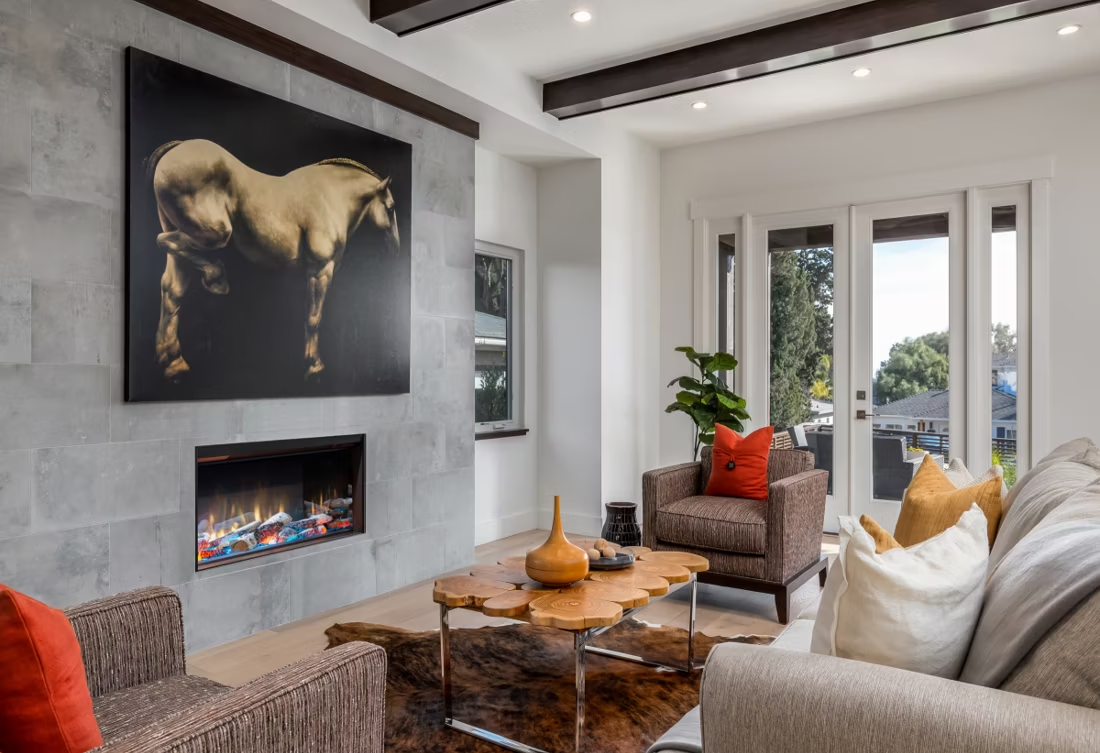
From Albemarle to Locust, Oakboro, Badin, and Norwood, electric fireplaces give Stanly County homes real flame-look ambiance and supplemental zone heat without a chimney, a gas line, or a woodpile. Find the right unit and connect with a trusted local dealer.
Every Project Starts From One of These Five Situations
The easy fit for Stanly County's mild winters.
Stanly County sits in the North Carolina Piedmont, threaded by Lake Tillery and Badin Lake and bordered by the Uwharrie National Forest, at a modest elevation with a climate zone 3A designation. Winters here are mild by national standards—the average winter low sits around 31°F, giving the county less than half the winter heating load of a colder city like Madison, Wisconsin in a typical winter. That milder heating load is exactly why electric fireplaces have found such a comfortable niche in Albemarle, Locust, Oakboro, Badin, and the smaller communities scattered around the county.
Most Stanly County homes already rely on heat pumps or gas furnaces for whole-house heating, which is more than adequate given the region's short, moderate heating season. An electric fireplace or insert layers in supplemental warmth for a den or living room and, just as often, gets chosen purely for the flame-effect ambiance—no real BTU output required to make a mild January evening feel right. Electricity is supplied across the county by Duke Energy Progress in and around Albemarle and by Union Power Cooperative in many of the surrounding rural areas, and either service handles a standard electric fireplace circuit without issue. Installation is dramatically simpler than wood or gas: no venting, no chimney inspection, no gas-line permit—just a proper electrical circuit sized for the unit.
Three steps. No salesperson until you're ready.
Tell us about your project
Your zip code, your situation, and the fuel you're leaning toward—or let the answers point you to one.
See what's actually available
The brands dealers within 100 miles genuinely carry—real options, never a catalog mirage.
Get your dealer & Project Guide
A trusted local dealer, plus the free Project Guide & Parts List that names every component of the job.
Frequently Asked Questions
How much does an electric fireplace installation cost in Stanly County?
A plug-in electric insert or freestanding unit that uses a standard 120V outlet typically runs $500 to $1,200 installed, with most of that cost in the unit itself. A built-in wall unit or linear electric fireplace that requires a dedicated 240V circuit run by a licensed electrician usually lands between $1,200 and $2,500, depending on how far the run is from the panel and whether drywall or trim work is needed to finish the surround. Custom mantel or media-wall installations in Albemarle and the surrounding communities can push higher when cabinetry work is involved, but there's no chimney, flue, or venting cost to worry about—which keeps electric installs well below wood or gas pricing in every case.
How big of an electric fireplace do I need for my Stanly County home?
Most electric fireplaces top out around 4,000 to 5,500 BTUs, which is plenty for zone heating a single room in a climate as mild as Stanly County's—you're not fighting the kind of cold that a Duluth or Fargo winter throws at a house. Sizing here is really about the room and the look: a 30-inch insert suits a small den, a 50-to-60-inch linear unit fills a great room wall nicely, and mantel packages are sized to match existing fireplace openings in older Albemarle and Norwood homes. Because heat output is secondary to ambiance in this climate, most homeowners size for the visual proportions of the room rather than for BTUs alone.
Do I need a permit or an electrician to install an electric fireplace in Stanly County?
A small plug-in electric fireplace or insert that runs off a standard 120V household outlet generally doesn't require a permit—it's treated like any other appliance. A built-in electric fireplace wired to a dedicated 240V circuit is electrical work, and that does require a licensed electrician and an electrical permit through Stanly County's building inspections process. Most local dealers coordinate this directly, pairing the fireplace sale with a licensed electrician who pulls the permit and handles the circuit run, so you're not left tracking down a separate contractor.
What's the difference between an electric insert, an electric fireplace, and an electric stove?
An electric insert is built to slide into an existing masonry fireplace opening, which makes it a popular upgrade for older homes in Albemarle and Norwood that have a fireplace but no interest in burning wood. A built-in electric fireplace is a standalone unit framed into a wall, often the centerpiece of a media wall or new-construction living room. An electric stove is a freestanding cabinet-style unit that mimics a wood stove's footprint but plugs into an outlet—a good fit for a sunroom or converted porch where running a chimney or gas line isn't practical.
Will an electric fireplace actually heat my house?
Not the whole house, and that's worth being upfront about. Electric fireplaces are zone heaters—they'll comfortably warm a single room, but with Stanly County's average winter low around 31°F and a heat pump or gas furnace already doing the primary heating in most homes, an electric unit is really there for supplemental warmth and the visual effect of a real fire. That's a fair trade for most local homeowners, since the county's mild heating season rarely demands more than a heat pump can already deliver.
What's the best electric fireplace for Stanly County's climate?
Because heat output matters less here than in a harsher climate, the better question is flame realism and finish. Brands like Dimplex and Napoleon build electric inserts and linear units with layered LED and mirror-effect flames that look convincing even in daylight, which matters more in a mild-winter market where the fireplace is often on for ambiance rather than warmth. If you do want more usable heat for a chilly evening, look for a model with a built-in fan-forced heater rated near 5,000 BTUs rather than a flame-only display unit.
How much does it cost to run an electric fireplace in Stanly County?
Running costs depend on your electricity provider and rate—Duke Energy Progress serves much of Albemarle, while Union Power Cooperative covers a good share of the surrounding rural areas—but a typical electric fireplace on its heater setting draws around 1,500 watts, which works out to roughly 15 to 20 cents an hour at current regional rates. Running it flame-only, with the heater off, costs only a few cents an hour. That's a fraction of what a gas fireplace or a wood-burning insert costs per hour of use, which is part of why electric appeals to homeowners who just want the look without the fuel bill.
Electric vs. wood or gas—which is right for my Stanly County home?
Wood is still a strong option here—oak, hickory, maple, and pine are all common locally, air quality isn't a limiting factor in Stanly County, and a wood stove or fireplace keeps working during a power outage, which an electric unit can't do. Gas offers instant, adjustable heat without the ash and stacking. Electric wins on installation simplicity and running cost, but it goes dark the moment the power does, so it's not a fit if you're specifically after backup heat for ice storms or outages. Many Stanly County homeowners land on electric for a secondary room specifically because their primary heat—wood, gas, or a heat pump—already covers the emergency-heat need.
Where can I find a local dealer to install an electric fireplace in Stanly County?
Look for a hearth dealer that carries electric lines from established manufacturers like Dimplex, Napoleon, or Amantii, and that either employs or partners with a licensed electrician for built-in installs. That combination matters more than it sounds—a dealer who only sells the box and leaves the wiring to you can leave you scrambling for a separate electrician and permit. A dealer who handles both the unit and the circuit work start to finish, whether you're in Albemarle, Locust, Oakboro, or Badin, is the simpler path.
Can I put a TV above my fireplace?
Yes—with an asterisk. Fireplaces are hot and TVs don't like heat. Either put a mantel between them to deflect rising warmth, or choose a fireplace with heat-management technology that creates a cool zone on the wall above—the wall stays around 125 degrees, barely warm, while the room still gets full heat. If you like clean lines and don't want a mantel, heat management is the answer.
Do electric fireplaces actually produce heat?
Yes—most put out around 4,800–5,000 BTUs from a standard outlet, which comfortably warms a bedroom, office, or den as a comfort-zone heater. What they won't do is carry a whole house the way wood, gas, or pellet can. Think of electric as ambiance-first with honest supplemental heat: flames on with no heat in July, flames plus warmth in January.
What is an in-home preview and do I need one?
It's a visit where a hearth professional measures your space, confirms the model you picked actually works in your home, and walks the specs—framing, gas line, venting, finish work—before anything is ordered. Some details you just can't know until you see the house. Never make a down payment without one; it's the single most-skipped step that burns buyers.
Can a fireplace actually lower my heating bill?
Yes—by creating a comfort zone. A furnace heats every square foot of the house just to warm the one room you're in; a gas fireplace on low burns roughly a sixth of the gas a typical furnace does. Set the furnace around 55–60 degrees as a baseline, then heat the rooms your family actually uses. Families who heat this way commonly save $20–$60 a month.
Stove and Fireplace Dealers in Stanly County
Find your electric fireplace in Stanly County.
Tell us a bit about your home and we'll match you with a trusted local dealer and send over a free Project Guide & Parts List—the exact parts, wiring plan, and recommended installer for your electric fireplace project in Stanly County.
Find Your Fireplace →