
Efficient Heat for Piedmont Winters, Without the Wood Pile.
Clean-burning pellet heat for Chapel Hill, Carrboro, Hillsborough, and the rest of Orange County—sized right for Piedmont winters and matched with a trusted local dealer.
Every Project Starts From One of These Five Situations
Clean, efficient heat that fits Piedmont living.
Orange County sits in the North Carolina Piedmont, home to Chapel Hill, Carrboro, Hillsborough, and the unincorporated communities in between—roughly 90,500 residents spread across rolling hardwood forest and college-town neighborhoods. Winters here are mild by national standards: climate zone 4A, an average winter low near 32°F, and about 3,239 heating degree days a year—a fraction of what a place like Duluth, Minnesota logs in a typical winter. That means most Orange County homes don't need a heating system built to survive weeks of subzero cold. What they do need is an efficient way to take the edge off the county's damp, chilly nights and shoulder-season cold snaps without running the furnace around the clock.
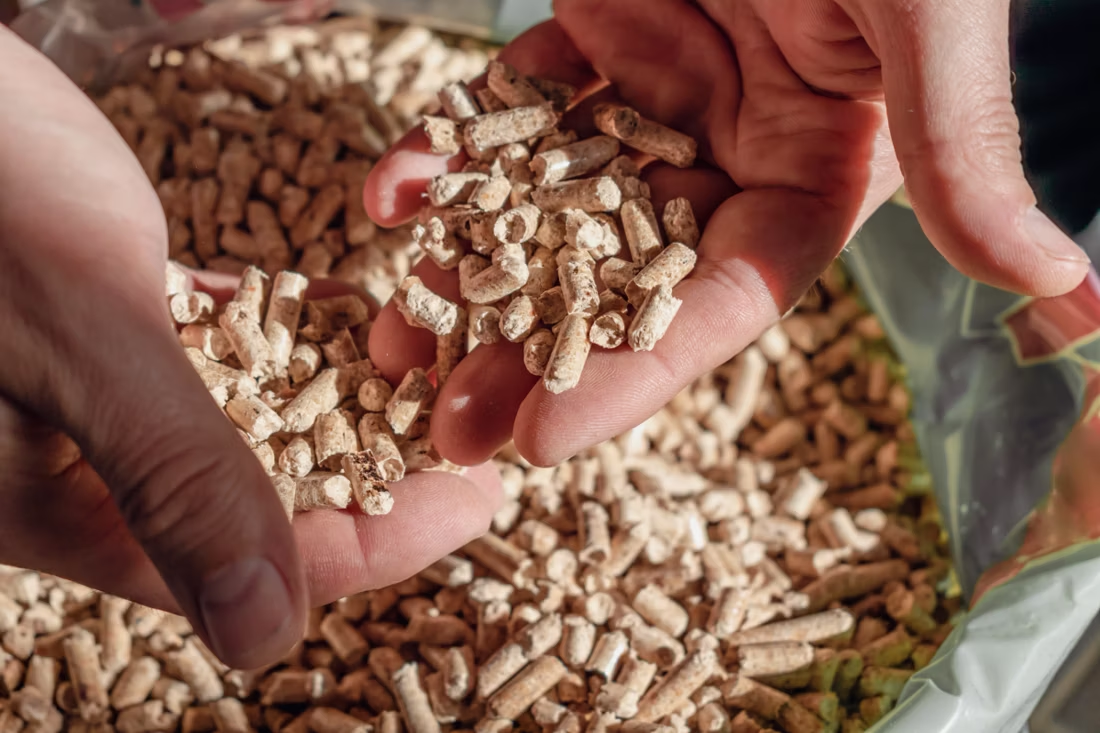
That's where pellet stoves earn their keep. Orange County has no wood-smoke non-attainment issues or winter inversion advisories to navigate, so the decision usually comes down to convenience and efficiency rather than air-quality restrictions. Pellet stoves burn compressed hardwood and softwood waste—often sourced from the same oak, hickory, maple, and pine that fill the county's forests—and they do it with a thermostat, a hopper, and none of the splitting, stacking, or creosote buildup that come with cordwood. Regional pellet brands like Lignetics, Hamer Pellet Fuel, and Greenway Renewable Energy supply the Piedmont, so fuel is easy to find without driving out of the county. For a lot of homes in Chapel Hill's older neighborhoods or Hillsborough's in-town lots, a pellet insert or freestanding stove is also simply a better fit than a wood-burning unit—less clearance needed, less smoke, and a design that works in a tighter footprint.
Three steps. No salesperson until you're ready.
Tell us about your project
Your zip code, your situation, and the fuel you're leaning toward—or let the answers point you to one.
See what's actually available
The brands dealers within 100 miles genuinely carry—real options, never a catalog mirage.
Get your dealer & Project Guide
A trusted local dealer, plus the free Project Guide & Parts List that names every component of the job.
Frequently Asked Questions
How much does a pellet stove installation cost in Orange County?
Costs vary by unit and venting path, but a straightforward pellet stove or insert installation in this part of the Piedmont typically lands somewhere in the $3,000 to $6,000 range, including the stove, PL venting, and a basic hearth pad if one isn't already in place. Installing into an existing masonry fireplace as an insert is usually toward the lower end since the chimney chase is already there; a freestanding stove in a new location—especially one that needs a wall or roof penetration for venting—runs higher. Local dealers serving Chapel Hill, Carrboro, and Hillsborough will give a firm number after seeing the room and the venting route in person.
What size pellet stove do I need for my Orange County home?
Because Orange County's winters are relatively mild—an average low around 32°F and roughly 3,239 heating degree days a year—most homes here don't need the largest pellet stoves on the market. A small to mid-size unit (rated for 1,000 to 1,800 square feet) is enough supplemental or zone heat for most Chapel Hill and Carrboro homes, especially if the pellet stove is backing up an existing HVAC system. Older, less-insulated farmhouses out toward Efland or rural Hillsborough township sometimes benefit from a larger unit if the goal is to offset more of the winter heating load. A local dealer can size the stove to your square footage, ceiling height, and insulation rather than guessing from a box label.
Where can I find certified pellet stove installers near me?
Look for installers with NFI (National Fireplace Institute) pellet certification—it signals real training on hopper systems, venting, and combustion air requirements specific to pellet appliances, which differ from wood stove installs. Dealers covering Orange County typically serve Chapel Hill, Carrboro, and Hillsborough from a single showroom, so you don't need a specialist in every town. Ask whether the installer also handles annual service—pellet stoves have moving parts (the auger motor, the combustion blower) that benefit from a technician who already knows the model.
What's the difference between a pellet stove and a pellet insert?
A pellet stove is a freestanding appliance that sits on its own hearth pad and vents through a wall or ceiling—it can go almost anywhere in a room with the right clearances. A pellet insert is built to slide into an existing masonry fireplace opening, using the existing chimney chase (with a proper liner) to route the vent pipe. For Orange County homes with an older wood-burning fireplace that rarely gets used—common in Hillsborough's historic district and older Chapel Hill neighborhoods—an insert is usually the simpler, lower-cost path since the fireplace opening and chase already exist.
Do I need a permit to install a pellet stove in Orange County?
Yes. Pellet stove installations require a building permit, and the process depends on where the home sits. Inside Chapel Hill or Carrboro town limits, permits are pulled through the town's own inspections department; in Hillsborough and the unincorporated parts of the county, permits go through Orange County Planning and Inspections. Most local hearth dealers handle the permit paperwork as part of the installation, so it's rarely something the homeowner has to manage directly. Because pellet stoves vent through smaller PL (pellet vent) pipe rather than a full masonry chimney, inspections tend to move faster than a comparable wood stove permit.
What's the best pellet stove for Orange County's climate?
Given the county's mild, humid Piedmont winters, most homeowners here don't need the biggest hopper or the highest BTU output on the market—they need a quiet, efficient unit that can run for long stretches on a low or medium setting without cycling constantly. Mid-size non-catalytic pellet stoves and inserts handle that well, and models with larger hoppers (60+ pounds) mean fewer refills during a cold snap. Since Orange County doesn't have the humidity extremes of the coast or the elevation swings of the mountains, pellet quality and moisture content matter less here than in some regions—but it's still worth buying from a supplier like Lignetics, Hamer Pellet Fuel, or Greenway Renewable Energy that stores pellets properly and keeps them dry.
How often does a pellet stove need to be cleaned and serviced?
Pellet stoves need more frequent light cleaning than wood stoves but less heavy chimney work. Plan on emptying and vacuuming the ash pot every few days during regular use, cleaning the burn pot weekly to keep the fire pattern even, and scheduling a full professional service—including the auger, combustion blower, and venting—once a year, usually before burning season starts in the fall. Skipping the annual service is the most common cause of pellet stoves that start smoking or shutting off unexpectedly mid-winter.
Where can I buy wood pellets in Orange County?
Regional brands including Lignetics, Hamer Pellet Fuel, and Greenway Renewable Energy supply the Piedmont, and most hearth retailers, hardware stores, and farm supply stores in and around Chapel Hill, Carrboro, and Hillsborough carry bagged pellets by the ton or by the individual 40-pound bag. Premium hardwood pellets (lower ash content, made from oak or similar dense wood) generally cost more per ton than standard softwood blends. Buying a full ton ahead of the season—rather than a few bags at a time—is usually the more economical route and guarantees supply during the coldest stretch of winter.
Pellet stove vs. wood stove—which is right for my home?
Wood stoves work without electricity, which matters during winter storm outages, and Orange County's oak, hickory, and pine forests make self-cut or locally sourced firewood easy to come by. Pellet stoves need electricity to run the auger and combustion blower, so they go dark in an outage unless paired with a battery backup—but they're easier to operate day to day, produce far less ash, and don't require splitting or stacking cordwood. Since Orange County has no wood-smoke air quality restrictions to navigate, the choice here really comes down to lifestyle: pellet for hands-off convenience and steady output, wood for authenticity, lower fuel cost, and outage resilience. A number of local homes end up with both—pellet for the main living space, wood as backup.
Why is a fireplace insert so efficient?
An insert does two things: it seals the chimney completely, so you stop losing air you already paid to heat, and it radiates warmth into the room through the firebox and glass. Most add a heat-exchange fan that pulls cool room air underneath, wraps it around the hot firebox, and pushes it back out warm. Your home is more efficient before you've even lit the first fire.
Why is my open fireplace making my house colder?
Open fireplaces suck—literally. As the fire burns, it consumes air your furnace already paid to heat and pulls it out through the chimney, so the house is actually colder after the fire goes out than before you lit it. An insert fixes this: it seals the chimney, puts fixed glass across the front, and turns that hole in your house into a real heat source.
Can I install a fireplace myself?
If you're putting a fire in your house on purpose, it's best to work with an expert. Unless you're genuinely experienced in framing, gas line, vent pipe, and the national code on clearances to combustibles, have a professional do it—and ideally the same company that sells you the fireplace, so warranty, service, and liability all live under one roof.
What is an in-home preview and do I need one?
It's a visit where a hearth professional measures your space, confirms the model you picked actually works in your home, and walks the specs—framing, gas line, venting, finish work—before anything is ordered. Some details you just can't know until you see the house. Never make a down payment without one; it's the single most-skipped step that burns buyers.
Stove and Fireplace Dealers in Orange County
Pellet Brands Stocked Around Orange County
Manufacturers will point you to the nearest stocking dealer.
Find your pellet stove in Orange County.
Tell us about your home and we'll match you with the right pellet stove or insert, plus a free Project Guide & Parts List—the vent kit, materials, and a trusted local dealer to install it—for your Orange County project.
Find Your Fireplace →