
Every fuel type, matched to your Orange County home.
Wood, gas, pellet, and electric fireplace resources for the whole county—from the brick sidewalks of Hillsborough to the UNC neighborhoods of Chapel Hill and the farmland around Cedar Grove and Efland. Pick a fuel and get matched with a local dealer who actually installs it here.
Every Project Starts From One of These Five Situations
Mild Piedmont winters, 3,239 heating degree days, and a county where every fuel has a place.
Orange County sits in North Carolina's Piedmont, split between the university energy of Chapel Hill and Carrboro and the quieter, more rural stretches around Hillsborough, Efland, and Cedar Grove. Climate zone 4A and an average winter low of 32°F put the heating season here at roughly 3,239 heating degree days—about half the annual load of a colder northern city like Madison, Wisconsin, which runs closer to 7,400. That milder math is exactly why all four fuels stay genuinely relevant: a well-sized gas insert can carry most of a Chapel Hill winter on its own, while a wood stove burning local oak, hickory, or maple is more about ambiance, backup heat, and the occasional hard freeze than round-the-clock survival heating.
Orange County has no non-attainment designation and no winter air-quality curtailment program, so wood-burning households here aren't navigating burn bans the way parts of the western U.S. do—the permitting focus is on emissions-compliant equipment and correct clearances, not curtailment days. Building permits run through the Orange County Planning and Inspections Department for unincorporated areas, with Chapel Hill, Carrboro, and Hillsborough each handling permits through their own town inspections offices inside city limits. Natural gas service reaches most of Chapel Hill, Carrboro, and Hillsborough proper through Dominion Energy North Carolina, while homes further out toward Efland, Cedar Grove, and Bingham Township typically run on propane. Pellet stove owners here have regional supply through Lignetics, Hamer Pellet Fuel, and Greenway Renewable Energy. This hub rolls up hearth retailers, service techs, and fuel suppliers across the whole county—pick your fuel below for local dealers, install costs, and recommendations specific to your town.
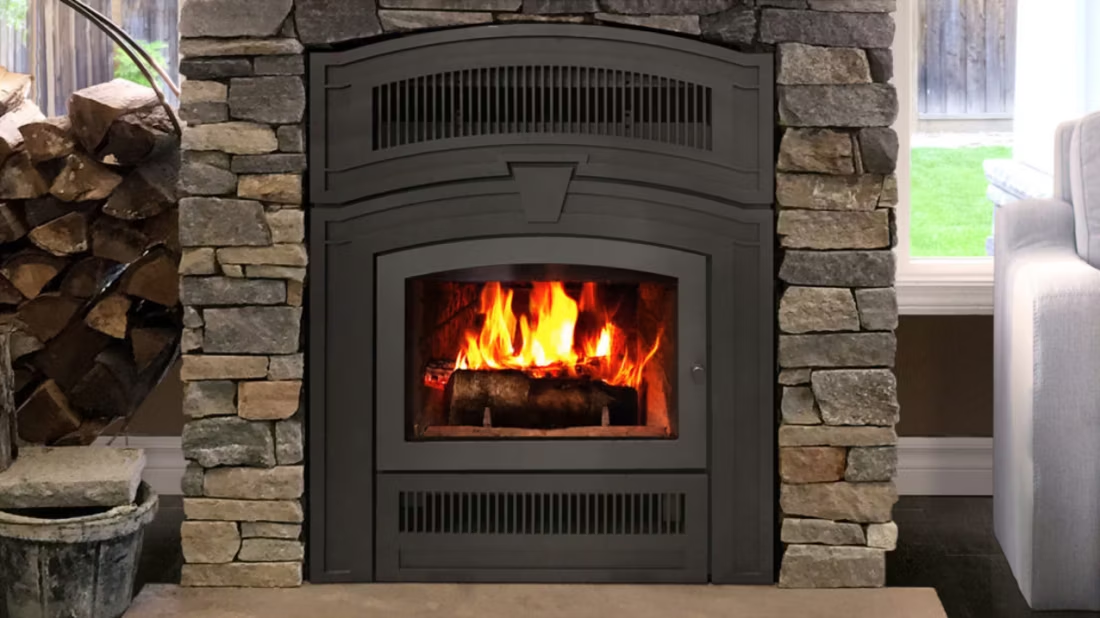
Four fuels. One honest answer for Orange County.
Three steps. No salesperson until you're ready.
Tell us about your project
Your zip code, your situation, and the fuel you're leaning toward—or let the answers point you to one.
See what's actually available
The brands dealers within 100 miles genuinely carry—real options, never a catalog mirage.
Get your dealer & Project Guide
A trusted local dealer, plus the free Project Guide & Parts List that names every component of the job.
Frequently Asked Questions
Which fireplace fuel makes the most sense in Orange County?
With only about 3,239 heating degree days a year and winter lows that average around 32°F, Orange County's climate leaves real room for all four fuels rather than forcing one obvious choice. Gas fireplaces and inserts are popular in Chapel Hill and Carrboro where Dominion Energy North Carolina's gas lines already run, since they deliver consistent heat without any fuel storage. Wood stoves and inserts burning local oak, hickory, or maple still make sense in Hillsborough, Efland, and Cedar Grove, especially on properties with wooded acreage and easy access to split firewood. Pellet stoves have a following countywide thanks to steady regional supply from Lignetics and Hamer Pellet Fuel, and they're a good fit for anyone who wants wood-like ambiance without splitting and stacking logs. Electric fireplaces work well here as a primary heat source in smaller rooms or additions, or as a no-venting supplement in a home already heated by gas or wood—the mild winters mean electric doesn't have to fight a brutal heating load the way it would in a colder climate.
Do I need a permit to install a fireplace or wood stove in Orange County?
Yes, in most cases. If your property is in unincorporated Orange County, permits go through the Orange County Planning and Inspections Department; inside Chapel Hill, Carrboro, or Hillsborough, you'll instead file with that town's own inspections office. New wood stoves and inserts need to meet current EPA emissions standards to pass inspection, and gas installations require a licensed gas fitter along with a separate gas-line permit. Pellet stove installs follow a similar process to wood but without any curtailment-related restrictions, since Orange County has no non-attainment designation. Electric fireplace installs usually skip the permit process unless you're adding a new dedicated circuit for a built-in unit. Most retailers we match homeowners with handle this paperwork directly as part of the install.
Since Orange County doesn't have air-quality curtailment days, are there any burn restrictions to worry about?
Orange County has no non-attainment designation and no winter inversion pattern like you'd find in a mountain basin, so there's no yellow-curtailment system restricting wood stoves on high-pollution days. That said, individual towns can issue temporary outdoor burn restrictions during dry stretches, and any wood stove or insert you install still needs to meet current EPA emissions certification to pass your local building inspection. In practice, this means Orange County wood-burning households have more flexibility day-to-day than counties dealing with basin smoke trapping, but a certified, correctly sized unit still matters for both inspection sign-off and simple efficiency—a modern EPA-certified stove burning seasoned oak or hickory puts out meaningfully more heat per cord than an older, uncertified unit.
Is natural gas available everywhere in the county, or do I need propane?
It depends on where in Orange County you're located. Dominion Energy North Carolina runs natural gas lines through most of Chapel Hill, Carrboro, and Hillsborough, which makes a direct gas-line hookup straightforward for a fireplace or insert in those areas. Once you're out past the town limits—toward Efland, Cedar Grove, or the more rural stretches of Bingham and Cheeks townships—natural gas service typically doesn't reach, and propane becomes the standard option instead, either from a buried tank or an above-ground cylinder setup. Your local retailer can confirm which option applies to your specific address and will size the gas line or propane tank accordingly during the install.
How does installation and service work for homes outside Chapel Hill?
Most hearth retailers and service technicians are based in or near the Chapel Hill–Durham corridor, but they regularly run installation and service calls out to Hillsborough, Efland, Cedar Grove, and the more rural parts of the county. Expect a modest trip fee for the farthest addresses, and expect scheduling to get tighter heading into late fall as everyone tries to book their annual chimney sweep or gas inspection before the first cold snap—getting on the calendar in late summer avoids the rush. For wood-burning households on wooded acreage further from town, it's also worth asking your installer about firewood delivery or splitting services, since some retailers coordinate with local firewood suppliers as part of the relationship.
What does a fireplace installation typically cost in Orange County?
Costs vary by fuel and by how much venting or gas-line work your project needs. Wood stove or insert installs generally run $4,000–$8,500, depending on chimney condition and whether new venting is required. Gas fireplaces, inserts, and stoves typically run $4,500–$10,500, with the higher end reflecting new gas-line runs for homes further from existing Dominion Energy service. Pellet stove or insert installs generally land around $4,000–$7,000. Electric fireplaces are the most affordable option—usually $200–$3,000 for the unit, plus $300–$1,000 in labor unless it's a simple plug-and-play placement. The county + fuel pages above break these numbers down further with local retailer pricing.
What is an in-home preview and do I need one?
It's a visit where a hearth professional measures your space, confirms the model you picked actually works in your home, and walks the specs—framing, gas line, venting, finish work—before anything is ordered. Some details you just can't know until you see the house. Never make a down payment without one; it's the single most-skipped step that burns buyers.
Wood, gas, pellet, or electric—how do I choose?
Match the fuel to your life, not the other way around. Wood: lowest fuel cost and total power-outage independence, but you're hauling and stacking. Gas: press a button, set a thermostat, no maintenance to speak of. Pellet: wood economics with automatic feeding, in exchange for weekly cleaning and a need for electricity. Electric: plugs in anywhere with honest supplemental heat. Nobody regrets the fuel that fits how they actually live.
Can a fireplace actually lower my heating bill?
Yes—by creating a comfort zone. A furnace heats every square foot of the house just to warm the one room you're in; a gas fireplace on low burns roughly a sixth of the gas a typical furnace does. Set the furnace around 55–60 degrees as a baseline, then heat the rooms your family actually uses. Families who heat this way commonly save $20–$60 a month.
Should the dealer who sells my fireplace also install it?
Ideally, yes. A fireplace project involves vent pipe, gas line, electrical, and often tile or stone. Hire three or four separate trades and you own the liability and the game of telephone between them. One company selling and installing means one accountable party, start to finish—ask about factory training, on-time completion records, and what happens if an inspection fails.
Stove and Fireplace Dealers in Orange County
Listings include WhyFire partner dealers, dealers we have verified as authorized for the brands we recommend, and established local businesses that carry hearth products. Every listing shows which one it is. The ones marked Preferred run on WhyFire's software, so they can show you real pricing and book your appointment right here. No manufacturer pays for placement. How we verify dealers →
Original Grills - Outdoor Kitchen & Grill Store
Conklin Oil & Propane, Inc.
Brandco Incorporated
Payne Oil Company Inc.
L.g. Jordan Oil & Gas Co.
Energy United Propane- Creedmoor
Get matched with a local Orange County dealer.
Pick your fuel below and we'll put together a free Project Guide & Parts List—the right unit, the vent kit it needs, and the local dealer we recommend for your project.
Find Your Fireplace →