
Efficient pellet heat, sized right for Martin County winters.
From Williamston to Robersonville and out along the Roanoke River bottomlands, Martin County's winters are short but not soft—pellet heat gives you thermostat-level control without stacking or seasoning wood. Find the right unit and get matched with a trusted local dealer.
Every Project Starts From One of These Five Situations
Consistent heat without stacking wood.
Martin County sits in climate zone 3A with a moderate winter heating load and an average winter low near 33°F—mild by national standards, but the county still sees real cold snaps into the 20s and the occasional ice event off the Roanoke River corridor. Firewood is abundant here—oak, hickory, maple, and pine grow throughout the bottomlands around Jamesville and Hamilton—but a meaningful share of Martin County's housing stock is manufactured or mobile homes, where a pellet stove's sealed combustion, factory-approved venting kit, and set-it-and-forget-it hopper feed are often a better fit than a traditional wood stove.
Martin County has no air quality non-attainment designation, so there are no winter burn curtailment periods to plan around—pellet or wood, you're free to run a stove whenever the weather calls for it. Regional pellet supply runs through brands like Lignetics, Hamer Pellet Fuel, and Greenway Renewable Energy, typically available through farm supply stores and heating co-ops serving the Williamston and Washington-Greenville trade area. For homes already running a central heat pump—the norm in this part of eastern NC—a pellet stove in the main living area is a common way to add zone heat and cut the propane or electric bill during the coldest weeks of January and February.
Three steps. No salesperson until you're ready.
Tell us about your project
Your zip code, your situation, and the fuel you're leaning toward—or let the answers point you to one.
See what's actually available
The brands dealers within 100 miles genuinely carry—real options, never a catalog mirage.
Get your dealer & Project Guide
A trusted local dealer, plus the free Project Guide & Parts List that names every component of the job.
Frequently Asked Questions
How much does a pellet stove installation cost in Martin County?
Cost depends mainly on the unit, the venting path, and whether new electrical work is needed for the auger and blower circuit. A pellet insert going into an existing masonry fireplace is usually the least expensive path since it reuses the chimney. A freestanding pellet stove venting through an exterior wall—common in the manufactured and mobile homes found throughout Martin County—needs a listed wall-thimble kit and horizontal vent run, which adds to the labor. Local dealers serving Williamston and the surrounding towns will give you a firm number after seeing your home; ask specifically whether the quote includes the electrical outlet for the unit, since pellet stoves are the one hearth appliance that won't run without power.
What size pellet stove do I need for my home?
Given Martin County's relatively mild winter heating load, most homes don't need a maximum-output unit unless they're heating the whole house on pellets alone. A small to mid-size stove (rated for 1,000 to 1,800 square feet) covers a typical living room or open floor plan as supplemental heat, while manufactured homes often do well with a compact unit placed centrally in the main living space. If you're aiming to offset propane or electric resistance heat as your primary source, size up and talk to a local dealer about your home's insulation and ceiling height—oversizing a pellet stove wastes fuel since, unlike a wood stove, you can't just build a smaller fire.
Where can I find certified pellet stove installers near me?
Look for NFI (National Fireplace Institute) certified technicians, which is the standard credential for hearth appliance installation. Given Martin County's population is under 9,000, most installers cover the whole county from a base in Williamston or a neighboring town like Washington or Greenville, and travel to Robersonville, Jamesville, Hamilton, and the rural county roads in between. Ask any installer about experience specifically with manufactured-home venting kits if that applies to your house—the clearance and thimble requirements differ from a stick-built home with an existing chimney.
What's the difference between a pellet stove and a pellet insert?
A pellet stove is a freestanding unit that sits on its own hearth pad and vents either through an exterior wall or up through an existing chimney. A pellet insert is built to slide into an existing masonry fireplace opening, using the chimney as the vent path with a liner sized for pellet exhaust. For Martin County homes with an older brick fireplace that's rarely used, an insert converts that opening into an efficient, thermostat-controlled heat source. For manufactured homes or rooms without a fireplace at all, a freestanding stove with wall venting is the more common route.
Do I need a permit to install a pellet stove in Martin County?
Yes—pellet stove installations typically require a building permit through Martin County's building inspections department, covering the appliance placement, clearances, and venting. Because pellet stoves also need a dedicated electrical circuit for the auger and blower, an electrical permit is sometimes required as well, particularly for new construction or a wall-vented install in a manufactured home. Most local dealers handle the permitting as part of the installation quote, so it's worth asking upfront whether that's included.
What's the best pellet stove for Martin County's climate?
Because winters here are mild—average lows in the low 30s rather than sub-zero—most Martin County homes don't need the largest, highest-output pellet stove on the market. Mid-size units from brands like Harman, Lopi, or England's Stove Works (built just up the road in Marion, NC) are well matched to supplemental heating in a main living area or full heating in a smaller manufactured home. Look for a model with a reliable auto-ignition system and easy hopper access, since day-to-day convenience matters more here than raw BTU output aimed at deep-cold survival.
Where do I buy pellets locally, and how much do they cost?
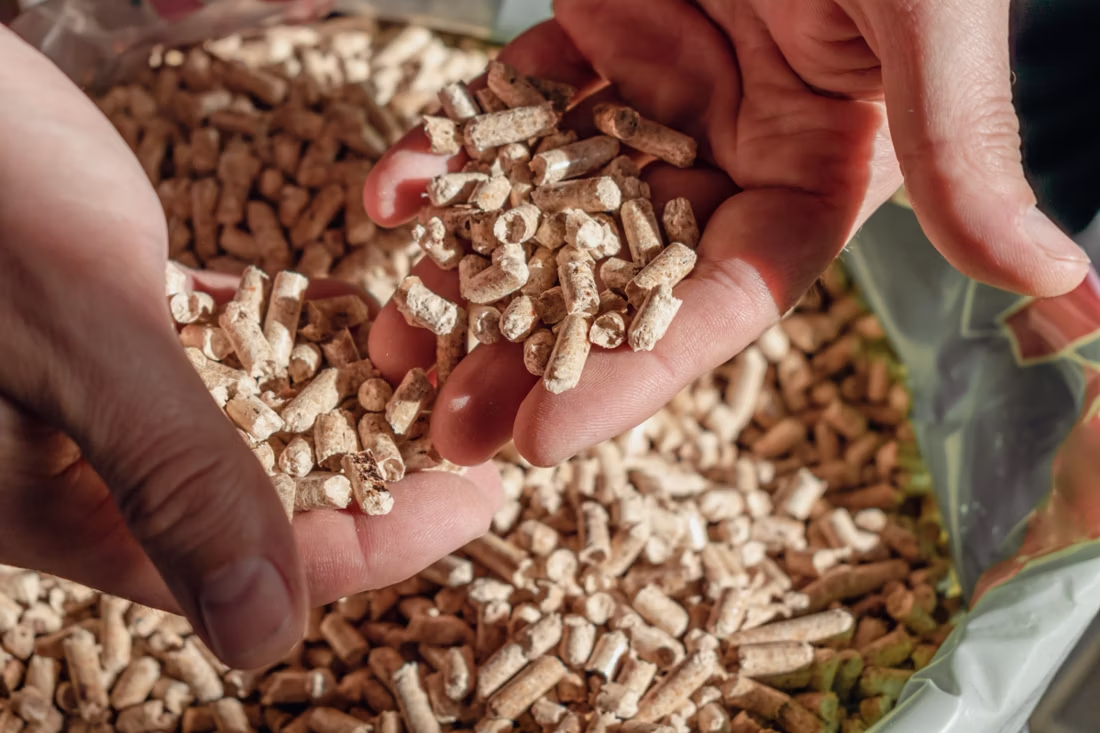
Wood pellets are sold by the ton (usually in 40-pound bags, roughly 50 bags per ton) through farm supply stores and heating co-ops serving the Williamston and Washington-Greenville area. Regional and national brands like Lignetics, Hamer Pellet Fuel, and Greenway Renewable Energy are the ones you'll most commonly see on shelves in eastern North Carolina. Buying a full winter's supply early in the fall—before demand spikes during the first cold snap—is the most reliable way to avoid running short mid-season. Your local dealer can usually point you toward the specific retailer or co-op with the best stock in Martin County.
What happens to my pellet stove during a power outage?
Pellet stoves rely on electricity to run the auger that feeds fuel and the blower that distributes heat, so a standard unit stops working the moment the power goes out—a real consideration in Martin County, where ice storms and downed lines along the rural county roads can knock out power for hours or days. If backup heat during outages matters to you, ask your local dealer about pairing the stove with a small battery backup or a portable generator sized for the stove's low draw, or consider a wood-burning stove or insert as a secondary, no-electricity option for the same room.
Pellet vs. wood—which is right for my Martin County home?
With oak, hickory, maple, and pine all growing locally along the Roanoke River bottomlands, wood is inexpensive and abundant for anyone with land access or a willingness to source it—and it keeps working through a power outage, which pellet stoves can't do on their own. Pellet stoves trade that independence for convenience: no splitting or stacking, a steady thermostat-controlled burn, and less ash and mess, which is a big part of why they're popular in the manufactured homes common throughout the county. If you want set-it-and-forget-it heat for daily use, pellet usually wins. If backup heat during storms or minimizing fuel cost matters more, wood is worth a serious look—and some households keep both.
How often does a pellet stove need cleaning?
A clean pellet stove is a happy pellet stove. Plan on cleaning the burn pot about once a week when you're burning regularly—ash and clinkers gum up the air holes just like a pellet barbecue. Most pellet stove problems trace back to skipped cleaning that nobody explained up front. Some designs make it easy with a trapdoor burn pot: pull a lever and the gunk drops into the ash pan.
What's the difference between an insert and a zero-clearance fireplace?
An insert is a fireplace that slides into a pre-existing wood-burning fireplace—if you don't have one, there's nothing to insert it into. A zero-clearance fireplace is built into a framed wall, which makes it the answer for remodels and new construction. Simple test: existing masonry fireplace means insert; blank or framed wall means zero-clearance.
Does a fireplace add value to my home?
On average, a fireplace adds back to the home about the same amount you spent installing it. Add the monthly savings from heating the rooms you actually use instead of the whole house—often hundreds of dollars a year—and the value case is strong before you even count what a fire does for how your family uses the room.
What is an in-home preview and do I need one?
It's a visit where a hearth professional measures your space, confirms the model you picked actually works in your home, and walks the specs—framing, gas line, venting, finish work—before anything is ordered. Some details you just can't know until you see the house. Never make a down payment without one; it's the single most-skipped step that burns buyers.
Stove and Fireplace Dealers in Martin County
Pellet Brands Stocked Around Martin County
Manufacturers will point you to the nearest stocking dealer.
Find your pellet stove in Martin County.
Tell us a bit about your home and we'll match you with the right pellet stove or insert, plus a free Project Guide & Parts List—the exact parts, including your vent kit, and a trusted local dealer serving Martin County.
Find Your Fireplace →