
Wood, Gas, Pellet & Electric Fireplaces for Every Corner of Martin County.
From Williamston down to Oak City and out along the Roanoke River to Jamesville and Hamilton, here's where to find local hearth retailers, installers, and fuel suppliers serving Martin County's mild, mixed-humid winters.
Every Project Starts From One of These Five Situations
Mild Coastal Plain heat needs, from Williamston to Oak City.
Martin County sits in North Carolina's Coastal Plain along the Roanoke River, at elevations mostly under 60 feet, in climate zone 3A. Winters here are short and mild—the average winter low is 33°F and the county's overall winter heating need is roughly a third of what a place like Duluth, MN sees in a typical winter. That means most homes need supplemental heat for a handful of genuinely cold weeks rather than a five-month sustained burn season. It also means wood heat here is as much about tradition and ambiance as it is about survival—oak, hickory, maple, and pine are all abundant from the county's bottomland hardwoods and pine plantations, and splitting your own firewood remains common practice on the rural properties that make up most of the county's 8,300 residents.
This hub covers hearth retailers, service technicians, and fuel suppliers for every community in Martin County—Williamston (the county seat), Robersonville, Oak City, Jamesville, Hamilton, and Bear Grass, plus the farmland and river-bottom properties between them. Because Martin County is small and rural, some of the dealers who service it are based just over the line in Pitt or Edgecombe County and travel in for installs. Pick your fuel below to see local pricing, recommended units, and which dealers actually cover your address.
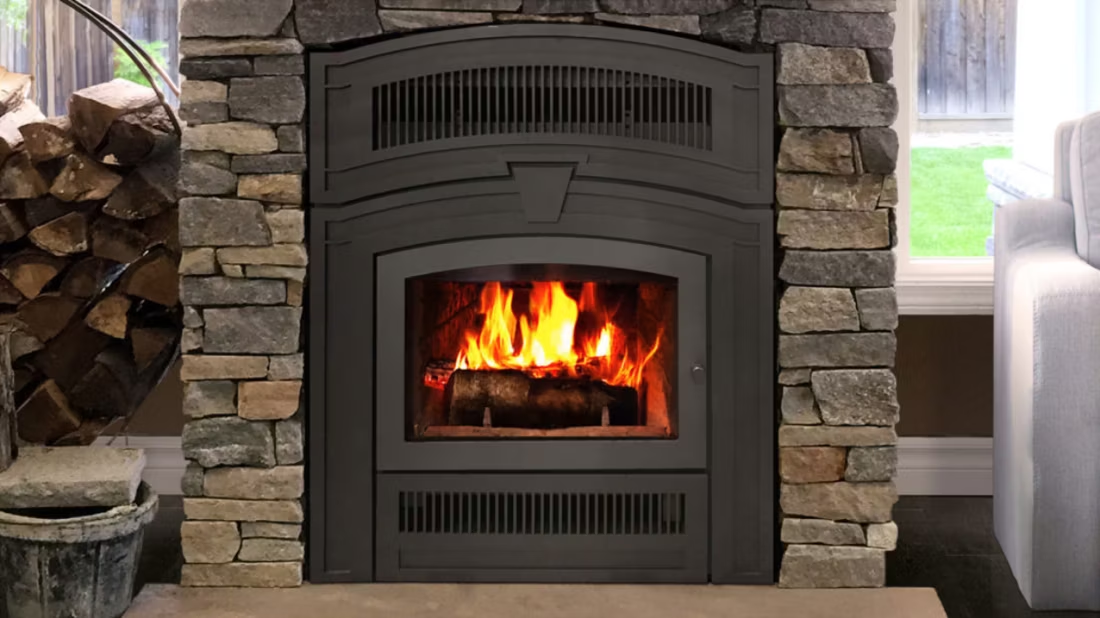
Four fuels. One honest answer for Martin County.
Three steps. No salesperson until you're ready.
Tell us about your project
Your zip code, your situation, and the fuel you're leaning toward—or let the answers point you to one.
See what's actually available
The brands dealers within 100 miles genuinely carry—real options, never a catalog mirage.
Get your dealer & Project Guide
A trusted local dealer, plus the free Project Guide & Parts List that names every component of the job.
Frequently Asked Questions
Which fuel works best in Martin County?
Martin County's mild Coastal Plain winters—average low around 33°F, with an overall winter heating need of only about a third of a colder climate like Duluth's—mean every fuel type stays realistic here, but for different reasons than in a colder climate. Wood is deeply rooted in local tradition; oak and hickory from the Roanoke River bottomlands burn hot and long, and plenty of Martin County households still split their own firewood, often more for ambiance and cost savings than out of necessity. Propane is the practical convenience choice in most of the county since natural gas infrastructure is limited outside town limits. Pellet stoves do well here too—with a shorter heating season, a single ton or two of pellets from suppliers carrying Lignetics or Greenway Renewable Energy can cover most homes for the year. Electric fireplaces are a genuinely viable primary option for smaller homes in this climate, not just a supplemental unit, since the actual heating load is modest most winters.
Do I need a permit to install a fireplace in Martin County?
Generally yes. New wood stove and insert installations in North Carolina fall under the state residential building code, which requires EPA-certified units—Martin County's building inspections department issues the permit and typically requires an inspection of the chimney or vent chase before it's signed off. Propane installations need a permit for the gas line work itself, plus a licensed gas contractor to make the connection—most local retailers coordinate this directly rather than leaving it to the homeowner. Gas fireplace and insert permits work the same way. Electric fireplaces usually skip the permit process entirely unless it's a built-in unit that requires a new dedicated circuit, in which case an electrical permit applies. Local retailers in Williamston and the dealers who travel in from Greenville or Rocky Mount typically handle the permitting as part of the install quote.
Are there air quality restrictions on wood burning in Martin County?
No—Martin County has no air quality nonattainment designations and no local wood-burning curtailment program, unlike parts of the western U.S. where winter inversions trap smoke. That said, safe burning still matters practically: creosote buildup in a chimney that only sees light seasonal use (common given the county's short heating season) can actually be a bigger fire-safety concern than it is in colder climates where stoves run constantly and burn hotter. An annual sweep before the first cold snap, usually October or November here, is the main precaution local retailers and chimney sweeps recommend.
Can one local hearth retailer handle all four fuel types?
That depends on which dealer you're near. Given Martin County's population of just over 8,300, the county doesn't support many standalone hearth showrooms—a Williamston-based retailer may carry wood, gas, and pellet but stock only a limited electric fireplace line, while some multi-fuel dealers from Greenville or Rocky Mount who service Martin County carry the full range including built-in electric units. If you're deciding between fuels, it's worth asking a dealer directly whether they have working display units on-site or whether you're choosing from a catalog—that distinction matters more in a county this size than in a large metro market.
How does service work in rural parts of Martin County?
Most technicians who service Martin County are based in Williamston or drive in from Pitt or Edgecombe County, covering the outlying towns—Oak City, Hamilton, Jamesville, Bear Grass, and the farm properties along the Roanoke River—on set routes rather than daily. Expect a modest travel fee for calls outside Williamston town limits, and expect fall scheduling (September–November) to fill up faster than mid-winter, since the heating season here is short and everyone tends to think about their chimney or gas logs at the same time. Booking your annual service early gives you more flexibility than waiting for the first cold snap.
What's the typical cost range for fireplace installation across all fuel types in Martin County?
Costs run somewhat lighter here than in colder-climate markets, mainly because venting and chimney work tend to be simpler in a mild 3A climate with less extreme temperature swings. Wood stove or insert installation typically runs $4,000–$8,000, including a code-compliant chimney liner where needed. Propane fireplace, insert, or stove installation runs $4,000–$9,000 depending on gas line distance from the tank or meter. Pellet stove or insert installation is usually $4,000–$6,500. Electric fireplaces run $200–$2,500 for the unit itself, with $300–$1,000 in labor for anything beyond a simple plug-in install, such as a built-in unit needing a dedicated circuit. For a specific quote tied to your address, a local dealer will need to see your chimney or vent path in person.
Wood, gas, pellet, or electric—how do I choose?
Match the fuel to your life, not the other way around. Wood: lowest fuel cost and total power-outage independence, but you're hauling and stacking. Gas: press a button, set a thermostat, no maintenance to speak of. Pellet: wood economics with automatic feeding, in exchange for weekly cleaning and a need for electricity. Electric: plugs in anywhere with honest supplemental heat. Nobody regrets the fuel that fits how they actually live.
Should the dealer who sells my fireplace also install it?
Ideally, yes. A fireplace project involves vent pipe, gas line, electrical, and often tile or stone. Hire three or four separate trades and you own the liability and the game of telephone between them. One company selling and installing means one accountable party, start to finish—ask about factory training, on-time completion records, and what happens if an inspection fails.
How much should I budget for a fireplace?
For an average home—covering the fireplace, the vent pipe, and basic installation—a budget between $3,900 and $5,500 gives you a lot of options across wood, gas, and pellet. By the time you add finish work, gas line, and electrical, the average complete installation lands between $5,000 and $12,000 all-in. In a remodel or new build, a good rule is to put about 2.5% of the total project cost toward the fireplace.
Can a fireplace actually lower my heating bill?
Yes—by creating a comfort zone. A furnace heats every square foot of the house just to warm the one room you're in; a gas fireplace on low burns roughly a sixth of the gas a typical furnace does. Set the furnace around 55–60 degrees as a baseline, then heat the rooms your family actually uses. Families who heat this way commonly save $20–$60 a month.
Stove and Fireplace Dealers in Martin County
Listings include WhyFire partner dealers, dealers we have verified as authorized for the brands we recommend, and established local businesses that carry hearth products. Every listing shows which one it is. The ones marked Preferred run on WhyFire's software, so they can show you real pricing and book your appointment right here. No manufacturer pays for placement. How we verify dealers →
Jernigan Oil & Gas- Williamston
Fireplace Creation
Daughtridge Gas & Oil Company
Williams Fuel
Daughtridge Gas & Oil Company
Find your fireplace in Martin County.
Tell us your fuel and your town—Williamston, Robersonville, Oak City, or anywhere in between—and we'll match you with a trusted local dealer and send over a free Project Guide & Parts List: the exact parts, including the vent kit, for your project and the dealer we recommend to install it.
Find Your Fireplace →