
Steady, efficient heat for Macon County's mountain winters.
From the valley floor in Franklin up to the higher elevations around Highlands, pellet stoves deliver clean, thermostat-controlled heat without the splitting and stacking that wood demands. Find the right unit and connect with a trusted local dealer.
Every Project Starts From One of These Five Situations
Efficient heat without the wood-splitting labor.
Macon County sits tucked into the southwestern corner of North Carolina, bordered by the Nantahala-Pisgah National Forests and ranging from around 1,800 feet in Franklin up past 4,000 feet near Highlands. Climate zone 4A and a winter heating load a bit above average put winters here in a moderate range—average lows near 26°F, cooler than the Piedmont cities to the east but nowhere near the deep-freeze winters of Duluth or Fargo. That's exactly the kind of climate where a pellet stove earns its keep: enough cold to matter most nights from November through March, but rarely severe enough to demand a 24-hour catalytic wood burn.
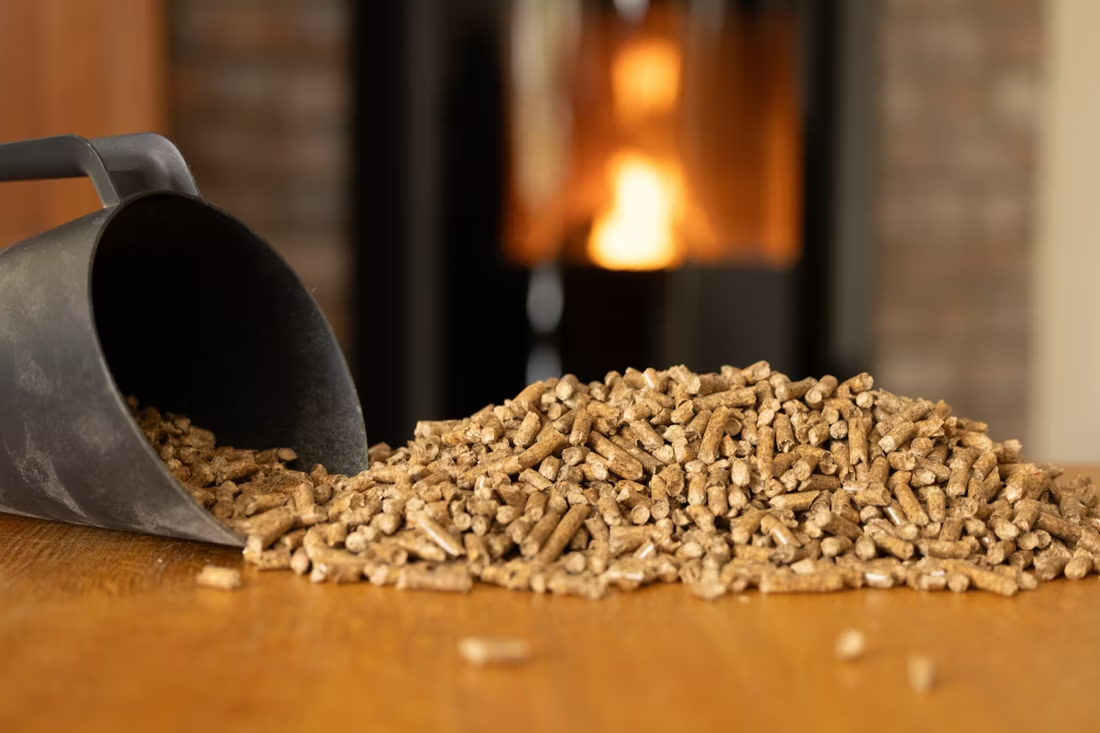
The county's oak, hickory, maple, and pine forests have long supplied firewood, but they also feed the regional pellet supply chain—brands like Lignetics, Hamer Pellet Fuel, and Greenway Renewable Energy are commonly stocked by dealers throughout western North Carolina. With no local air quality non-attainment issues or winter burn curtailments to work around, pellet stoves here are chosen mainly for convenience: load the hopper, set the thermostat, and let the auger do the work. That's especially popular with the second-home and retiree households scattered through Highlands and Cashiers-adjacent parts of the county, where low-maintenance heat matters as much as ambiance.
Three steps. No salesperson until you're ready.
Tell us about your project
Your zip code, your situation, and the fuel you're leaning toward—or let the answers point you to one.
See what's actually available
The brands dealers within 100 miles genuinely carry—real options, never a catalog mirage.
Get your dealer & Project Guide
A trusted local dealer, plus the free Project Guide & Parts List that names every component of the job.
Frequently Asked Questions
How much does a pellet stove installation cost in Macon County?
Most pellet stove installations run in the $3,000 to $6,500 range, depending on the stove model, whether you need a hearth pad for clearance compliance, and the length and routing of the pellet vent pipe. A freestanding pellet stove going into a room with no existing hearth typically lands on the higher end once you factor in hearth pad construction and exterior wall penetration for the vent. A pellet insert replacing an existing wood or gas fireplace is often less involved since the masonry surround is already in place. Local dealers will give you a firm number after walking the room and checking your wall or chimney situation.
What size pellet stove do I need for my Macon County home?
Sizing depends on square footage, ceiling height, and how much of the load you want the stove to carry. Given the county's moderate 4A climate and average winter lows around 26°F, most Franklin-area homes do well with a mid-size unit rated for 1,200 to 2,000 square feet as either primary or serious supplemental heat. Homes at higher elevation near Highlands or Scaly Mountain see colder, windier conditions and often benefit from sizing up one notch, since heat loss runs higher at 4,000 feet than it does down in the valley. A local dealer can walk your space and size it properly—oversizing a pellet stove wastes fuel and forces you to run it on low settings most of the season.
Pellet stove or pellet insert—which is right for my home?
A pellet stove is freestanding and sits on a hearth pad, which gives you flexibility on placement anywhere in the room with proper clearances and a vent run to an exterior wall. A pellet insert is built to slide into an existing masonry fireplace opening, using a liner through the existing flue or a direct vent kit through the firebox wall. For Macon County homes with an old, rarely-used wood fireplace, an insert is usually the more efficient upgrade—it keeps the existing look while converting a heat-losing open hearth into a controlled, thermostat-driven heat source. Homes without an existing fireplace are better suited to a freestanding stove.
Where can I buy pellets locally in Macon County?
Regional dealers throughout western North Carolina commonly stock Lignetics, Hamer Pellet Fuel, and Greenway Renewable Energy bags, and most hearth retailers who sell pellet stoves also carry pellets by the bag or pallet, especially heading into the fall burning season. Because Macon County's oak, hickory, and pine forests overlap with the same wood supply that feeds regional pellet mills, availability here tends to be consistent, though it's worth ordering or picking up early in autumn when demand across the region spikes.
Do I need a permit to install a pellet stove in Macon County?
Yes—a building permit is typically required for a new pellet stove installation, covering the hearth clearance, wall penetration for the vent, and confirmation that the unit meets current EPA emissions standards. Your local dealer or installer will usually handle the permit application with Macon County's building inspections office as part of the install, so this generally isn't something you need to coordinate yourself. Unlike some parts of the country, Macon County has no winter air quality non-attainment status or burn curtailment periods to work around, so once the unit is permitted and installed, you're free to run it as needed.
Will my pellet stove work during a power outage?
Not without a backup power source. Pellet stoves rely on electricity to run the auger that feeds fuel and the fan that distributes heat, so a power outage shuts the stove down even with a full hopper. This matters in Macon County, where ice storms and downed lines in the higher elevations around Highlands and Scaly Mountain can knock out power for hours or longer. Some homeowners pair a pellet stove with a small battery backup or generator sized for the stove's low wattage draw; others keep a wood stove or fireplace as true off-grid backup heat. Ask your local dealer about the stove's power draw if outage resilience is a priority for your home.
How often does a pellet stove vent need to be cleaned?
Pellet stove venting should be inspected and cleaned at least once a year, typically before the start of the winter heating season. Because pellet fuel burns cleaner than cordwood, the maintenance is generally lighter than a wood-burning chimney sweep, but the vent pipe and exhaust fan still accumulate ash and fly ash residue over a season of regular use. Homes running a pellet stove as primary heat through a full Macon County winter—November through March—may want a mid-season check as well. Local hearth retailers who sell pellet stoves typically offer this service or can point you to someone who does.
Pellet vs. wood—which makes more sense in Macon County?
Wood is the traditional choice here, and it's cheap if you're willing to cut your own—Forest Service permits through the Nantahala-Pisgah National Forests run about $20 per cord during the May-to-October cutting season, and oak, hickory, and maple all burn well once seasoned. Wood also keeps working with the power out, which matters for rural parts of the county. Pellet stoves trade that self-sufficiency for convenience: no splitting, stacking, or hauling, more consistent heat output, and an easy on-off thermostat that suits second homes and households that don't want the ongoing labor of a wood pile. For a lot of Macon County homeowners—especially retirees and part-time residents in the Highlands area—that convenience is the deciding factor.
What's the best pellet stove for Macon County's climate?
With winters in the moderate 4A range and a winter heating load a bit above average, Macon County doesn't require the extreme-duty, 24-hour-burn stoves you'd size for a place like Bozeman or International Falls. Mid-size units from mainstream pellet stove manufacturers with a reliable auto-ignition feature and a hopper that holds 40-plus pounds tend to be plenty for most homes here, giving you a full evening's burn without a mid-fire reload. Homes at higher elevation near Highlands or Scaly Mountain, where wind and cold run harder than in the Franklin valley, may do better with a slightly larger hopper and higher max BTU output. A local dealer can match the stove to your elevation and square footage.
What's the difference between an insert and a zero-clearance fireplace?
An insert is a fireplace that slides into a pre-existing wood-burning fireplace—if you don't have one, there's nothing to insert it into. A zero-clearance fireplace is built into a framed wall, which makes it the answer for remodels and new construction. Simple test: existing masonry fireplace means insert; blank or framed wall means zero-clearance.
Why is my open fireplace making my house colder?
Open fireplaces suck—literally. As the fire burns, it consumes air your furnace already paid to heat and pulls it out through the chimney, so the house is actually colder after the fire goes out than before you lit it. An insert fixes this: it seals the chimney, puts fixed glass across the front, and turns that hole in your house into a real heat source.
Can a fireplace actually lower my heating bill?
Yes—by creating a comfort zone. A furnace heats every square foot of the house just to warm the one room you're in; a gas fireplace on low burns roughly a sixth of the gas a typical furnace does. Set the furnace around 55–60 degrees as a baseline, then heat the rooms your family actually uses. Families who heat this way commonly save $20–$60 a month.
What is an in-home preview and do I need one?
It's a visit where a hearth professional measures your space, confirms the model you picked actually works in your home, and walks the specs—framing, gas line, venting, finish work—before anything is ordered. Some details you just can't know until you see the house. Never make a down payment without one; it's the single most-skipped step that burns buyers.
Stove and Fireplace Dealers in Macon County
Superior Plus Propane D/b/a Freeman Gas - Franklin
Pellet Brands Stocked Around Macon County
Manufacturers will point you to the nearest stocking dealer.
Find your pellet stove in Macon County.
Tell us a bit about your home and we'll match you with a trusted local dealer and send over a free Project Guide & Parts List—a plan for your pellet project in Macon County, right down to the vent kit.
Find Your Fireplace →