
Warmth without the woodpile, for every corner of Macon County.
From cabins near Highlands and Scaly Mountain to homes around Franklin and Otto, electric fireplaces add real zone heat and ambiance with no chimney, no gas line, and no venting. Find the right unit and connect with a trusted local dealer.
Every Project Starts From One of These Five Situations
Zone heat that works anywhere the plug reaches.
Macon County sits in the Nantahala Mountains of far western North Carolina, with elevations ranging from the valley floor around Franklin up to 4,000-plus feet at Highlands and Scaly Mountain. At climate zone 4A with roughly 4,126 heating degree days and average winter lows around 26°F, the county sees real cold on winter nights—but it's a fraction of the heating load a true northern winter demands. Duluth, MN averages closer to 9,000 heating degree days a year; Macon County homes need consistent supplemental warmth on cold nights, not round-the-clock furnace-level heating.
That's exactly the gap electric fireplaces fill well here. Many Macon County properties are second homes, cabins, or short-term rentals scattered through Highlands, Otto, and the lake communities around Franklin—places where owners want reliable, attractive heat without running a flue through a rental unit's roofline or coordinating a Nantahala-Pisgah National Forest cutting permit ($20 per cord, May through October season) for firewood nobody's around to split and stack. A plug-in insert or built-in electric unit installs in an afternoon, adds real warmth to a den or bedroom, and works whether the home is occupied every weekend or three times a year.
Three steps. No salesperson until you're ready.
Tell us about your project
Your zip code, your situation, and the fuel you're leaning toward—or let the answers point you to one.
See what's actually available
The brands dealers within 100 miles genuinely carry—real options, never a catalog mirage.
Get your dealer & Project Guide
A trusted local dealer, plus the free Project Guide & Parts List that names every component of the job.
Frequently Asked Questions
How much does an electric fireplace installation cost in Macon County?
Simple plug-in inserts and freestanding electric stoves that run on a standard 120V outlet typically run $300 to $1,200 installed, including mounting hardware. Built-in wall units and larger linear fireplaces that require a dedicated circuit run higher—often $1,500 to $3,500—because an electrician needs to run new wiring, which matters in older Highlands and Franklin cabins where the panel may already be near capacity. Mantel surrounds and custom trim add to the total but aren't required for the unit to function.
Do I need a permit to install an electric fireplace in Macon County?
Most plug-in electric fireplaces that use an existing outlet don't require a permit—they're treated like any other plug-in appliance. If your install needs a new dedicated circuit or a panel upgrade, that electrical work typically does require a permit through the Macon County building permit process, and a licensed electrician will usually pull it as part of the job. Unlike a wood stove, there's no EPA certification or chimney inspection involved.
What electrical setup does an electric fireplace actually need?
Small and mid-size electric fireplaces run on a standard 120V, 15- or 20-amp household outlet—no gas line, no chimney, no exterior venting of any kind. Larger built-in units, especially wide linear models over 50 inches, sometimes call for a dedicated 20-amp circuit to avoid tripping breakers when the heater element is running at full output. A local dealer or electrician can tell you in five minutes whether your existing outlet will do the job or whether new wiring makes sense.
What size electric fireplace do I need for my home?
Most electric fireplaces put out 1,500 to 5,000 BTUs of supplemental heat, enough for a single room—typically 400 to 1,000 square feet depending on ceiling height and insulation. Since most Macon County homes already run a central heat pump or furnace, electric units here are almost always sized for zone heating a den, bedroom, or sunroom rather than the whole house. Cabins with lower insulation values or lots of glass, common around Highlands and Scaly Mountain, may want a unit on the higher end of that BTU range.
Which electric fireplace brands are available through local dealers?
Dealers serving Macon County commonly carry Dimplex, Napoleon, and Touchstone, along with mid-range built-in lines suited to remodels and new construction. Availability shifts by season and by dealer, which is exactly where a local match helps—a dealer can tell you what's actually in stock or on short lead time rather than what's simply listed online, and can steer you toward a model with the right flame realism and heat output for your specific room.
Is there a best time of year to install an electric fireplace?
Electric fireplaces can be installed any time of year—there's no cutting-permit season to work around like there is for firewood (May through October in the Nantahala-Pisgah National Forest), and no weather window required the way chimney or venting work sometimes demands. Many Highlands and Franklin rental property owners schedule installs in the shoulder season before fall leaf-season bookings or winter ski traffic picks up, so the unit is ready and tested before guests arrive.
Are electric fireplaces a good fit for short-term rental properties?
Yes, and it's one of the more common reasons owners choose electric in this part of Macon County, where cabins around Highlands and Lake Emory see steady short-term rental traffic. Electric units have no open flame, no combustion byproducts, and no ash or embers to manage between guest turnovers—which simplifies liability and insurance conversations compared to a wood-burning appliance. Many models also include remote or app-based shutoff, useful for property managers who can't always confirm in person that a unit was turned off.
How much maintenance does an electric fireplace need?
Very little. There's no chimney to sweep, no creosote to manage, and no annual CSIA inspection required the way a wood stove or gas insert needs. Maintenance is mostly dusting the heating element and vents once or twice a season and occasionally replacing an LED light strip after years of use. That low-maintenance profile is part of why electric works well for absentee owners of cabins around Otto and Scaly Mountain who aren't on-site to manage a fuel-burning appliance.
Electric vs. wood—which makes sense for a Macon County home?
Wood has deep roots here—oak, hickory, maple, and pine are all abundant on Nantahala-Pisgah National Forest land, with cutting permits running about $20 per cord during the May-to-October season, and a wood stove still delivers real heat during a power outage, which electric cannot. Electric wins on convenience: no fuel to split or store, no venting or chimney to maintain, and instant on-off heat that works in a rental unit or a home where nobody wants to tend a fire. For a primary residence with someone around to manage wood, especially outside town where power blips happen, wood remains a strong choice. For cabins, rentals, and secondary living spaces, electric is usually the simpler, lower-maintenance fit.
Can I put a TV above my fireplace?
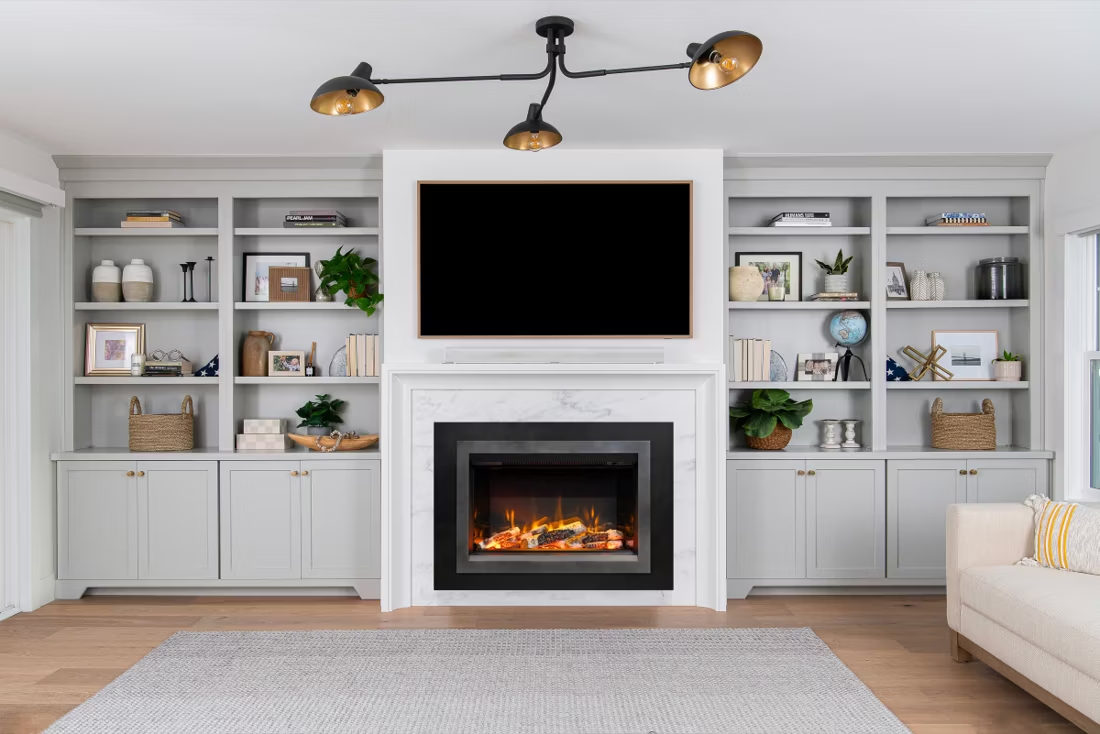
Yes—with an asterisk. Fireplaces are hot and TVs don't like heat. Either put a mantel between them to deflect rising warmth, or choose a fireplace with heat-management technology that creates a cool zone on the wall above—the wall stays around 125 degrees, barely warm, while the room still gets full heat. If you like clean lines and don't want a mantel, heat management is the answer.
Do electric fireplaces actually produce heat?
Yes—most put out around 4,800–5,000 BTUs from a standard outlet, which comfortably warms a bedroom, office, or den as a comfort-zone heater. What they won't do is carry a whole house the way wood, gas, or pellet can. Think of electric as ambiance-first with honest supplemental heat: flames on with no heat in July, flames plus warmth in January.
How much should I budget for a fireplace?
For an average home—covering the fireplace, the vent pipe, and basic installation—a budget between $3,900 and $5,500 gives you a lot of options across wood, gas, and pellet. By the time you add finish work, gas line, and electrical, the average complete installation lands between $5,000 and $12,000 all-in. In a remodel or new build, a good rule is to put about 2.5% of the total project cost toward the fireplace.
Does a fireplace add value to my home?
On average, a fireplace adds back to the home about the same amount you spent installing it. Add the monthly savings from heating the rooms you actually use instead of the whole house—often hundreds of dollars a year—and the value case is strong before you even count what a fire does for how your family uses the room.
Stove and Fireplace Dealers in Macon County
Superior Plus Propane D/b/a Freeman Gas - Franklin
Find your electric fireplace in Macon County.
Tell us a bit about your home or cabin and we'll put together a free Project Guide & Parts List for your electric fireplace project—the right unit, the exact parts, and a trusted local dealer to install it.
Find Your Fireplace →