
Warm, low-maintenance heat for Lincoln County winters.
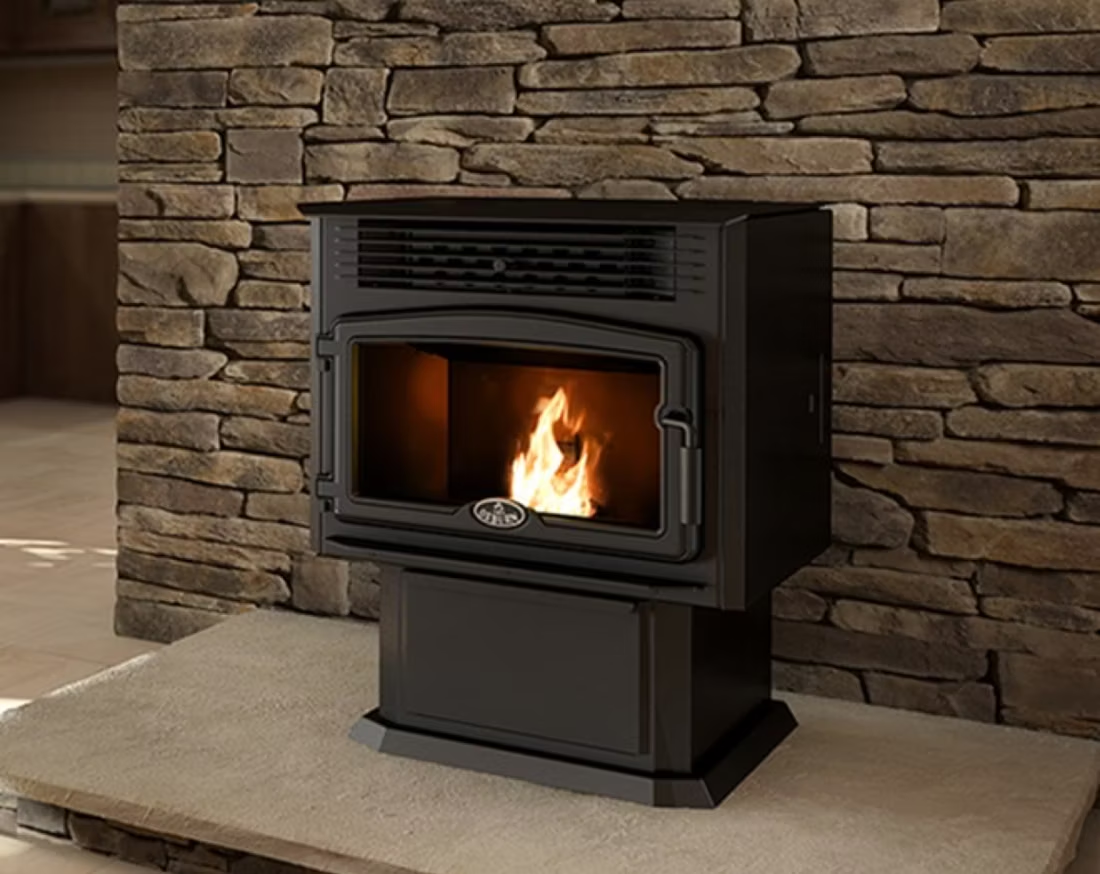
From Lincolnton to Denver to Cherryville, pellet stoves give Piedmont North Carolina homes thermostat-like heat without splitting or stacking wood. Find the right unit and connect with a trusted local dealer.
Every Project Starts From One of These Five Situations
Consistent heat without the wood-splitting work.
Lincoln County sits in Zone 4A on the North Carolina Piedmont, with winter lows averaging around 30°F and roughly 3,335 heating degree days a year—a real heating season, but a fraction of what a place like Burlington, VT, or International Falls, MN, deals with each winter. That's exactly the climate where pellet stoves shine: enough cold nights and shoulder-season chill to want dependable supplemental heat, but not a climate that demands the round-the-clock, cord-wood-burning commitment of a much colder region.
Lincoln County's oak, hickory, maple, and pine forests have supported generations of traditional wood heat, and that culture is still alive from Vale to Iron Station. But splitting, stacking, and seasoning wood for a Piedmont winter that's often mild is a lot of labor for a shorter payoff—which is why a growing number of homeowners, especially in newer construction around Denver and the Lake Norman corridor, are choosing pellet stoves and inserts instead. Lincoln County has no air quality non-attainment designation and no winter burn curtailment program, so pellet appliances here run without the seasonal restrictions some western states impose. Bagged pellets from regional brands like Lignetics, Hamer Pellet Fuel, and Greenway Renewable Energy are stocked at farm-supply stores and hearth dealers throughout the county, so fuel is easy to keep on hand all winter.
Three steps. No salesperson until you're ready.
Tell us about your project
Your zip code, your situation, and the fuel you're leaning toward—or let the answers point you to one.
See what's actually available
The brands dealers within 100 miles genuinely carry—real options, never a catalog mirage.
Get your dealer & Project Guide
A trusted local dealer, plus the free Project Guide & Parts List that names every component of the job.
Frequently Asked Questions
How much does a pellet stove installation cost in Lincoln County?
Pellet stove and insert installations in Lincoln County typically fall in the $3,000 to $6,000 range. The lower end usually covers a freestanding stove vented directly out an exterior wall—a common setup in newer Denver-area homes without an existing chimney. The higher end covers a pellet insert fitted into an existing masonry fireplace, which requires a liner run up the flue. Because Lincoln County's mild heating season (3,335 heating degree days) means most households don't need the largest hopper on the market, sizing appropriately for a mid-capacity unit also helps keep installed cost down. A local hearth dealer serving Lincolnton, Denver, or Cherryville can give you a firm number after looking at your venting path.
What size pellet stove do I need for my home?
Sizing depends on square footage, insulation, and whether the stove is primary or supplemental heat. Older farmhouses around Vale, Crouse, and Iron Station—often larger, less insulated, and sometimes without central ductwork—tend to need a bigger hopper and higher burn rate if pellet heat is doing most of the work. Newer construction near Denver and the Lake Norman side of the county is typically better insulated and better suited to a smaller unit running as zone heat alongside central HVAC. A local dealer will walk your space and account for ceiling height and window count before recommending a specific model.
Where do I buy pellet fuel in Lincoln County?
Lignetics, Hamer Pellet Fuel, and Greenway Renewable Energy are the three brands most commonly stocked by hearth dealers and farm-supply stores serving Lincoln County. Pellets are usually sold in 40-pound bags, and many dealers also offer ton pallets for households running a stove as significant supplemental heat all winter. Because Lincoln County is within easy trucking range of Piedmont pellet production, local supply has stayed steady even in winters when pellet shortages have hit harder in parts of New England.
Do I need a permit to install a pellet stove in Lincoln County?
Yes—a new pellet stove or insert installation requires a building permit, handled through Lincoln County's building inspections department, or through the city permitting office if your home is inside Lincolnton city limits. Because Lincoln County has no air quality non-attainment designation and no winter curtailment program, there's no extra environmental paperwork layered on top of the standard permit—a contrast to some western counties where burn restrictions come into play. Most local dealers pull the permit as part of the installation, so it's typically not something you have to handle yourself.
What's the difference between a pellet stove and a pellet insert?
A pellet stove is a freestanding unit that can be placed almost anywhere with a nearby exterior wall for venting—a good fit for homes without a fireplace, which describes a lot of newer construction around Denver and Iron Station. A pellet insert is built to slide into an existing masonry fireplace opening, using a liner run through the chimney to vent, and works well for older Lincoln County homes near Lincolnton or Vale that already have a hearth they want to upgrade from an open wood fireplace to something more efficient.
What's the best pellet stove for Lincoln County's climate?
Given Lincoln County's mild Zone 4A winters—average lows near 30°F and just 3,335 heating degree days, well under a third of what a Fargo, ND, or Minneapolis, MN, home sees in a season—most households don't need a maximum-output unit. A mid-size stove with a 40 to 60 pound hopper and a burn rate in the 1 to 3 pound-per-hour range comfortably supplements central heat through a typical Lincolnton or Denver winter, cycling low on the many 40-degree days and running longer only during an occasional hard freeze. Homes using pellet heat as primary heat, more common in older farmhouses around Vale and Crouse, should size up for a larger hopper to reduce refill frequency.
How much maintenance does a pellet stove need?
Pellet stoves need more routine attention than a gas unit but far less than a wood stove's annual chimney sweep. Plan on emptying the ash pan every few days during regular use, cleaning the burn pot weekly to keep clinkers from building up, and vacuuming the hopper and exhaust fan periodically through the season. Most manufacturers also recommend an annual professional service to inspect the auger motor, gaskets, and venting—local hearth dealers serving Lincoln County typically offer this as a seasonal tune-up before burning season starts each fall.
Should I burn wood instead of pellets given how much wood is around Lincoln County?
Lincoln County sits within reach of the Nantahala-Pisgah National Forests, where a firewood cutting permit runs about $20 per cord during the May-through-October season—a real option given the oak, hickory, maple, and pine that grow throughout the Piedmont. But the drive out to public land, plus the labor of splitting and seasoning wood for a year or two before it's ready to burn, is exactly what pushes many Lincoln County homeowners toward a pellet stove instead: no permit trip, no splitting, no seasoning wait, just bagged fuel picked up from a local farm-supply store or hearth dealer.
Pellet stove vs. wood stove—which is right for my Lincoln County home?
Wood stoves burn the oak, hickory, and pine that are plentiful across Lincoln County, run without electricity, and appeal to homeowners who want the ritual of tending a real fire—useful during a power outage. Pellet stoves trade that self-sufficiency for convenience: load the hopper, set the thermostat, and let it run, with less mess and steadier heat output, though they do require electricity to run the auger and blower. For Lincoln County's shorter, milder heating season, that convenience tends to win out for households using the stove as supplemental heat in a main living area, while wood remains popular for older farmhouses and anyone wanting backup heat that works when the power's out.
What's the difference between an insert and a zero-clearance fireplace?
An insert is a fireplace that slides into a pre-existing wood-burning fireplace—if you don't have one, there's nothing to insert it into. A zero-clearance fireplace is built into a framed wall, which makes it the answer for remodels and new construction. Simple test: existing masonry fireplace means insert; blank or framed wall means zero-clearance.
How often does a pellet stove need cleaning?
A clean pellet stove is a happy pellet stove. Plan on cleaning the burn pot about once a week when you're burning regularly—ash and clinkers gum up the air holes just like a pellet barbecue. Most pellet stove problems trace back to skipped cleaning that nobody explained up front. Some designs make it easy with a trapdoor burn pot: pull a lever and the gunk drops into the ash pan.
Does a fireplace add value to my home?
On average, a fireplace adds back to the home about the same amount you spent installing it. Add the monthly savings from heating the rooms you actually use instead of the whole house—often hundreds of dollars a year—and the value case is strong before you even count what a fire does for how your family uses the room.
Can a fireplace actually lower my heating bill?
Yes—by creating a comfort zone. A furnace heats every square foot of the house just to warm the one room you're in; a gas fireplace on low burns roughly a sixth of the gas a typical furnace does. Set the furnace around 55–60 degrees as a baseline, then heat the rooms your family actually uses. Families who heat this way commonly save $20–$60 a month.
Stove and Fireplace Dealers in Lincoln County
Pellet Brands Stocked Around Lincoln County
Manufacturers will point you to the nearest stocking dealer.
Find your pellet stove in Lincoln County.
Tell us a bit about your home and we'll match you with the right pellet stove or insert, plus a free Project Guide & Parts List with the exact parts—including the vent kit—and your recommended local Lincoln County dealer.
Find Your Fireplace →