
Instant heat for the Piedmont's mild winters.
From Lincolnton to Denver to the Lake Norman side of the county, gas fireplaces deliver clean, on-demand heat without the wood pile. Find the right unit and connect with a trusted local dealer.
Every Project Starts From One of These Five Situations
Reliable heat for a fast-growing corner of the Piedmont.
Lincoln County sits in the western Piedmont between Charlotte and the foothills, with an average winter low around 30°F and roughly 3,335 heating degree days a year—a fraction of what a place like Duluth, MN sees, but still enough cold to make a heat source worth having, especially through the January cold snaps that hit Lincolnton, Denver, and Stanley alike. Growth around Lake Norman has brought a wave of newer homes to the county's eastern edge, and gas fireplaces have become a standard feature in many of them—valued less for necessity and more for the convenience of instant, no-mess heat in a den or great room.
Piedmont Natural Gas serves much of the Lincolnton-Denver corridor and the areas closest to Charlotte, so homes there can typically tie a fireplace directly into existing natural gas service. Farther out—around Vale, Iron Station, and other rural stretches of the county—propane is the more practical option, delivered and stored in a tank on the property. Lincoln County has no non-attainment status or winter inversion concerns like the mountain counties to the west, so there's no air-quality restriction driving the choice between wood and gas here—it comes down to what a homeowner wants day to day: the ritual of a wood fire, or the flip-a-switch convenience of gas.
Three steps. No salesperson until you're ready.
Tell us about your project
Your zip code, your situation, and the fuel you're leaning toward—or let the answers point you to one.
See what's actually available
The brands dealers within 100 miles genuinely carry—real options, never a catalog mirage.
Get your dealer & Project Guide
A trusted local dealer, plus the free Project Guide & Parts List that names every component of the job.
Frequently Asked Questions
How much does a gas fireplace installation cost in Lincoln County?
Costs vary with the unit, the venting path, and whether new gas line work is needed. A direct-vent gas insert going into an existing masonry fireplace with gas already run to the room tends to land on the lower end of the range. A new built-in gas fireplace for a remodel or new construction—with framing, venting, and a fresh gas line—runs higher, and adding a propane tank for a home outside the Piedmont Natural Gas footprint (common around Vale and Iron Station) adds more. A local dealer will give you a firm number after seeing the space, but expect the conversation to start in the low thousands and scale up from there depending on scope.
Can I convert my existing wood fireplace to gas?
Yes, and it's a common project for homes in Lincolnton and Denver with older masonry fireplaces originally built to burn oak, hickory, or maple. A gas insert typically slides into the existing firebox and vents through a stainless liner run up the same chimney, so you keep the look of the fireplace while gaining push-button heat and losing the ash and creosote maintenance. If the home already has natural gas service through Piedmont Natural Gas, the conversion is usually simpler and cheaper than starting from a propane setup, which may need a new tank.
Do I need natural gas to install a gas fireplace, or can I use propane?
Either works, and which one makes sense depends on where in the county you live. Homes along the Lincolnton-Denver corridor closer to Charlotte are more likely to have natural gas service through Piedmont Natural Gas, which makes adding a fireplace straightforward if you already have gas appliances. Out toward Vale, Iron Station, or other rural pockets of the county, propane is the standard fallback, using either an existing tank or a new one set by a local propane supplier. Most gas fireplace models can be configured for either fuel—your installer sets the correct orifice and regulator for whichever you have.
Will my gas fireplace work during a power outage?
Most modern gas fireplaces will. Units with IPI (intermittent pilot ignition) run on a small battery backup that kicks in the moment power drops, so the fireplace still lights on demand—just remember to swap the batteries occasionally. Valor fireplaces skip batteries altogether: their pilot generates its own electricity through the thermocouple, so the unit keeps working through an outage with no maintenance required. Lincoln County doesn't see the extended ice-storm outages some parts of the Piedmont foothills do, but a battery-backed or self-powered unit is still worth asking your local dealer about.
What's the difference between a gas fireplace, gas insert, and gas stove?
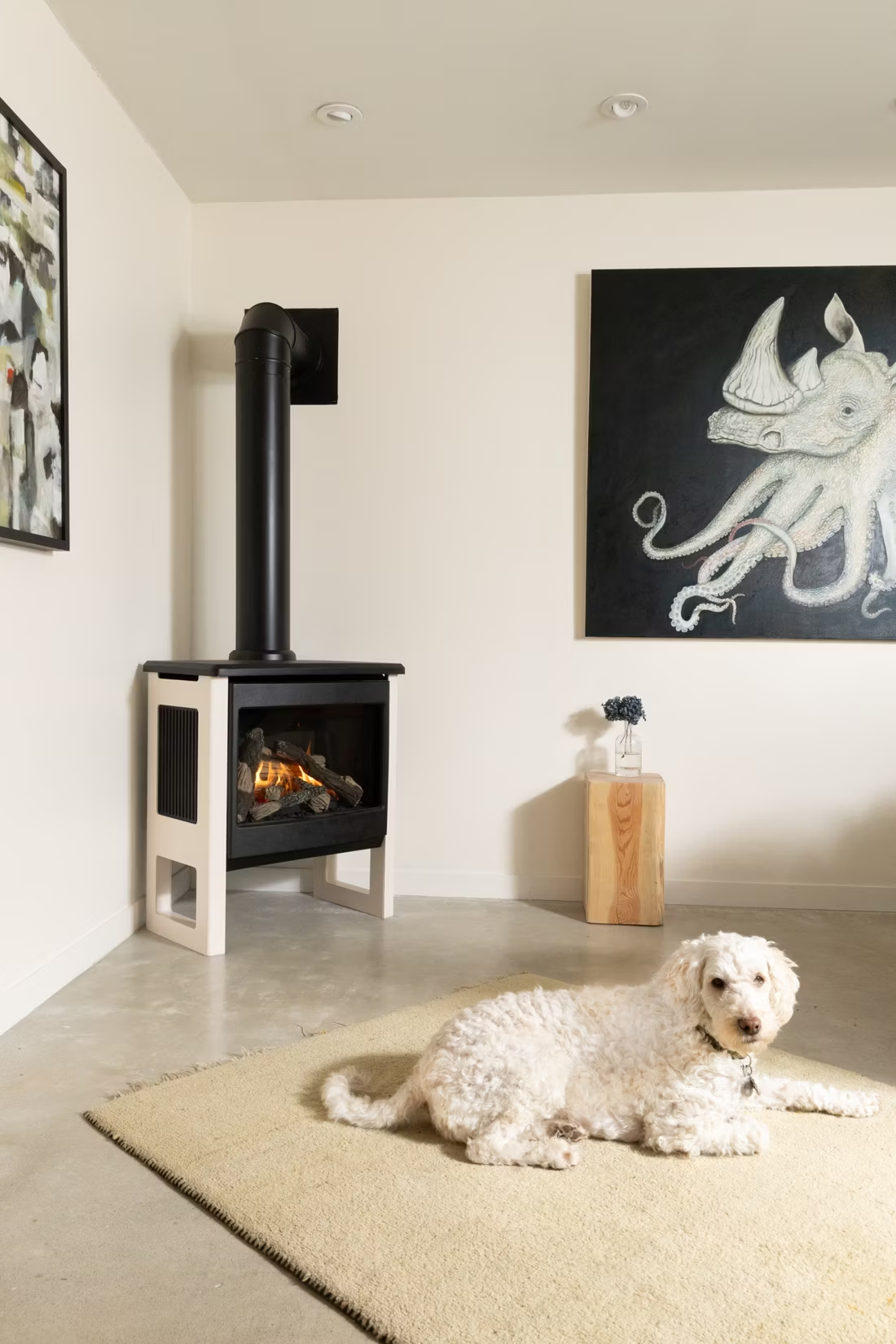
A gas fireplace is a fully built-in unit framed into a wall—the common choice for new construction and remodels around Denver's newer subdivisions. A gas insert drops into an existing masonry firebox, converting an old wood-burning fireplace into a sealed, efficient gas unit using the same chimney to vent. A gas stove is a freestanding cabinet-style unit that sits on the floor, similar in footprint to a wood stove but running on gas. For most Lincoln County homes with an existing fireplace, an insert is the simplest upgrade; homes without one usually go with a built-in fireplace or a freestanding stove.
Do I need a permit to install a gas fireplace in Lincoln County?
Yes—a building permit and a gas line permit are both required for a new gas fireplace installation, and the gas work itself has to be done by a licensed gas-fitter. Permits for Lincoln County installations are handled through the county's building inspections department, or through the applicable municipal office if you're inside Lincolnton or another incorporated town. Most local hearth dealers coordinate the permitting, gas line, and venting as part of the install, so you're not left managing separate trades yourself.
What's the difference between vented and vent-free gas fireplaces?
Vented (direct-vent) gas fireplaces pull combustion air from outside and exhaust it back outside through sealed venting—cleaner, safer, and code-compliant everywhere. Vent-free units burn directly into the room with no external venting, which is efficient on paper but releases some water vapor and combustion byproducts into the living space. Lincoln County has no air-quality non-attainment issues that would restrict either type, and vent-free units are legal in North Carolina with proper room sizing and oxygen depletion sensors—but most local dealers still steer homeowners toward direct-vent units for day-to-day indoor air quality, especially in smaller, well-sealed newer homes around Denver and Lake Norman.
How often should my gas fireplace be serviced?
Plan on an annual inspection, ideally before the first cold snap each fall. A technician checks the burner, pilot assembly, gas connections, and venting, and cleans the glass and interior—a much lighter task than a wood chimney sweep, but it matters for safety and keeps the warranty intact. The gas service providers who cover Lincolnton, Denver, and the rest of the county typically handle this in under an hour.
Gas vs. wood or pellet—which is right for my home?
Wood, cut from the oak, hickory, maple, and pine common to Lincoln County's forests (with cutting permits available through the Nantahala-Pisgah National Forests at roughly $20 per cord during the May-to-October season), gives you a real fire and heat that keeps working without power. Pellet stoves burning regional brands like Lignetics, Hamer Pellet Fuel, or Greenway Renewable Energy are more automated but need electricity to run the auger. Gas beats both on convenience—instant on-off, no hauling fuel, no ash—which is a big part of why it's become the default choice in newer construction around Denver and the Lake Norman side of the county. For a primary living space where daily ease matters more than the ritual of tending a fire, gas is usually the better fit.
Can I put a TV above my fireplace?
Yes—with an asterisk. Fireplaces are hot and TVs don't like heat. Either put a mantel between them to deflect rising warmth, or choose a fireplace with heat-management technology that creates a cool zone on the wall above—the wall stays around 125 degrees, barely warm, while the room still gets full heat. If you like clean lines and don't want a mantel, heat management is the answer.
Why is a fireplace insert so efficient?
An insert does two things: it seals the chimney completely, so you stop losing air you already paid to heat, and it radiates warmth into the room through the firebox and glass. Most add a heat-exchange fan that pulls cool room air underneath, wraps it around the hot firebox, and pushes it back out warm. Your home is more efficient before you've even lit the first fire.
What is an in-home preview and do I need one?
It's a visit where a hearth professional measures your space, confirms the model you picked actually works in your home, and walks the specs—framing, gas line, venting, finish work—before anything is ordered. Some details you just can't know until you see the house. Never make a down payment without one; it's the single most-skipped step that burns buyers.
Can a fireplace actually lower my heating bill?
Yes—by creating a comfort zone. A furnace heats every square foot of the house just to warm the one room you're in; a gas fireplace on low burns roughly a sixth of the gas a typical furnace does. Set the furnace around 55–60 degrees as a baseline, then heat the rooms your family actually uses. Families who heat this way commonly save $20–$60 a month.
Stove and Fireplace Dealers in Lincoln County
Find your gas fireplace in Lincoln County.
Tell us a bit about your home and we'll match you with a trusted local dealer and send over a free Project Guide & Parts List—the right gas fireplace or insert for your space, the vent kit it needs, and who locally can install it.
Find Your Fireplace →