
Pellet Heat Isn't Common in Kernersville—But It Still Has a Place.
Kernersville's mild Piedmont winters mean most homes lean on gas or electric heat. If a pellet stove still makes sense for your house, we'll connect you with a dealer who actually installs and services them.
Every Project Starts From One of These Five Situations
Kernersville's mild winters favor gas and electric—not pellet.
Kernersville sits in the North Carolina Piedmont at about 934 feet elevation, in climate zone 4A, with an average winter low near 30°F and a fairly short, mild heating season. That's a fraction of the heating load in places like Duluth, MN or Burlington, VT, where pellet stoves are a genuine primary heat source for months at a time. Here, a furnace or heat pump comfortably handles most of the winter, which is a big part of why pellet appliances never became a standard fixture in local homes.
Natural gas and electricity are the default choices in Kernersville, served by Duke Energy Carolinas and EnergyUnited Electric Membership Corporation depending on where you live in Forsyth County. There's no regional air quality non-attainment issue pushing homeowners toward cleaner-burning pellet appliances the way there is in parts of the West, and few local hearth shops stock pellet stoves as a core product line. That said, a small number of Kernersville homeowners do install one—for supplemental heat during ice-storm power outages, for the look and smell of a real flame without splitting wood, or simply because they like running one. If that's you, we can still match you with a dealer who carries and services them properly.
Three steps. No salesperson until you're ready.
Tell us about your project
Your zip code, your situation, and the fuel you're leaning toward—or let the answers point you to one.
See what's actually available
The brands dealers within 100 miles genuinely carry—real options, never a catalog mirage.
Get your dealer & Project Guide
A trusted local dealer, plus the free Project Guide & Parts List that names every component of the job.
Frequently Asked Questions
Do pellet stoves make sense for a house in Kernersville?
For most homes here, not as a primary heat source. With average winter lows around 30°F and a fairly short, mild heating season, Kernersville's climate is mild compared to places where pellet stoves are common—think Duluth, MN or Fargo, ND—and a gas furnace, heat pump, or gas fireplace insert generally covers the heating load more efficiently. Where a pellet stove does make sense locally is as supplemental heat for a bonus room, a den that runs cold, or backup warmth during an ice-storm outage that knocks out the grid for a day or two. It's a legitimate choice, just a niche one here rather than a default.
Where can I actually buy pellet fuel near Kernersville?
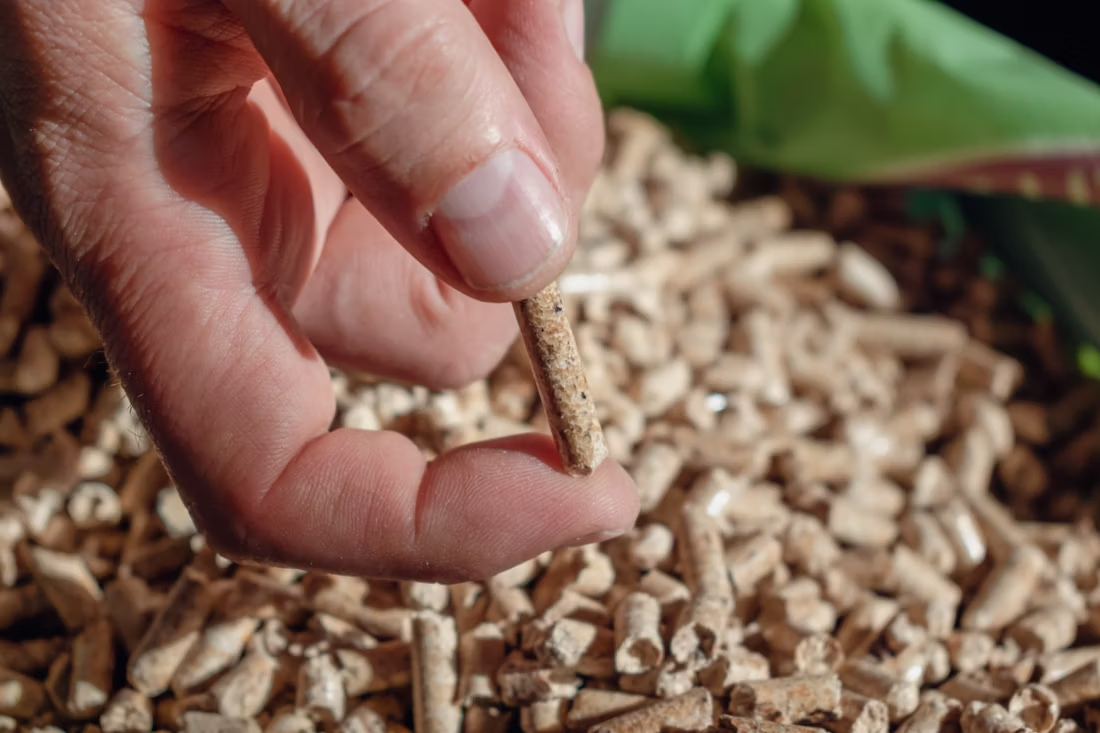
Because pellet stoves aren't a big local market, pellet fuel isn't stocked on every corner the way firewood or propane is. Brands like Lignetics, Hamer Pellet Fuel, and Greenway Renewable Energy circulate through the Carolinas and are typically available through farm supply stores, a handful of hearth dealers, or by special order—sometimes by the pallet (usually 50 forty-pound bags) rather than single bags. If you go this route, plan to buy your season's supply in one or two trips rather than counting on picking up bags as you go.
What does a pellet stove installation cost in Kernersville?
There isn't a well-established local price benchmark simply because so few Piedmont dealers install them regularly, but nationally a pellet stove installation—unit, venting, and labor—typically runs $3,000 to $6,000, with inserts into an existing fireplace often landing on the lower end. Because pellet stoves need dedicated venting (not a standard chimney flue) and, in most cases, a nearby outlet for the auger and blower motor, get a firm in-home quote from a dealer who actually installs pellet units regularly rather than a generalist who only occasionally handles them.
Do I need a permit to install a pellet stove in Kernersville?
Yes—a solid-fuel appliance installation typically requires a permit through the Town of Kernersville or Forsyth County building inspections, covering the appliance's listing (UL 1482 for pellet stoves), clearances, and venting termination. This is a smaller lift than a wood stove permit since pellet venting doesn't require a full masonry chimney, but it's still an inspected install. A dealer who installs pellet appliances regularly, even if that's a short list locally, will usually pull the permit for you as part of the job.
What size pellet stove do I need?
Pellet stoves are rated by BTU output and hopper capacity rather than square footage alone. A small unit (under 30,000 BTU) suits a single room or bonus space; a mid-size unit (35,000–50,000 BTU) can supplement heat for an open living area in a typical Kernersville home. Given the mild climate here, oversizing is a common mistake—most local installs are meant to supplement a furnace or heat pump, not replace it, so a smaller unit with a longer burn time per hopper load is usually the better fit than the biggest model on the showroom floor.
Should I get a pellet stove or a gas insert instead?
For Kernersville, gas is the more practical everyday choice. Duke Energy Carolinas and EnergyUnited both serve reliable electric territory, and natural gas or propane appliances offer instant on-off heat with a wall switch or remote—no hopper to fill, no ash pan to empty. A pellet stove needs electricity to run its auger and combustion blower, so it won't function at all during a power outage unless you have battery or generator backup, which undercuts one of the reasons people sometimes choose solid-fuel heat in the first place. Pellet still wins on ambiance—a real flame and the smell of a wood fire—and on using a renewable, domestically produced fuel. If neither of those matters more to you than convenience, gas is usually the better fit here.
Are there tax credits available for pellet stoves?
Yes, and this applies nationally regardless of how common pellet stoves are locally: high-efficiency wood and pellet stoves rated at 75% efficiency or higher (by HHV) can qualify for a 30% federal tax credit under the Residential Clean Energy Credit, covering both equipment and installation costs, up to program limits. Ask any dealer you work with for the manufacturer's efficiency documentation—you'll need it to claim the credit, and not every model on the market qualifies.
How much maintenance does a pellet stove actually need?
More hands-on than a gas fireplace, less than a wood stove. Expect to empty the ash pan and clean the burn pot every few days of regular use, vacuum the hopper and exhaust passages periodically through the season, and have the venting and combustion blower professionally inspected once a year—ideally before the appliance sits unused through Kernersville's long mild stretches from spring through fall. Because pellet stoves have moving mechanical parts (auger motor, igniter, blower), an annual service visit also catches wear items before they fail mid-winter.
Why don't more homes in Kernersville have pellet stoves?
Mostly climate and infrastructure. Kernersville's heating load is modest—a fairly short, mild heating season with winter lows averaging 30°F—so gas furnaces and heat pumps handle the job efficiently without the hassle of hopper loading or ash disposal. There's also no local air-quality non-attainment designation the way there is in parts of the West, so there's never been a regulatory or smoke-management push toward cleaner-burning pellet appliances here. Add in the fact that natural gas service from Duke Energy Carolinas and EnergyUnited reaches most of Forsyth County, and gas simply became the path of least resistance for local homeowners and hearth dealers alike.
Why is a fireplace insert so efficient?
An insert does two things: it seals the chimney completely, so you stop losing air you already paid to heat, and it radiates warmth into the room through the firebox and glass. Most add a heat-exchange fan that pulls cool room air underneath, wraps it around the hot firebox, and pushes it back out warm. Your home is more efficient before you've even lit the first fire.
What's the difference between an insert and a zero-clearance fireplace?
An insert is a fireplace that slides into a pre-existing wood-burning fireplace—if you don't have one, there's nothing to insert it into. A zero-clearance fireplace is built into a framed wall, which makes it the answer for remodels and new construction. Simple test: existing masonry fireplace means insert; blank or framed wall means zero-clearance.
Does a fireplace add value to my home?
On average, a fireplace adds back to the home about the same amount you spent installing it. Add the monthly savings from heating the rooms you actually use instead of the whole house—often hundreds of dollars a year—and the value case is strong before you even count what a fire does for how your family uses the room.
How much should I budget for a fireplace?
For an average home—covering the fireplace, the vent pipe, and basic installation—a budget between $3,900 and $5,500 gives you a lot of options across wood, gas, and pellet. By the time you add finish work, gas line, and electrical, the average complete installation lands between $5,000 and $12,000 all-in. In a remodel or new build, a good rule is to put about 2.5% of the total project cost toward the fireplace.
Pellet Brands Stocked Around Kernersville
Manufacturers will point you to the nearest stocking dealer.
See what's actually available near Kernersville.
Whether a pellet stove genuinely fits your home or a gas or electric option makes more sense in Kernersville's mild climate, tell us about your project and we'll send a free Project Guide & Parts List—the right appliance, venting, and a trusted local dealer who actually installs it.
Find Your Fireplace →