
Find the Right Fireplace for Your Forsyth County Home.
Fireplace resources for every city and community in Forsyth County—from Winston-Salem to Kernersville, Clemmons, and Lewisville. Find the right unit and connect with a trusted local hearth retailer.
Every Project Starts From One of These Five Situations
Mild Piedmont Winters, Modern Heating Choices Across Forsyth County.
Forsyth County sits in the North Carolina Piedmont, home to Winston-Salem and more than 500,000 residents across a mix of dense urban neighborhoods, suburban subdivisions, and rolling farmland toward Kernersville and Tobaccoville. Winters here are mild by national standards—average lows sit around 31°F and the county logs roughly 3,500 heating degree days a season, a fraction of what a place like Duluth, MN or Bismarck, ND sees. Ice storms and the occasional hard freeze happen, but sustained deep-cold stretches are rare. That climate shapes what actually gets installed here: gas fireplaces for reliable, low-labor heat, and electric units for supplemental warmth in bedrooms, sunrooms, and finished basements.
What you'll find on this hub: hearth retailers, service technicians, and fuel suppliers serving every community in the county—from downtown Winston-Salem out to Kernersville, Clemmons, Lewisville, Rural Hall, Walkertown, and the smaller towns along the Yadkin River corridor. Wood-burning and pellet appliances exist here too, mostly for ambiance or ice-storm backup in older homes with access to local oak and hickory, but they're the exception rather than the rule. Pick your fuel below to see local dealers, installation costs, and the resources that match your project.
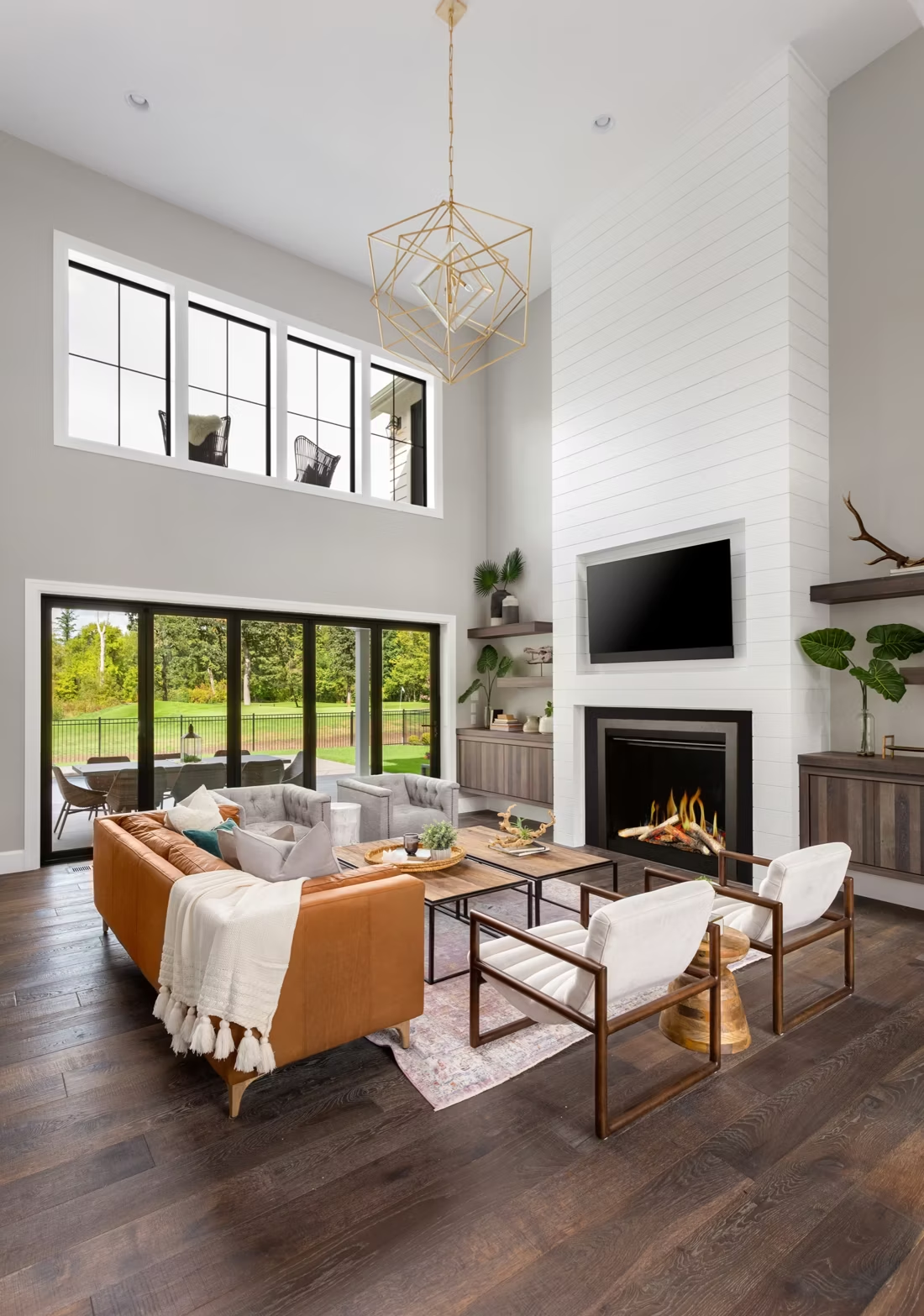
Four fuels. One honest answer for Forsyth County.
Three steps. No salesperson until you're ready.
Tell us about your project
Your zip code, your situation, and the fuel you're leaning toward—or let the answers point you to one.
See what's actually available
The brands dealers within 100 miles genuinely carry—real options, never a catalog mirage.
Get your dealer & Project Guide
A trusted local dealer, plus the free Project Guide & Parts List that names every component of the job.
Frequently Asked Questions
Which fuel works best in Forsyth County?
For most homes in Forsyth County, gas or electric is the practical choice. With average winter lows around 31°F and roughly 3,500 heating degree days a season—nowhere close to what a cold-climate city like Fargo, ND or Madison, WI logs—the county doesn't have the sustained deep-cold that makes wood or pellet heat a necessity. Gas fireplaces, run on Piedmont Natural Gas service through most of Winston-Salem and the closer-in suburbs, give instant heat with none of the labor. Electric units work well as supplemental heat in bedrooms, sunrooms, and finished basements, backed by Duke Energy's grid. Wood-burning fireplaces still exist in older Forsyth County homes—often masonry fireplaces burning local oak or hickory—mostly for ambiance or as backup during the occasional ice storm outage, not as a primary heat source. Pellet stoves are rarer still; the short heating season doesn't justify the storage and handling for most households.
Do I need a permit to install a fireplace in Forsyth County?
Yes, in most cases. Gas fireplace, insert, and stove installations require a building permit through the local permitting office—for homes inside Winston-Salem city limits that's the city/county joint inspections process, and unincorporated Forsyth County goes through the county building department. Gas work also requires a separate gas permit and a licensed gas fitter to make the connection. Electric fireplaces generally don't need a permit for plug-in units, but built-in electric fireplaces that require a dedicated circuit or hardwiring need an electrical permit. Most local retailers who sell and install gas or electric units handle the permitting as part of the job, so you typically aren't filing paperwork yourself.
Are there air quality restrictions on fireplaces in Forsyth County?
No—Forsyth County doesn't have the winter inversion or non-attainment issues that trigger burn advisories in some western basins. There's no local restriction on gas or electric fireplace use. If you do install a wood-burning appliance for ambiance or ice-storm backup, choosing an EPA-certified unit is still worth it for efficiency and cleaner burns, even though it isn't required by any local air quality rule here.
Can one local hearth retailer handle both gas and electric fireplaces?
Yes—most hearth retailers serving Forsyth County carry both gas and electric lines, since those are the two fuels that see the bulk of local demand. A dealer that stocks both can walk you through the trade-offs directly: gas gives you real flame and works during a power outage if the unit has a battery-backup ignition, while electric is simpler to install, cheaper up front, and flexible for rooms without a gas line or masonry chimney. A smaller number of retailers also handle wood inserts for older Winston-Salem homes with existing masonry fireplaces, but that's a secondary offering for most of them, not the main business.
How do gas and electric fireplaces hold up during Forsyth County's ice storms?
Piedmont ice storms are the main winter risk in Forsyth County, and they can knock out Duke Energy power for hours or, in bad years, days. A gas fireplace with a millivolt or battery-backup ignition system will keep running through a power outage since it doesn't depend on grid electricity to operate—that's a real advantage for anyone who wants heat redundancy. Electric fireplaces, by contrast, go dark the moment the power does, so they're best treated as everyday supplemental heat rather than an outage plan. If backup heat during storms is a priority, ask your local retailer specifically about battery-backup ignition when you're comparing gas units.
What's the typical cost range for gas and electric fireplace installation in Forsyth County?
Gas fireplace, insert, or stove: roughly $4,000–$10,000 depending on whether a new gas line needs to be run and what venting the install requires; conversions of an existing wood-burning fireplace to gas tend to land on the lower end. Electric fireplace: $200–$3,000 for the unit itself, plus $400–$1,200 in labor for anything beyond a simple plug-and-play install, which covers most wall-mount, insert, and built-in electric installations. Wood inserts, where they're still installed in older homes, typically run $4,500–$9,000. For details tied to specific local retailer pricing, see the county + fuel pages above.
Wood, gas, pellet, or electric—how do I choose?
Match the fuel to your life, not the other way around. Wood: lowest fuel cost and total power-outage independence, but you're hauling and stacking. Gas: press a button, set a thermostat, no maintenance to speak of. Pellet: wood economics with automatic feeding, in exchange for weekly cleaning and a need for electricity. Electric: plugs in anywhere with honest supplemental heat. Nobody regrets the fuel that fits how they actually live.
Can a fireplace actually lower my heating bill?
Yes—by creating a comfort zone. A furnace heats every square foot of the house just to warm the one room you're in; a gas fireplace on low burns roughly a sixth of the gas a typical furnace does. Set the furnace around 55–60 degrees as a baseline, then heat the rooms your family actually uses. Families who heat this way commonly save $20–$60 a month.
Can I install a fireplace myself?
If you're putting a fire in your house on purpose, it's best to work with an expert. Unless you're genuinely experienced in framing, gas line, vent pipe, and the national code on clearances to combustibles, have a professional do it—and ideally the same company that sells you the fireplace, so warranty, service, and liability all live under one roof.
Should the dealer who sells my fireplace also install it?
Ideally, yes. A fireplace project involves vent pipe, gas line, electrical, and often tile or stone. Hire three or four separate trades and you own the liability and the game of telephone between them. One company selling and installing means one accountable party, start to finish—ask about factory training, on-time completion records, and what happens if an inspection fails.
Stove and Fireplace Dealers in Forsyth County
Listings include WhyFire partner dealers, dealers we have verified as authorized for the brands we recommend, and established local businesses that carry hearth products. Every listing shows which one it is. The ones marked Preferred run on WhyFire's software, so they can show you real pricing and book your appointment right here. No manufacturer pays for placement. How we verify dealers →
Environmental Heating Solutions
Pilot Air & Appliances
Blossman Gas
Lanier Ace Hardware
Builder's Fireplace & Stone
Get Matched with a Local Forsyth County Fireplace Dealer.
Tell us about your gas or electric fireplace project and we'll match you with a trusted local dealer, plus send a free Project Guide & Parts List—the exact parts, venting, and recommended installer for your Forsyth County home.
Find Your Fireplace →