
A niche choice for Jacksonville's mild coastal winters.
With just a mild, short heating season and winter lows averaging 35°F, Jacksonville rarely needs the kind of sustained heat output a pellet stove is built for. A handful of homeowners still install one—for backup heat, ambiance, or a second property further inland—and I can match you with a local dealer who actually installs and services them here.
Every Project Starts From One of These Five Situations
Heat pumps and gas do the heavy lifting here.
Jacksonville sits at sea level in coastal Onslow County, squarely in climate zone 3A, where the humid subtropical climate keeps heating demand light. With a mild, short heating season, this is a fraction of what a pellet-heavy market like Burlington, Vermont sees in a single season—Burlington has a much longer, far colder winter heating season, and that gap is exactly why pellet stoves never became a mainstream category around Onslow County. Winter lows here average a mild 35°F, and hard freezes are the exception rather than the rule, so most homes are built and heated around electric heat pumps or gas, not a hopper full of wood pellets.
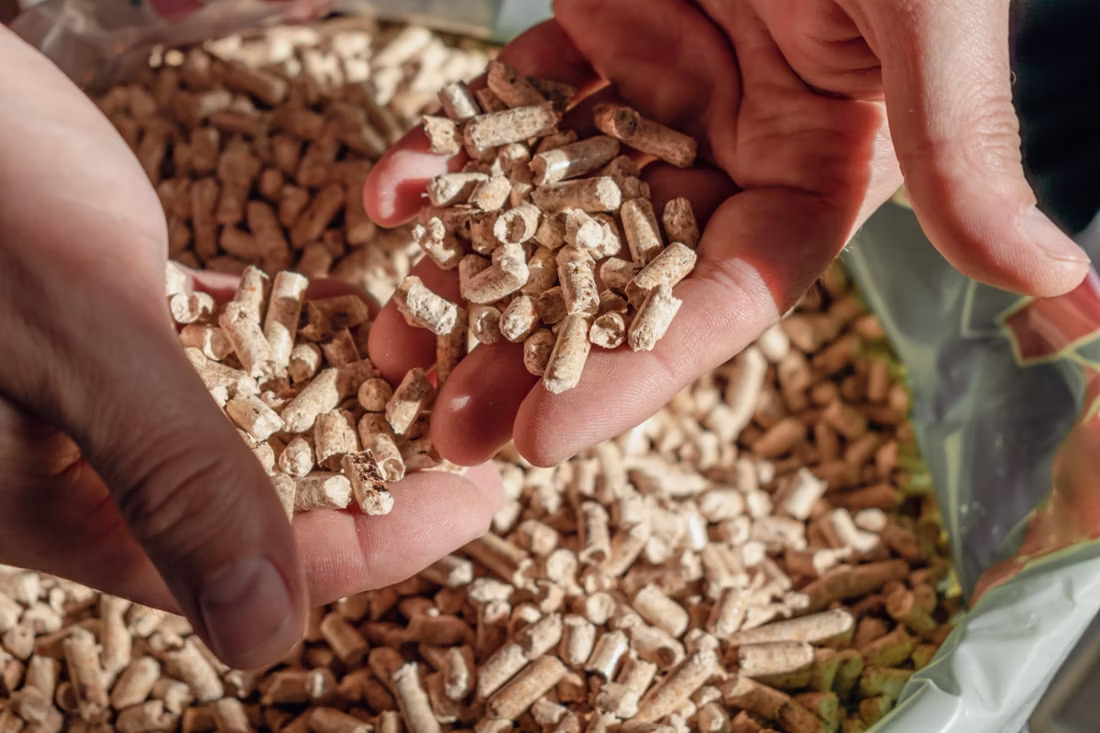
That doesn't mean pellet stoves are absent—a limited number of Jacksonville homeowners install one for supplemental heat during the occasional cold snap, for the ambiance of a real flame without a chimney, or for a second property further inland where winters run colder. When they do, regional brands like Lignetics, Hamer Pellet Fuel, and Greenway Renewable Energy are the pellets most commonly available through Coastal Carolina retailers, though you may need to plan ahead and buy pallets before the short burning season rather than restocking mid-winter. Because demand is thin, fewer local dealers stock and service pellet appliances compared to gas fireplace specialists—which is exactly where a trusted local match matters more than a big-box guess.
Three steps. No salesperson until you're ready.
Tell us about your project
Your zip code, your situation, and the fuel you're leaning toward—or let the answers point you to one.
See what's actually available
The brands dealers within 100 miles genuinely carry—real options, never a catalog mirage.
Get your dealer & Project Guide
A trusted local dealer, plus the free Project Guide & Parts List that names every component of the job.
Frequently Asked Questions
Are pellet stoves actually popular in Jacksonville, NC?
Not especially—with only a mild, short heating season and winter lows averaging 35°F, most Onslow County homes are heated by electric heat pumps through Duke Energy Progress or Jones-Onslow Electric Member Corp, or by gas. Pellet stoves show up here as a secondary or lifestyle choice more than a primary heating decision, which is different from what you'd find in a colder pellet market like Buffalo or Duluth. That said, a real subset of homeowners here do install one, usually for a den, a workshop, or a rental cabin further inland.
How much does a pellet stove installation cost in Jacksonville?
Expect a typical range of roughly $3,000 to $6,000 for a freestanding pellet stove with venting through an exterior wall, similar to national averages, since Jacksonville doesn't have the install-cost premiums that come with steep-pitch chimneys or extreme cold-weather venting requirements. Because pellet demand is limited locally, it's worth confirming your installer regularly services pellet units rather than just gas or electric fireplaces—the auger, hopper, and venting all need pellet-specific know-how that not every Jacksonville hearth shop keeps current.
Do I need a permit to install a pellet stove in Jacksonville?
Yes. Depending on your address, you'll pull a building permit through the City of Jacksonville or Onslow County, and the vent run through an exterior wall typically needs inspection just like any solid-fuel appliance. Given how few pellet installs happen in Onslow County compared to gas or electric, it's worth using a dealer who's pulled these permits before rather than one who mostly does gas logs—the inspection points are different.
What size pellet stove makes sense for a Jacksonville home?
Smaller than you might guess. With winter lows averaging 35°F and a heating season that's short by national standards, a pellet stove rated for 1,000 to 1,500 square feet is plenty for most Jacksonville living rooms or dens, even as a primary heat source for that one room. Oversizing is the more common mistake here—a unit sized for a Duluth winter will run you out of the room on Jacksonville's milder January afternoons.
Will a pellet stove keep working during a hurricane-season power outage?
Only with a backup power plan. Pellet stoves need electricity to run the auger and combustion blower, so when Duke Energy Progress or Jones-Onslow Electric lines go down during a tropical storm or hurricane, the stove stops with them. Homeowners in Onslow County who want heat resilience through storm season usually pair a pellet stove with a small generator or battery backup, or they choose a wood-burning or vented gas appliance instead specifically because it doesn't depend on grid power.
What pellet brands can I actually buy near Jacksonville?
Lignetics, Hamer Pellet Fuel, and Greenway Renewable Energy are the brands most commonly stocked by Coastal Carolina hearth and feed-supply retailers. Because Onslow County's pellet-burning season is short and demand is modest, supply can tighten in a rare deep-cold stretch—buying your season's pallets in fall rather than waiting for a cold snap is the safer approach here.
Pellet stove or gas fireplace—which fits a Jacksonville home better?
For most Onslow County homes, gas is the more practical everyday choice—natural heat pumps and gas systems already dominate here, and a gas fireplace or insert gives you instant, thermostat-level heat without hauling pellet bags. A pellet stove makes more sense if you specifically want the look and feel of a real fire, don't mind refilling a hopper, and are comfortable that it depends on grid power. Given Jacksonville's mild climate, most homeowners who install a pellet stove are choosing it for ambiance and occasional supplemental heat rather than as their main heat source.
Does Jacksonville's humidity cause problems for pellet storage?
It can. Coastal Onslow County's humidity is high enough that pellets left in an open garage or unsealed bag will absorb moisture, swell, and turn to sawdust rather than burning cleanly. Store bags off the concrete floor, ideally in a sealed bin or a climate-controlled space, and buy pellets closer to when you'll actually burn them rather than stockpiling a full season's supply in a damp shed.
Are there rebates or tax credits for pellet stoves in Jacksonville or North Carolina?
North Carolina doesn't currently run a pellet-stove-specific rebate program, but the federal biomass stove tax credit—up to 30% of cost and installation, capped at $2,000—applies to qualifying high-efficiency pellet stoves nationwide, including here in Jacksonville. It's worth asking your local dealer for the manufacturer's efficiency documentation you'll need to claim it at tax time.
Why is a fireplace insert so efficient?
An insert does two things: it seals the chimney completely, so you stop losing air you already paid to heat, and it radiates warmth into the room through the firebox and glass. Most add a heat-exchange fan that pulls cool room air underneath, wraps it around the hot firebox, and pushes it back out warm. Your home is more efficient before you've even lit the first fire.
Why is my open fireplace making my house colder?
Open fireplaces suck—literally. As the fire burns, it consumes air your furnace already paid to heat and pulls it out through the chimney, so the house is actually colder after the fire goes out than before you lit it. An insert fixes this: it seals the chimney, puts fixed glass across the front, and turns that hole in your house into a real heat source.
Can a fireplace actually lower my heating bill?
Yes—by creating a comfort zone. A furnace heats every square foot of the house just to warm the one room you're in; a gas fireplace on low burns roughly a sixth of the gas a typical furnace does. Set the furnace around 55–60 degrees as a baseline, then heat the rooms your family actually uses. Families who heat this way commonly save $20–$60 a month.
How much should I budget for a fireplace?
For an average home—covering the fireplace, the vent pipe, and basic installation—a budget between $3,900 and $5,500 gives you a lot of options across wood, gas, and pellet. By the time you add finish work, gas line, and electrical, the average complete installation lands between $5,000 and $12,000 all-in. In a remodel or new build, a good rule is to put about 2.5% of the total project cost toward the fireplace.
Nearby Dealers
Hearth shops serving Jacksonville and the surrounding area.
Pellet Brands Stocked Around Jacksonville
Manufacturers will point you to the nearest stocking dealer.
Get your free Project Guide & Parts List for a Jacksonville pellet stove.
Tell me about your home and how you plan to use the stove—primary heat, backup, or ambiance—and I'll match you with a trusted local dealer who actually installs and services pellet appliances in Onslow County, plus a free Project Guide & Parts List with the vent kit and parts specified.
Find Your Fireplace →