
Warmth That Plugs In—No Chimney, No Gas Line.
Coastal North Carolina winters rarely demand a wood stove or gas insert. Find the right electric fireplace for your Jacksonville home, and connect with a trusted local dealer.
Every Project Starts From One of These Five Situations
A mild coastal climate makes electric the practical choice.
Jacksonville sits at sea level along the New River in Onslow County, home to Marine Corps Base Camp Lejeune and a population of more than 111,000. Winters here are short and mild—average lows hover around 35°F, and the city logs only a light winter heating load, a fraction of what a place like Duluth, MN racks up in a single hard winter. Climate zone 3A means humid, temperate conditions where a hearth is rarely doing the heavy lifting of keeping a house warm.
That combination—mild weather, a large renter and active-duty population that moves frequently, and no wood or pellet fuel culture to speak of on this flat coastal plain—is exactly where electric fireplaces earn their keep. A plug-in or built-in electric unit needs no chimney, no gas line, and in most cases no permit, which matters in a city where a large share of housing turns over with every PCS season. Local electricity comes from Duke Energy Progress or Jones-Onslow Electric Membership Corporation depending on where you sit on the zip code map, with residential rates running about 15.5 and 13.1 cents per kWh respectively—cheap enough that running a 1,500-watt unit for an evening costs well under a quarter.
Three steps. No salesperson until you're ready.
Tell us about your project
Your zip code, your situation, and the fuel you're leaning toward—or let the answers point you to one.
See what's actually available
The brands dealers within 100 miles genuinely carry—real options, never a catalog mirage.
Get your dealer & Project Guide
A trusted local dealer, plus the free Project Guide & Parts List that names every component of the job.
Frequently Asked Questions
How much does an electric fireplace cost to install in Jacksonville?
Because there's no chimney, gas line, or venting involved, electric is the least expensive fireplace category to install in Jacksonville. A freestanding or plug-in unit typically runs $150 to $600 installed, since it just needs a standard outlet. A built-in wall unit or an insert designed to slide into an existing masonry firebox runs higher, generally $800 to $2,500, especially if a dedicated 20-amp circuit needs to be run by an electrician. Compare that to gas insert work common elsewhere in Onslow County, which often requires a licensed gas-fitter and runs well into the thousands—electric skips that step entirely.
Do I need a permit to install an electric fireplace in Jacksonville?
In most cases, no. A plug-in electric fireplace or a wall-mount unit that uses an existing outlet doesn't trigger a building or electrical permit. If your installer needs to add a new dedicated circuit or breaker to support a larger built-in unit, that electrical work does require a permit through the City of Jacksonville Inspections Department (or Onslow County Inspections if you're outside city limits), and it needs to be pulled by a licensed electrician. Either way, it's a far simpler permitting path than the gas line and venting inspections a gas fireplace install requires.
What's the best type of electric fireplace for Jacksonville's climate?
With winter lows averaging around 35°F and only a light winter heating load, most Jacksonville homes don't need a fireplace as a primary heat source—central HVAC handles that. A wall-mount or built-in insert works well for ambiance and light supplemental warmth in a living room or bedroom, while a freestanding unit gives renters and families near Marine Corps Base Camp Lejeune the flexibility to take it with them at the next PCS move. Look for a unit with a real flame-effect (LED ember bed and rotating flame media) rather than the older plastic-log style if you want something that reads as a genuine focal point, not just a space heater in a box.
How much does it cost to run an electric fireplace in Jacksonville?
Running costs depend on which utility serves your address. Duke Energy Progress customers pay about 15.5 cents per kWh, while Jones-Onslow Electric Membership Corporation customers pay closer to 13.1 cents. A typical 1,500-watt electric fireplace on the heat setting costs roughly 20 to 23 cents an hour to run—so a few hours each evening through a mild Jacksonville winter adds up to maybe $10 to $20 a month, far less than most homeowners expect from a gas or wood alternative.
Is an electric fireplace a good fit for rental housing or Camp Lejeune base housing?
Yes, and it's one of the more common reasons homeowners and renters in Jacksonville choose electric. With such a large share of the local population tied to Camp Lejeune and rotating on military assignment cycles, a freestanding or plug-in electric fireplace makes sense: no permanent modification to the home, no landlord approval for gas or wood-burning work, and it moves with you at the next PCS. Built-in wall units are better suited to homeowners planning to stay put, since they involve cutting into drywall or framing.
Does coastal humidity affect electric fireplaces in Jacksonville?
Electric units hold up well in Jacksonville's humid coastal air since there's no metal flue or chimney exposed to the weather the way a wood or gas vent would be. The main thing to watch is placement—avoid installing near a bathroom or laundry area without a GFCI-protected outlet, and keep units a few inches from exterior walls where condensation can form during Onslow County's muggy summers. Otherwise, maintenance is minimal: an occasional dusting of the fan and heating element is about all an electric fireplace needs.
Electric vs. gas fireplace—which makes more sense in Jacksonville?
Gas fireplaces are available and popular in Jacksonville for homeowners who want higher heat output during the occasional hard freeze or want a fireplace that can also warm a room during a power outage. Electric fireplaces skip the gas line, venting, and annual burner service that a gas unit requires, and cost far less to install and run in a climate where you're heating a room for ambiance more often than out of necessity. For most Jacksonville living rooms, dens, or bedrooms, electric covers the need; homeowners who want a workhorse heat source for the coldest nights of the year sometimes still choose gas.
Are electric fireplaces safe for homes with kids or pets?
Electric fireplaces are one of the safer hearth options for households with young kids or pets, since the glass front stays cool to the touch—there's no open flame, no hot glass like a wood stove, and no risk of embers or sparks. That's part of why they're popular in family neighborhoods around Jacksonville like those near Northwoods and Piney Green. Most units also have a heat-only-when-needed setting, so you can run the flame effect for ambiance without the heater running at all, which matters during Jacksonville's warm, humid summers.
Why don't more Jacksonville homes use wood or pellet stoves?
Wood and pellet stoves are uncommon in Jacksonville, and for good reason—this is flat coastal plain, not the forested mountain terrain where cutting permits and cordwood culture make wood heat practical. With winter lows averaging 35°F and barely any sustained winter heating load, there's rarely enough sustained cold to justify the chimney, venting, and creosote maintenance a wood-burning appliance demands. A small number of homeowners with existing masonry fireplaces still burn local oak, hickory, or pine occasionally for ambiance, but electric and gas cover the vast majority of hearth installations in Onslow County.
Can I put a TV above my fireplace?
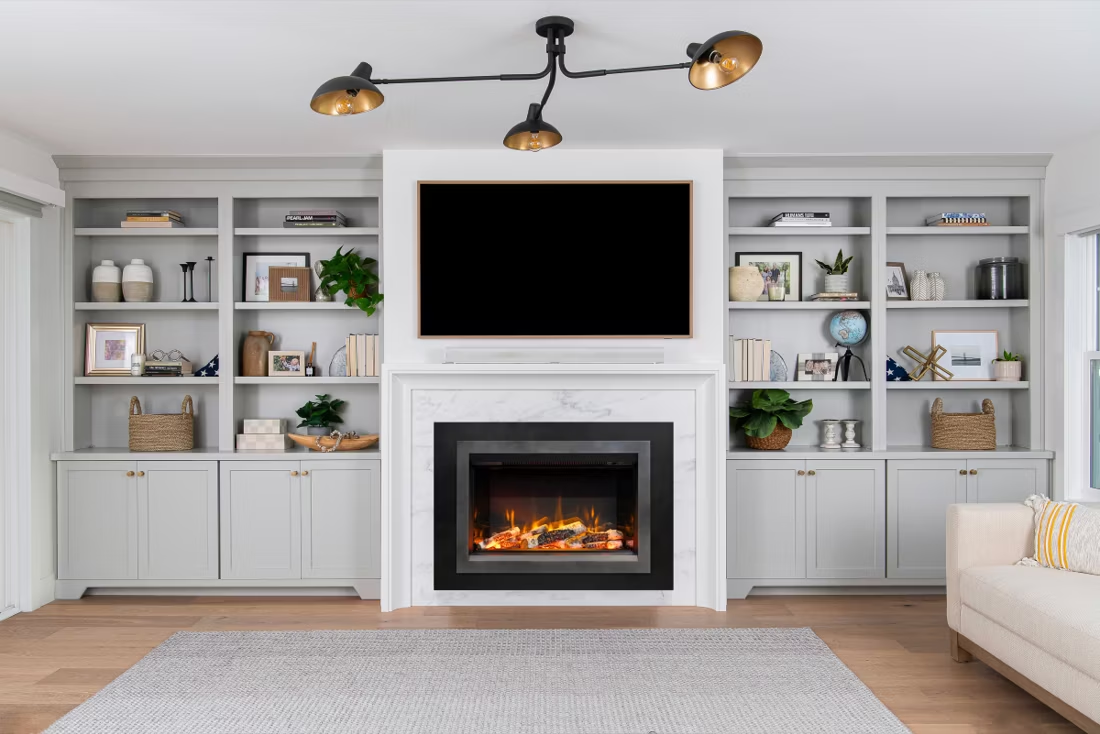
Yes—with an asterisk. Fireplaces are hot and TVs don't like heat. Either put a mantel between them to deflect rising warmth, or choose a fireplace with heat-management technology that creates a cool zone on the wall above—the wall stays around 125 degrees, barely warm, while the room still gets full heat. If you like clean lines and don't want a mantel, heat management is the answer.
Do electric fireplaces actually produce heat?
Yes—most put out around 4,800–5,000 BTUs from a standard outlet, which comfortably warms a bedroom, office, or den as a comfort-zone heater. What they won't do is carry a whole house the way wood, gas, or pellet can. Think of electric as ambiance-first with honest supplemental heat: flames on with no heat in July, flames plus warmth in January.
Can a fireplace actually lower my heating bill?
Yes—by creating a comfort zone. A furnace heats every square foot of the house just to warm the one room you're in; a gas fireplace on low burns roughly a sixth of the gas a typical furnace does. Set the furnace around 55–60 degrees as a baseline, then heat the rooms your family actually uses. Families who heat this way commonly save $20–$60 a month.
Should the dealer who sells my fireplace also install it?
Ideally, yes. A fireplace project involves vent pipe, gas line, electrical, and often tile or stone. Hire three or four separate trades and you own the liability and the game of telephone between them. One company selling and installing means one accountable party, start to finish—ask about factory training, on-time completion records, and what happens if an inspection fails.
Nearby Dealers
Hearth shops serving Jacksonville and the surrounding area.
Electric Service in Jacksonville
An electric fireplace's heater draws about 1,500 watts—pennies per hour at local rates.
Duke Energy Progress - (Nc)
Jones-Onslow Elec Member Corp
Find your electric fireplace in Jacksonville.
Tell us a bit about your home and we'll match you with the right electric fireplace or insert, plus a free Project Guide & Parts List and a trusted local dealer to install it.
Find Your Fireplace →