
Keep Your Family Warm and Safe—No Matter What
With winter lows averaging 34°F and a fairly light heating season overall, most Hope Mills homes get by fine on a heat pump. But for backup heat during an ice storm, a detached workshop, or a hunting camp on wooded acreage, a wood stove still earns its place—and a local dealer can tell you honestly whether it fits your home.
Every Project Starts From One of These Five Situations
The Sandhills' mild winters mean wood is optional, not essential.
Hope Mills sits in Cumberland County's Sandhills region at just 162 feet of elevation, a short drive from Fayetteville and Fort Liberty. Winters here are mild by national standards—average lows hover around 34°F, and the area has a heating season that's roughly a third as demanding as a place like Duluth, MN sees in an average winter. Central heat pumps handle most of the heating load without much strain, which is why wood stoves never became a default appliance in local homes the way they did in colder parts of the country.
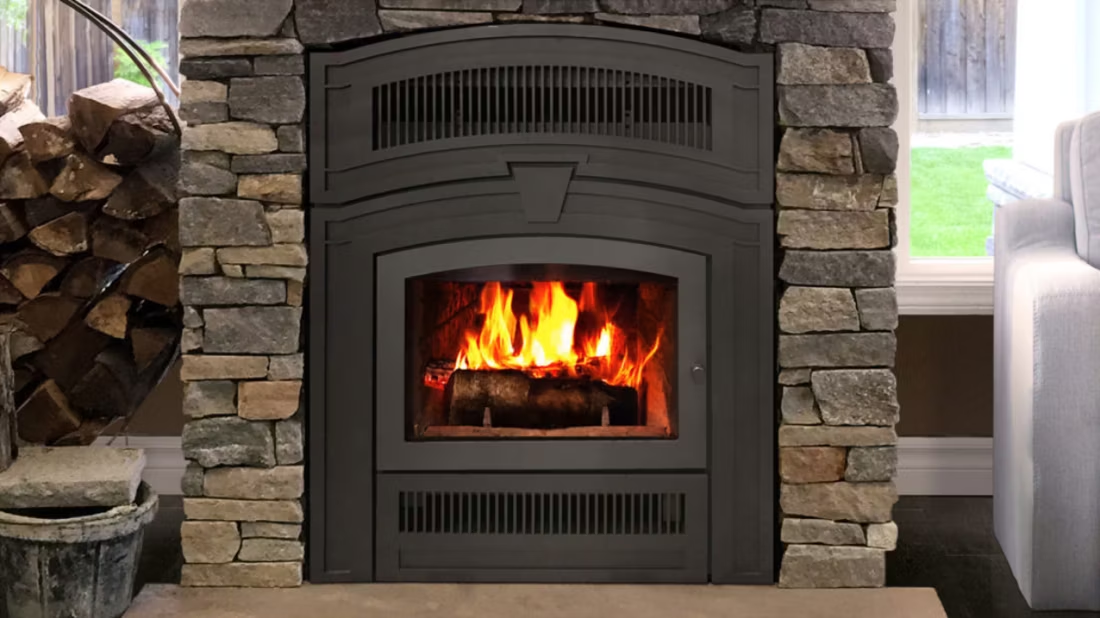
That doesn't mean wood heat has no role here. Cumberland County has plenty of oak, hickory, maple, and pine on wooded lots and rural properties, and some homeowners still install a stove for backup heat when ice storms knock out power from Duke Energy Progress or Fayetteville Public Works Commission lines, for a detached workshop or garage that isn't on the main HVAC zone, or simply for the ambiance of a real fire in a den or sunroom. There's no non-attainment designation or winter air-quality advisory in this area, so burning wood here doesn't come with the seasonal restrictions homeowners in smokier western basins deal with—it's just a smaller, more deliberate niche than a primary heat source.
Three steps. No salesperson until you're ready.
Tell us about your project
Your zip code, your situation, and the fuel you're leaning toward—or let the answers point you to one.
See what's actually available
The brands dealers within 100 miles genuinely carry—real options, never a catalog mirage.
Get your dealer & Project Guide
A trusted local dealer, plus the free Project Guide & Parts List that names every component of the job.
Frequently Asked Questions
Are wood stoves common in Hope Mills?
Not really, and it's worth saying plainly: with winter lows averaging 34°F and a heating season that's fairly light overall, most Hope Mills homes run entirely on heat pumps or gas, and wood stoves are the exception rather than the rule. The homeowners who do install one usually have a specific reason—a wooded lot with free fuel, a detached structure without central heat, or a desire for backup warmth during a winter storm—rather than needing it to survive the cold season the way a homeowner in Fargo, ND or Duluth, MN would.
What does a wood stove installation typically cost in Hope Mills?
Because wood stoves are a niche purchase locally rather than a routine one, pricing is best framed by national averages: a straightforward freestanding stove installation with new Class A chimney pipe generally runs $3,000 to $8,000, with the low end covering simpler setups and the high end covering homes that need full chimney construction through an existing roofline. Fewer installers in this market specialize in wood-burning work compared to gas or HVAC, so it's worth confirming a dealer has hands-on wood stove experience before committing.
Why would someone in a mild climate like Hope Mills want a wood stove?
The most common reasons aren't about surviving the cold—they're about resilience and specific-use spaces. A wood stove keeps producing heat during a power outage, which matters when an ice storm takes down lines from Duke Energy Progress or Fayetteville PWC for a day or two. It's also a practical choice for a detached garage, workshop, or hunting camp on wooded acreage that isn't tied into central HVAC. And some homeowners simply want the look and feel of a real wood fire in a den or sunroom, even if it's supplemental rather than primary heat.
What wood species are available locally for burning?
Oak, hickory, maple, and pine are all common in Cumberland County's woodlots and rural properties. Oak and hickory are dense, high-BTU hardwoods that burn long and hot—good choices if you're running a stove for real heat output. Pine is more common as kindling or shoulder-season fuel since it burns faster and leaves more resin buildup in a flue if used exclusively. Maple falls in between, burning cleaner than pine with a bit less heat output than oak or hickory.
Do I need a permit to install a wood stove in Hope Mills?
Typically, yes—new wood-burning appliance installations generally require a building permit through Cumberland County's inspections process, and the stove itself needs to meet current EPA emissions standards. Because wood stove installs are less frequent here than gas or electric work, it's worth confirming permit requirements directly with the county before scheduling installation. A local hearth dealer who has handled wood stove permitting before can usually walk you through the process rather than leaving you to sort it out solo.
Are there air quality restrictions on wood burning in Hope Mills?
No—Hope Mills and Cumberland County don't carry a non-attainment designation or a history of winter inversion events, so there's no seasonal burn curtailment like homeowners face in smokier basin climates out west. That said, a properly installed EPA-certified stove is still the right call for efficiency and lower particulate output, even without a regulatory mandate pushing you there.
Wood vs. gas—which makes more sense for a Hope Mills home?
For most homes here, gas wins on practicality. Natural gas and propane service is widely available in the area, gas fireplaces and inserts require none of the wood handling or ash cleanup, and with mild winters averaging 34°F lows, the instant, adjustable heat of a gas unit covers typical heating needs without much fuss. Wood tends to make more sense in specific situations—a detached building without gas service, a wooded lot with free fuel, or a household that specifically wants backup heat that doesn't depend on the grid.
Can a wood stove serve as backup heat during a power outage?
Yes, and it's one of the strongest arguments for installing one in this area. Central heat pumps and gas furnaces with electronic ignition both go down when the power does, whether the outage comes from Duke Energy Progress or Fayetteville Public Works Commission lines during an ice storm. A wood stove keeps producing heat with zero electrical dependence, which is why some Hope Mills homeowners install one specifically as a resilience measure even though it isn't their everyday heat source.
Where can I get firewood in Hope Mills?
Local sellers and rural property owners around Cumberland County commonly sell oak, hickory, maple, and pine by the cord, with regional pricing generally landing in the $200 to $300 range depending on species mix and seasoning. Oak and hickory command a bit more due to higher heat output and longer burn times; pine tends to be cheaper and is better suited to kindling or supplemental burning than as a sole fuel source.
Do I have to leave the stove door cracked open to start a fire?
On many stoves, yes—a new fire needs extra air, and cracking the door a couple inches is how most stoves get it. But some modern stoves offer an automatic startup air system: engage it when you light, and timed air jets feed the fire for the first 20 minutes with the door fully shut, then close automatically. It's mechanical—like an egg timer, no electricity—and it means you can load it, light it, and walk away.
What's the difference between an insert and a zero-clearance fireplace?
An insert is a fireplace that slides into a pre-existing wood-burning fireplace—if you don't have one, there's nothing to insert it into. A zero-clearance fireplace is built into a framed wall, which makes it the answer for remodels and new construction. Simple test: existing masonry fireplace means insert; blank or framed wall means zero-clearance.
What is an in-home preview and do I need one?
It's a visit where a hearth professional measures your space, confirms the model you picked actually works in your home, and walks the specs—framing, gas line, venting, finish work—before anything is ordered. Some details you just can't know until you see the house. Never make a down payment without one; it's the single most-skipped step that burns buyers.
How much should I budget for a fireplace?
For an average home—covering the fireplace, the vent pipe, and basic installation—a budget between $3,900 and $5,500 gives you a lot of options across wood, gas, and pellet. By the time you add finish work, gas line, and electrical, the average complete installation lands between $5,000 and $12,000 all-in. In a remodel or new build, a good rule is to put about 2.5% of the total project cost toward the fireplace.
Nearby Dealers
Hearth shops serving Hope Mills and the surrounding area. Every listing shows whether it is a WhyFire partner, a dealer we have verified as authorized for the brands we recommend, or a local business carrying hearth products. No manufacturer pays for placement. How we verify dealers →
Parker Gas
Bobby Taylor Oil Company Inc.
Quality Oil & Gas Company
Find your wood stove option in Hope Mills.
Tell us a bit about your home and how you'd use a wood stove—backup heat, a workshop, or ambiance—and we'll match you with a trusted local dealer plus a free Project Guide & Parts List covering the exact parts, venting, and recommended install for your space.
Find Your Fireplace →