
Comfortable, Instant Heat for Hope Mills Homes.
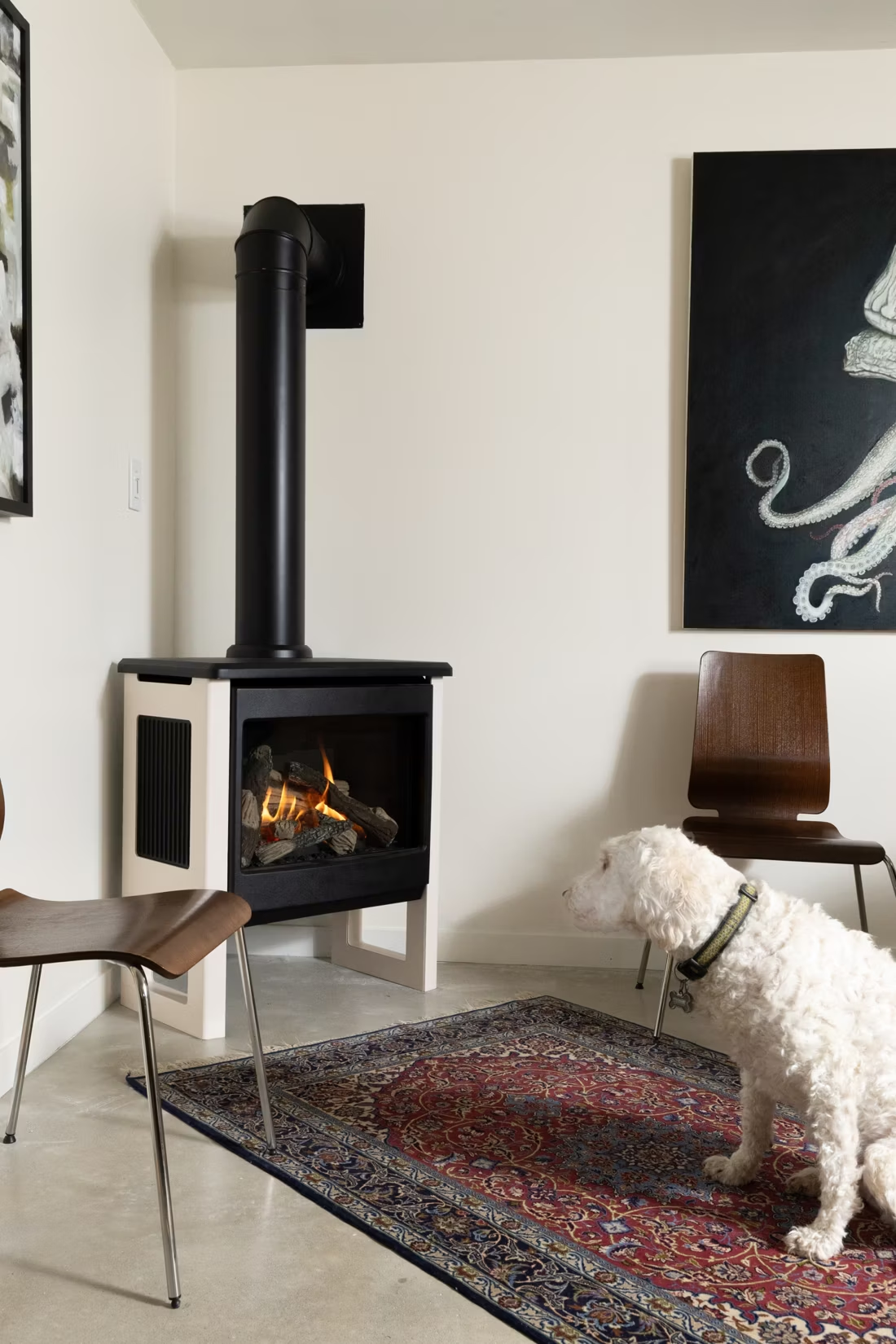
With winters this mild, a gas fireplace in Hope Mills is less about survival and more about comfort, backup heat during storm outages, and a fire that lights with the flip of a switch. We'll match you with a trusted local dealer who can install it right.
Every Project Starts From One of These Five Situations
Mild winters, real demand for backup heat and ambiance.
Hope Mills sits at just 162 feet in elevation in the Sandhills region of Cumberland County, where winters are short and mild—average lows hover around 34°F and the area has a light overall winter heating need, only a fraction of what a truly cold climate sees. Compare that to a place like Duluth, Minnesota, which faces a far longer and far more intense winter heating season, and it's clear why nobody in Hope Mills is sizing a stove to survive a week of sub-zero nights. That changes what a gas fireplace is for here: less whole-home primary heat, more instant supplemental warmth on the handful of genuinely cold nights each winter, plus year-round ambiance in the living room.
Hope Mills also falls outside the natural gas distribution footprint that serves much of nearby Fayetteville, so the large majority of gas fireplace installs in town run on propane, delivered and maintained by regional propane suppliers rather than a piped utility. That's not a downside—propane units perform identically to natural gas ones and give homeowners a reliable heat source that keeps working when Hurricane season or an ice storm knocks out grid power, which happens periodically in this part of Cumberland County. With no air-quality non-attainment restrictions here, gas installation is also refreshingly unregulated compared to some parts of the country.
Three steps. No salesperson until you're ready.
Tell us about your project
Your zip code, your situation, and the fuel you're leaning toward—or let the answers point you to one.
See what's actually available
The brands dealers within 100 miles genuinely carry—real options, never a catalog mirage.
Get your dealer & Project Guide
A trusted local dealer, plus the free Project Guide & Parts List that names every component of the job.
Frequently Asked Questions
How much does a gas fireplace installation cost in Hope Mills?
Most gas fireplace and insert installations in Hope Mills fall between roughly $3,000 and $9,000, with the spread driven mainly by whether you're converting an existing masonry fireplace or building out a new direct-vent unit from scratch. A gas insert into an existing brick fireplace—common in the older ranch-style homes around Hope Mills and Fayetteville—sits toward the lower end if propane service is already run to the house. New construction or a fireplace added where none existed, including a new propane tank and gas line run, pushes toward the higher end. A local dealer will give you a firm number after seeing the space in person.
Is natural gas available in Hope Mills, or do I need propane?
Hope Mills sits largely outside the piped natural gas network that reaches parts of Fayetteville, so the great majority of gas fireplace installations here run on propane rather than utility natural gas. That means either tapping into an existing propane tank if your home already uses propane for cooking or water heating, or having a supplier install a new above-ground or buried tank alongside the fireplace project. Propane fireplaces perform identically to natural gas models—same flame, same heat output—the fuel source just changes the tank setup your installer coordinates.
Do I need a permit to install a gas fireplace in Hope Mills?
Yes. Homes within town limits go through the Town of Hope Mills Building Inspections Department, while properties in unincorporated parts of Cumberland County are permitted through Cumberland County Development Services. Both require a building permit for the fireplace installation and sign-off on the gas line work, which by law has to be run by a licensed gas fitter. A reputable local hearth dealer handles this coordination as part of the install rather than leaving you to chase down separate trades.
Will my gas fireplace work during a power outage?
For the most part, yes—and that matters in Cumberland County, where tropical storm remnants and occasional ice events can knock out power for days. Gas fireplaces with IPI (intermittent pilot ignition) run on a small battery backup that kicks in automatically when the grid drops, so the fireplace lights on demand just like normal. Valor's lineup goes a step further: their pilot assembly generates its own electricity from the flame's heat through a thermocouple, so there are no batteries to remember or replace. Ask your local dealer which ignition system is built into any unit you're considering.
What's the difference between a gas fireplace, gas insert, and gas stove?
A gas fireplace is a fully built-in unit framed into a wall, typically chosen for new construction or a remodel. A gas insert slides into an existing masonry fireplace opening—a good fit for the brick, wood-burning fireplaces built into many Hope Mills homes from the '70s through the '90s, since it reuses the existing chimney chase for venting. A gas stove is a freestanding cast-iron or steel unit that sits on the floor and vents through a wall or existing flue. For most Hope Mills homeowners with an old, rarely-used wood fireplace, an insert is the simplest upgrade—you keep the mantel and surround, but swap out the fire.
What's the difference between vented and vent-free gas fireplaces?
Vented (direct-vent) gas fireplaces pull combustion air from outside and exhaust it back outside through a sealed pipe—cleaner, safer, and code-compliant everywhere. Vent-free units burn gas directly into the room with no outside venting; North Carolina permits them, but they come with strict room-size and ventilation requirements, and an oxygen depletion sensor is required. Hope Mills doesn't have any air-quality non-attainment restrictions that would rule out either option, but direct-vent units remain the more commonly recommended choice locally because they deliver more usable heat and don't add moisture or combustion byproducts to the living space.
How often should my gas fireplace be serviced?
Plan on an annual inspection, ideally before the first cool snap in October or November. A technician checks the burner, pilot assembly, venting, and gas connections, and cleans the glass and firebox interior. It's a quick visit—most local service providers charge in the $150 to $250 range—but skipping it is how minor issues like a dirty pilot or a failing thermocouple turn into a fireplace that won't light on the one cold night you actually need it.
Gas vs. electric fireplace—which makes more sense in Hope Mills?
Electric fireplaces have a real place in Hope Mills' mild climate: no venting, no gas line, and installation costs a fraction of a gas unit—often under $1,000 for a plug-in insert. But they're heaters, not flames, and electricity here runs $0.1554 per kWh through Duke Energy Progress or $0.1221 per kWh through Fayetteville PWC depending on which utility serves your address, so running one as a daily heat source costs more per BTU than gas. Gas fireplaces cost more upfront but deliver real radiant heat, keep working during power outages, and hold their value better if you sell the house. For a supplemental unit that's mostly decorative, electric is hard to beat on cost. For genuine backup heat, gas wins.
Gas vs. wood—why don't more Hope Mills homes burn wood?
With such a short, mild winter and lows averaging in the mid-30s, Hope Mills simply doesn't have the sustained cold that makes a dedicated wood-burning setup worth the upkeep for most households—unlike a place such as Bozeman, Montana, where wood heat is a practical necessity. Local oak, hickory, and pine are available for anyone who wants the traditional experience, and there are no air-quality burn restrictions here to worry about, but the maintenance of splitting, stacking, and sweeping a chimney rarely pencils out against a gas insert that lights instantly and needs one inspection a year. Most Hope Mills homeowners who still want the wood-fire look end up converting an old wood fireplace to a gas insert instead.
What's the difference between an insert and a zero-clearance fireplace?
An insert is a fireplace that slides into a pre-existing wood-burning fireplace—if you don't have one, there's nothing to insert it into. A zero-clearance fireplace is built into a framed wall, which makes it the answer for remodels and new construction. Simple test: existing masonry fireplace means insert; blank or framed wall means zero-clearance.
Can I put a TV above my fireplace?
Yes—with an asterisk. Fireplaces are hot and TVs don't like heat. Either put a mantel between them to deflect rising warmth, or choose a fireplace with heat-management technology that creates a cool zone on the wall above—the wall stays around 125 degrees, barely warm, while the room still gets full heat. If you like clean lines and don't want a mantel, heat management is the answer.
Does a fireplace add value to my home?
On average, a fireplace adds back to the home about the same amount you spent installing it. Add the monthly savings from heating the rooms you actually use instead of the whole house—often hundreds of dollars a year—and the value case is strong before you even count what a fire does for how your family uses the room.
How much should I budget for a fireplace?
For an average home—covering the fireplace, the vent pipe, and basic installation—a budget between $3,900 and $5,500 gives you a lot of options across wood, gas, and pellet. By the time you add finish work, gas line, and electrical, the average complete installation lands between $5,000 and $12,000 all-in. In a remodel or new build, a good rule is to put about 2.5% of the total project cost toward the fireplace.
Nearby Dealers
Hearth shops serving Hope Mills and the surrounding area. Every listing shows whether it is a WhyFire partner, a dealer we have verified as authorized for the brands we recommend, or a local business carrying hearth products. No manufacturer pays for placement. How we verify dealers →
Parker Gas
Bobby Taylor Oil Company Inc.
Quality Oil & Gas Company
Find your gas fireplace in Hope Mills.
Tell us about your home and your existing fireplace, and we'll send over a free Project Guide & Parts List—the exact parts, venting, and a trusted local Hope Mills dealer to install it.
Find Your Fireplace →