
Efficient, clean heat for Hoke County's mild Sandhills winters.
From Raeford to the farmland outside Fort Liberty, a pellet stove or insert gives Hoke County homes steady, thermostat-controlled heat without a wood pile. Find the right unit and connect with a trusted local dealer.
Every Project Starts From One of These Five Situations
Clean, controllable heat—without the cordwood.
Hoke County sits in the Sandhills of south-central North Carolina, a rural county of just over 10,500 people anchored by Raeford and shaped by its proximity to Fort Liberty. Winters here are genuinely mild by national standards—Climate Zone 3A, an average winter low around 30°F, and a light winter heating load overall. That's a fraction of what a place like Fargo, ND racks up in a single season, which means most Hoke County homes need efficient supplemental or zone heat rather than a furnace-replacing workhorse.
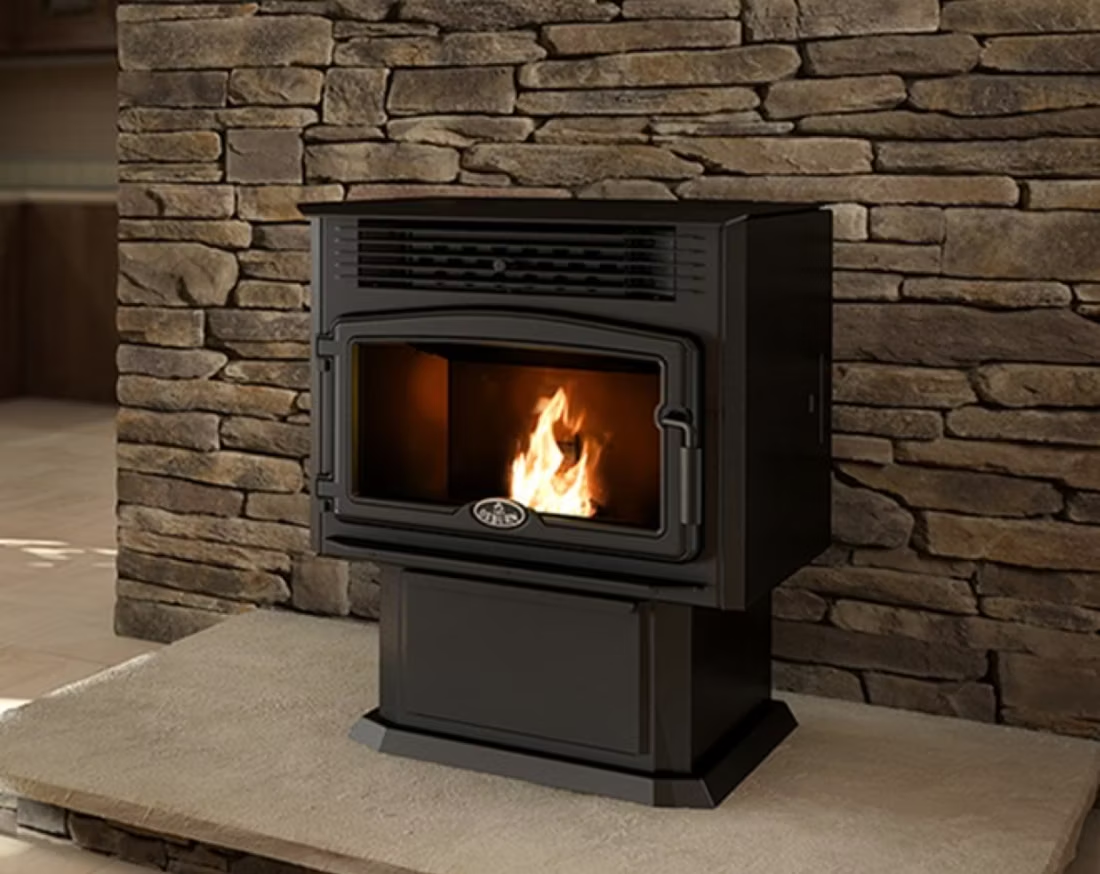
That's exactly where pellet stoves earn their place here. A pellet stove or insert delivers consistent, thermostat-regulated warmth to a den, sunroom, or main living area without the splitting, stacking, and chimney upkeep that come with cordwood—even though oak, hickory, maple, and pine are all plentiful in the surrounding Sandhills forests for those who still want a wood option. Hoke County has no wood-smoke non-attainment issues or seasonal burn restrictions, so pellet appliances run clean and unrestricted year-round. Regional suppliers like Lignetics, Hamer Pellet Fuel, and Greenway Renewable Energy keep pellets reasonably accessible in this part of the state, which matters more than people expect once you own a hopper-fed stove.
Three steps. No salesperson until you're ready.
Tell us about your project
Your zip code, your situation, and the fuel you're leaning toward—or let the answers point you to one.
See what's actually available
The brands dealers within 100 miles genuinely carry—real options, never a catalog mirage.
Get your dealer & Project Guide
A trusted local dealer, plus the free Project Guide & Parts List that names every component of the job.
Frequently Asked Questions
How much does a pellet stove installation cost in Hoke County?
A freestanding pellet stove installation in Hoke County typically runs $3,000 to $6,500, depending on the unit, whether you need a new wall-through vent kit, and any electrical work for the auger and blower. A pellet insert set into an existing masonry fireplace usually lands in the middle of that range, since it reuses the existing firebox opening but still needs a properly sized vent liner. Given how mild winters run here—average lows around 30°F—most Hoke County homeowners are outfitting one primary living space rather than a whole-home heating system, which keeps typical projects on the lower end compared to colder-climate installs.
What size pellet stove do I need for my Hoke County home?
Because Hoke County only sees a light winter heating load overall, most homes here do well with a small to mid-size pellet stove rated for 1,000 to 1,800 square feet, sized to heat a den, living room, or open-concept main floor rather than an entire house. Homes used as primary heat—less common here than in colder states, but not unheard of on older farmhouses outside Raeford—may want to size up slightly. A local dealer will size the unit based on your actual square footage, ceiling height, and insulation rather than guessing from a chart, since an oversized stove will just cycle on and off more than it should in a mild climate like this one.
Pellet stove vs. wood stove—which makes more sense in Hoke County?
Wood is genuinely abundant in the Sandhills—oak, hickory, maple, and pine are all common locally, and Hoke County has no air quality restrictions that would limit wood burning. So a wood stove is a perfectly reasonable choice if you want the lowest fuel cost and don't mind splitting and stacking. A pellet stove trades that hands-on ritual for convenience: load the hopper, set the thermostat, and let it run—no ash-heavy cleanup, no chimney creosote buildup, and more even heat output. For Hoke County's relatively short, mild heating season, that convenience often outweighs wood's cost advantage, especially for households that want heat without a firewood operation in the backyard.
Where do I buy pellet fuel near Hoke County?
Regional pellet brands including Lignetics, Hamer Pellet Fuel, and Greenway Renewable Energy are distributed through farm supply and hardware retailers across this part of North Carolina, and most sell by the 40-pound bag or the ton. A ton typically covers a full heating season for a stove used as supplemental heat in a Hoke County home, given the relatively mild winters. Buying ahead of the fall rush and storing pellets in a dry space—a garage or shed, off the ground—keeps quality consistent and avoids the scramble that happens when cold snaps hit and local stock runs low.
Do I need a permit to install a pellet stove in Hoke County?
Yes—new pellet stove and insert installations require a building permit through the Hoke County building inspections process, and if new circuit work is needed for the stove's auger and blower motor, an electrical permit as well. Most local dealers handle this paperwork as part of the installation, so you're not left coordinating separate trades. Because pellet appliances rely on electricity to run, the electrical inspection is just as important as the venting inspection—it's not a step to skip even though pellet stoves burn cleaner than a traditional wood-burning unit.
Will my pellet stove work during a power outage?
No—pellet stoves need electricity to run the auger that feeds fuel and the blower that circulates heat, so a standard unit shuts down when the power does. That's worth planning for in Hoke County, where hurricane remnants and severe summer storms occasionally knock out power for extended stretches. A small battery backup or portable generator sized for the stove's low wattage draw (most run on well under 500 watts) can keep it running through an outage. If uninterrupted backup heat during storms is a priority, a wood stove or a gas unit with battery-backed ignition may be a better complementary choice alongside a pellet stove.
How is a pellet stove vented compared to a wood stove?
Pellet stoves vent through a smaller-diameter pipe than wood stoves—typically 3 or 4 inches—and can usually run straight out through an exterior wall rather than requiring a full masonry chimney. That makes pellet installs considerably simpler in homes without an existing chimney, which is common among newer construction around Raeford and the county's outlying communities. For homes with an existing masonry fireplace, a pellet insert can still use that opening with a properly sized liner, giving you the option to keep the existing hearth's appearance while switching fuel types.
What's a good pellet stove for Hoke County's climate?
Given the mild winters here—average lows around 30°F and a fairly short heating season—most Hoke County homes don't need a maximum-output unit. Mid-size pellet stoves in the 40,000 to 50,000 BTU range from established manufacturers cover most main living spaces without excess cycling. Look for a model with an automatic ignition and a thermostat or room-sensing feature, since that's where pellet stoves shine for day-to-day convenience. A local dealer can match BTU output to your specific room size and layout rather than over-sizing for a cold snap that rarely lasts long in this part of the state.
Pellet stove vs. gas fireplace—which is right for my home?
Gas fireplaces offer instant on-off operation with no fuel storage or hopper refilling, and many models include battery-backed ignition that keeps working through a power outage. Pellet stoves require you to keep pellets on hand and refill the hopper periodically, but they burn a renewable, often locally sourced fuel and give you visible flame with real combustion heat rather than gas logs. For Hoke County homes without natural gas service, a pellet stove also avoids the cost of a propane tank installation. Which one fits better usually comes down to whether you'd rather manage fuel bags a few times a season or manage a propane account—a local dealer can walk through both options for your specific setup.
How often does a pellet stove need cleaning?
A clean pellet stove is a happy pellet stove. Plan on cleaning the burn pot about once a week when you're burning regularly—ash and clinkers gum up the air holes just like a pellet barbecue. Most pellet stove problems trace back to skipped cleaning that nobody explained up front. Some designs make it easy with a trapdoor burn pot: pull a lever and the gunk drops into the ash pan.
Why is my open fireplace making my house colder?
Open fireplaces suck—literally. As the fire burns, it consumes air your furnace already paid to heat and pulls it out through the chimney, so the house is actually colder after the fire goes out than before you lit it. An insert fixes this: it seals the chimney, puts fixed glass across the front, and turns that hole in your house into a real heat source.
What is an in-home preview and do I need one?
It's a visit where a hearth professional measures your space, confirms the model you picked actually works in your home, and walks the specs—framing, gas line, venting, finish work—before anything is ordered. Some details you just can't know until you see the house. Never make a down payment without one; it's the single most-skipped step that burns buyers.
Does a fireplace add value to my home?
On average, a fireplace adds back to the home about the same amount you spent installing it. Add the monthly savings from heating the rooms you actually use instead of the whole house—often hundreds of dollars a year—and the value case is strong before you even count what a fire does for how your family uses the room.
Pellet Brands Stocked Around Hoke County
Manufacturers will point you to the nearest stocking dealer.
Find your pellet stove in Hoke County.
Tell us a bit about your home and we'll match you with the right pellet stove or insert, plus a free Project Guide & Parts List—the exact parts, vent kit, and recommended local Hoke County dealer for your project.
Find Your Fireplace →