
Pellet Stoves in Greenville, NC: An Honest Look for a Mild Climate.
Greenville's mild winters mean pellet heat is a niche choice, not a necessity. Here's an honest look at where it fits—and a path to a trusted local dealer if it's right for you.
Every Project Starts From One of These Five Situations
Pellet stoves are the exception here, not the rule.
Greenville sits on North Carolina's coastal plain at just 28 feet of elevation, squarely in climate zone 3A. Winters here average a low of 33°F, and the city logs about 2,937 heating degree days a year—roughly a third of what a place like Duluth, Minnesota racks up in a single season. That's the number that matters most for pellet heat: pellet stoves earn their keep in climates where long, hard winters make thermostat-controlled combustion heat pay for itself over months of continuous use. Pitt County's winters are short and mild enough that most homes here run on electric heat pumps, not hopper-fed appliances.
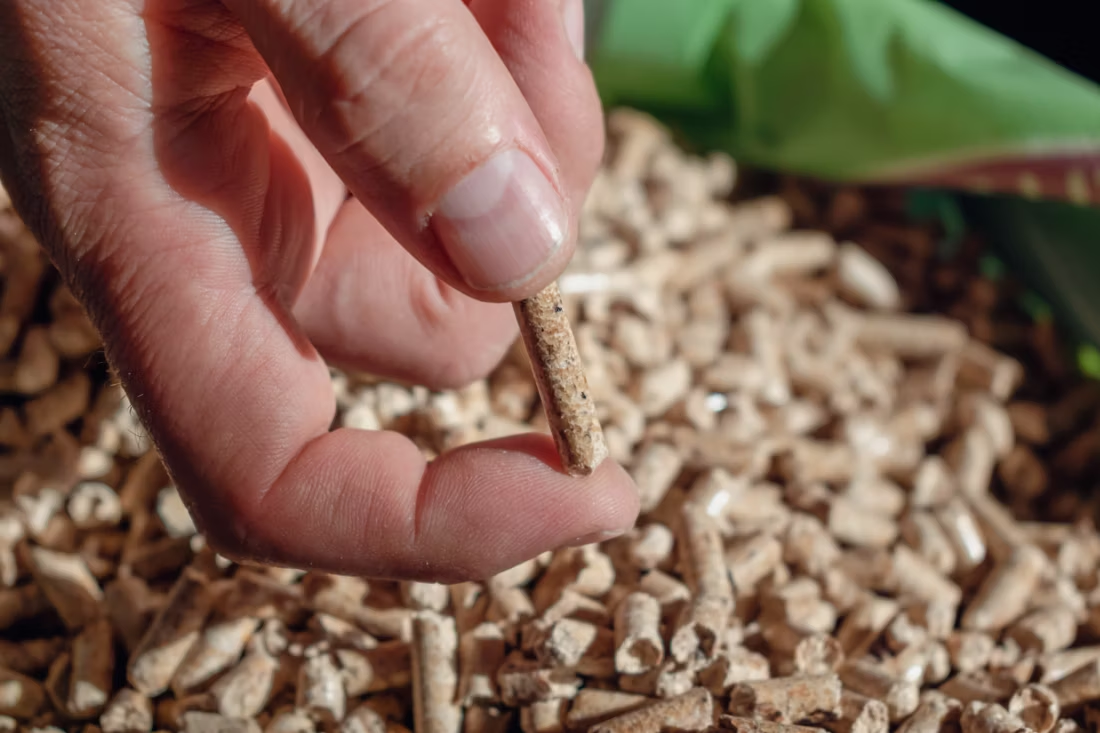
That doesn't mean pellet stoves are unheard of in Greenville—a handful of homeowners install them in sunrooms, detached workshops, or older farmhouses on the edges of Pitt County where ductwork doesn't reach every room. Pellets themselves are actually manufactured regionally: brands like Lignetics, Hamer Pellet Fuel, and Greenway Renewable Energy produce bagged pellets from Southeastern pine and hardwood mill residue, much of which ships out of state to colder markets. If you're one of the homeowners who wants the steady, adjustable heat and real-flame look a pellet stove provides—and you understand it's a supplemental choice here rather than a climate necessity—a trusted local dealer can tell you honestly whether it fits your space.
Three steps. No salesperson until you're ready.
Tell us about your project
Your zip code, your situation, and the fuel you're leaning toward—or let the answers point you to one.
See what's actually available
The brands dealers within 100 miles genuinely carry—real options, never a catalog mirage.
Get your dealer & Project Guide
A trusted local dealer, plus the free Project Guide & Parts List that names every component of the job.
Frequently Asked Questions
Are pellet stoves actually common in Greenville, NC?
Not especially. With only about 2,937 heating degree days a year and winter lows that average 33°F, Greenville's climate doesn't create the sustained cold that makes pellet heat cost-effective the way it does in colder regions of the country. Most homes here are heated with electric heat pumps served by Duke Energy Progress or Greenville Utilities Commission, both of which offer residential rates under 16 cents per kWh—cheap enough that a heat pump usually beats the economics of hauling and feeding bags of pellets. Pellet stoves show up here mostly as a secondary heat source or for the look and feel of a real flame, not as a primary heating strategy.
How much does it cost to install a pellet stove in Greenville?
Because pellet stoves are a niche purchase in this market, there isn't a deep bench of local installers quoting jobs every week, which makes pricing less predictable than in colder states. Nationally, a pellet stove or insert installation—including the unit, direct-vent hardware, and labor—typically runs $3,000 to $6,000, with simpler freestanding installs on the low end and masonry-fireplace insert conversions on the higher end. The honest answer for a Greenville home is that you'll want an in-home quote from a dealer who actually installs these locally rather than a national average.
Would a pellet stove work as backup heat during a hurricane or ice storm in Pitt County?
Less than you'd hope. Pellet stoves rely on an electric auger to feed fuel and a blower to push heat into the room—no power, no fire. That's a real limitation in a part of eastern North Carolina where hurricane season and the occasional ice storm can knock out power for days. If backup heat during an outage is your main goal, a wood-burning appliance or a gas unit with a battery-backup or millivolt ignition system will actually function when the grid goes down; a pellet stove will not.
Where can I buy pellets locally in Greenville?
Regional brands like Lignetics, Hamer Pellet Fuel, and Greenway Renewable Energy manufacture bagged pellets from Southeastern pine and hardwood mill residue, and you can usually find one of these brands at farm-supply stores or hardware retailers around Pitt County. Because pellet heating is uncommon here, don't expect the wall of pellet pallets you'd see at a hardware store in the Midwest—availability is real but limited, and it's worth calling ahead in peak winter weeks to make sure a location is stocked.
What's the difference between a pellet stove and a wood stove, and does it matter in Greenville?
A pellet stove burns compressed wood pellets fed automatically by an electric auger, giving you thermostat-like control and consistent heat with far less ash than cordwood. A wood stove burns split logs—species like the oak, hickory, and maple common to Pitt County woodlots—and needs a proper chimney rather than a simple through-wall vent. In Greenville's mild climate, neither is a heating necessity, but pellet stoves are the easier of the two to live with day to day if you just want supplemental warmth without stacking or seasoning firewood.
Do I need a permit to install a pellet stove in Greenville?
Yes. A permanent pellet stove installation—including the through-wall vent kit—typically requires a building permit through your local jurisdiction, whether that's the City of Greenville or Pitt County depending on your address. A licensed installer will usually pull the permit as part of the job and make sure the vent termination clears windows, doors, and combustible siding per the manufacturer's listing. Given how few installers in the area handle pellet appliances regularly, choosing one who is comfortable with the local permitting process is worth asking about up front.
What size pellet stove makes sense for a Greenville home?
Because most Greenville homes lean on heat pumps for whole-house heating, pellet stoves here are almost always sized for a single room or zone rather than the entire house. A small unit rated for 500-1,000 square feet is usually plenty for a sunroom, den, or converted garage. Given the area's mild winters, oversizing is more likely to cause problems—an overpowered stove will cycle on and off constantly or force you to run it with the windows cracked, neither of which is efficient or pleasant.
Pellet stove or electric heat—which makes more sense in Greenville's climate?
For most homes, electric wins on pure economics here. Greenville Utilities Commission customers pay around 12 cents per kWh and Duke Energy Progress customers around 15.5 cents—both low enough that a modern heat pump delivers cheap, automatic heat all winter without anyone loading a hopper. Where a pellet stove earns its place is in the spaces electric heat doesn't reach well: a bonus room over a garage, a sunroom without ductwork, or simply a homeowner who wants the visual warmth of a real flame. It's a lifestyle choice here more than a cost-saving one.
If pellet heat isn't the best fit, what should I consider instead for my Greenville home?
Given the area's mild winters, most Greenville homeowners are better served by a gas fireplace or insert—natural gas and propane are both well established locally—or by an electric fireplace for pure ambiance with zero venting hassle. That said, if you've weighed the tradeoffs and a pellet stove still fits your space and goals, we can match you with a trusted local dealer who actually installs them in this market rather than guessing at fit from a big-box aisle.
Why is my open fireplace making my house colder?
Open fireplaces suck—literally. As the fire burns, it consumes air your furnace already paid to heat and pulls it out through the chimney, so the house is actually colder after the fire goes out than before you lit it. An insert fixes this: it seals the chimney, puts fixed glass across the front, and turns that hole in your house into a real heat source.
What do I measure to size a fireplace insert?
Four numbers tell you what fits: the front width, the front height, the back width, and the overall depth of your existing fireplace opening. Grab a tape measure, jot those down, and snap a photo of the wall—those two things do more to move your project forward than anything else you can do today.
Can I install a fireplace myself?
If you're putting a fire in your house on purpose, it's best to work with an expert. Unless you're genuinely experienced in framing, gas line, vent pipe, and the national code on clearances to combustibles, have a professional do it—and ideally the same company that sells you the fireplace, so warranty, service, and liability all live under one roof.
Does a fireplace add value to my home?
On average, a fireplace adds back to the home about the same amount you spent installing it. Add the monthly savings from heating the rooms you actually use instead of the whole house—often hundreds of dollars a year—and the value case is strong before you even count what a fire does for how your family uses the room.
Nearby Dealers
Hearth shops serving Greenville and the surrounding area.
Pellet Brands Stocked Around Greenville
Manufacturers will point you to the nearest stocking dealer.
Find your pellet stove in Greenville.
If a pellet stove is the right call for your space, we'll match you with a trusted local dealer and put together a free Project Guide & Parts List—the exact parts, including the vent kit, and the dealer we recommend for your Greenville home.
Find Your Fireplace →