
Fireplace options for Pitt County homes.
With winter lows averaging 33°F and just under 3,000 heating degree days a year, Pitt County's Coastal Plain climate calls for a different approach than the wood-burning stove country farther north. Here's where to find local gas and electric hearth dealers serving Greenville, Winterville, Ayden, and the rest of the county.
Every Project Starts From One of These Five Situations
Mild Coastal Plain winters call for gas and electric heat, not heavy wood stoves.
Pitt County sits in North Carolina's eastern Coastal Plain, anchored by Greenville and East Carolina University, with roughly 154,000 residents spread across Greenville, Winterville, Ayden, Farmville, Bethel, and the smaller towns and farmland in between. Climate zone 3A here means short, mild winters—an average low of 33°F and about 2,937 heating degree days a year, a fraction of what a cold-climate city like Duluth, Minnesota (over 10,000 HDD) or Bismarck, North Dakota deals with every winter. The heating season is real but brief, and most Pitt County homes are built around gas and electric comfort rather than sustained wood-fired heat.
That's why this hub leads with gas and electric fireplace resources. Wood-burning stoves and inserts aren't off the table—oak, hickory, maple, and pine are all abundant locally, and plenty of Pitt County homeowners enjoy a wood-burning fireplace for ambiance or the occasional hard freeze—but given how mild and short the heating season runs here, wood isn't the primary heat source it is farther inland or up north. Pellet appliances are similarly uncommon as home heating equipment locally, even though pellet manufacturers like Lignetics, Hamer Pellet Fuel, and Greenway Renewable Energy operate in the region—their product mostly moves through retail and agricultural channels rather than into Pitt County living rooms. Pick your fuel below for local dealers, installation costs, and the resources that match your project.
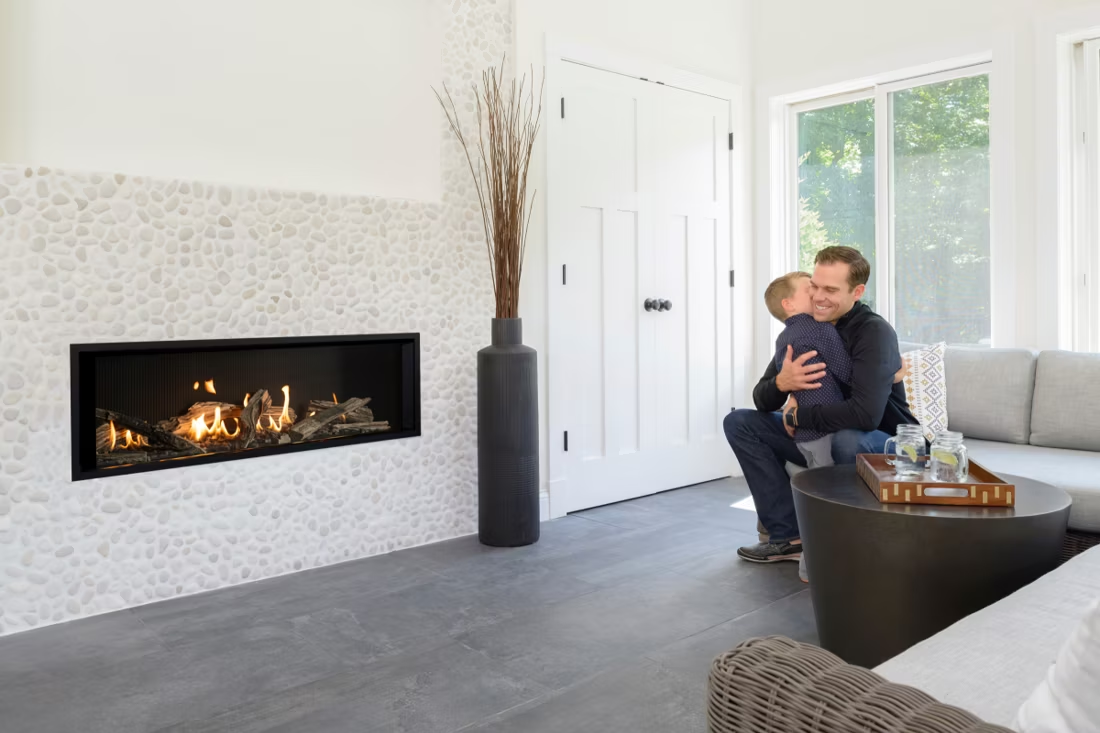
Four fuels. One honest answer for Pitt County.
Three steps. No salesperson until you're ready.
Tell us about your project
Your zip code, your situation, and the fuel you're leaning toward—or let the answers point you to one.
See what's actually available
The brands dealers within 100 miles genuinely carry—real options, never a catalog mirage.
Get your dealer & Project Guide
A trusted local dealer, plus the free Project Guide & Parts List that names every component of the job.
Frequently Asked Questions
Which fireplace fuel makes the most sense in Pitt County?
For most Pitt County homes, it's gas or electric. Gas fireplaces and inserts give you instant heat and a real flame with none of the wood supply or ash cleanup—a natural fit for a climate where the heating season is short and mild (33°F average winter low, under 3,000 heating degree days). Electric fireplaces have become popular for renovations, rentals, and off-campus student housing around East Carolina University, since they need no venting and install in an afternoon. Wood-burning fireplaces still exist here—oak, hickory, maple, and pine are all locally available firewood species—but they're mostly chosen for ambiance or backup rather than as a household's primary heat source. Pellet stoves are rare in Pitt County homes for the same reason: the winters here simply don't demand the sustained biomass heat output pellet stoves are built for.
Do I need a permit to install a gas or electric fireplace in Pitt County?
Usually, yes, for gas. A gas fireplace, insert, or stove install typically requires a mechanical/gas permit and a licensed gas-fitter to run or tap the line, whether you're in Greenville city limits or unincorporated Pitt County—your building inspections department can confirm which permits apply to your address. Electric fireplaces are simpler: plug-in units generally need no permit at all, while built-in electric fireplaces that require new wiring or a dedicated circuit typically need an electrical permit. Most local retailers handle the permitting as part of installation, so it's rarely something you have to manage yourself.
Are wood-burning fireplaces common in Pitt County?
Not as a primary heat source—Pitt County's mild Coastal Plain winters don't call for it the way a place with 8,000 or more heating degree days would. That said, wood fireplaces and the occasional wood stove do show up in older homes and in households that simply like the look and feel of a real fire during a cold front. Firewood isn't hard to come by locally, with oak, hickory, maple, and pine all common regional species. If you're considering a wood-burning unit here, it's worth talking with a local retailer about how it fits your specific use case—ambiance and occasional use, rather than daily winter heating.
What about pellet stoves—is pellet fuel available in Pitt County?
Pellet fuel itself is available regionally—Lignetics, Hamer Pellet Fuel, and Greenway Renewable Energy all operate in or near North Carolina—but pellet home-heating appliances are uncommon in Pitt County. With winters this mild, most of that regional pellet product moves into other uses rather than residential heating stoves. If you're set on a pellet stove despite the mild climate, expect a smaller pool of local dealers who stock or service them compared to gas and electric options.
Can one local retailer handle both a gas and an electric fireplace install?
Yes, most Pitt County hearth retailers carry and install both gas and electric units, which makes sense given how those two fuels dominate demand locally. That's useful if you're deciding between the two—a dealer who carries both can walk you through the real trade-offs (venting and gas line work versus a simpler plug-in or hardwired electric install) for your specific home rather than steering you toward whichever fuel they happen to specialize in.
What's the typical cost range for gas and electric fireplace installation in Pitt County?
Gas fireplace, insert, or stove installs in Pitt County generally run $3,500–$9,000, with the wide range mostly coming down to how much new gas line and venting work is needed—a straightforward insert into an existing masonry fireplace costs a lot less than a new gas line run to an addition. Electric fireplaces are cheaper across the board: the unit itself typically runs $200–$3,000, and installation labor beyond simple plug-and-play (built-ins requiring a new circuit, for example) adds roughly $300–$1,000. Wood and pellet installs are less common locally, but a local retailer can give you a real number if that's the direction you're headed.
How much should I budget for a fireplace?
For an average home—covering the fireplace, the vent pipe, and basic installation—a budget between $3,900 and $5,500 gives you a lot of options across wood, gas, and pellet. By the time you add finish work, gas line, and electrical, the average complete installation lands between $5,000 and $12,000 all-in. In a remodel or new build, a good rule is to put about 2.5% of the total project cost toward the fireplace.
Can a fireplace actually lower my heating bill?
Yes—by creating a comfort zone. A furnace heats every square foot of the house just to warm the one room you're in; a gas fireplace on low burns roughly a sixth of the gas a typical furnace does. Set the furnace around 55–60 degrees as a baseline, then heat the rooms your family actually uses. Families who heat this way commonly save $20–$60 a month.
What is an in-home preview and do I need one?
It's a visit where a hearth professional measures your space, confirms the model you picked actually works in your home, and walks the specs—framing, gas line, venting, finish work—before anything is ordered. Some details you just can't know until you see the house. Never make a down payment without one; it's the single most-skipped step that burns buyers.
Can I install a fireplace myself?
If you're putting a fire in your house on purpose, it's best to work with an expert. Unless you're genuinely experienced in framing, gas line, vent pipe, and the national code on clearances to combustibles, have a professional do it—and ideally the same company that sells you the fireplace, so warranty, service, and liability all live under one roof.
Stove and Fireplace Dealers in Pitt County
Listings include WhyFire partner dealers, dealers we have verified as authorized for the brands we recommend, and established local businesses that carry hearth products. Every listing shows which one it is. The ones marked Preferred run on WhyFire's software, so they can show you real pricing and book your appointment right here. No manufacturer pays for placement. How we verify dealers →
Daughtridge Gas & Oil Company
Fireplace Creation
Rand Wade Oil Company
Mallard Oil & Gas
Williams Fuel
Find your fireplace in Pitt County.
Tell us about your home and we'll match you with a trusted local Pitt County dealer and send over a free Project Guide & Parts List—the exact parts, venting or wiring needs, and the dealer we recommend for your project.
Find Your Fireplace →