
Consistent heat without the daily wood chores in Gates County.
From Gatesville to Sunbury and Hobbsville, pellet stoves give Gates County homes automated, hands-off heat without a gas line or a woodpile. Find the right unit and connect with a trusted local dealer.
Every Project Starts From One of These Five Situations
Why pellet heat fits rural Gates County.
Gates County sits in the far northeastern corner of North Carolina, bordering Virginia along the edge of the Great Dismal Swamp, with the county seat of Gatesville and small farming communities scattered through Sunbury, Eure, Hobbsville, and Corapeake. Climate zone 4A here means genuinely cold winter stretches—nights in the 20s aren't rare—layered on top of humid summers, so a heating appliance needs to work well in both damp air and real cold without demanding daily attention on a working farm or a long commute into Elizabeth City or Chesapeake, Virginia.
The county's hardwood stands of oak, hickory, and maple, mixed with loblolly pine plantations, are part of the same Southeastern timber base that feeds regional pellet producers—brands like Hamer Pellet Fuel and Greenway Renewable Energy operate not far from here, alongside nationally distributed lines like Lignetics. With no local air quality restrictions or burn bans on the books, pellet appliances run without the winter curtailment concerns some western North Carolina counties deal with. For rural households without natural gas service, a pellet stove sidesteps the need for a gas line or a big propane tank—it just needs a wall outlet and a supply of bagged fuel.
Three steps. No salesperson until you're ready.
Tell us about your project
Your zip code, your situation, and the fuel you're leaning toward—or let the answers point you to one.
See what's actually available
The brands dealers within 100 miles genuinely carry—real options, never a catalog mirage.
Get your dealer & Project Guide
A trusted local dealer, plus the free Project Guide & Parts List that names every component of the job.
Frequently Asked Questions
How much does a pellet stove installation cost in Gates County?
Most pellet stove installations in this part of northeastern North Carolina fall in the $3,000 to $6,000 range, depending on the unit, whether a hearth pad upgrade is needed, and how the exhaust vent is routed through an exterior wall. Because Gates County is so rural—with the closest full-service hearth showrooms often based out toward Elizabeth City or Suffolk, Virginia—expect installers to build a modest travel charge into quotes for jobs out toward Hobbsville or Corapeake. Homes with an existing masonry fireplace looking at a pellet insert instead of a freestanding stove typically land toward the higher end once a liner and venting adapter are factored in.
What size pellet stove do I need for an older Gates County farmhouse?
Many homes in Gates County are older farmhouses with less insulation and higher ceilings than modern construction, so sizing tends to run a notch above the stove manufacturer's square-footage chart. A small pellet stove (up to roughly 1,000 sq ft) works for a single large room or an addition; a medium unit (1,000–2,000 sq ft) handles most main living areas; larger homes or those with an open floor plan connecting several rooms usually need a stove rated for 2,000+ sq ft to keep up on the coldest nights. A local dealer can walk your home and size it properly—oversizing leads to short, inefficient burn cycles, while undersizing leaves you running the auger nonstop without catching up.
Where can I find a pellet stove dealer near Gates County?
Given the county's small population, there isn't a hearth showroom in Gatesville itself—most homeowners work with dealers based in Elizabeth City, Suffolk, or Chesapeake, Virginia, who cover Gates County as part of their regular service area. Ask specifically whether the dealer stocks the brands sold regionally, including Lignetics pellets and units compatible with local fuel supply, and confirm they'll travel to your part of the county—Sunbury, Eure, and Hobbsville are a bit further from the main service routes than Gatesville proper. Installation and warranty service are usually bundled with the same company that sells the stove.
What's the difference between a pellet stove and a pellet insert?
A pellet stove is a freestanding appliance that sits on a hearth pad and vents through a wall or existing chimney—it can go almost anywhere with the right clearances, which makes it a common choice for Gates County homes without an existing fireplace. A pellet insert is built to slide into an existing masonry fireplace opening, using a vent liner run up through the old chimney, and is the better fit if you already have a wood-burning fireplace you want to convert to lower-maintenance heat. Either way, both types need a nearby electrical outlet to run the auger, igniter, and blower fan.
Do I need a permit to install a pellet stove in Gates County?
Yes—a building permit is required for a new pellet stove installation, issued through the Gates County building inspections office. Since Gates County has no local air quality nonattainment designation or wood-burning curtailment program, there's no additional emissions permitting hurdle beyond the standard building and mechanical permit most installers will pull on your behalf. Most local dealers handle this paperwork as part of the installation, so it's rarely something the homeowner has to manage directly.
What's the best pellet stove for Gates County's climate?
Zone 4A winters here are cold but not extreme, so you don't need a specialized cold-climate model—most mid-range pellet stoves and inserts are more than capable. The bigger consideration for rural Gates County is power reliability: pellet stoves need continuous electricity to run the auger and combustion blower, and hurricane-season outages along this stretch of northeastern North Carolina can knock out power for days. A battery backup or small generator paired with your pellet stove is worth budgeting for if you're relying on it as anything more than supplemental heat. A local dealer can talk through backup options alongside stove selection.
How often does a pellet stove need to be cleaned and serviced?
Plan on cleaning the burn pot and glass weekly during heavy winter use, a full internal cleaning of the hopper, auger, and exhaust fan a few times per season, and an annual professional inspection of the venting before each burning season starts. Pellet appliances don't build creosote the way wood stoves do, so the maintenance burden is lighter, but neglecting the exhaust vent and combustion blower is still the most common cause of poor performance and error codes in units that run daily through a Gates County winter.
Where can I buy pellet fuel near Gates County?
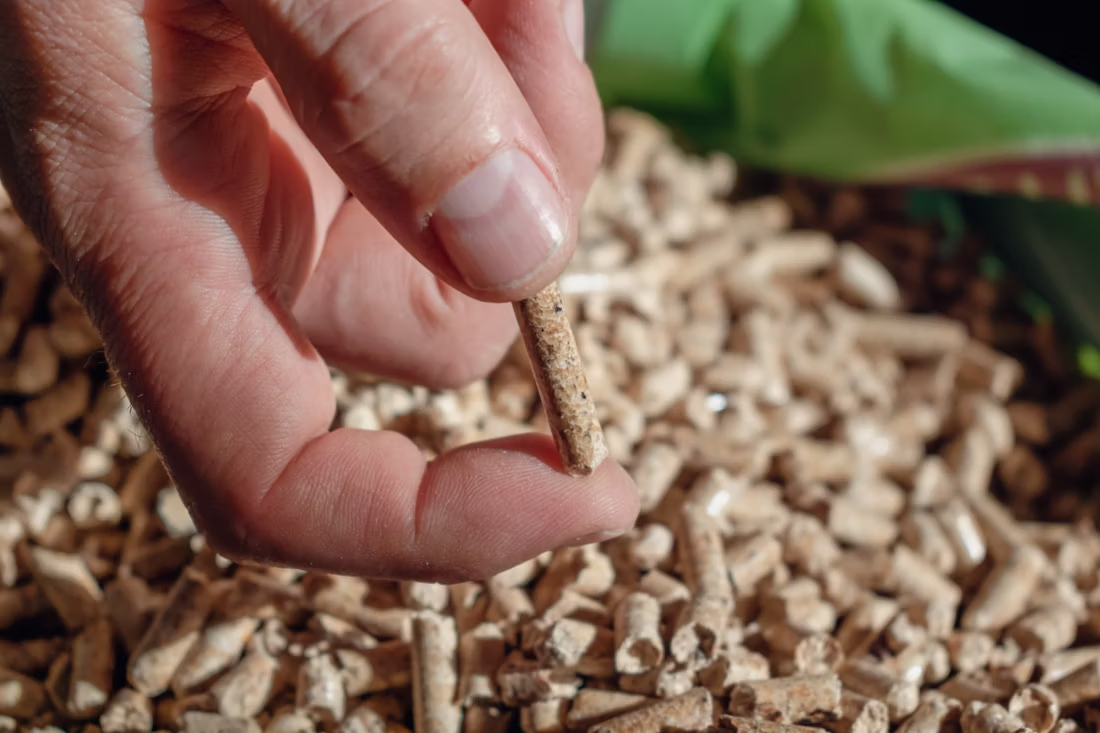
Bagged pellets from brands like Lignetics, Hamer Pellet Fuel, and Greenway Renewable Energy are typically available through farm supply stores and hearth dealers serving the region, with prices generally running in the $230 to $300 per ton range depending on the brand and time of year. Because Gates County doesn't have a large retail hardware presence, many households buy a season's supply—roughly 2 to 3 tons for an average home—early in the fall rather than making repeat trips into Elizabeth City or Suffolk once cold weather sets in.
Pellet stove vs. wood stove—which is right for my Gates County home?
Gates County's oak, hickory, and maple stands make self-cut or locally sourced firewood a realistic option for wood stove owners with the time, equipment, and storage space for it—and wood keeps working during power outages, which matters given how storms move through this part of the state. Pellet stoves trade that off-grid resilience for convenience: load the hopper, set the thermostat, and skip the splitting, stacking, and daily tending, with a cleaner burn and far less ash. For a working farm household with more pressing demands on daily time, pellet often wins; for a household that wants heat guaranteed during a multi-day outage, wood remains the more dependable backup.
How often does a pellet stove need cleaning?
A clean pellet stove is a happy pellet stove. Plan on cleaning the burn pot about once a week when you're burning regularly—ash and clinkers gum up the air holes just like a pellet barbecue. Most pellet stove problems trace back to skipped cleaning that nobody explained up front. Some designs make it easy with a trapdoor burn pot: pull a lever and the gunk drops into the ash pan.
What's the difference between an insert and a zero-clearance fireplace?
An insert is a fireplace that slides into a pre-existing wood-burning fireplace—if you don't have one, there's nothing to insert it into. A zero-clearance fireplace is built into a framed wall, which makes it the answer for remodels and new construction. Simple test: existing masonry fireplace means insert; blank or framed wall means zero-clearance.
What is an in-home preview and do I need one?
It's a visit where a hearth professional measures your space, confirms the model you picked actually works in your home, and walks the specs—framing, gas line, venting, finish work—before anything is ordered. Some details you just can't know until you see the house. Never make a down payment without one; it's the single most-skipped step that burns buyers.
Can a fireplace actually lower my heating bill?
Yes—by creating a comfort zone. A furnace heats every square foot of the house just to warm the one room you're in; a gas fireplace on low burns roughly a sixth of the gas a typical furnace does. Set the furnace around 55–60 degrees as a baseline, then heat the rooms your family actually uses. Families who heat this way commonly save $20–$60 a month.
Pellet Brands Stocked Around Gates County
Manufacturers will point you to the nearest stocking dealer.
Find your pellet stove in Gates County.
Tell us a bit about your home in Gates County and we'll put together a free Project Guide & Parts List—the right pellet stove or insert, the vent kit it needs, and a trusted local dealer to install it.
Find Your Fireplace →