
Warm, safe, no-fuss heat for Gates County homes.
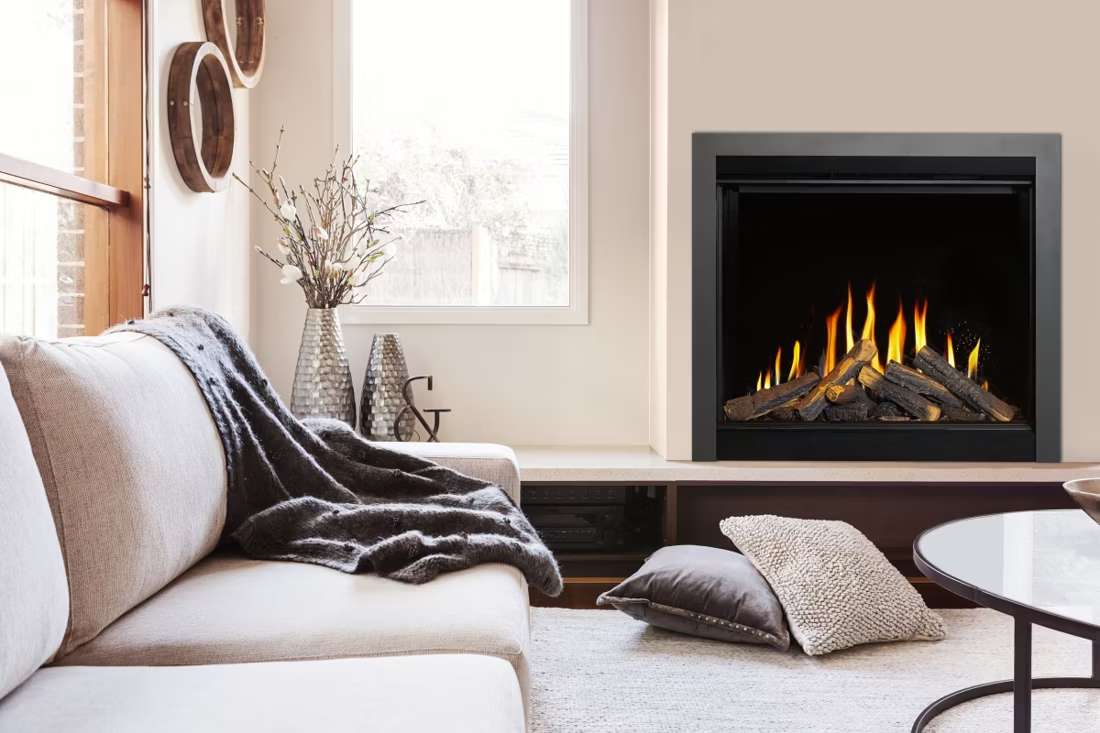
No chimney, no gas line, no wood stacked on the porch—just plug it in. Find the right electric fireplace for your farmhouse, modular home, or newer build near Gatesville, and get matched with a trusted local dealer.
Every Project Starts From One of These Five Situations
Electric heat that just works—no chimney required.
Gates County is one of North Carolina's smallest and quietest counties—about 398 people spread across farmland, timberland, and the edges of the Great Dismal Swamp near the Chowan River. Homes here run the gamut from older farmhouses with existing masonry fireplaces to newer modular and manufactured homes without a chimney at all. In a mixed-humid climate zone 4A, winters are moderate rather than brutal—most nights don't demand the round-the-clock output of a wood stove—which is exactly the situation where an electric fireplace or insert earns its keep.
With no natural gas infrastructure reaching most of rural Gates County, the usual alternative is propane, which means a tank, a line, and ongoing delivery. Electric skips all of that. It goes into an existing fireplace opening, mounts on a wall, or sits as a freestanding stove-style unit, and it runs on a standard household circuit—no venting, no gas line, no cutting or hauling oak and hickory from the woodlot out back. For a lot of Gates County homeowners, that's the appeal: real flame-effect ambiance and supplemental warmth for a bedroom, den, or sunroom, without adding a combustion appliance to the house.
Three steps. No salesperson until you're ready.
Tell us about your project
Your zip code, your situation, and the fuel you're leaning toward—or let the answers point you to one.
See what's actually available
The brands dealers within 100 miles genuinely carry—real options, never a catalog mirage.
Get your dealer & Project Guide
A trusted local dealer, plus the free Project Guide & Parts List that names every component of the job.
Frequently Asked Questions
How much does it cost to install an electric fireplace in Gates County?
Electric fireplaces are the least expensive hearth option to install, and Gates County is no exception. A plug-in insert or wall-mount unit that uses an existing outlet can run a few hundred dollars installed. Built-in units, or installations that require an electrician to add a dedicated 120V or 240V circuit—common in older farmhouses with outdated panels, or when the fireplace is going into a wall away from existing wiring—push the cost higher. A local dealer can tell you within a few minutes of looking at your panel and the wall in question whether you're looking at a simple plug-in job or an electrical upgrade first.
Will an electric fireplace actually heat a room, or is it just for looks?
Most electric fireplaces sold today include a real heating element—typically a fan-forced or infrared heater rated to comfortably supplement a bedroom, den, or sunroom in the 300-1,500 square foot range. In Gates County's climate zone 4A, where winter lows are moderate rather than extreme, that's often enough to take the chill off a single room without running central heat harder. What it won't do is replace a furnace or heat pump for a whole farmhouse—think of it as zone heat for the room you're actually sitting in, plus the flame effect on days you just want ambiance with the heater switched off.
Do I need a permit or an electrician to install an electric fireplace in Gates County?
A plug-in unit using an existing outlet typically doesn't require a permit. If the installation involves adding a new dedicated circuit, running wire into a wall, or hardwiring a built-in unit, that electrical work should go through a licensed electrician and, depending on scope, may require a permit through Gates County Building Inspections. Most local hearth dealers either employ a licensed electrician or coordinate with one as part of the install, so you're not left figuring out the wiring side yourself.
What's the difference between an electric insert, a wall-mount, and a freestanding electric stove?
An electric insert is built to slide into an existing masonry fireplace opening, which makes it the natural choice for Gates County's older farmhouses that already have a hearth but no interest in dealing with wood or a chimney sweep. A wall-mount unit hangs flat against a wall like a large-format TV, which works well in newer or modular homes without a fireplace opening at all. A freestanding electric stove sits on the floor and mimics the look of a wood or gas stove—a good fit if you want that stove silhouette in a room without an existing chimney or hearth. All three plug into standard household power; the right one comes down to what's already built into your walls.
Will my electric fireplace still work during a power outage?
No—and this is worth being direct about. Gates County sits in a hurricane-prone stretch of northeastern North Carolina, and tropical storm season regularly brings multi-day power outages to rural parts of the county. Because an electric fireplace runs entirely on household current, it goes dark the moment the power does, unlike a wood stove that keeps burning regardless. If backup heat during outages matters to you, a wood or propane appliance is worth considering alongside an electric unit rather than instead of one—some Gates County homes run electric for daily convenience and keep a wood stove or fireplace as the storm-season fallback.
Electric vs. wood—which makes more sense for a Gates County home?
Wood has deep roots here—Gates County's oak, hickory, maple, and pine woodlots have heated farmhouses for generations, and with no air quality restrictions in the county, burning wood is straightforward. But it means chimney maintenance, ash cleanup, and hauling cordwood. Electric skips all of that: no venting, no creosote, no permit hassle for a simple plug-in unit, and it's a much better match for newer modular and manufactured homes that were never built with a chimney. If you already have a working masonry fireplace and enjoy tending a fire, wood still makes sense. If you want low-maintenance supplemental heat and ambiance without adding a combustion appliance, electric is usually the easier call.
Electric vs. propane—which is more practical in Gates County?
Most of rural Gates County has no natural gas main, so the realistic gas comparison is propane, not natural gas. Propane fireplaces deliver more heat output and can be sized to genuinely warm a room or two, but they require a tank, a gas line, and ongoing delivery or refill service. Electric requires none of that—just an outlet or a dedicated circuit—but tops out at lower heat output and depends entirely on grid power. For a primary heat source, propane generally wins on output. For supplemental warmth, easy installation, and avoiding a tank in the yard, electric is the simpler path.
What does it cost to run an electric fireplace day to day?
Electric fireplaces are inexpensive to operate compared to central heat, since most units draw around 1,500 watts on the heater setting—roughly comparable to a space heater. Run a few hours an evening in a bedroom or den, and the added cost on an Albemarle Electric Membership Corporation bill or Dominion Energy North Carolina bill is modest, especially compared to running central heat harder to cover the same room. Ambiance-only mode, with the heater switched off, costs next to nothing to run.
What size electric fireplace do I need for my Gates County home?
Sizing depends more on the room than the whole house. A 26-33 inch insert or wall-mount unit typically covers a bedroom or small den, while 40-50 inch units suit a larger living room or open-concept space common in newer Gates County builds. Because most electric units are meant for zone heating rather than whole-home heat, there's less risk of getting it wrong than with a wood stove—oversizing mostly just means paying for width you don't need rather than overheating the room. A local dealer can measure your space and existing opening (if you have one) and point you to the right unit.
Does an electric fireplace need a vent or chimney?
No—that's its superpower. An electric fireplace needs a wall and an outlet, period. No vent pipe, no gas line, no clearances to design around, which is why it works in bedrooms, offices, apartments, and walls where venting a gas or wood unit would be impractical or impossible. Installation is typically the simplest and least expensive of any fireplace type.
Can I put a TV above my fireplace?
Yes—with an asterisk. Fireplaces are hot and TVs don't like heat. Either put a mantel between them to deflect rising warmth, or choose a fireplace with heat-management technology that creates a cool zone on the wall above—the wall stays around 125 degrees, barely warm, while the room still gets full heat. If you like clean lines and don't want a mantel, heat management is the answer.
Can I install a fireplace myself?
If you're putting a fire in your house on purpose, it's best to work with an expert. Unless you're genuinely experienced in framing, gas line, vent pipe, and the national code on clearances to combustibles, have a professional do it—and ideally the same company that sells you the fireplace, so warranty, service, and liability all live under one roof.
Can a fireplace actually lower my heating bill?
Yes—by creating a comfort zone. A furnace heats every square foot of the house just to warm the one room you're in; a gas fireplace on low burns roughly a sixth of the gas a typical furnace does. Set the furnace around 55–60 degrees as a baseline, then heat the rooms your family actually uses. Families who heat this way commonly save $20–$60 a month.
Find your electric fireplace in Gates County.
Tell us a bit about your home and we'll put together a free Project Guide & Parts List—the right electric fireplace or insert for your space, matched with a trusted local dealer who can wire it in correctly.
Find Your Fireplace →