
Pellet stoves in Dare County: a niche fit for a mild coastal climate.
From Nags Head to Hatteras, winters average a low of 36°F and heating demand is light. Pellet heat isn't the norm here, but for the right home—a sunroom, a den, a full-time residence off the immediate beachfront—it can still make sense. I'll help you find out if it does and connect you with a local dealer who knows what actually works on the Outer Banks.
Every Project Starts From One of These Five Situations
A mild climate makes pellet stoves the exception, not the rule.
Dare County sits in climate zone 3A with an average winter low around 36°F and a short, mild heating season—among the mildest heating climates on the entire East Coast, closer to coastal South Carolina than to anything you'd find in Duluth or Burlington. Across the barrier islands—Kill Devil Hills, Nags Head, Manteo, Hatteras—most full-time and seasonal homes get by on heat pumps and, where available, gas. Oak, hickory, maple, and pine grow throughout the county and get burned recreationally in fire pits and open hearths, but there simply isn't enough cold weather here to drive real demand for a dedicated wood-pellet heating appliance.
That said, pellet fuel isn't entirely absent from the region—bagged pellets from Lignetics, Hamer Pellet Fuel, and Greenway Renewable Energy show up at feed stores and hardware retailers along the US-158 corridor, mostly for grills and smokers rather than home heating. The bigger issue for Dare County specifically is that pellet stoves need continuous electricity to run their auger and blower—and this is hurricane country, where extended power outages are the exact scenario homeowners are trying to plan around. A fuel that goes dark with the grid loses its main advantage here. For the small number of homeowners who do want a pellet stove—usually in a den, a converted sunroom, or a year-round home set back from the beachfront—pairing it with a generator or battery backup is worth discussing with your installer up front.
Three steps. No salesperson until you're ready.
Tell us about your project
Your zip code, your situation, and the fuel you're leaning toward—or let the answers point you to one.
See what's actually available
The brands dealers within 100 miles genuinely carry—real options, never a catalog mirage.
Get your dealer & Project Guide
A trusted local dealer, plus the free Project Guide & Parts List that names every component of the job.
Frequently Asked Questions
How much does a pellet stove installation cost in Dare County?
Because pellet stoves aren't a common request on the Outer Banks, pricing here tends to track national mid-range figures rather than a well-established local benchmark: expect roughly $3,000 to $6,000 for a freestanding pellet stove with a basic vent-through-wall installation, and somewhat more for a pellet insert into an existing fireplace once venting and a liner are factored in. Because few dealers in Dare County stock pellet units on a regular basis, expect a longer lead time than you'd see for a gas or electric appliance, and ask upfront whether the unit needs to be special-ordered.
Does a pellet stove even make sense for a home on the Outer Banks?
For most Dare County homes, no—with such a short, mild heating season and winter lows that rarely dip below the mid-30s, a heat pump or gas fireplace covers the heating load with far less equipment and no fuel storage to manage. Pellet stoves make more sense as a supplemental, ambiance-driven choice: a den or sunroom that runs cold on windy winter nights, or a full-time residence a bit inland from the sound where owners want the look of a real fire without wood handling. If your primary goal is whole-home heat, a local dealer will likely steer you toward gas or electric instead—and that's the right call for this climate.
Will a pellet stove keep working during a hurricane power outage?
No, not on its own. Pellet stoves rely on an electric auger to feed fuel and a blower to distribute heat and exhaust—cut the power, and the stove stops, which is a real limitation in a county that sees regular tropical-storm and hurricane-related outages. If backup heat during storm season is a priority, a wood stove or a gas unit with battery-backed ignition is generally a better fit for Dare County than pellet. Homeowners who still want a pellet stove for everyday use can pair it with a portable generator sized to handle the stove's draw, but that's an added cost and step most other fuels here don't require.
Where can I buy pellet fuel in Dare County?
Bagged pellets from brands like Lignetics, Hamer Pellet Fuel, and Greenway Renewable Energy are available at some hardware and feed stores along the US-158 corridor, though supply is inconsistent since demand is low. Because Dare County is made up of barrier islands connected by a limited number of bridges, some homeowners find it easier to order pellets by the pallet from a mainland supplier and have them delivered ahead of the heating season rather than relying on rack stock at a local store. If you do install a pellet stove, plan on storing several tons at once—a dry, elevated storage space matters here given the coastal humidity.
Do I need a permit to install a pellet stove in Dare County?
Yes—any new solid-fuel or pellet-burning appliance typically requires a building permit through the county, covering the appliance installation, hearth clearances, and the through-wall or through-roof vent penetration. Because a large share of Dare County homes are elevated on pilings in flood-zone construction, venting a pellet stove often means routing through an elevated floor system or a crawlspace rather than a simple slab-level wall penetration—something your installer should account for before pulling permits, since it affects both the vent run and the inspection.
What's the difference between a pellet stove and a pellet insert?
A pellet stove is a freestanding appliance that sits on its own hearth pad and vents through a wall or existing chimney—it can go almost anywhere with the right clearances, which makes it a common choice for a den or sunroom addition. A pellet insert is built to slide into an existing masonry fireplace opening, using the chimney (with a liner) as the vent path. Since wood-burning fireplaces are relatively uncommon in Dare County to begin with, most of the small number of pellet installations here are freestanding stoves rather than insert conversions.
What size pellet stove do I need for a Dare County home?
Given the mild climate, most Dare County installations call for a smaller-output stove than you'd see recommended in a colder inland climate—a unit sized for a single room or open living area (roughly 1,000 to 1,500 square feet of coverage) is usually plenty, even in an older, less-insulated beach cottage. Oversizing is the more common mistake locally, since manufacturer BTU charts are often built around northern winters rather than the 36°F average lows Dare County actually sees. A local dealer familiar with coastal homes can size the unit to your actual heating need rather than a generic chart.
Pellet vs. gas vs. electric—which is right for my Dare County home?
For most homes here, gas or electric wins by a wide margin—both are standard, well-supported fuel types in Dare County, with straightforward installation and no fuel storage or hauling involved, and gas units in particular offer battery-backed ignition that keeps working through a storm-related outage. Pellet only makes sense if you specifically want the look and ambiance of a live-fuel fire without the mess of cordwood, understand that it depends on continuous electricity, and are willing to manage bagged-fuel storage on an island with limited retail supply. If backup heat during hurricane season is the goal, gas or wood beats pellet here every time.
Do pellet stoves need special maintenance in a coastal, humid climate like Dare County's?
Yes—salt air and high humidity are real considerations for any appliance on the Outer Banks. Pellet stoves have more moving mechanical parts (auger motor, combustion blower, exhaust fan) than a simple gas unit, and those components benefit from more frequent cleaning and inspection in a salt-air environment than they would inland. Fuel storage matters too: pellets absorb ambient moisture readily, and pellets that have swelled or broken down from humidity exposure burn poorly and can jam a stove's feed system. Keeping bagged pellets in a dry, sealed space—not a damp shed or an uninsulated crawlspace—is one of the more overlooked maintenance points for the handful of pellet stoves running in the county.
How often does a pellet stove need cleaning?
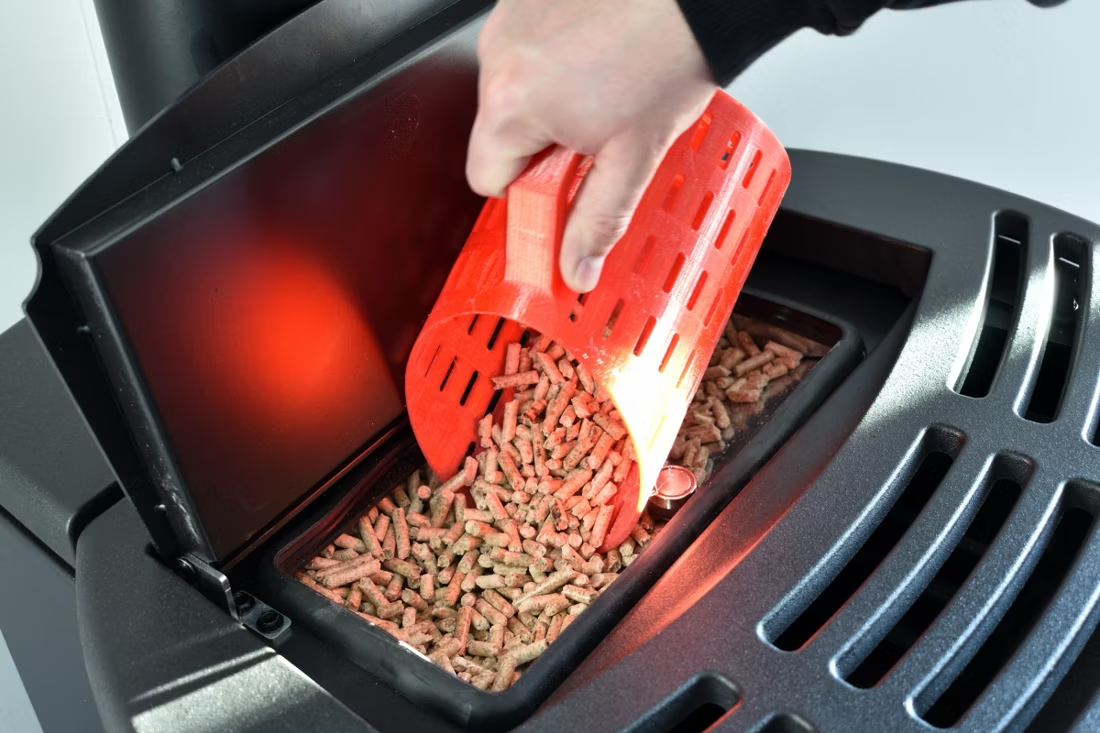
A clean pellet stove is a happy pellet stove. Plan on cleaning the burn pot about once a week when you're burning regularly—ash and clinkers gum up the air holes just like a pellet barbecue. Most pellet stove problems trace back to skipped cleaning that nobody explained up front. Some designs make it easy with a trapdoor burn pot: pull a lever and the gunk drops into the ash pan.
Why is my open fireplace making my house colder?
Open fireplaces suck—literally. As the fire burns, it consumes air your furnace already paid to heat and pulls it out through the chimney, so the house is actually colder after the fire goes out than before you lit it. An insert fixes this: it seals the chimney, puts fixed glass across the front, and turns that hole in your house into a real heat source.
Does a fireplace add value to my home?
On average, a fireplace adds back to the home about the same amount you spent installing it. Add the monthly savings from heating the rooms you actually use instead of the whole house—often hundreds of dollars a year—and the value case is strong before you even count what a fire does for how your family uses the room.
What is an in-home preview and do I need one?
It's a visit where a hearth professional measures your space, confirms the model you picked actually works in your home, and walks the specs—framing, gas line, venting, finish work—before anything is ordered. Some details you just can't know until you see the house. Never make a down payment without one; it's the single most-skipped step that burns buyers.
Stove and Fireplace Dealers in Dare County
Pellet Brands Stocked Around Dare County
Manufacturers will point you to the nearest stocking dealer.
Find your pellet stove option in Dare County.
Tell me a bit about your home and heating goals, and I'll let you know honestly whether a pellet stove fits—then match you with a trusted local dealer and a free Project Guide & Parts List covering the exact equipment, vent kit, and recommended installer for your Dare County home.
Find Your Fireplace →