
Find the right fireplace for your Outer Banks home.
Propane fireplace resources for every barrier-island town and mainland community in Dare County—from Manteo to the Hatteras villages. Connect with a local hearth dealer who knows how to install correctly on a piling-elevated, high-wind coastal home.
Every Project Starts From One of These Five Situations
Mild winters, salt air, and stilt-built homes define hearth choices across Dare County, North Carolina.
Dare County spans the Outer Banks barrier islands and a slice of mainland peninsula—Manteo, Nags Head, Kill Devil Hills, Kitty Hawk, Duck, Southern Shores, and the Hatteras Island villages of Rodanthe, Waves, Salvo, Avon, Buxton, Frisco, and Hatteras. Winters here are mild by national standards: average lows near 36°F and a winter heating load that's a fraction of what a single hard freeze delivers in Duluth MN or Burlington VT. Most homes on the barrier islands are elevated on pilings to meet FEMA flood-zone requirements and engineered for 150 mph wind exposure. That combination—light heating load, elevated wood-frame construction, and constant salt-air corrosion—pushes homeowners toward propane-fed direct-vent gas fireplaces and electric units rather than wood-burning appliances.
What you'll find on this hub: hearth retailers, service technicians, and fuel suppliers serving Dare County's towns and villages, from the northern beaches down through Hatteras Island. Wood and pellet appliances are genuinely rare here—flood-zone elevation, high-wind chimney engineering, and a vacation-rental-heavy housing stock make masonry chimneys and pellet hoppers impractical for most properties, and there's no meaningful local wood or pellet dealer network. Gas and electric are the standard, practical choices. Permits run through Dare County Planning & Inspections for unincorporated areas, or through the incorporated towns' own building departments (Nags Head, Kill Devil Hills, Kitty Hawk, Southern Shores, Manteo), with CAMA coastal-area review layered on for anything near the shoreline or in a flood zone.
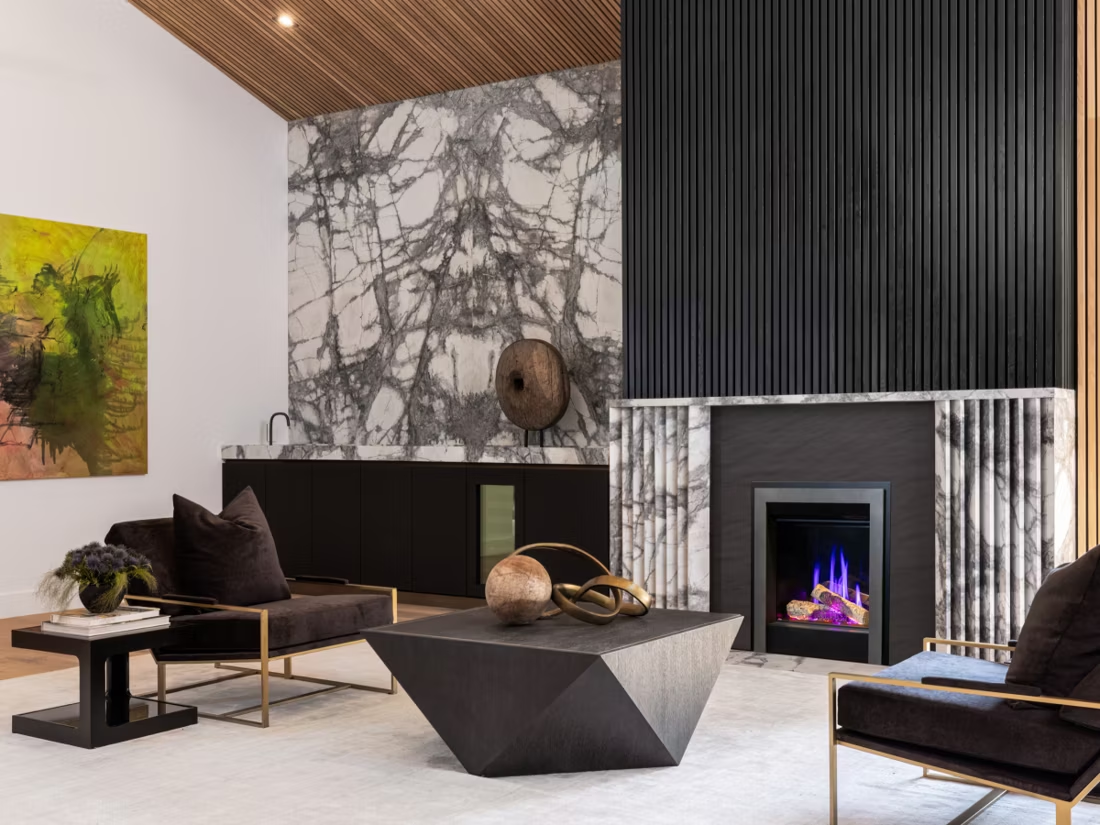
Four fuels. One honest answer for Dare County.
Three steps. No salesperson until you're ready.
Tell us about your project
Your zip code, your situation, and the fuel you're leaning toward—or let the answers point you to one.
See what's actually available
The brands dealers within 100 miles genuinely carry—real options, never a catalog mirage.
Get your dealer & Project Guide
A trusted local dealer, plus the free Project Guide & Parts List that names every component of the job.
Frequently Asked Questions
Which fuel works best in Dare County?
For most homes on the Outer Banks, it comes down to propane gas or electric. There's no natural gas main running out to the barrier islands, so gas fireplaces here run on propane, delivered and stored in a tank—direct-vent units are the norm because they don't need a masonry chimney, which matters on a home elevated on pilings. Electric fireplaces are popular too, especially in vacation rentals and second homes, since they need no venting, no gas line, and no annual chimney service between renter turnovers. Wood-burning appliances are uncommon here—flood-zone elevation requirements and 150 mph wind-load chimney engineering make masonry fireplaces impractical on most stilt-built construction, though a handful of older mainland homes in Manteo still have traditional wood fireplaces. Pellet stoves are close to nonexistent locally; there's no dealer network on the islands, though regional suppliers like Lignetics, Hamer Pellet Fuel, and Greenway Renewable Energy do deliver bagged pellets to the rare owner who's brought one out this way.
Do I need a permit to install a fireplace in Dare County?
Yes, in most cases. If your property sits in unincorporated Dare County, permits go through Dare County Planning & Inspections. If you're inside Manteo, Nags Head, Kill Devil Hills, Kitty Hawk, or Southern Shores, the town's own building department handles it instead. Gas fireplace installs need a permit for the appliance plus a separate permit and licensed gas-fitter for the propane line connection. Because so much of Dare County sits in a flood zone or near the shoreline, CAMA (Coastal Area Management Act) review can apply on top of standard building permits, especially for new construction or major renovations. Chimney chases and flue penetrations through the roof also have to meet NC Building Code wind-load engineering for this coastal exposure. Electric fireplaces usually don't need a permit unless you're hardwiring a built-in unit into a new circuit. Most local dealers handle the paperwork as part of installation.
Are there air quality restrictions on burning in Dare County?
No. Dare County has no wood-smoke nonattainment designation, no winter inversion advisories, and no curtailment program—unlike wood-heavy mountain or basin counties elsewhere in the country. That's not really the reason wood stays rare here, though. The bigger factors are construction: elevated, piling-supported homes built to withstand hurricane-force wind don't lend themselves to masonry chimneys, and a housing stock dominated by vacation rentals doesn't create much demand for a fuel that requires stacking, storing, and hauling firewood between guest turnovers.
Can one local hearth retailer handle both gas and electric fireplace installs?
Yes—most hearth retailers serving Dare County carry both propane gas fireplaces and electric units, since those are the two fuels that actually fit the local housing stock. Gas installs on the islands typically involve coordinating a propane tank set and a licensed gas-fitter for the line run, in addition to the fireplace install itself; a dealer who does this routinely will already have that coordination worked out. Electric installs are simpler—often a straightforward plug-in unit or a built-in that needs a dedicated circuit. If you're not sure which fits your home, especially in a piling-elevated or flood-zone property, a local dealer who's installed both fuels in similar Outer Banks homes can walk you through the trade-offs before you commit.
How does service and installation work on Hatteras Island and the more remote parts of the county?
Hatteras Island sits south of the Marc Basnight Bridge, reached by highway from the northern beaches or by ferry from Ocracoke, and service techs covering Rodanthe, Waves, Salvo, Avon, Buxton, Frisco, and Hatteras village typically drive out from the Nags Head–Kill Devil Hills area. Expect a modest travel charge for calls that far south, and it's worth booking ahead of hurricane season and the spring rental turnover rush rather than waiting for a mid-winter breakdown. Salt air is the other factor: propane line fittings, gas valves, and electrical connections on the Outer Banks corrode faster than they would inland, so annual inspection matters more here than the mild heating load alone would suggest.
What's the typical cost range for fireplace installation across fuel types in Dare County?
Gas fireplace, insert, or stove: typically $4,500–$10,500 for propane direct-vent installs, with cost driven mostly by the propane line run and venting through an elevated structure rather than the appliance itself. Electric fireplace: $200–$3,000 for the unit, plus $400–$1,200 in labor for anything beyond a plug-in wall unit—built-ins with a dedicated circuit run toward the higher end. Wood and pellet appliances aren't a meaningful cost category here since local demand and dealer support for either fuel are minimal. For rental property owners, ask your dealer about low-maintenance venting configurations that hold up well between guest turnovers.
Can I install a fireplace myself?
If you're putting a fire in your house on purpose, it's best to work with an expert. Unless you're genuinely experienced in framing, gas line, vent pipe, and the national code on clearances to combustibles, have a professional do it—and ideally the same company that sells you the fireplace, so warranty, service, and liability all live under one roof.
Does a fireplace add value to my home?
On average, a fireplace adds back to the home about the same amount you spent installing it. Add the monthly savings from heating the rooms you actually use instead of the whole house—often hundreds of dollars a year—and the value case is strong before you even count what a fire does for how your family uses the room.
Can a fireplace actually lower my heating bill?
Yes—by creating a comfort zone. A furnace heats every square foot of the house just to warm the one room you're in; a gas fireplace on low burns roughly a sixth of the gas a typical furnace does. Set the furnace around 55–60 degrees as a baseline, then heat the rooms your family actually uses. Families who heat this way commonly save $20–$60 a month.
What are the biggest mistakes people make buying a fireplace?
Five come up constantly: budgeting for the unit but not the full job (vent, gas line, electrical, finish work); drowning in options instead of starting from style and fuel; buying without an in-home preview; handing installation to a handyman instead of a pro; and giving up out of sheer indecision. Every one is avoidable with a clear plan—step one, step two, step three.
Stove and Fireplace Dealers in Dare County
Listings include WhyFire partner dealers, dealers we have verified as authorized for the brands we recommend, and established local businesses that carry hearth products. Every listing shows which one it is. The ones marked Preferred run on WhyFire's software, so they can show you real pricing and book your appointment right here. No manufacturer pays for placement. How we verify dealers →
Owen Gas
Shorefire Gas Fireplaces
Jt Jones Propane & Fireplace
Find your fireplace in Dare County.
Get matched with a trusted local dealer and a free Project Guide & Parts List—a plan for your gas or electric fireplace project in Dare County, with the exact parts (including the vent kit) and our recommended local installer.
Find Your Fireplace →