
Find the right pellet stove for Clay County's mountain winters.
Steady, thermostat-controlled heat for the far southwestern tip of the Blue Ridge—from Hayesville to the cabins and lake homes ringing Chatuge. Get matched with a local dealer who can size, vent, and install it right.
Every Project Starts From One of These Five Situations
Consistent heat, without the wood-splitting work.
Clay County sits in North Carolina's far southwestern corner, bordering Georgia and wrapped around Lake Chatuge, with the county seat of Hayesville tucked among the ridgelines of the Nantahala region. It's a small, rural county—home to just a few hundred year-round residents in the surrounding township areas—where a lot of housing stock is seasonal or part-time: lake cabins, retirement homes, and mountain retreats that need reliable heat without someone tending a fire all winter. Winter nights here regularly drop into the 20s and teens in a 4A mixed-humid climate that runs colder than lowland Piedmont NC once you factor in the elevation around Hayesville.
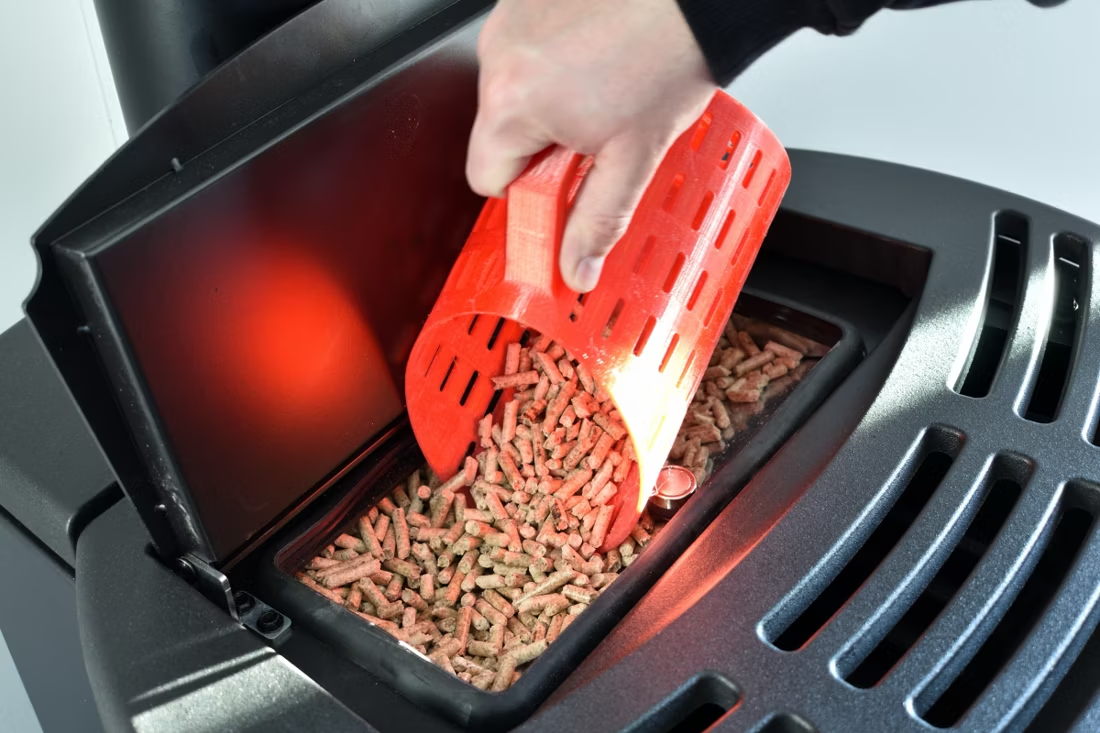
The hardwood forests that define this part of the mountains—oak, hickory, maple, and pine—also underpin a healthy regional pellet supply. Lignetics, Hamer Pellet Fuel, and Greenway Renewable Energy all serve the Southeast, which means Clay County homeowners aren't paying long-haul freight premiums the way some northern markets do. There are no non-attainment or winter-inversion air quality restrictions here, so burning is straightforward year-round. A pellet stove or insert gives lake-house owners and full-time residents alike a set-it-and-forget-it heat source: load the hopper, set the thermostat, and let it run—a real advantage for anyone who isn't around every day to feed a wood fire.
Three steps. No salesperson until you're ready.
Tell us about your project
Your zip code, your situation, and the fuel you're leaning toward—or let the answers point you to one.
See what's actually available
The brands dealers within 100 miles genuinely carry—real options, never a catalog mirage.
Get your dealer & Project Guide
A trusted local dealer, plus the free Project Guide & Parts List that names every component of the job.
Frequently Asked Questions
How much does a pellet stove installation cost in Clay County?
A typical pellet stove or insert installation runs in the $3,000 to $6,500 range in most Southeastern mountain markets like Clay County, depending on the unit, whether it's a freestanding stove or an insert into an existing masonry fireplace, and whether a dedicated electrical circuit needs to be added for the auger and blower motor. Exterior wall venting through PL pipe is usually simpler and cheaper than a full chimney liner job, which is one reason pellet inserts are popular in older Hayesville-area homes with an existing fireplace opening. A local dealer can give you a firm number after seeing your home.
What pellet brands are available near Clay County?
Lignetics, Hamer Pellet Fuel, and Greenway Renewable Energy all distribute into the western North Carolina market, giving Clay County reasonably consistent access to bagged softwood and hardwood-blend pellets without the shipping costs that drive up prices in more remote parts of the country. Availability can still tighten during peak cold snaps in January and February, so many local homeowners stock up early in the fall rather than buying pallet-by-pallet all winter.
Pellet stove vs. wood stove—which makes more sense for a lake house in Clay County?
With oak, hickory, maple, and pine all common in the surrounding forest, wood is cheap and plentiful if you're willing to split, stack, and haul it—and a wood stove keeps working with zero electricity, which matters if you're only at the cabin occasionally and don't want to worry about a frozen pipe situation during an ice storm. A pellet stove trades that self-sufficiency for convenience: no splitting, longer unattended burn times, and cleaner glass, but it needs power to run the auger and blower. For a part-time lake home around Chatuge, pair a pellet unit with a small battery backup or generator plan; for a full-time home where someone is around daily, either works well.
Do I need a permit to install a pellet stove in Clay County?
Most solid-fuel appliance installations require a building permit, and Clay County is no exception—check with the Clay County Building Inspections Department before work begins, since permitting confirms your venting and clearances meet current code. Most local hearth dealers handle this paperwork as part of the installation, so it typically isn't something you have to manage yourself. There are no air-quality non-attainment restrictions in Clay County, so unlike some larger NC metro areas, you won't run into seasonal burn curtailment.
Will my pellet stove work if the power goes out?
No—pellet stoves rely on electricity to run the auger that feeds pellets into the burn pot and the blower that circulates heat, so a standard pellet stove stops working in an outage. This matters in Clay County's mountain terrain, where ice storms and downed lines can knock out power for a day or more in the winter. If backup heat during outages is a priority, look at a small battery backup unit sized for a pellet stove's low draw, or pair the pellet stove with a wood-burning unit elsewhere in the house for true off-grid heat.
What size pellet stove do I need for a Clay County home or cabin?
Sizing depends on square footage, ceiling height, and how well-insulated the structure is—older lake cabins around Chatuge with single-pane windows and minimal insulation need more heating capacity per square foot than a newer, well-sealed home. As a rough guide, smaller pellet stoves (under 1,000 sq ft) suit a single great room or cabin, while medium units (1,000–1,800 sq ft) cover most primary living areas at this elevation. A local dealer will do an in-home assessment rather than rely on square footage alone, since mountain homes often have more glass and more exposed walls than lowland construction.
How much maintenance does a pellet stove need?
Pellet stoves need more frequent light maintenance than wood stoves but far less heavy lifting. Plan to empty the ash pan every few days during regular use, clean the glass and burn pot weekly, and have the hopper, auger, and venting professionally serviced once a year—typically before the season starts. Because pellets burn cleaner than cordwood, you won't deal with creosote buildup, but the mechanical components (auger motor, blower, igniter) are the parts that eventually need attention, so an annual service visit from a local dealer is worth the cost.
Where can I buy pellet fuel near Clay County?
Regional brands including Lignetics, Hamer Pellet Fuel, and Greenway Renewable Energy are typically stocked by hearth dealers and farm-supply retailers serving the western NC mountains, and pellets generally run somewhere in the $250 to $320 per ton range in the Southeast, sold by the 40-pound bag or by the pallet (usually 50 bags, or one ton, per pallet). Buying a season's supply on pallet in the fall is common practice here, both to lock in price and to avoid scrambling during a cold snap when demand spikes.
Pellet vs. electric heat—which fits better in Clay County?
Much of rural Clay County relies on propane or electric heat pumps rather than natural gas, so the real comparison for a lot of homeowners is pellet versus electric resistance or heat-pump backup. A pellet stove delivers strong, visible zone heat to a main living area and can meaningfully cut whole-home electric bills during the coldest stretches of winter, while an electric fireplace or insert offers instant on-off convenience with no fuel to store but costs more to run as a primary heat source. For a full-time home in the Hayesville area, pairing a pellet stove for the living space with electric heat elsewhere is a common, cost-effective setup.
Why is a fireplace insert so efficient?
An insert does two things: it seals the chimney completely, so you stop losing air you already paid to heat, and it radiates warmth into the room through the firebox and glass. Most add a heat-exchange fan that pulls cool room air underneath, wraps it around the hot firebox, and pushes it back out warm. Your home is more efficient before you've even lit the first fire.
How often does a pellet stove need cleaning?
A clean pellet stove is a happy pellet stove. Plan on cleaning the burn pot about once a week when you're burning regularly—ash and clinkers gum up the air holes just like a pellet barbecue. Most pellet stove problems trace back to skipped cleaning that nobody explained up front. Some designs make it easy with a trapdoor burn pot: pull a lever and the gunk drops into the ash pan.
Can a fireplace actually lower my heating bill?
Yes—by creating a comfort zone. A furnace heats every square foot of the house just to warm the one room you're in; a gas fireplace on low burns roughly a sixth of the gas a typical furnace does. Set the furnace around 55–60 degrees as a baseline, then heat the rooms your family actually uses. Families who heat this way commonly save $20–$60 a month.
What is an in-home preview and do I need one?
It's a visit where a hearth professional measures your space, confirms the model you picked actually works in your home, and walks the specs—framing, gas line, venting, finish work—before anything is ordered. Some details you just can't know until you see the house. Never make a down payment without one; it's the single most-skipped step that burns buyers.
Pellet Brands Stocked Around Clay County
Manufacturers will point you to the nearest stocking dealer.
Find your pellet stove in Clay County.
Tell us about your home near Hayesville or Lake Chatuge and we'll match you with a trusted local dealer, plus a free Project Guide & Parts List—sizing, venting, and the exact parts your pellet stove or insert install needs.
Find Your Fireplace →