
Warmth and ambiance for Clay County—no chimney required.
From Hayesville to the shoreline homes around Chatuge Lake, electric fireplaces give Clay County's cabins, additions, and rental properties real-looking flame and supplemental heat without venting, gas lines, or a masonry chimney. Get matched with a local dealer who installs them right.
Every Project Starts From One of These Five Situations
The simplest fireplace to add to a mountain home you don't want to gut.
Clay County is one of North Carolina's smallest and most rural counties—tucked against the Georgia line in the Blue Ridge Mountains, ringed by Nantahala National Forest, with Hayesville as the county seat and Chatuge Lake forming much of its western edge. With a population in the low hundreds and a landscape dominated by lake cabins, second homes, and older farmhouses, a lot of Clay County's housing stock wasn't built with a fireplace in mind—or has one that's expensive to retrofit for wood or gas. Climate zone 4A means real winter cold in the hollows and along the ridgelines, but nights here are milder than the deep Appalachian interior further north, so a full masonry rebuild or new gas line often isn't worth it for supplemental heat.
Most primary heat in Clay County still comes from heat pumps, propane, or wood—the oak, hickory, maple, and pine that fill the surrounding national forest have heated local homes for generations. Electric fireplaces fill a different role: a plug-in or hardwired unit that adds real flame-look ambiance and a few thousand BTUs of zone heat to a lake-house great room, a finished basement, or a primary bedroom, without touching the chimney, running gas line, or dealing with ash. That makes electric a particularly good fit for Chatuge Lake vacation and rental properties, where owners want a cozy amenity that's safe to leave unattended and doesn't require seasonal maintenance.
Three steps. No salesperson until you're ready.
Tell us about your project
Your zip code, your situation, and the fuel you're leaning toward—or let the answers point you to one.
See what's actually available
The brands dealers within 100 miles genuinely carry—real options, never a catalog mirage.
Get your dealer & Project Guide
A trusted local dealer, plus the free Project Guide & Parts List that names every component of the job.
Frequently Asked Questions
How much does an electric fireplace installation cost in Clay County?
Electric fireplaces are one of the few hearth products whose cost doesn't swing much by region, because there's no chimney, gas line, or venting to price in. A plug-in insert or freestanding electric stove typically runs $150 to $800 for the unit. A built-in linear electric fireplace with a custom mantel, shiplap surround, or recessed wall install—common in lake-house great rooms around Chatuge Lake—runs $1,500 to $4,000 once framing, trim, and electrical work are included. In a county as small as Clay, expect installers to fold travel time into quotes for cabins farther out from Hayesville.
Do I need an electrician to install an electric fireplace?
For a simple plug-in unit on a standard 120V outlet, no. For a built-in or wall-mount electric fireplace—especially one wired to its own dedicated circuit, which is standard for larger units—yes, a licensed electrician should handle the run. This matters more in Clay County than in newer subdivisions elsewhere, since a fair number of the county's older lake cabins and farmhouses have wiring that predates modern electrical code and may need a panel check before adding a dedicated circuit.
Can an electric fireplace heat my whole house?
No. Most electric fireplaces top out around 1,500 watts, roughly 5,000 BTUs—enough to noticeably warm a single room, not a whole home. In Clay County's zone 4A climate, homes still need a heat pump, propane furnace, or wood stove as the primary heat source; the electric fireplace's job is zone heat and ambiance in the room where you're actually sitting, particularly useful for a lake house that only gets used seasonally and doesn't justify running central heat for the whole structure.
What's the best type of electric fireplace for a lake cabin?
For Chatuge Lake cabins and rental properties, a built-in linear electric fireplace with adjustable flame brightness and a separate heat on/off switch is the most popular choice—you can run the flame for ambiance without heat during shoulder seasons, which matters in a county where cabins often sit empty for stretches. Wall-mount units work well in smaller additions or bedrooms. Freestanding electric stoves are a good option if you want to preserve the option of moving the unit later or aren't ready to commit to a built-in surround.
Do I need a permit to install an electric fireplace in Clay County?
Most plug-in electric fireplaces don't require a permit since there's no gas line, venting, or structural chimney work involved. If your project includes new electrical circuitry, a wall recess, or structural framing changes, check with Clay County's building permit office before work starts—a licensed electrician or your installing dealer can usually tell you in a few minutes whether your specific project crosses that line.
What's the difference between an electric insert, stove, and wall-mount fireplace?
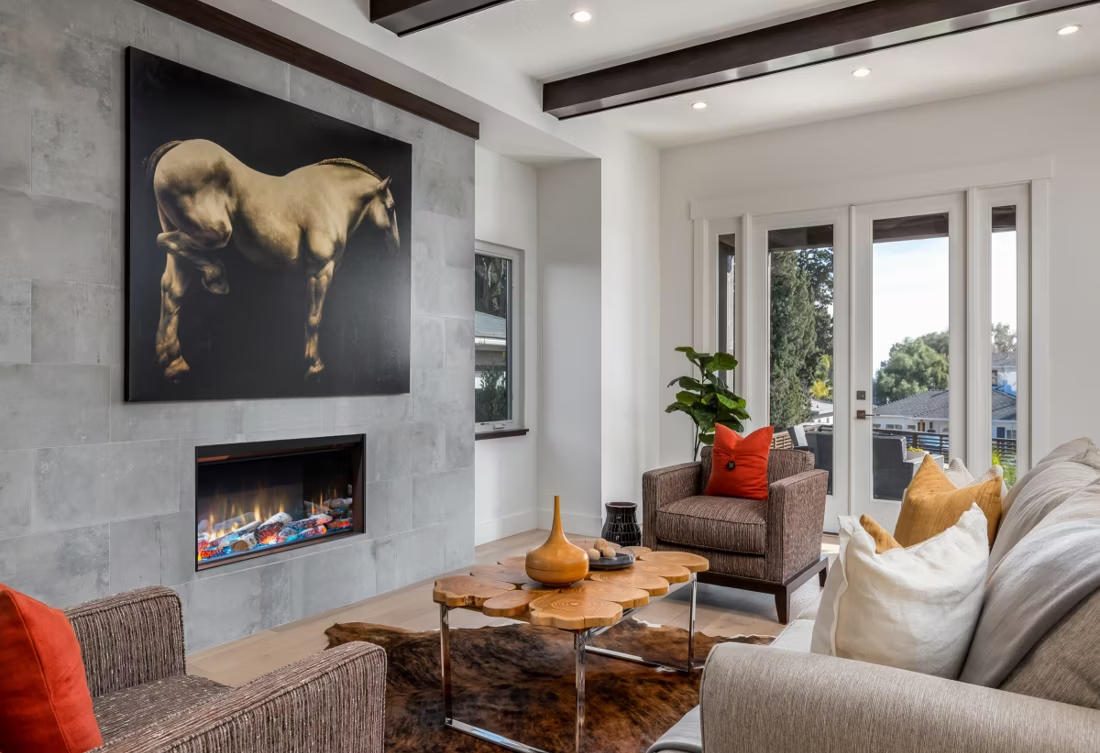
An electric insert is sized to slide into an existing fireplace opening, masonry or otherwise—a common upgrade for older Clay County farmhouses with an unused wood-burning firebox. An electric stove is a freestanding cabinet-style unit that mimics a wood stove's footprint and can sit anywhere near an outlet. A wall-mount or built-in linear fireplace is the flattest option, designed to be recessed into a wall or framed surround—the look most lake-house great rooms go for. All three plug into standard household power or a dedicated circuit; none require venting.
Electric vs. wood vs. propane—what's right for my Clay County home?
Wood remains a strong choice in Clay County given the abundant oak, hickory, maple, and pine in the surrounding Nantahala National Forest, and it works without electricity—a real consideration for rural properties where power can go out during mountain storms. Propane is the common piped-gas alternative here since natural gas mains don't reach much of the county. Electric doesn't compete with either as a primary heat source, but it's the easiest way to add fireplace ambiance to a room that doesn't already have a chimney or gas line—a second bedroom, a finished basement, or a lake-house addition where running a flue or gas line isn't practical.
Where can I actually get an electric fireplace installed given how small Clay County is?
With a population under a thousand, Clay County doesn't support big hearth showrooms of its own—most homeowners here end up working with dealers based in nearby Murphy or Franklin, NC, or just across the state line around Hiawassee and Blairsville, GA, many of whom regularly service the Hayesville and Chatuge Lake area. That regional-dealer reality is exactly why matching with the right one matters: a trusted installer who already knows Clay County's older wiring and cabin construction will save you a callback later.
Is an electric fireplace a good fit for a Chatuge Lake rental property?
Yes, often a better fit than wood or gas for a short-term rental. There's no ash to clean between guest stays, no open flame or gas valve for renters to manage incorrectly, and no annual chimney sweep or gas line inspection to schedule around bookings. A linear electric fireplace with a simple remote gives guests the cozy look they're booking a lake cabin for, with far less liability and upkeep than a wood-burning unit sitting unattended in a property you're not at every week.
Can I put a TV above my fireplace?
Yes—with an asterisk. Fireplaces are hot and TVs don't like heat. Either put a mantel between them to deflect rising warmth, or choose a fireplace with heat-management technology that creates a cool zone on the wall above—the wall stays around 125 degrees, barely warm, while the room still gets full heat. If you like clean lines and don't want a mantel, heat management is the answer.
Do electric fireplaces actually produce heat?
Yes—most put out around 4,800–5,000 BTUs from a standard outlet, which comfortably warms a bedroom, office, or den as a comfort-zone heater. What they won't do is carry a whole house the way wood, gas, or pellet can. Think of electric as ambiance-first with honest supplemental heat: flames on with no heat in July, flames plus warmth in January.
Can I install a fireplace myself?
If you're putting a fire in your house on purpose, it's best to work with an expert. Unless you're genuinely experienced in framing, gas line, vent pipe, and the national code on clearances to combustibles, have a professional do it—and ideally the same company that sells you the fireplace, so warranty, service, and liability all live under one roof.
What is an in-home preview and do I need one?
It's a visit where a hearth professional measures your space, confirms the model you picked actually works in your home, and walks the specs—framing, gas line, venting, finish work—before anything is ordered. Some details you just can't know until you see the house. Never make a down payment without one; it's the single most-skipped step that burns buyers.
Get matched with an electric fireplace dealer serving Clay County.
Tell us about your cabin, lake house, or addition and we'll send a free Project Guide & Parts List—the right electric fireplace or insert for your space, the exact parts list, and a trusted local dealer who installs in the Hayesville and Chatuge Lake area.
Find Your Fireplace →