
Find a pellet stove built for Cherokee County's mountain winters.
Steady, thermostat-controlled heat for the coves and ridgelines around Murphy, Andrews, and Marble—without the splitting, stacking, and hauling wood heat demands. Find the right unit and connect with a trusted local dealer.
Every Project Starts From One of These Five Situations
Consistent heat without the wood-splitting work.
Cherokee County sits in the far southwestern corner of North Carolina, tucked into the Appalachian foothills near the Tennessee and Georgia lines. Winters here are real but moderate by mountain standards—Climate Zone 4A, about 3,933 heating degree days a year, and average winter lows around 27°F. The county's hardwood forests, thick with oak, hickory, maple, and pine, have supported wood-heating households for generations, and plenty of homes here still burn cordwood. But not every household wants the physical work that comes with it, especially in homes where the woodpile means a steep driveway, a long walk to the shed, or an aging homeowner who'd rather not swing a maul every fall.
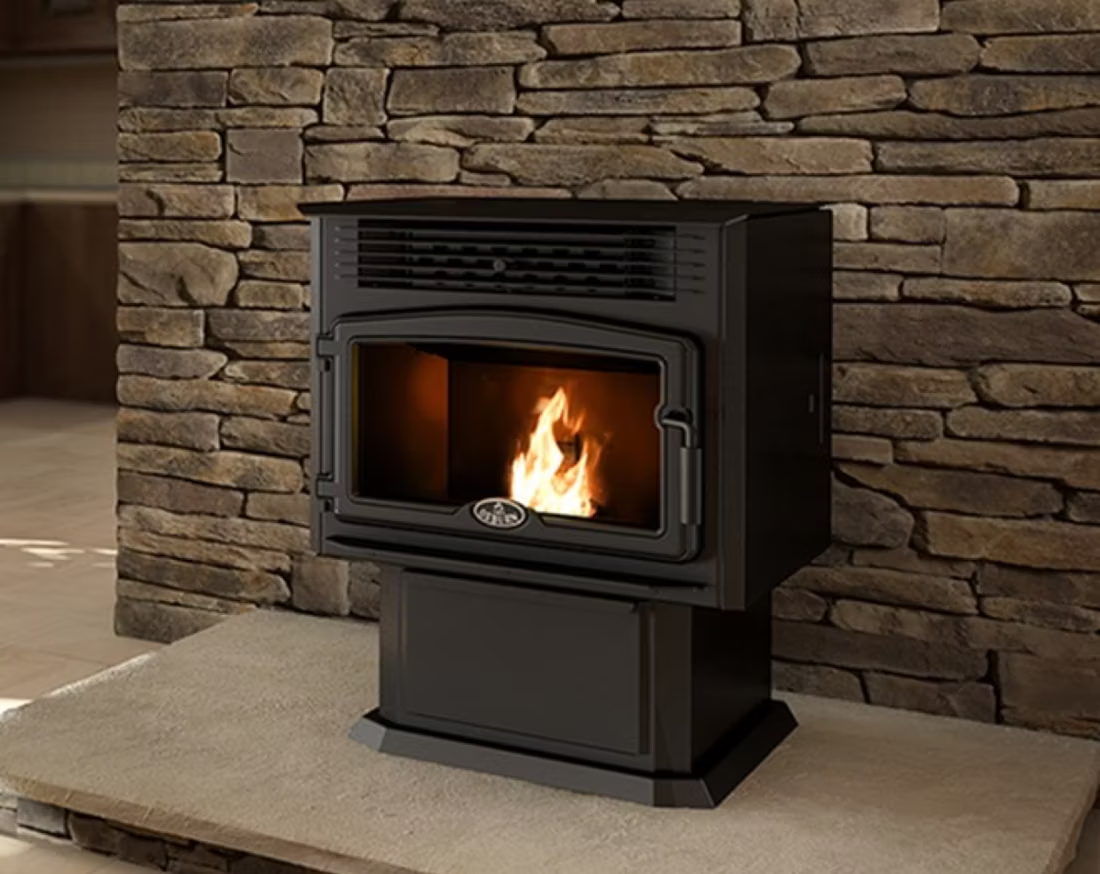
That's where pellet heat fits in. Regional pellet brands like Lignetics, Hamer Pellet Fuel, and Greenway Renewable Energy supply bagged fuel throughout western North Carolina and east Tennessee, so sourcing pellets isn't the challenge it can be in more remote parts of the country. A pellet stove or insert gives you thermostat-set, even heat, a hopper that only needs filling every day or two, and none of the splitting, stacking, or creosote buildup that comes with a wood-burning setup. With no air quality non-attainment issues or winter burn curtailments on record in Cherokee County, there's also no regulatory downside to running one daily through the coldest stretch of the season.
Three steps. No salesperson until you're ready.
Tell us about your project
Your zip code, your situation, and the fuel you're leaning toward—or let the answers point you to one.
See what's actually available
The brands dealers within 100 miles genuinely carry—real options, never a catalog mirage.
Get your dealer & Project Guide
A trusted local dealer, plus the free Project Guide & Parts List that names every component of the job.
Frequently Asked Questions
How much does a pellet stove installation cost in Cherokee County?
A pellet stove or insert installation in Cherokee County typically runs $3,000 to $6,000, depending on whether you choose a freestanding stove or an insert into an existing fireplace, the hopper capacity you need, and any hearth pad work required for clearance. Pellet units vent through a simple sidewall pipe rather than a full masonry chimney, so installs are generally more straightforward—and less expensive—than a comparable wood stove project. Homes in more remote coves outside Murphy, Andrews, or Marble may see a modest travel charge from local installers, but the work itself doesn't change with distance.
What size pellet stove do I need for my Cherokee County home?
Sizing depends on square footage, insulation, and whether you're using the stove as primary or supplemental heat. With Cherokee County's roughly 3,933 heating degree days and average winter lows near 27°F, most homes fall into the small-to-medium range for pellet appliances—a stove rated for 1,000 to 1,800 square feet handles most main living areas here without needing to run at full output around the clock. Homes at higher elevation or with less insulation, common in older farmhouses and cabins scattered through the county's coves, may want to size up slightly. A local dealer can size your specific home during an in-home visit, factoring in ceiling height and how open your floor plan is.
Where can I find certified pellet stove installers near me?
Look for installers with NFI (National Fireplace Institute) pellet-specific certification, which covers proper venting, clearance, and electrical setup for auger-fed appliances. Trusted local dealers serving Cherokee County generally cover Murphy, Andrews, Marble, and the surrounding rural routes, and most handle the sidewall venting and any electrical work as part of the install. Because pellet stoves depend on a working auger motor and combustion blower, it's worth confirming your installer also services the unit after the sale—not every general contractor who can hang drywall is equipped to troubleshoot an igniter or auger fault down the road.
What's the difference between a pellet stove and a pellet insert?
A pellet stove is a freestanding appliance that sits on a hearth pad and vents out a sidewall or through an existing chimney chase—it can go almost anywhere in a room with the right clearances. A pellet insert is built to slide into an existing masonry fireplace opening, turning a drafty wood-burning fireplace into a sealed, thermostat-controlled heat source while reusing the existing chimney as part of the vent path. For Cherokee County homes with an older stone or brick fireplace already in place—common in farmhouses throughout the county—an insert is often the more cost-effective route since it uses infrastructure you already have.
Do I need a permit to install a pellet stove in Cherokee County?
Yes—a building permit is typically required for a new pellet stove or insert installation through the county's permitting office, covering the venting and any electrical work for the unit's blower and auger. Cherokee County has no recorded air quality non-attainment status or winter burn curtailment periods, so unlike some western regions, there's no seasonal restriction on when you can run a pellet appliance. Most local dealers handle the permit paperwork as part of the installation, so it's rarely something homeowners need to manage themselves.
What's the best pellet stove for Cherokee County's climate?
Given the county's moderate 3,933 heating degree days and winter lows that average around 27°F, most Cherokee County homes don't need the largest hopper or highest BTU output on the market—a mid-size unit from a widely available brand like Harman or Quadra-Fire covers the bulk of local homes comfortably. What matters more locally is auger reliability and hopper capacity relative to how often you're willing to refill it, since a 40-pound bag typically burns down over 24 to 36 hours depending on setting. Talk to a local dealer about your square footage and insulation level for a specific model recommendation.
Where can I buy pellet fuel in Cherokee County?
Regional pellet brands including Lignetics, Hamer Pellet Fuel, and Greenway Renewable Energy are distributed throughout western North Carolina and are typically available through local hardware stores, farm supply retailers, and hearth dealers serving Murphy, Andrews, and Marble. Pricing across the region generally runs in the $250 to $320 per ton range, though it can shift with hardwood pellet demand each fall. Buying a season's supply early, before the first cold snap, is a common local strategy to avoid picked-over inventory in December and January.
Will my pellet stove work if the power goes out?
Not without a backup power source. Pellet stoves rely on an electric auger to feed fuel and a blower to move heat and combustion air, so a power outage stops the stove entirely—a real consideration in a mountain county where ice storms and downed lines can knock out power for hours or days at a time. Some homeowners here pair a pellet stove with a small battery backup or inverter generator sized to run the auger and blower; others keep a wood stove or fireplace as a true off-grid backup. If reliable heat during outages is a priority for your household, ask a local dealer about UPS battery backup options sized for your specific model.
Pellet stove vs. wood stove—which is right for my Cherokee County home?
Wood stoves work without electricity, which matters during the ice-storm outages that hit this part of the mountains, and Cherokee County residents have easy access to self-cut firewood—Cherokee National Forest issues cutting permits for $20 per cord during the May-to-October season, and the county's oak, hickory, maple, and pine are all solid firewood species. Pellet stoves trade that off-grid independence for convenience: no splitting, no stacking, more even heat output, and far less ash and creosote to manage. For households with a truck, a woodlot, and the physical ability to process cordwood, wood often wins on cost. For those who'd rather load a hopper than run a chainsaw, pellet is the easier day-to-day choice—and plenty of local homes end up with one of each.
Why is a fireplace insert so efficient?
An insert does two things: it seals the chimney completely, so you stop losing air you already paid to heat, and it radiates warmth into the room through the firebox and glass. Most add a heat-exchange fan that pulls cool room air underneath, wraps it around the hot firebox, and pushes it back out warm. Your home is more efficient before you've even lit the first fire.
Why is my open fireplace making my house colder?
Open fireplaces suck—literally. As the fire burns, it consumes air your furnace already paid to heat and pulls it out through the chimney, so the house is actually colder after the fire goes out than before you lit it. An insert fixes this: it seals the chimney, puts fixed glass across the front, and turns that hole in your house into a real heat source.
How much should I budget for a fireplace?
For an average home—covering the fireplace, the vent pipe, and basic installation—a budget between $3,900 and $5,500 gives you a lot of options across wood, gas, and pellet. By the time you add finish work, gas line, and electrical, the average complete installation lands between $5,000 and $12,000 all-in. In a remodel or new build, a good rule is to put about 2.5% of the total project cost toward the fireplace.
Can I install a fireplace myself?
If you're putting a fire in your house on purpose, it's best to work with an expert. Unless you're genuinely experienced in framing, gas line, vent pipe, and the national code on clearances to combustibles, have a professional do it—and ideally the same company that sells you the fireplace, so warranty, service, and liability all live under one roof.
Stove and Fireplace Dealers in Cherokee County
Pellet Brands Stocked Around Cherokee County
Manufacturers will point you to the nearest stocking dealer.
Find your pellet stove in Cherokee County.
Tell us a bit about your home and we'll match you with a trusted local dealer and a free Project Guide & Parts List—the exact parts, including your vent kit, for a pellet stove or insert project in Cherokee County.
Find Your Fireplace →