
Heat that holds through an Appalachian winter, right here in Cherokee County.
Wood, gas, pellet, and electric fireplace resources for Murphy, Andrews, and the mountain communities that make up Cherokee County. Find the right unit for your home and get matched with a trusted local hearth dealer.
Every Project Starts From One of These Five Situations
Appalachian hardwood country at the far western edge of North Carolina.
Cherokee County sits at the far western tip of North Carolina, where the Hiwassee and Valley rivers cut through the southern Appalachians near the Georgia and Tennessee state lines. Elevations run from around 1,500 feet along the river bottoms up past 3,000 feet on the ridges toward the Cherokee National Forest boundary. The climate is zone 4A—a mixed, moderately cold climate with an average winter low of 27°F and roughly 3,933 heating degree days a year. That's meaningfully milder than the deep winters of Burlington, Vermont or Duluth, Minnesota, but still cold enough, especially in shaded coves and higher elevations, that most homes here run real hearth heat for four to five months a year. Firewood is dense and abundant—oak, hickory, maple, and pine cover the ridges, and a personal-use cutting permit through Cherokee National Forest lets many households harvest their own.
What you'll find on this hub: hearth retailers, chimney sweeps and gas techs, and fuel suppliers—including regional pellet brands like Lignetics, Hamer Pellet Fuel, and Greenway Renewable Energy—serving a county with a modest year-round population spread across a large, rugged footprint. Don't expect a retailer on every corner here; most are concentrated in and around Murphy, with homeowners in Andrews, Marble, or the Hiwassee Dam community often driving 20-30 minutes for a consultation or service call. Pick your fuel below for local dealers, typical installation costs, and the specifics of what actually gets installed in this part of the mountains.
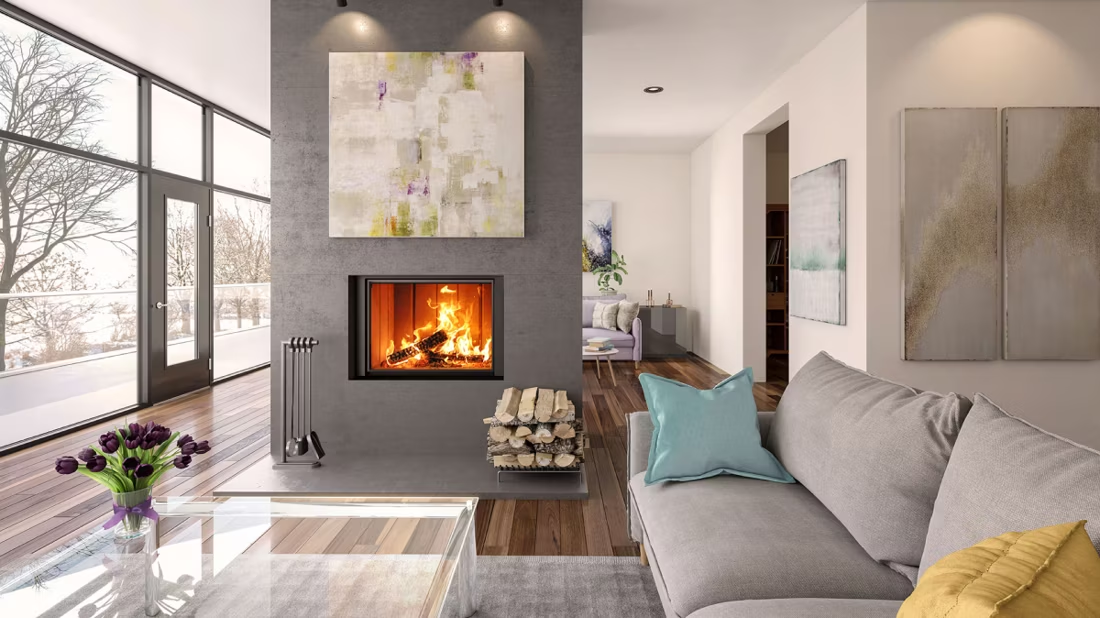
Four fuels. One honest answer for Cherokee County.
Three steps. No salesperson until you're ready.
Tell us about your project
Your zip code, your situation, and the fuel you're leaning toward—or let the answers point you to one.
See what's actually available
The brands dealers within 100 miles genuinely carry—real options, never a catalog mirage.
Get your dealer & Project Guide
A trusted local dealer, plus the free Project Guide & Parts List that names every component of the job.
Frequently Asked Questions
Which fireplace fuel works best in Cherokee County?
It depends on your home and your relationship to firewood. Wood is still the heritage fuel here—hardwood ridges thick with oak and hickory make for dense, long-burning firewood, and a Cherokee National Forest personal-use permit lets many households cut their own each fall. A modern EPA-certified wood stove or insert handles the coves and hollows well, where temperatures can run several degrees colder than the valley floor. Gas around here is mostly propane rather than piped natural gas—reliable, no chimney maintenance, a good fit for homes that want heat at the flip of a switch, though tank setup adds to the upfront cost. Pellet stoves are a solid middle ground, especially with regional supply from Lignetics and Hamer Pellet Fuel keeping bag prices reasonable, and they skip the labor of splitting and stacking wood. Electric fireplaces work well as supplemental heat in bedrooms, sunrooms, or additions, but with winter lows only averaging 27°F, they're rarely anyone's sole heat source. Most households end up running wood or pellet as the primary heater with electric or propane backup in secondary rooms.
Do I need a permit to install a wood stove, gas fireplace, or insert in Cherokee County?
Yes, in nearly every case. New wood stoves, wood inserts, gas fireplaces, gas inserts, and pellet stoves all require a building permit through the Cherokee County Building Permits & Inspections Department, and any wood-burning appliance installed today has to meet EPA 2020 NSPS emissions standards. Propane installations also need a separate gas-line permit, and the connection work should go through a licensed gas fitter, not a general handyman. Electric fireplaces are usually exempt unless you're doing a hardwired built-in that adds a new circuit. If you're harvesting your own firewood from Cherokee National Forest land, that's a separate personal-use cutting permit through the Forest Service, unrelated to your home's building permit. Most local retailers who sell and install stoves handle the county paperwork as part of the job, so it's worth asking upfront.
Are there any wood-burning restrictions or air-quality rules in Cherokee County?
No—Cherokee County doesn't carry a non-attainment designation or a formal wood-smoke advisory program the way some western basin communities do. There's no seasonal burn curtailment here and no yellow or red advisory days to track. The main requirement most homeowners run into is EPA 2020 NSPS certification on new stove installs, plus standard local ordinances around outdoor open burning of brush and debris, which are separate from indoor heating appliances. If you're cutting firewood on Cherokee National Forest land, check current fire restrictions before burning on-site—those can tighten during dry ridge-top conditions in fall, independent of anything related to your home's fireplace.
Can I find one local dealer that carries wood, gas, pellet, and electric in Cherokee County?
It's possible, but with a small year-round county population, the retailer footprint here is thin compared to larger metro counties. Most hearth dealers based in or near Murphy carry two or three fuel types—commonly wood and pellet, or propane and electric—rather than a full four-fuel showroom. If you want to see working displays of every fuel type side by side, some Cherokee County homeowners drive into neighboring counties across the Tennessee or Georgia line, or toward Andrews and beyond, where larger dealer showrooms exist. For most projects, though, a local dealer who specializes in your chosen fuel and knows the county's permitting and venting quirks will do a better job than a big-box store two hours away.
How does chimney sweeping or gas service work in the rural parts of Cherokee County?
Technicians serving Cherokee County typically base out of Murphy and travel to outlying communities—Andrews, Marble, Ranger, and the Hiwassee Dam area—often covering winding mountain roads that add real time to a service call. Book earlier than you would in a city: pre-season sweeps and gas inspections from September through November fill up fast once the weather turns, and a mid-winter emergency call may mean a wait, especially after an ice event slows travel. A small trip fee for the more remote coves and hollows is common. If your home is well off the state highway, ask your technician about access before they arrive—a long gravel driveway or steep grade can affect how quickly they can get equipment to your chimney.
What's the typical installation cost across fuel types in Cherokee County?
Wood stove or insert installation runs roughly $4,000–$8,000 for a typical retrofit into an existing masonry chimney, more if new Class A chimney pipe has to be run through a second story. Propane fireplace, insert, or stove installation runs $4,000–$9,000 depending on whether an existing tank and gas line are in place or need to be added. Pellet stove or insert installation runs $4,000–$6,500, with regional pellet supply from brands like Lignetics and Greenway Renewable Energy keeping ongoing fuel costs manageable. Electric fireplace costs $200–$2,500 for the unit, with $300–$1,000 in labor for anything beyond a plug-and-play wall unit. Rural Appalachian labor rates tend to run a bit below big-metro pricing, but travel time to more remote parts of the county can add to the total. See the county + fuel pages above for dealer-specific pricing.
Can I install a fireplace myself?
If you're putting a fire in your house on purpose, it's best to work with an expert. Unless you're genuinely experienced in framing, gas line, vent pipe, and the national code on clearances to combustibles, have a professional do it—and ideally the same company that sells you the fireplace, so warranty, service, and liability all live under one roof.
Can a fireplace actually lower my heating bill?
Yes—by creating a comfort zone. A furnace heats every square foot of the house just to warm the one room you're in; a gas fireplace on low burns roughly a sixth of the gas a typical furnace does. Set the furnace around 55–60 degrees as a baseline, then heat the rooms your family actually uses. Families who heat this way commonly save $20–$60 a month.
Wood, gas, pellet, or electric—how do I choose?
Match the fuel to your life, not the other way around. Wood: lowest fuel cost and total power-outage independence, but you're hauling and stacking. Gas: press a button, set a thermostat, no maintenance to speak of. Pellet: wood economics with automatic feeding, in exchange for weekly cleaning and a need for electricity. Electric: plugs in anywhere with honest supplemental heat. Nobody regrets the fuel that fits how they actually live.
Does a fireplace add value to my home?
On average, a fireplace adds back to the home about the same amount you spent installing it. Add the monthly savings from heating the rooms you actually use instead of the whole house—often hundreds of dollars a year—and the value case is strong before you even count what a fire does for how your family uses the room.
Stove and Fireplace Dealers in Cherokee County
Listings include WhyFire partner dealers, dealers we have verified as authorized for the brands we recommend, and established local businesses that carry hearth products. Every listing shows which one it is. The ones marked Preferred run on WhyFire's software, so they can show you real pricing and book your appointment right here. No manufacturer pays for placement. How we verify dealers →
North Ga Stone
Aspen Hearth & Home
Get your Cherokee County fireplace project matched with a local dealer.
Pick your fuel below, and we'll match you with a trusted local dealer and send a free Project Guide & Parts List—sized to your home, your fuel, and the venting your project actually needs.
Find Your Fireplace →