
Real Warmth, No Chimney, No Wood Pile Required.
From the new streets of Chatham Park in Pittsboro to older farmhouses outside Siler City, electric fireplaces give Chatham County homeowners ambiance and zone heat without venting, permits headaches, or a cord of oak to split. Find the right unit and get matched with a trusted local dealer.
Every Project Starts From One of These Five Situations
A mild Piedmont climate makes electric heat a practical fit.
Chatham County sits in climate zone 4A with about 3,504 heating degree days and an average winter low around 30 degrees—a fraction of the heating load a place like Madison, WI carries through a season. That mild profile matters: Chatham County winters rarely demand the kind of all-night, sub-zero output that pushes homeowners toward a catalytic wood stove or a high-BTU gas insert. Instead, most heating need here is supplemental—take the edge off a cool December night, warm a sunroom or primary suite, or add a visual focal point to a living room without opening a wall for venting.
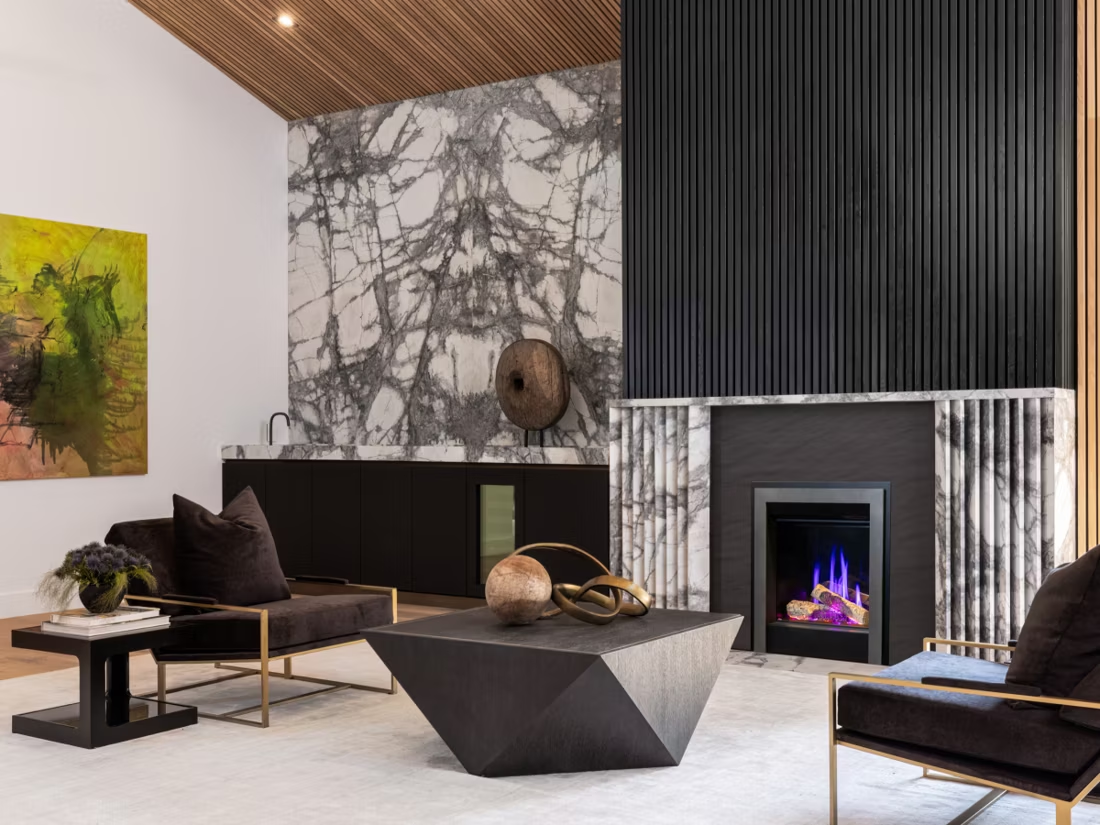
That's exactly where electric fireplaces do their best work. Chatham Park's rapid build-out in Pittsboro has added thousands of new homes, many without a masonry chimney at all, and a plug-in or built-in electric unit is often the simplest way to add a fireplace feature during finish-out. Out toward Siler City and the county's rural west, where Randolph Electric Membership Corporation serves alongside Duke Energy Progress, older farmhouses with existing but unused masonry fireplaces are good candidates for a zero-clearance electric insert—no chimney sweep, no venting retrofit, just power and heat. With no regional air quality restrictions on burning in Chatham County, electric isn't a compliance workaround here—it's a convenience choice for homeowners who want the look and warmth without the upkeep.
Three steps. No salesperson until you're ready.
Tell us about your project
Your zip code, your situation, and the fuel you're leaning toward—or let the answers point you to one.
See what's actually available
The brands dealers within 100 miles genuinely carry—real options, never a catalog mirage.
Get your dealer & Project Guide
A trusted local dealer, plus the free Project Guide & Parts List that names every component of the job.
Frequently Asked Questions
How much does an electric fireplace installation cost in Chatham County?
A basic plug-in electric insert or freestanding unit typically runs $300 to $1,500 installed, since it uses a standard outlet and needs no venting or gas line. Built-in wall units—the kind commonly specified in new Chatham Park construction—run higher, generally $800 to $2,500, because they often require a licensed electrician to run a dedicated 120V or 240V circuit and may need minor framing work. Converting an existing masonry fireplace with an electric insert typically lands in the $1,000 to $2,000 range, largely driven by the insert size and any surround or trim kit needed to match the existing opening.
Will an electric fireplace actually heat a room, or is it just for looks?
Most electric fireplaces put out 4,000 to 5,200 BTUs—enough to comfortably heat a single room of 400 to 1,000 square feet, which lines up well with Chatham County's mild 30-degree average winter low. They won't replace a central heat pump or furnace on a hard freeze night, but for spot-heating a sunroom addition in a Chatham Park home, a primary bedroom, or a den in an older Siler City farmhouse, they're genuinely effective—and most units let you run the flame visual with the heater off during North Carolina's many mild evenings when you want ambiance without added heat.
Do I need a permit to install an electric fireplace in Chatham County?
A plug-in electric insert or freestanding unit that uses an existing outlet generally doesn't require a permit. Built-in units that need a new dedicated circuit do require an electrical permit through Chatham County Central Permitting, and the work should be done by a licensed electrician—this is especially common in new Chatham Park builds and remodels where the fireplace is being added to a wall without existing wiring. Most local dealers who handle built-in installs coordinate the electrical permit and inspection as part of the job.
What's the difference between an electric insert, an electric stove, and a built-in wall unit?
An electric insert is sized to slide into an existing masonry fireplace opening, replacing an unused wood-burning firebox with a heater and flame effect—a popular retrofit for older Chatham County homes near Siler City and Bear Creek that have a chimney they no longer want to maintain. An electric stove is a freestanding cabinet styled like a wood stove, useful when there's no fireplace opening at all. A built-in wall unit is framed into new construction or a remodel, common in Chatham Park and other newer subdivisions where the fireplace is a designed feature rather than a retrofit. All three plug in or hardwire—none require venting or a chimney.
How does the running cost of an electric fireplace compare to gas or wood in Chatham County?
Electric fireplaces cost more per BTU to run than gas or wood, since you're paying Duke Energy Progress or Randolph EMC residential electric rates directly rather than burning cheaper fuel. But because Chatham County's heating season is comparatively short—3,504 heating degree days is well under half what a colder climate like Duluth, MN sees—most homeowners run these units for supplemental warmth and ambiance rather than as a primary heat source, which keeps the actual seasonal cost modest. If you're planning to heat a whole addition or rely on it heavily through the winter, a gas or wood option may be more cost-effective long term; for occasional zone heat, electric is hard to beat on convenience.
Can I put an electric insert into my existing wood-burning fireplace?
Yes—this is one of the most common projects local dealers handle in the older parts of the county. If you have a masonry fireplace in a Siler City or Pittsboro-area farmhouse that you no longer want to load with oak or hickory and clean out ash from, an electric insert drops into the existing opening, plugs into a nearby outlet (or a new dedicated circuit for larger units), and gives you flame visual and heat without touching the chimney. The masonry stays intact and the original look is largely preserved.
What size electric fireplace do I need for my Chatham County home?
For most rooms up to 400 square feet, a standard 26–40 inch insert or wall unit with 4,000–5,000 BTUs is sufficient given Chatham County's mild winter lows. Larger open-concept living areas common in newer Chatham Park floor plans may need a 50-inch-plus linear unit or two zoned units to feel warm throughout. Because electric heat output is fixed regardless of brand, sizing is really about matching square footage and room layout rather than climate severity—a local dealer can walk your space and recommend the right width and BTU output.
Is an electric fireplace a good fit for new construction in Chatham Park?
Yes—it's one of the most requested features in Chatham Park's newer builds. Because these homes are framed without a masonry chimney, a built-in electric wall unit lets a builder or homeowner add a fireplace focal point during finish-out without the cost or footprint of venting, gas lines, or a chase. It's typically the fastest and least invasive fireplace option to add during a build or a post-move-in remodel, and most units can be trimmed with tile, stone, or shiplap surrounds to match the home's style.
Electric vs. wood or gas—which is right for my Chatham County home?
Wood remains standard here—oak, hickory, and pine are all locally common and there are no regional air quality restrictions limiting burning, so a traditional wood stove or fireplace is fully viable if you want real fire and off-grid backup heat. Gas is a strong choice where natural gas or propane service already reaches the home and you want stronger, sustained heat output than electric provides. Electric wins when you want no venting, no fuel handling, and the flexibility to add a fireplace anywhere in the house—a sunroom, a primary suite, a Chatham Park great room without a chimney. Given Chatham County's mild 3,504-degree-day heating season, many homeowners here choose electric specifically because they don't need a fireplace to carry real heating load, just supplemental warmth and ambiance.
Does an electric fireplace need a vent or chimney?
No—that's its superpower. An electric fireplace needs a wall and an outlet, period. No vent pipe, no gas line, no clearances to design around, which is why it works in bedrooms, offices, apartments, and walls where venting a gas or wood unit would be impractical or impossible. Installation is typically the simplest and least expensive of any fireplace type.
Can I put a TV above my fireplace?
Yes—with an asterisk. Fireplaces are hot and TVs don't like heat. Either put a mantel between them to deflect rising warmth, or choose a fireplace with heat-management technology that creates a cool zone on the wall above—the wall stays around 125 degrees, barely warm, while the room still gets full heat. If you like clean lines and don't want a mantel, heat management is the answer.
Can a fireplace actually lower my heating bill?
Yes—by creating a comfort zone. A furnace heats every square foot of the house just to warm the one room you're in; a gas fireplace on low burns roughly a sixth of the gas a typical furnace does. Set the furnace around 55–60 degrees as a baseline, then heat the rooms your family actually uses. Families who heat this way commonly save $20–$60 a month.
Can I install a fireplace myself?
If you're putting a fire in your house on purpose, it's best to work with an expert. Unless you're genuinely experienced in framing, gas line, vent pipe, and the national code on clearances to combustibles, have a professional do it—and ideally the same company that sells you the fireplace, so warranty, service, and liability all live under one roof.
Stove and Fireplace Dealers in Chatham County
Find your electric fireplace in Chatham County.
Tell us about your home—Chatham Park new build, Siler City farmhouse, or somewhere in between—and we'll match you with a trusted local dealer and send over a free Project Guide & Parts List with the exact unit and parts recommended for your space.
Find Your Fireplace →