
Instant warmth, zero wood pile, for Chapel Hill winters.
Chapel Hill's Piedmont winters are short but real. Find the right gas fireplace or insert for your home and connect with a trusted local dealer.
Every Project Starts From One of These Five Situations
A mild Piedmont climate, real cold snaps.
Chapel Hill sits in climate zone 4A at just 264 feet elevation, where winter lows average around 32°F and the winter heating season is roughly half as demanding as a colder city like Duluth, MN. Short doesn't mean absent, though: January can still drop into the teens, and central HVAC alone often leaves rooms in the town's older brick colonials and farmhouses feeling drafty on those nights.
Electric service in Chapel Hill splits between Duke Energy Progress and Duke Energy Carolinas depending on the neighborhood, a quirk of how Orange County grew up around UNC. That split, combined with a short but genuine cold season, is a big part of why gas fireplaces and inserts have become the go-to zone-heat upgrade here—instant, controllable warmth without the ash and wood-stacking of a stove, and without leaning on electric resistance heat during a cold snap.
Three steps. No salesperson until you're ready.
Tell us about your project
Your zip code, your situation, and the fuel you're leaning toward—or let the answers point you to one.
See what's actually available
The brands dealers within 100 miles genuinely carry—real options, never a catalog mirage.
Get your dealer & Project Guide
A trusted local dealer, plus the free Project Guide & Parts List that names every component of the job.
Frequently Asked Questions
How much does a gas fireplace installation cost in Chapel Hill?
A gas fireplace or insert installation in Chapel Hill typically runs $4,000 to $10,500. Converting an existing masonry fireplace to a direct-vent gas insert sits at the lower end, especially if gas already reaches that wall. New construction, additions, or homes in newer developments around Southern Village and Meadowmont—where venting and gas line have to be run from scratch—land at the higher end. Homes that need a propane tank added because they're outside a natural gas service area usually fall in the middle once tank setup is included. A local dealer will give you a firm number after seeing your chimney and gas access in person.
Can I convert my existing wood fireplace to gas?
Yes, and it's one of the more common projects for Chapel Hill's older brick colonials and farmhouses, many of which were originally built with oak- or hickory-burning fireboxes that see little real use anymore. A direct-vent gas insert slides into the existing firebox and vents through a stainless liner run up your current chimney, so you keep the mantel and masonry look while gaining push-button heat. Expect roughly $3,800 to $8,000 for the conversion, with the main cost driver being whether gas already runs to the fireplace wall or needs to be extended from the meter.
Do I need natural gas, or can I use propane?
It depends on where in Orange County you are. Natural gas mains reach many in-town Chapel Hill neighborhoods, but homes on the wooded edges toward Chatham County or out past Carrboro often sit outside any main and run on propane instead. If your home already has a gas range or water heater, you likely already know which fuel serves your address; if not, your hearth dealer can confirm it during the estimate. Nearly every gas fireplace or insert on the market can be configured for either fuel—it's just a different orifice and regulator—so fuel availability shouldn't limit which model you choose.
Will my gas fireplace work during a power outage?
Most direct-vent gas fireplaces use an IPI (intermittent pilot ignition) system with battery backup, so the unit still lights on demand if Duke Energy Progress or Duke Energy Carolinas power goes out—and in Orange County it's usually an ice storm, not snow, that causes that outage. Valor fireplaces take a different approach: the pilot generates its own electricity through a thermocouple, so there's no battery to remember at all. If backup heat during winter outages matters to you, ask your local dealer about the ignition system before you buy.
What's the difference between a gas fireplace, gas insert, and gas stove?
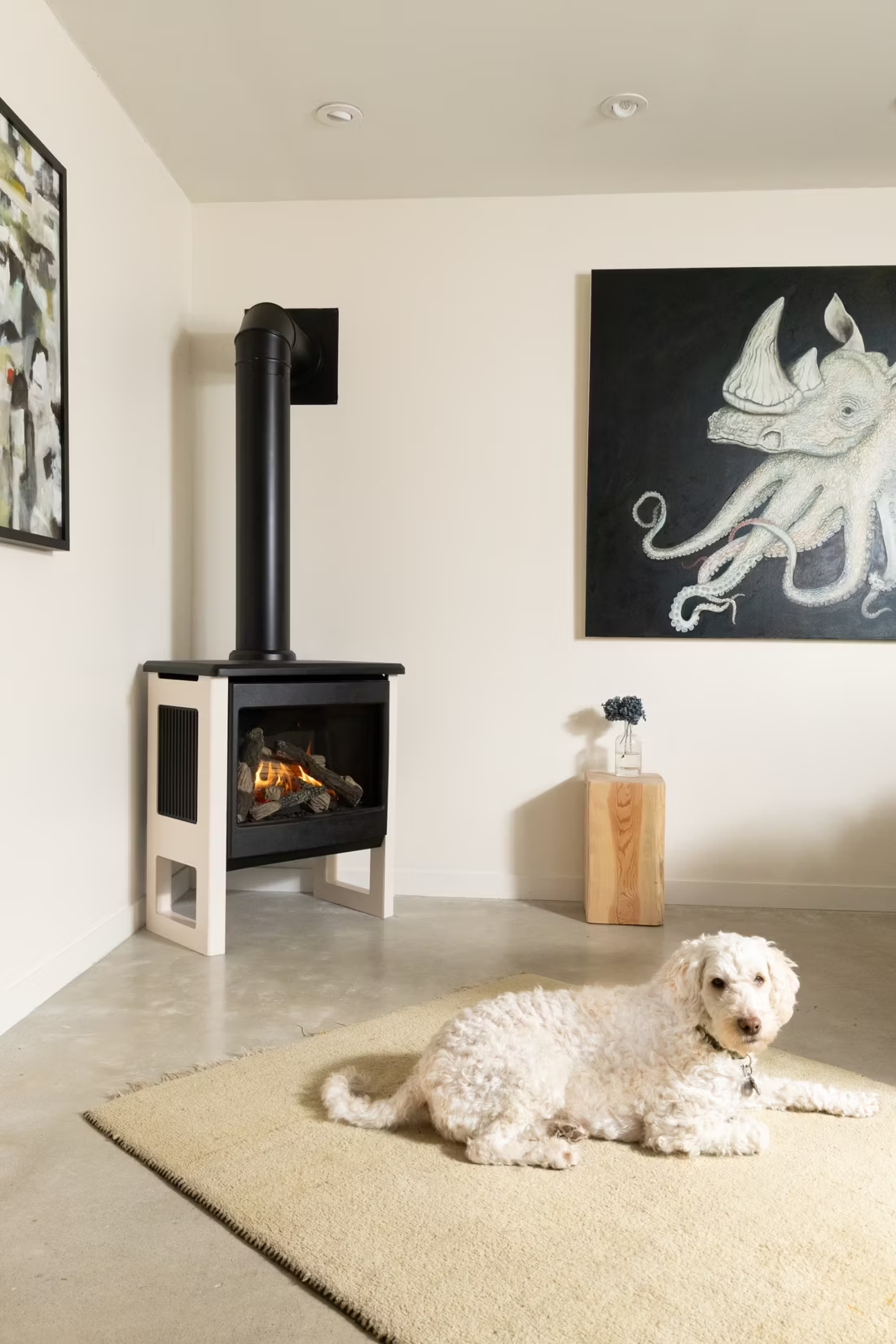
A gas fireplace is a fully built-in unit framed into a wall—the right choice for new construction or a remodel without an existing hearth. A gas insert drops into an existing masonry firebox, which describes most of the fireplaces already sitting unused in Chapel Hill's older homes. A gas stove is a freestanding unit that sits on the floor like a wood stove but runs on gas, a good option for a sunroom or addition with no existing chimney. For the typical Chapel Hill homeowner with an underused masonry fireplace, an insert is usually the simplest and most cost-effective upgrade.
Do I need a permit to install a gas fireplace in Chapel Hill?
Yes. Gas fireplace installations require a building permit and a separate gas permit, issued through the Town of Chapel Hill's Planning & Development Services if your address is inside town limits, or through Orange County's permitting office if you're in the unincorporated county. The gas line itself has to be run by a licensed gas-fitter either way. Most hearth dealers handle this paperwork and the inspections as part of the installation, which is one of the main reasons to route gas work through your fireplace installer rather than a separate handyman.
What's the difference between vented and vent-free gas fireplaces?
Vented (direct-vent) gas fireplaces pull combustion air from outside and exhaust it back outside through sealed venting, and they work in almost any wall or existing masonry chimney—they're by far the standard choice in Chapel Hill. Vent-free units burn directly into the room and are legal in North Carolina within room-size and ventilation limits, but given how mild and short Chapel Hill's heating season is, most homeowners here don't gain enough from the marginal efficiency to accept the tradeoff of extra moisture and combustion byproducts indoors. Local dealers can walk you through both, but expect most living-room installs to land on direct-vent.
How often should my gas fireplace be serviced?
Plan on an annual inspection, ideally in early fall before the first real cold snap. A technician checks the burner, pilot assembly, venting, and gas connections, and cleans the glass—typically $150 to $225 for a standard visit. Because Chapel Hill's heating season is short, fireplaces here often sit unused from March through October, and that dormancy is exactly when pilot or igniter issues quietly develop—issues you don't want to discover on the first cold night in November.
Gas vs. electric—which fireplace is right for my Chapel Hill home?
For most homes here, the real comparison is gas versus electric rather than gas versus wood—wood-burning fireplaces are uncommon in Chapel Hill's newer subdivisions and townhome communities, partly due to HOA rules and partly because the mild, short heating season doesn't justify stacking and hauling oak or hickory for most households. Electric fireplaces need no venting or gas line, install almost anywhere for $400 to $1,500, and run on Duke Energy Progress or Duke Energy Carolinas power at roughly $0.14 to $0.16 per kWh—a solid fit for condos and rentals near UNC. Gas costs more upfront but delivers real, sustained heat you can feel across a room, which is why it stays the more popular choice for primary living spaces in single-family homes.
What's the difference between an insert and a zero-clearance fireplace?
An insert is a fireplace that slides into a pre-existing wood-burning fireplace—if you don't have one, there's nothing to insert it into. A zero-clearance fireplace is built into a framed wall, which makes it the answer for remodels and new construction. Simple test: existing masonry fireplace means insert; blank or framed wall means zero-clearance.
Why is a fireplace insert so efficient?
An insert does two things: it seals the chimney completely, so you stop losing air you already paid to heat, and it radiates warmth into the room through the firebox and glass. Most add a heat-exchange fan that pulls cool room air underneath, wraps it around the hot firebox, and pushes it back out warm. Your home is more efficient before you've even lit the first fire.
What is an in-home preview and do I need one?
It's a visit where a hearth professional measures your space, confirms the model you picked actually works in your home, and walks the specs—framing, gas line, venting, finish work—before anything is ordered. Some details you just can't know until you see the house. Never make a down payment without one; it's the single most-skipped step that burns buyers.
How much should I budget for a fireplace?
For an average home—covering the fireplace, the vent pipe, and basic installation—a budget between $3,900 and $5,500 gives you a lot of options across wood, gas, and pellet. By the time you add finish work, gas line, and electrical, the average complete installation lands between $5,000 and $12,000 all-in. In a remodel or new build, a good rule is to put about 2.5% of the total project cost toward the fireplace.
Nearby Dealers
Hearth shops serving Chapel Hill and the surrounding area.
Find your gas fireplace in Chapel Hill.
Tell us about your Chapel Hill home and we'll match you with a trusted local dealer and send along a free Project Guide & Parts List—the exact parts, including the vent kit, for your gas fireplace project.
Find Your Fireplace →