
Clean, instant heat for Chapel Hill's mild winters.
No chimney, no gas line, no wood pile—just plug in and go. Find the right electric fireplace or insert and connect with a trusted local dealer.
Every Project Starts From One of These Five Situations
Electric heat fits the Piedmont's mild winters.
Chapel Hill sits in the North Carolina Piedmont at just 264 feet elevation, with an average winter low around 32°F and roughly 3,239 heating degree days a year. That's a fraction of what a place like Burlington, VT or Duluth, MN racks up each winter—which is exactly why electric fireplaces make so much sense here. Homeowners near Franklin Street, Southern Village, and the older bungalow neighborhoods around UNC don't need a heavy-duty primary heat source; they need something that takes the edge off a 35-degree evening and looks good doing it.
Chapel Hill's climate is too mild to sustain the kind of wood-burning or pellet culture you'd find further north or out west, and there's no wildfire smoke or winter inversion issue driving air quality restrictions here. That leaves electric as one of the simplest retrofits available: no chimney, no gas line, no combustion byproducts, and no permit hassle for most plug-in units. Whether you're updating a rental near campus, adding supplemental warmth to a drafty older home, or just want the ambiance of a fire without the upkeep, an electric insert or wall unit installs in an afternoon and runs on either Duke Energy Progress or Duke Energy Carolinas power, depending on which side of town you're on.
Three steps. No salesperson until you're ready.
Tell us about your project
Your zip code, your situation, and the fuel you're leaning toward—or let the answers point you to one.
See what's actually available
The brands dealers within 100 miles genuinely carry—real options, never a catalog mirage.
Get your dealer & Project Guide
A trusted local dealer, plus the free Project Guide & Parts List that names every component of the job.
Frequently Asked Questions
How much does an electric fireplace installation cost in Chapel Hill?
Most electric fireplace projects in Chapel Hill fall between $500 and $3,000. A plug-in insert dropped into an existing masonry firebox or a freestanding unit on the lower end requires little more than an outlet and a few hours of labor. A built-in wall unit—recessed into new framing with a dedicated 120V or 240V circuit run by a licensed electrician—sits at the higher end, especially in older homes near downtown where panel upgrades or new wiring runs are sometimes needed. Local dealers will size the unit and quote a firm number after seeing your space.
Do I need a permit to install an electric fireplace in Chapel Hill?
Plug-in electric fireplaces and inserts that use an existing outlet typically don't require a permit. If your project involves a new dedicated circuit, a panel upgrade, or built-in wall construction, the Town of Chapel Hill Inspections Division (or Orange County Inspections for homes outside town limits) requires an electrical permit, and the wiring work needs to be pulled by a licensed electrician. Most local hearth and electrical retailers handle this paperwork as part of the installation quote.
Will an electric fireplace actually heat a room, or is it just for looks?
Modern electric fireplaces genuinely heat—most units put out around 4,600–5,000 BTUs (roughly 1,500 watts), enough to comfortably warm a single room of 400–1,000 square feet depending on insulation and ceiling height. In Chapel Hill's climate, where winter lows average around 32°F rather than sub-zero cold, that's plenty for zone heating an office, sunroom, or living room without running central HVAC. They're not designed to heat an entire multi-story home the way a furnace or heat pump does, but as supplemental heat for the shoulder-season chill common here, they perform well.
What does it cost to run an electric fireplace in Chapel Hill?
At Duke Energy Progress rates (about $0.1554/kWh), a typical 1,500-watt unit running on high costs roughly 23 cents per hour, or about $1.15 for a 5-hour evening. Homes served by Duke Energy Carolinas, at roughly $0.1394/kWh, run slightly cheaper—about $1.05 for the same 5 hours. Most units also have a lower flame-only setting (no heat) that draws under 100 watts, so you can run the visual effect for pennies on nights when you just want ambiance without added warmth.
Will my electric fireplace work during a power outage?
No—electric fireplaces require household power to run the heater, blower, and flame effect, so they'll shut off during an outage just like the rest of your home's electrical system. This is the main tradeoff compared to a wood-burning unit, which requires no electricity at all. If backup heat during storm-related outages is a priority for your Chapel Hill home, it's worth pairing an electric fireplace with a generator or considering a gas option for at least one room. For everyday supplemental heat and ambiance, though, electric remains the simplest and lowest-maintenance choice.
What's the difference between an electric insert, a built-in unit, and a freestanding electric fireplace?
An electric insert is sized to slide into an existing masonry firebox, instantly converting an old wood-burning fireplace into a clean, code-free heat source with no chimney work required—a common upgrade in Chapel Hill's older homes with existing hearths that no longer see wood use. A built-in unit is recessed into a wall or custom mantel surround, typically used in new construction or remodels for a flush, modern look. A freestanding electric fireplace is a standalone cabinet or stove-style unit that plugs in anywhere with an outlet—no installation beyond placement. For most Chapel Hill homeowners with an existing but unused fireplace, an insert is the easiest and most cost-effective path.
Electric vs. gas fireplace—which is right for my Chapel Hill home?
Gas fireplaces offer higher heat output, real flame, and—with the right ignition system—the ability to run during a power outage, which matters when Piedmont ice storms knock out electricity. They do require a gas line (natural gas is available through parts of Chapel Hill, propane elsewhere) and typically cost $4,500 to $11,000 installed. Electric fireplaces cost far less to install, need no venting or gas line, and are the simplest option for renters, condos, or homes where running new gas isn't practical. For a primary living space where real flame and outage-proof heat matter, gas usually wins. For a bedroom, home office, or rental property where simplicity and low upfront cost matter most, electric is hard to beat.
Is wood or pellet heat common in Chapel Hill?
Not really—Chapel Hill's mild Piedmont winters (average lows around 32°F, roughly 3,239 heating degree days) don't drive the kind of wood-heating culture you'd see in colder regions of the country. A handful of rural Orange County properties still burn oak, hickory, or pine for ambiance or backup heat, but for most homes inside town limits, wood and pellet stoves are the exception rather than the norm. That's part of why electric and gas fireplaces are the more practical, more commonly installed options here.
How long does an electric fireplace installation take?
A straightforward insert or freestanding unit using an existing outlet can be installed in an afternoon—sometimes in under an hour if no framing or wiring changes are needed. A built-in wall unit requiring a new dedicated circuit or wall modifications typically takes one to two days once an electrician is scheduled, factoring in any Town of Chapel Hill or Orange County inspection sign-off. Local dealers can give you a firm timeline once they've seen the installation site and confirmed the electrical capacity available.
Can I put a TV above my fireplace?
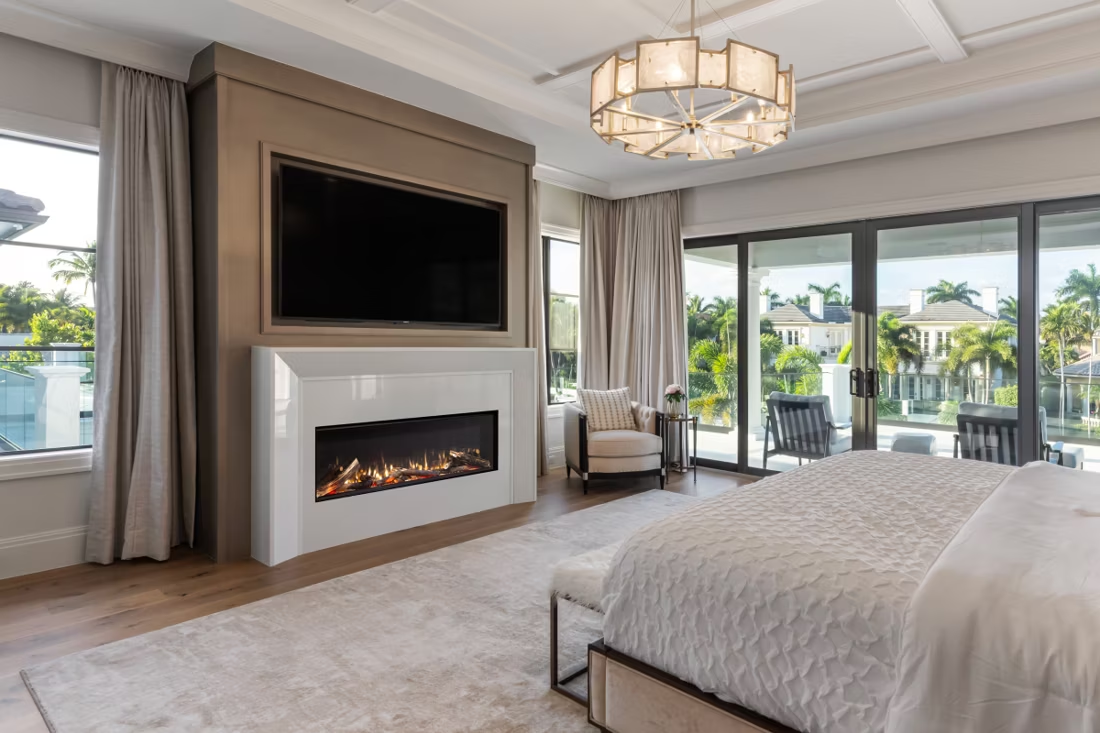
Yes—with an asterisk. Fireplaces are hot and TVs don't like heat. Either put a mantel between them to deflect rising warmth, or choose a fireplace with heat-management technology that creates a cool zone on the wall above—the wall stays around 125 degrees, barely warm, while the room still gets full heat. If you like clean lines and don't want a mantel, heat management is the answer.
Do electric fireplaces actually produce heat?
Yes—most put out around 4,800–5,000 BTUs from a standard outlet, which comfortably warms a bedroom, office, or den as a comfort-zone heater. What they won't do is carry a whole house the way wood, gas, or pellet can. Think of electric as ambiance-first with honest supplemental heat: flames on with no heat in July, flames plus warmth in January.
Can I install a fireplace myself?
If you're putting a fire in your house on purpose, it's best to work with an expert. Unless you're genuinely experienced in framing, gas line, vent pipe, and the national code on clearances to combustibles, have a professional do it—and ideally the same company that sells you the fireplace, so warranty, service, and liability all live under one roof.
What is an in-home preview and do I need one?
It's a visit where a hearth professional measures your space, confirms the model you picked actually works in your home, and walks the specs—framing, gas line, venting, finish work—before anything is ordered. Some details you just can't know until you see the house. Never make a down payment without one; it's the single most-skipped step that burns buyers.
Nearby Dealers
Hearth shops serving Chapel Hill and the surrounding area.
Electric Service in Chapel Hill
An electric fireplace's heater draws about 1,500 watts—pennies per hour at local rates.
Duke Energy Progress - (Nc)
Duke Energy Carolinas, LLC
Find your electric fireplace in Chapel Hill.
Tell us a bit about your home and we'll match you with the right electric fireplace or insert—and connect you with a trusted local dealer who can get it installed correctly.
Find Your Fireplace →