
Keep Your Family Warm and Safe—No Matter What
From Hickory and Newton to Conover, Maiden, and Claremont, Catawba County winters are mild but the wood-burning tradition runs deep. Find the right stove or insert, and connect with a trusted local dealer.
Every Project Starts From One of These Five Situations
Mild winters, but wood heat still runs deep here.
Catawba County sits in the North Carolina Piedmont foothills, straddling the Catawba River and Lake Hickory between Hickory, Newton, Conover, and Maiden. At climate zone 4A with a moderate heating season and an average winter low near 30°F, this isn't extreme cold-climate territory—nothing like Duluth, MN's long, brutal winters. But wood heat is still a fixture in the county, especially as supplemental heat in living rooms and dens, backup heat during winter ice storms, and the kind of radiant warmth that a heat pump just doesn't replicate on a 20-degree night.
Local hardwoods make wood heat practical here: oak, hickory, and maple are common in the county's woodlots and river bottomlands, with pine mixed in as well. Catawba County has no air quality non-attainment issues and no winter inversion concerns, so there are no seasonal burn curtailments to plan around—unlike parts of the West where wood smoke advisories restrict burning. Self-cutting permits are available through the Nantahala-Pisgah National Forests, roughly a couple hours west, at about $20 per cord during the May-to-October cutting season. For most Catawba County homeowners, a wood stove or insert isn't the primary heat source—it's the backup that keeps the house warm when an ice storm takes down power lines, and the ambiance that makes a den or great room feel finished.
Firewood Cutting Permits Near Catawba County
Three steps. No salesperson until you're ready.
Tell us about your project
Your zip code, your situation, and the fuel you're leaning toward—or let the answers point you to one.
See what's actually available
The brands dealers within 100 miles genuinely carry—real options, never a catalog mirage.
Get your dealer & Project Guide
A trusted local dealer, plus the free Project Guide & Parts List that names every component of the job.
Frequently Asked Questions
How much does a wood stove installation cost in Catawba County?
For a mild-climate county like Catawba, a straightforward freestanding wood stove installation with a hearth pad and Class A chimney typically runs in the $3,000 to $6,500 range, depending on the stove model and whether new chimney work is needed. Converting an existing masonry fireplace to a wood insert is often on the lower end of that range since the chimney already exists. New construction or homes without an existing chimney—common in some of the newer subdivisions around Hickory and Conover—run higher once full Class A pipe and roof penetration are added. A local retailer will give you a firm number after seeing your home.
What size wood stove or insert do I need for my home?
Because Catawba County's winters are relatively mild—average lows around 30°F and a moderate heating season overall—most homes here are well served by a small to medium stove used for supplemental heat rather than the oversized, long-burn units needed in genuinely cold climates. A stove rated for up to 1,200-1,500 square feet handles a den or open living/kitchen area in most Hickory and Newton homes without overheating the space. Larger farmhouse-style homes out toward Maiden or Claremont with less insulation may want a mid-size unit instead. A local dealer will walk through your square footage, ceiling height, and insulation before recommending a specific model—oversizing a stove in a mild climate like this is a common mistake that leads to smoldering, inefficient fires.
Where can I find certified wood stove installers near me?
Look for installers carrying NFI (National Fireplace Institute) certification or CSIA (Chimney Safety Institute of America) credentials—both indicate specific training in wood-burning appliance clearances and venting. The hearth retailers serving Catawba County generally cover Hickory, Newton, Conover, and Maiden without a travel surcharge, though homes further out toward the county line may see a small trip fee. Installation is usually bundled with the stove purchase, which keeps warranty coverage and code compliance under one roof. Skip general handyman installs for wood-burning units—improper clearances and venting are the leading cause of chimney fires.
What's the difference between a wood stove and a wood insert?
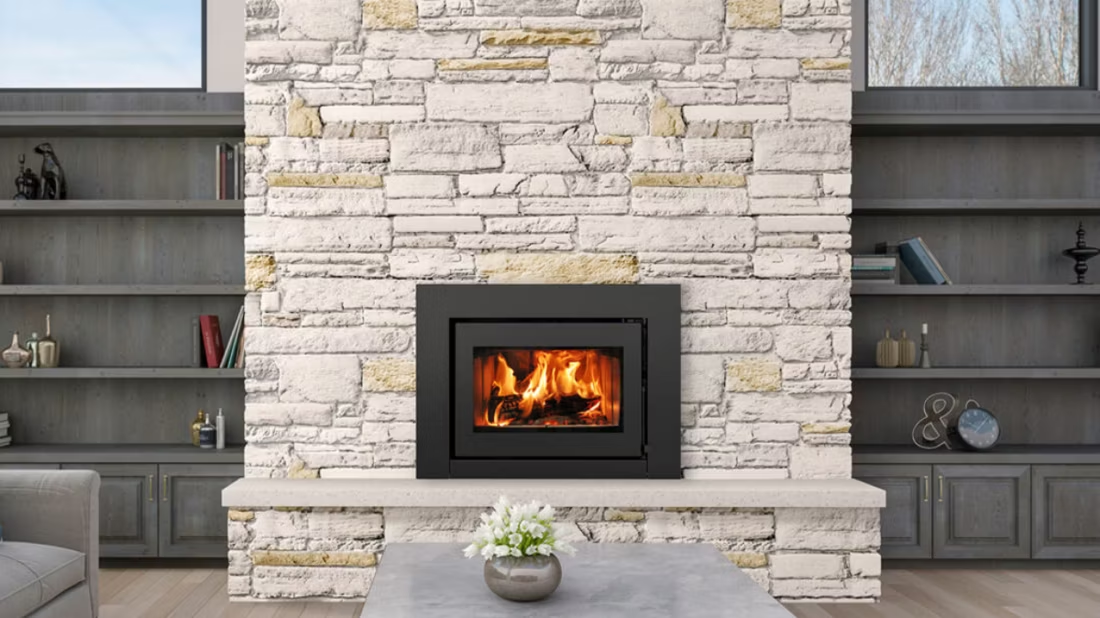
A wood stove is a freestanding unit installed on a hearth pad with its own Class A chimney—it can go almost anywhere in a room with proper clearances. A wood insert slides into an existing masonry fireplace opening, using a stainless liner run up the existing chimney, and converts a drafty open hearth into a sealed, high-efficiency heater. Plenty of older homes around Hickory and Newton still have original masonry fireplaces that were built for looks rather than heat output—an insert is usually the better fit there. Newer homes without an existing fireplace, or additions and dens, are typically better suited to a freestanding stove.
Do I need a permit to install a wood stove in Catawba County?
Yes—new wood stove and insert installations generally require a building permit through Catawba County's permitting office, and the unit itself needs to meet current EPA emissions standards. Most local installers handle the permit paperwork as part of the job, so you typically don't have to file anything yourself. Unlike some Western states, Catawba County has no air quality non-attainment status and no seasonal wood-burning curtailment periods, so once your stove is installed and inspected, there's no ongoing restriction on when you can burn.
What's the best wood stove for Catawba County's climate?
Since Catawba County's winters are mild by national standards, most homeowners here don't need the 20-plus-hour catalytic burn times that cold-climate stoves are built for. Mid-size non-catalytic stoves from brands like Pacific Energy, Lopi, or Vermont Castings are a good fit for supplemental heat in a den or living room. If your household leans on wood heat as backup during ice storms—a real concern in this part of the Piedmont, where ice can take down power lines for days—ask about a stove that can run without any electricity, since freestanding wood units don't need power to operate. Local oak and hickory, both common in the county, burn hot and long, which pairs well with almost any mid-size unit.
How often should my chimney be inspected and cleaned?
The CSIA recommends an annual inspection for any wood-burning appliance, and that holds true in Catawba County even with lighter seasonal use than a true cold-climate area. Plan on a full sweep and inspection once a year, ideally in late summer or early fall before the first cold snap. Households burning wood as primary heat, or those running a stove hard during multi-day ice storm outages, may need a mid-season check if creosote builds up faster than expected. Local chimney sweeps serving Hickory, Newton, and Conover offer Level 1 inspections and full sweeps.
Where can I get firewood in Catawba County?
Local firewood dealers around Hickory, Newton, and Conover typically sell seasoned oak, hickory, and maple by the cord, with pine sometimes available for quicker-burning kindling. Oak and hickory in particular are dense, slow-burning hardwoods that suit Catawba County's mix of primary and supplemental wood heat. For self-cutting, permits are available through the Nantahala-Pisgah National Forests—about a couple hours west of the county—for roughly $20 per cord during the May-to-October cutting season. Given the drive, most county residents find it more practical to buy locally cut and split wood rather than haul it back from the national forest themselves.
Wood stove vs. pellet stove—which is right for me?
Wood stoves burn cordwood, work without electricity, and give you the option to source local oak or hickory rather than buying fuel—useful during Piedmont ice storms when power can be out for days. Pellet stoves burn compressed wood pellets from regional brands like Lignetics, Hamer Pellet Fuel, or Greenway Renewable Energy, load easily, produce less ash, and burn cleaner, but they need electricity to run the auger and blower, so they go dark in an outage unless paired with a battery backup. For Catawba County homes that want wood heat specifically as ice-storm backup, a wood stove usually makes more sense. For homes that want low-maintenance, thermostat-controlled convenience and don't need it during outages, pellet is worth a look. Both are available through local dealers.
Why is a fireplace insert so efficient?
An insert does two things: it seals the chimney completely, so you stop losing air you already paid to heat, and it radiates warmth into the room through the firebox and glass. Most add a heat-exchange fan that pulls cool room air underneath, wraps it around the hot firebox, and pushes it back out warm. Your home is more efficient before you've even lit the first fire.
Do I have to leave the stove door cracked open to start a fire?
On many stoves, yes—a new fire needs extra air, and cracking the door a couple inches is how most stoves get it. But some modern stoves offer an automatic startup air system: engage it when you light, and timed air jets feed the fire for the first 20 minutes with the door fully shut, then close automatically. It's mechanical—like an egg timer, no electricity—and it means you can load it, light it, and walk away.
Does a fireplace add value to my home?
On average, a fireplace adds back to the home about the same amount you spent installing it. Add the monthly savings from heating the rooms you actually use instead of the whole house—often hundreds of dollars a year—and the value case is strong before you even count what a fire does for how your family uses the room.
Can I install a fireplace myself?
If you're putting a fire in your house on purpose, it's best to work with an expert. Unless you're genuinely experienced in framing, gas line, vent pipe, and the national code on clearances to combustibles, have a professional do it—and ideally the same company that sells you the fireplace, so warranty, service, and liability all live under one roof.
Stove and Fireplace Dealers in Catawba County
Listings include WhyFire partner dealers, dealers we have verified as authorized for the brands we recommend, and established local businesses that carry hearth products. Every listing shows which one it is. The ones marked Preferred run on WhyFire's software, so they can show you real pricing and book your appointment right here. No manufacturer pays for placement. How we verify dealers →
Blossman Gas, Inc.
Sawmills Hardware And Supply
Quality Propane
Carolina Fireplace & Granite
Carolina Energies
Blossman Gas And Appliance
High Country Fireplaces
Find your wood stove in Catawba County.
Tell us a bit about your home and we'll match you with the right wood stove or insert for Catawba County, plus a free Project Guide & Parts List with the exact parts—including the vent kit—and our recommended local dealer.'
Find Your Fireplace →