
Electric fireplace heat, sized for Catawba County's foothill winters.
With average winter lows near 30°F and a moderately cool heating season, Catawba County doesn't need a wood-burning workhorse in every room—it needs targeted, no-venting warmth for cool nights in Hickory, Newton, Conover, and around Lake Norman. Find the right unit and connect with a trusted local dealer.
Every Project Starts From One of These Five Situations
Why electric works well in a mild Piedmont climate.
Catawba County sits in the North Carolina foothills between Charlotte and Asheville, spanning furniture-manufacturing hubs like Hickory and Newton and stretching to the western shore of Lake Norman. Climate zone 4A here means a mixed-humid winter—cold enough for real heating need but nothing like the sustained deep freeze of a place like Duluth, MN. Winter lows average around 30°F and the county has a moderately cool heating season overall, so most homes need supplemental warmth on cold mornings and during the occasional hard freeze, not a wood stove running around the clock for six months straight.
That climate profile is exactly where electric fireplaces earn their place. They install with no chimney, no gas line, and no venting—a real advantage in Lake Norman condos, HOA-governed subdivisions, and the newer construction filling in around Hickory and Conover as Charlotte commuters move north. Catawba County is served primarily by Duke Energy Carolinas, with EnergyUnited cooperative covering more rural parts of the county, so an electric unit taps into infrastructure that's already reliable and familiar. For homeowners who want fire-look ambiance and zone heat in a den, bonus room, or bedroom without touching the county's building envelope, electric is often the simplest path—even in a county where oak, hickory, and maple firewood are still cut and burned plenty elsewhere in the home.
Three steps. No salesperson until you're ready.
Tell us about your project
Your zip code, your situation, and the fuel you're leaning toward—or let the answers point you to one.
See what's actually available
The brands dealers within 100 miles genuinely carry—real options, never a catalog mirage.
Get your dealer & Project Guide
A trusted local dealer, plus the free Project Guide & Parts List that names every component of the job.
Frequently Asked Questions
How much does an electric fireplace installation cost in Catawba County?
Plug-in electric inserts and freestanding stoves typically run $400 to $1,500 installed, since most simply plug into an existing outlet and need no electrician. Built-in linear electric fireplaces or wall-mount units that require a dedicated 120V or 240V circuit run higher—usually $1,200 to $2,800 once an electrician and any wall or mantel framing are factored in. Retrofitting an old masonry fireplace in a Hickory or Newton craftsman home with an electric insert tends to land in the middle of that range, since it involves fitting the unit to the existing opening but skips any venting work entirely.
Do I need a permit to install an electric fireplace in Catawba County?
In most cases, no—a plug-in electric fireplace or insert that uses an existing standard outlet doesn't require a building permit. If you're adding a dedicated circuit, a 240V hookup, or doing wiring inside a wall for a built-in unit, that electrical work typically does need a permit through Catawba County's building and electrical inspections process, and it should be pulled by a licensed electrician. Local dealers who handle built-in installations generally coordinate this permitting as part of the job.
Electric vs. gas vs. wood—which fits my Catawba County home?
Wood remains common in older Catawba County homes with existing masonry chimneys, especially where oak and hickory firewood is easy to source locally—it also keeps working if Duke Energy or EnergyUnited service goes down in a storm. Gas offers instant, higher-output heat for homes already piped for natural gas or set up with a propane tank, common in newer subdivisions. Electric is the lowest-effort option: no venting, no fuel storage, and it fits condos, apartments, and rental properties around Hickory and Lake Norman where the other two options simply aren't feasible. Given the county's mild winter lows, many households treat electric as ambiance-plus-supplemental heat rather than a primary heat source.
What type of electric fireplace works best for Catawba County's climate?
Because heating need here is moderate rather than extreme, a mid-size electric insert or wall-mount linear unit in the 1,500-watt range is usually enough to comfortably supplement a room during cold snaps without overwhelming a smaller space. Homes wanting whole-room supplemental heat—bonus rooms, finished basements, primary bedrooms—often do well with a freestanding electric stove that has a built-in thermostat and fan, since it can cycle on and off automatically as the room warms and cools through a typical Piedmont winter night.
Will an electric fireplace heat my whole house?
No—electric fireplaces are zone heaters, not whole-house systems. They're built to warm the room they're in, typically 400 to 1,000 square feet depending on the model and insulation. For a Catawba County home, that's usually plenty for supplementing a den, living room, or bedroom during the county's moderate cold spells, but it won't replace central HVAC as your primary heat source the way a larger wood stove might in a colder-climate home.
Will my electric fireplace work during a power outage?
No—electric fireplaces require power to run the heating element, fan, and flame-effect display, so they shut off during an outage. This is the one real tradeoff against wood heat in Catawba County: a wood stove or fireplace keeps working through an ice storm that takes down Duke Energy or EnergyUnited lines, while an electric unit goes dark until service is restored. If backup heat during outages is a priority, some homeowners pair an electric fireplace for daily convenience with a wood-burning appliance elsewhere in the home for storm resilience.
What's the difference between an electric insert, a wall-mount, and a built-in electric fireplace?
An electric insert is sized to slide into an existing fireplace opening—a common retrofit for older masonry fireplaces in Hickory and Newton homes. A wall-mount unit hangs directly on the wall like a large flat-screen TV and needs only a nearby outlet or a short electrical run. A built-in electric fireplace is framed into a wall or custom mantel surround during a remodel or new construction, which is increasingly common in the newer subdivisions going up around Lake Norman and along the US-321 corridor. Inserts and wall-mounts are generally the fastest and least invasive installs; built-ins offer the most custom look but involve more carpentry and electrical work.
How much does it cost to run an electric fireplace in Catawba County?
Most electric fireplaces draw about 1,500 watts on the heat setting, which costs roughly 15 to 20 cents an hour to run at typical Duke Energy or EnergyUnited residential rates—a few dollars for an evening of use. Because Catawba County's winters are moderate rather than severe, most households run their unit for a few hours on cold evenings rather than continuously, so the monthly cost impact is usually modest compared to running central heat for the whole house.
Is an electric fireplace safer than a portable space heater?
Yes, generally. Electric fireplaces are built and UL-listed as fixed or semi-fixed heating appliances with features like tip-over shutoff, cool-touch glass, and overheat protection, and they're designed for sustained use in a way many portable space heaters aren't. For Catawba County homes looking for supplemental warmth in a bedroom or living space without the fire risk of an open flame or the tip-over concerns of a cheap plug-in heater, a proper electric fireplace insert or stove is a meaningfully safer long-term choice.
Can I put a TV above my fireplace?
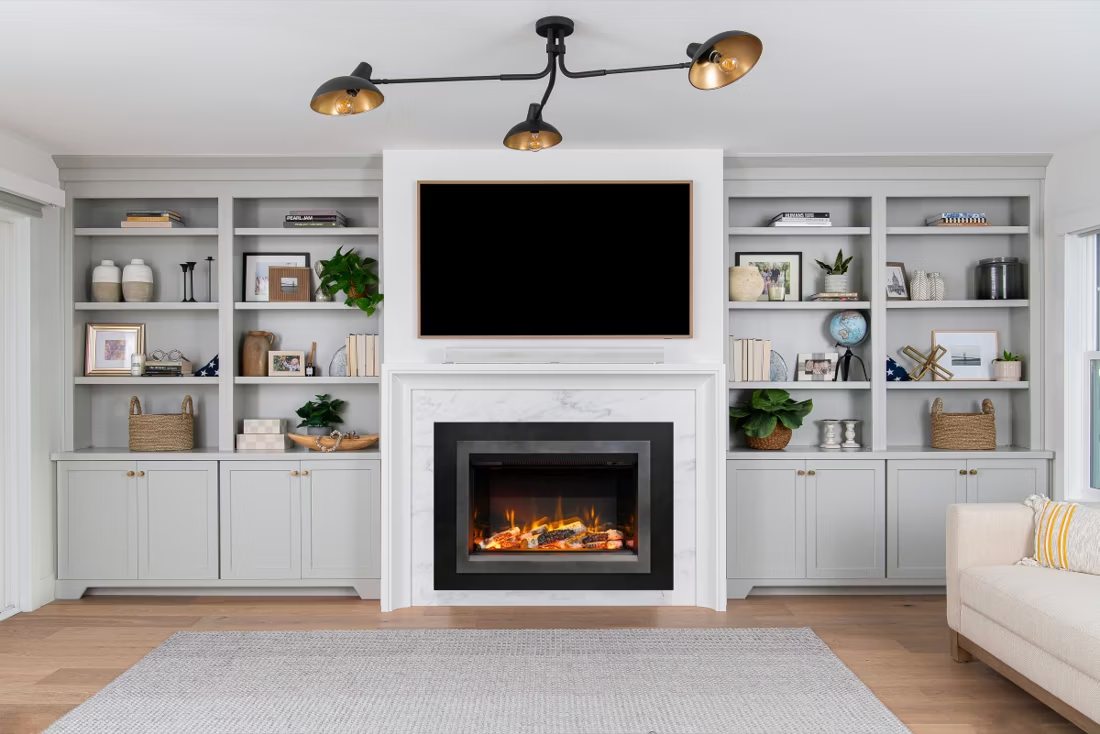
Yes—with an asterisk. Fireplaces are hot and TVs don't like heat. Either put a mantel between them to deflect rising warmth, or choose a fireplace with heat-management technology that creates a cool zone on the wall above—the wall stays around 125 degrees, barely warm, while the room still gets full heat. If you like clean lines and don't want a mantel, heat management is the answer.
Do electric fireplaces actually produce heat?
Yes—most put out around 4,800–5,000 BTUs from a standard outlet, which comfortably warms a bedroom, office, or den as a comfort-zone heater. What they won't do is carry a whole house the way wood, gas, or pellet can. Think of electric as ambiance-first with honest supplemental heat: flames on with no heat in July, flames plus warmth in January.
What is an in-home preview and do I need one?
It's a visit where a hearth professional measures your space, confirms the model you picked actually works in your home, and walks the specs—framing, gas line, venting, finish work—before anything is ordered. Some details you just can't know until you see the house. Never make a down payment without one; it's the single most-skipped step that burns buyers.
How much should I budget for a fireplace?
For an average home—covering the fireplace, the vent pipe, and basic installation—a budget between $3,900 and $5,500 gives you a lot of options across wood, gas, and pellet. By the time you add finish work, gas line, and electrical, the average complete installation lands between $5,000 and $12,000 all-in. In a remodel or new build, a good rule is to put about 2.5% of the total project cost toward the fireplace.
Stove and Fireplace Dealers in Catawba County
Listings include WhyFire partner dealers, dealers we have verified as authorized for the brands we recommend, and established local businesses that carry hearth products. Every listing shows which one it is. The ones marked Preferred run on WhyFire's software, so they can show you real pricing and book your appointment right here. No manufacturer pays for placement. How we verify dealers →
Blossman Gas, Inc.
Sawmills Hardware And Supply
Quality Propane
Carolina Fireplace & Granite
Carolina Energies
Blossman Gas And Appliance
High Country Fireplaces
Find your electric fireplace in Catawba County.
Tell us a bit about your home—condo, ranch, or new build near Lake Norman—and we'll match you with the right electric fireplace or insert, plus a free Project Guide & Parts List and a trusted local dealer to install it.
Find Your Fireplace →