
Instant Warmth for Claremont's Mild Winters.
No chimney, no fuel deliveries, no venting—just plug in and get zone heat that fits Claremont's short heating season. Find the right unit and connect with a trusted local dealer.
Every Project Starts From One of These Five Situations
A mild climate that rewards flexible heat.
Claremont sits in climate zone 4A at just under 1,000 feet in Catawba County, with an average winter low around 31°F and a mild, fairly short heating season overall. That's a fraction of the winter heating load a place like Duluth, MN racks up in a single season, and it changes the math on home heating: most Claremont houses lean on central HVAC for the bulk of the season and only need real supplemental warmth on the coldest nights or in a room the furnace never quite reaches. Wood stoves and pellet stoves are uncommon here—the nearest cutting permits are through the Nantahala-Pisgah National Forests, well over 100 miles west, and a mild 4A winter doesn't generate the demand for a full wood-heating setup that a colder region would. Gas is the standard alternative for homes that want a real flame, but electric has become the practical, no-fuss option for everything else.
Duke Energy Carolinas serves Claremont at a residential rate around 13.94 cents per kWh, which keeps the running cost of an electric fireplace low for the kind of occasional, targeted use most homes here actually need—a den, a converted garage, a bonus room over an unheated crawlspace. There's no chimney to maintain, no cutting permit to track down, and in most cases no building permit at all beyond a standard electrical hookup if you're hardwiring a built-in unit. For a town of under 2,000 people with a lot of older homes and rentals, that combination of low install friction and low monthly cost is exactly why electric fireplaces show up in so many living rooms here.
Three steps. No salesperson until you're ready.
Tell us about your project
Your zip code, your situation, and the fuel you're leaning toward—or let the answers point you to one.
See what's actually available
The brands dealers within 100 miles genuinely carry—real options, never a catalog mirage.
Get your dealer & Project Guide
A trusted local dealer, plus the free Project Guide & Parts List that names every component of the job.
Frequently Asked Questions
How much does it cost to install an electric fireplace in Claremont?
Most electric fireplace installs in Claremont run $400 to $2,500. A plug-in freestanding unit or a wall-mount model on existing wiring sits at the low end—often just the cost of the unit and mounting hardware. A built-in electric fireplace with a custom mantel surround, or a unit that needs a dedicated 120V or 240V circuit run by an electrician, pushes toward the higher end. Because there's no venting or chimney work involved, electric installs are almost always faster and cheaper than a comparable gas or wood project in this area.
Do I need a permit to install an electric fireplace in Claremont?
Usually not, if you're plugging into an existing outlet. If your installer needs to run a new dedicated circuit or hardwire a built-in unit, that typically requires an electrical permit through Catawba County Building Services, and the electrician pulls it as part of the job. There's no structural or venting permit involved the way there is with a wood or gas installation, which is one of the main reasons electric projects move faster here.
How much does an electric fireplace cost to run monthly in Claremont?
At Duke Energy Carolinas' residential rate of roughly 13.94 cents per kWh, a typical 1,500-watt electric fireplace costs about 21 cents an hour on the heat setting. Used a few hours a night as supplemental warmth in a bedroom or den, that lands most households around $20 to $40 a month during the coldest stretch of winter. Running the flame effect alone, without the heater engaged, costs only a few cents an hour—a detail a lot of Claremont homeowners appreciate when they want the ambiance without the electric bill.
Is an electric fireplace enough heat for a Claremont home, or do I still need my furnace?
For most Claremont homes, an electric fireplace is best treated as zone heat, not a furnace replacement. With average winter lows around 31°F and a mild, fairly short heating season overall, the coldest stretches are relatively short, so a well-placed unit can comfortably cover a single room—a den, a converted sunroom, a bedroom with poor airflow from the main system. Whole-home heating still runs through central HVAC. If you're trying to heat more than one or two rooms consistently, talk to a local dealer about whether a larger insert or a different fuel type makes more sense for your layout.
Electric vs. gas fireplace—which fits better in Claremont?
Gas fireplaces are standard in this part of Catawba County, but most rural Claremont properties run on propane rather than piped natural gas, which means a tank installation and periodic refills. Electric skips all of that—no fuel storage, no gas line, no annual burner inspection. Gas still wins if you want a real flame and higher sustained heat output for a main living space. But for a secondary room, a rental property, or anyone who wants heat with zero fuel logistics, electric is usually the simpler and cheaper path in Claremont.
Why don't more Claremont homes have wood stoves?
Wood heat just isn't a strong fit for this climate. Claremont's zone 4A winters and a mild, fairly short heating season overall are mild compared to genuine wood-heating country, and the closest public cutting permits—through the Nantahala-Pisgah National Forests at around $20 per cord, May through October—are more than a two-hour drive away. A handful of older homes still have a functioning masonry fireplace burning local oak, hickory, or maple, but for anyone starting from scratch, electric or gas is almost always the more practical choice than building out a wood-burning setup.
What about pellet stoves—are they an option in Claremont?
Pellet stoves are rare here for the same reason wood stoves are: Claremont's short, mild heating season doesn't generate the demand that keeps pellet heating common. Regional bags from Lignetics, Hamer Pellet Fuel, and Greenway Renewable Energy are sold in the broader Carolinas market, but few local dealers stock pellet appliances specifically for this area. Electric fireplaces cover the same supplemental-heat need without a hopper to refill, an auger to maintain, or venting to install.
What size electric fireplace do I need for my room?
Sizing comes down to square footage and how the room is used. A 750–1,000 sq ft space typically pairs well with a compact 1,500-watt insert or wall-mount unit; larger open rooms may need a wider built-in model or two smaller units placed strategically. Because electric units heat by convection or infrared within a limited radius rather than pushing heat through ductwork, placement matters as much as wattage—a local dealer can walk your room and recommend a unit sized for how you actually use the space, whether that's daily supplemental heat or occasional ambiance.
Can I install an electric fireplace insert into my existing fireplace?
Yes—electric inserts are one of the most common upgrades for Claremont homes with an older, rarely-used masonry fireplace. The insert slides into the existing firebox opening, plugs into a standard outlet or a new dedicated circuit, and gives you heat and flame effect without burning anything or maintaining a chimney. It's a popular option for homeowners who like the look of their existing hearth but don't want the upkeep, cost, or permitting that comes with reactivating it for wood or converting it to gas.
Can I put a TV above my fireplace?
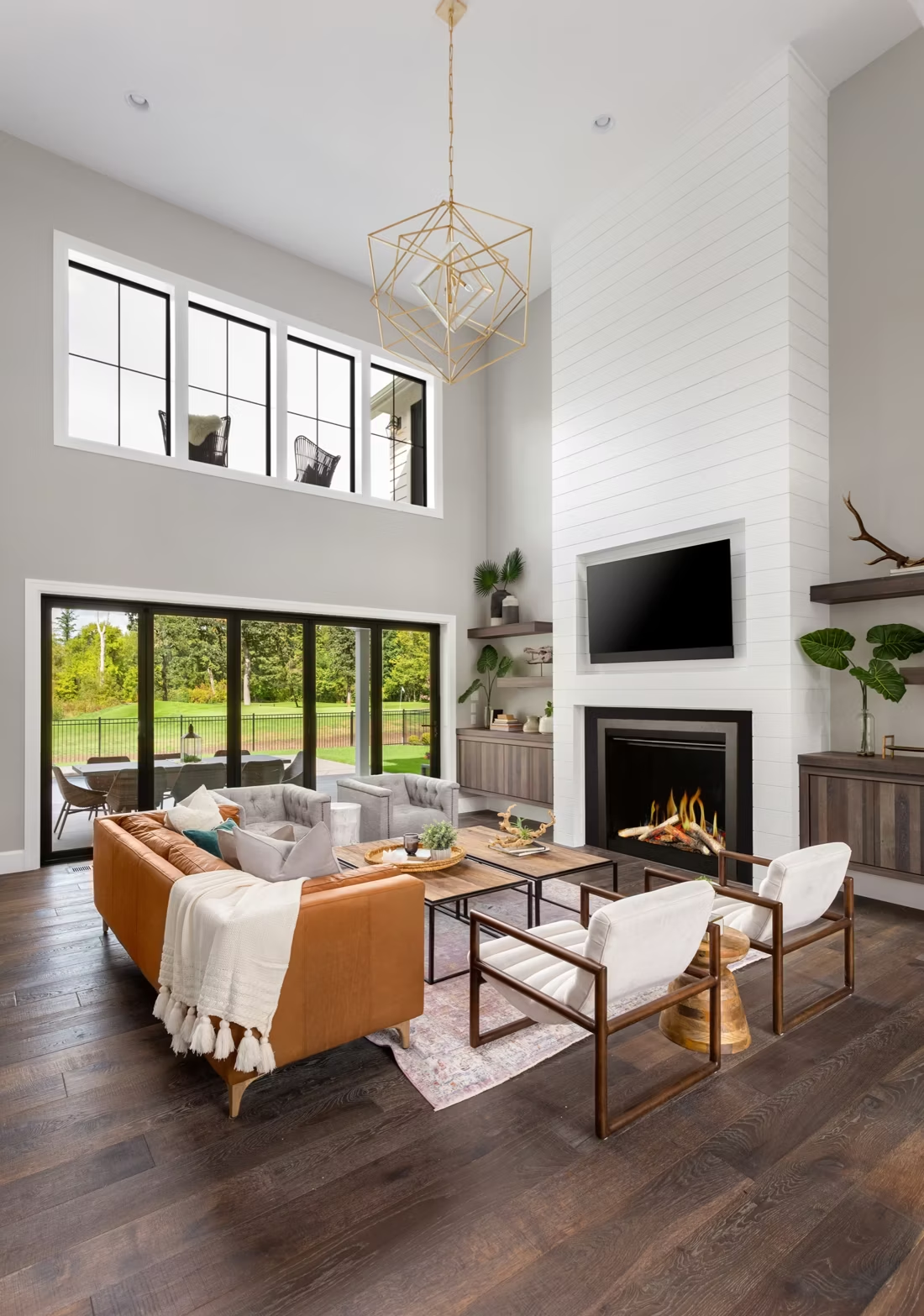
Yes—with an asterisk. Fireplaces are hot and TVs don't like heat. Either put a mantel between them to deflect rising warmth, or choose a fireplace with heat-management technology that creates a cool zone on the wall above—the wall stays around 125 degrees, barely warm, while the room still gets full heat. If you like clean lines and don't want a mantel, heat management is the answer.
How much does an electric fireplace cost to run?
With the heater on, a typical unit draws about 1,500 watts—at average electric rates that's roughly 20 cents an hour. Run the flame effect alone and it costs pennies; the flames are LED-driven and use about as much power as a light bulb. There's no pilot light, no fuel delivery, and essentially no maintenance.
Does a fireplace add value to my home?
On average, a fireplace adds back to the home about the same amount you spent installing it. Add the monthly savings from heating the rooms you actually use instead of the whole house—often hundreds of dollars a year—and the value case is strong before you even count what a fire does for how your family uses the room.
How much should I budget for a fireplace?
For an average home—covering the fireplace, the vent pipe, and basic installation—a budget between $3,900 and $5,500 gives you a lot of options across wood, gas, and pellet. By the time you add finish work, gas line, and electrical, the average complete installation lands between $5,000 and $12,000 all-in. In a remodel or new build, a good rule is to put about 2.5% of the total project cost toward the fireplace.
Nearby Dealers
Hearth shops serving Claremont and the surrounding area. Every listing shows whether it is a WhyFire partner, a dealer we have verified as authorized for the brands we recommend, or a local business carrying hearth products. No manufacturer pays for placement. How we verify dealers →
Blossman Gas, Inc.
Quality Propane
Carolina Fireplace & Granite
Blossman Gas And Appliance
High Country Fireplaces
Lkn Chimney Sweep
SirVent Of Charlotte
Sawmills Hardware And Supply
Queen City Sweeps, LLC
Queen City Fireplace & Outdoor
Electric Service in Claremont
An electric fireplace's heater draws about 1,500 watts—pennies per hour at local rates.
Duke Energy Carolinas, LLC
Find your electric fireplace in Claremont.
Tell us a bit about your home and we'll put together a free Project Guide & Parts List—the exact parts for your electric fireplace project and a recommended local Claremont-area dealer to install it.
Find Your Fireplace →