
Steady, low-fuss heat for Camden County's mild coastal winters.
From the edge of the Great Dismal Swamp to the farms along the Pasquotank River, Camden County's roughly 1,600 households get short, mild winters—the kind where a thermostat-controlled pellet stove makes more sense than tending a wood fire all night. Find the right unit and connect with a trusted local dealer.
Every Project Starts From One of These Five Situations
A clean, hands-off supplement to whatever's already heating your home.
Camden County sits in climate zone 3A, the same warm-humid band that covers most of coastal North Carolina—real winters, but short ones, without the sustained sub-zero stretches that push homeowners toward big cast-iron wood stoves. With a population under 1,600 spread across farmland, marshland, and the edge of the Dismal Swamp, most houses here run a heat pump as primary heat and want something simple to supplement it on the coldest nights of January and February.
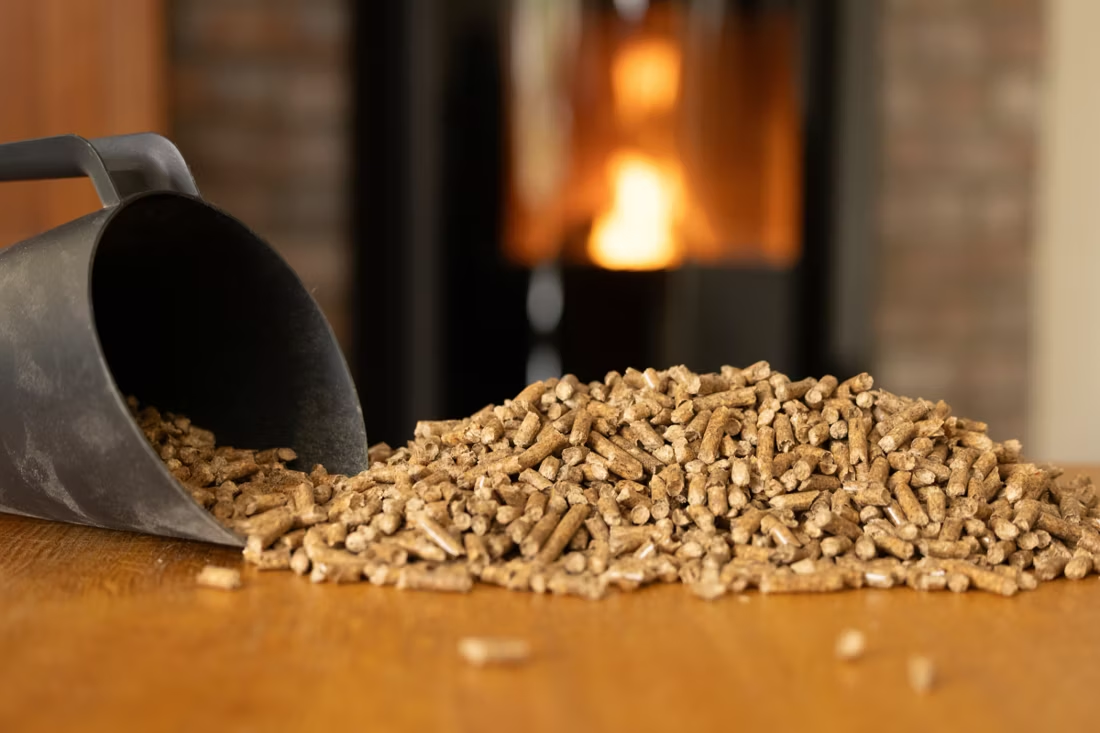
That's exactly the gap a pellet stove fills. Load the hopper, set the thermostat, and the auger feeds pellets automatically—no splitting oak or hickory, no creosote buildup, no chimney sweep on the calendar. Camden County has no air quality non-attainment designation and no burn restrictions, so there's nothing standing in the way of running one regularly. Regional pellet brands like Lignetics, Hamer Pellet Fuel, and Greenway Renewable Energy all supply this part of North Carolina, so fuel is easy to source without long drives or heavy stockpiling.
Three steps. No salesperson until you're ready.
Tell us about your project
Your zip code, your situation, and the fuel you're leaning toward—or let the answers point you to one.
See what's actually available
The brands dealers within 100 miles genuinely carry—real options, never a catalog mirage.
Get your dealer & Project Guide
A trusted local dealer, plus the free Project Guide & Parts List that names every component of the job.
Frequently Asked Questions
How much does a pellet stove installation cost in Camden County?
Most pellet stove installations in Camden County run in the $3,000 to $6,000 range, depending on the unit and whether the vent run is a straightforward through-wall connection or something longer. Because pellet stoves vent through a smaller PL-vent pipe rather than a full masonry chimney, installation is typically simpler and less costly than a comparable wood stove—a meaningful factor in a small, rural county where most homes weren't built with a chimney flue already in place. Get a firm quote from a local dealer after an in-home look at your space.
What size pellet stove do I need for my Camden County home?
Because Camden County's climate zone 3A winters are relatively mild, most homes here need a pellet stove sized for supplemental heat rather than whole-house primary heat—typically a small to mid-size unit rated for 1,000 to 1,800 square feet is enough to take the edge off the coldest nights while a heat pump or central system carries the rest of the load. Homes using a pellet stove as the sole heat source, which is less common here, should size up and talk with a local dealer about insulation and ceiling height before buying.
Where can I find pellet stove dealers near me in Camden County?
Camden County is small—under 1,600 residents spread across a mostly rural county—so dealer options directly in the county are limited, and many homeowners work with hearth retailers based in nearby Elizabeth City or elsewhere in the Albemarle region who service Camden as part of their regular route. Look for a dealer who's an authorized installer, not just a big-box retailer shipping a box—proper venting and hopper placement matter for how well the stove actually performs.
What's the difference between a pellet stove and a pellet insert?
A pellet stove is a freestanding unit that sits on its own hearth pad and vents through a wall or existing chimney—it can go almost anywhere with the right clearances. A pellet insert is built to slide into an existing masonry fireplace opening, which is a common upgrade for the older farmhouses scattered around Camden County that already have a wood fireplace but want the convenience and efficiency of pellets instead. If you have an existing fireplace you don't use much, an insert is usually the more cost-effective route since it reuses the opening you already have.
Do I need a permit to install a pellet stove in Camden County?
Yes—a building permit is generally required for a new pellet stove installation through the Camden County building inspections office, covering the unit's clearances, the vent penetration, and hearth pad requirements. Most established local dealers include the permit process as part of the installation, so you typically aren't the one filing paperwork. Since Camden County has no air quality non-attainment designation, there are no burn curtailment periods or emissions restrictions to worry about once the stove is installed and running.
What's the best pellet stove for Camden County's climate?
Because Camden County's winters are short and mild by national standards, most homeowners here don't need the largest, longest-burning units built for sustained sub-zero cold—a mid-size stove from a mainstream manufacturer with a reliable auger and a hopper that holds 40-60 pounds of pellets is plenty for supplemental heat through January and February. The bigger consideration locally is fuel sourcing: pellets from Lignetics, Hamer Pellet Fuel, or Greenway Renewable Energy are all distributed in this part of North Carolina, so buying a stove compatible with widely available bag sizes keeps things simple.
How much maintenance does a pellet stove need?
Pellet stoves need regular but light upkeep: emptying the ash pan every few days of use, cleaning the burn pot weekly to keep the auger feeding cleanly, and a full professional cleaning of the venting and exhaust fan once a year—typically before the season starts in the fall. It's far less involved than the annual chimney sweep a wood-burning setup needs, which is part of why pellet stoves appeal to Camden County homeowners who want reliable heat without a lot of hands-on work.
Where can I buy pellets locally in Camden County?
Bagged pellets from brands like Lignetics, Hamer Pellet Fuel, and Greenway Renewable Energy are distributed throughout this part of northeastern North Carolina and typically available through farm supply stores, hardware stores, and hearth retailers in and around the county. Buying a few tons ahead of the season is common practice, since a small county like Camden doesn't always have deep in-stock inventory during a cold snap when demand spikes.
Pellet stove vs. wood stove—which is right for my Camden County home?
Wood stoves burn cordwood—plenty of it available locally given the oak, hickory, maple, and pine common to this part of the Albemarle region—and they work without electricity, which matters during storm-related outages that hit this low-lying coastal county. Pellet stoves need power to run the auger and blower, so they're not a backup option when the grid goes down, but they're easier to operate day to day, burn cleaner, and don't require splitting or stacking firewood. For most Camden County homes using the stove as a supplement to an existing heat pump, pellet is the more convenient daily-use choice; for homes that want a wood-heat backup plan for hurricane season outages, a wood stove has the edge.
Why is my open fireplace making my house colder?
Open fireplaces suck—literally. As the fire burns, it consumes air your furnace already paid to heat and pulls it out through the chimney, so the house is actually colder after the fire goes out than before you lit it. An insert fixes this: it seals the chimney, puts fixed glass across the front, and turns that hole in your house into a real heat source.
Can a pellet stove heat a whole house?
It genuinely can. I burned a pellet stove as my only heat source for years after a furnace died, and it kept the entire house warm. Pellets feed automatically from a hopper, so you get wood-heat economics with thermostat-style control. Two honest caveats: it needs weekly cleaning during the season, and most models need electricity to run—ask about battery backup if outages are a concern.
Can I install a fireplace myself?
If you're putting a fire in your house on purpose, it's best to work with an expert. Unless you're genuinely experienced in framing, gas line, vent pipe, and the national code on clearances to combustibles, have a professional do it—and ideally the same company that sells you the fireplace, so warranty, service, and liability all live under one roof.
Can a fireplace actually lower my heating bill?
Yes—by creating a comfort zone. A furnace heats every square foot of the house just to warm the one room you're in; a gas fireplace on low burns roughly a sixth of the gas a typical furnace does. Set the furnace around 55–60 degrees as a baseline, then heat the rooms your family actually uses. Families who heat this way commonly save $20–$60 a month.
Pellet Brands Stocked Around Camden County
Manufacturers will point you to the nearest stocking dealer.
Find your pellet stove in Camden County.
Tell us a bit about your home and we'll match you with the right pellet stove or insert, plus a free Project Guide & Parts List—the exact parts, vent kit included, and a trusted local Camden County dealer to install it.
Find Your Fireplace →