
Find your electric fireplace in Camden County.
No chimney, no gas line, no wood to split—just clean zone heat and real flame ambiance for homes along the Pasquotank River, Currituck Sound, and the Dismal Swamp side of the county. Find the right unit and get matched with a trusted local dealer.
Every Project Starts From One of These Five Situations
Mild winters, low-hassle heat.
Camden County is a spread-out, largely rural corner of northeastern North Carolina—about 1,587 people across unincorporated communities like Camden, South Mills, Shiloh, Belcross, and Old Trap, bordered by Currituck Sound to the east and the Great Dismal Swamp to the west. Sitting in climate zone 3A, winters here are mixed-humid and mild by national standards—cold snaps happen, but the heating season is short compared to the mountains or the Midwest. That makes electric fireplaces a genuinely practical fit rather than a novelty: most Camden County homes don't need a wood stove's raw BTU output to stay comfortable, but they do want a focal point and supplemental warmth for a sunroom, a waterfront cottage addition, or a family room on the coldest nights.
Because electric units don't require a chimney or exterior venting, they work in places wood and gas can't—newer construction along the county's waterfront subdivisions, older farmhouses without an existing flue, and additions where running gas line or masonry work isn't realistic. Plug-in inserts and stoves need nothing more than a standard outlet; built-in models with higher heat output typically call for a dedicated 240-volt circuit, which means coordinating with a licensed electrician. Either way, a local dealer who knows what Camden County homes actually look like—slab foundations, crawl spaces, older wiring in some of the farmhouses near South Mills—will steer you toward the right install path instead of a one-size-fits-all box store unit.
Three steps. No salesperson until you're ready.
Tell us about your project
Your zip code, your situation, and the fuel you're leaning toward—or let the answers point you to one.
See what's actually available
The brands dealers within 100 miles genuinely carry—real options, never a catalog mirage.
Get your dealer & Project Guide
A trusted local dealer, plus the free Project Guide & Parts List that names every component of the job.
Frequently Asked Questions
How much does an electric fireplace installation cost in Camden County?
A simple plug-in electric insert or freestanding stove typically runs $300 to $800 installed, since it just needs an existing outlet and a properly sized opening. A built-in wall unit or mantel package with a dedicated 240-volt circuit runs higher—often $1,200 to $2,500 once electrical work, framing, and finish trim are included. Costs in Camden County can run slightly higher for homes farther from Elizabeth City and Chesapeake, since most hearth dealers and electricians serving the county are based across the river or up in Hampton Roads and factor in drive time.
Will an electric fireplace actually heat my home, or is it just for looks?
Most electric fireplaces are built for zone heating, not whole-house heating—a typical unit puts out around 4,000 to 5,000 BTU, enough to noticeably warm a single room but not a whole floor plan. Given Camden County's mild, mixed-humid winters, that's usually plenty: most homes here rely on a heat pump or propane furnace as primary heat, and the electric fireplace supplements a specific room—the sunroom, the addition, the room that always runs a little cold—rather than replacing central heat. If you want a fireplace that's also your main heat source, wood or gas is a better fit for the coldest weeks of the year.
Do I need a permit to install an electric fireplace in Camden County?
A simple plug-in unit generally doesn't require a permit since there's no new wiring or structural change involved. A built-in model on a dedicated circuit does typically need an electrical permit through Camden County's building inspections office, since it involves a licensed electrician running new wiring. Most local dealers coordinate this as part of the install so you're not chasing down the paperwork yourself—worth confirming when you get a quote.
Electric vs. propane or wood—which fits my Camden County home better?
Many Camden County homes already run on propane or a heat pump for primary heat, since natural gas service isn't widely available in this part of the county. An electric fireplace works well alongside either as a supplemental, no-mess heat source for a specific room—no wood to stack, no propane tank to monitor. Wood remains a solid choice for homes that want backup heat during winter storms or want the character of a real fire with local oak, hickory, or pine. If your priority is convenience and a clean install with no venting, electric wins; if you want a fuel source that keeps working when the power's out—a real consideration here given hurricane season—wood is worth pairing with it.
What size electric fireplace do I need for my room?
Sizing an electric fireplace is mostly about matching heat output to the room, not the whole house. A compact insert or 26-30 inch unit handles a bedroom or small den. A 40-50 inch wall-mount or built-in suits a typical Camden County living room or family room addition. For open-concept spaces or larger sunrooms common in the newer waterfront homes near the sound, look at models with a higher-wattage heater or plan on it as ambiance-plus-supplement rather than the room's sole heat source. A local dealer can walk your space and recommend a specific model rather than guessing off square footage alone.
What features actually matter when choosing an electric fireplace?
Flame realism varies a lot between brands—look for models with layered LED flame technology and adjustable brightness rather than the flat, cartoonish flame effects on cheaper units. Look for a heater with a thermostat and timer so it's not just full-blast or off. If you're mounting on drywall over a stud wall in one of the county's older frame homes, check the unit's weight and mounting hardware requirements before you buy. Brands with a track record for reliable heaters and realistic flame—the kind you'll find at an established hearth dealer rather than a big-box shelf—are worth the extra look before deciding.
Can I install an electric fireplace in a home with no chimney or existing fireplace?
Yes—that's actually where electric fireplaces do their best work. Since there's no combustion and no venting required, an electric unit can go into a bedroom, sunroom, or addition that was never built with a flue, which describes a good number of homes and additions across Camden County. Freestanding stoves need only floor space and an outlet; wall-mount and built-in units need wall framing that can support the unit and, for larger models, a dedicated circuit run to that wall.
How much does an electric fireplace add to my power bill?
Running costs are modest. A typical electric fireplace draws about 1,500 watts on the heater setting, which costs a few cents an hour depending on your rate—running it a few hours an evening adds maybe $10 to $20 a month to your bill during the heating season. Most of Camden County is served by Albemarle Electric Membership Corporation, and running an electric fireplace as supplemental heat is generally far cheaper than running a whole-house system harder to cover one cold room.
Will my electric fireplace still work if the power goes out?
No—and this is worth planning around in a coastal county that sees its share of hurricanes and nor'easters. Electric fireplaces are entirely dependent on grid power, so during an outage they're off, same as your lights and heat pump. If backup heat during storm season matters to you, a wood stove or a gas unit with battery-backup ignition is a better companion appliance. Plenty of Camden County homeowners run both: an electric fireplace for everyday convenience and ambiance, and a wood or gas unit elsewhere in the house for the nights the power doesn't come back quickly.
Can I put a TV above my fireplace?
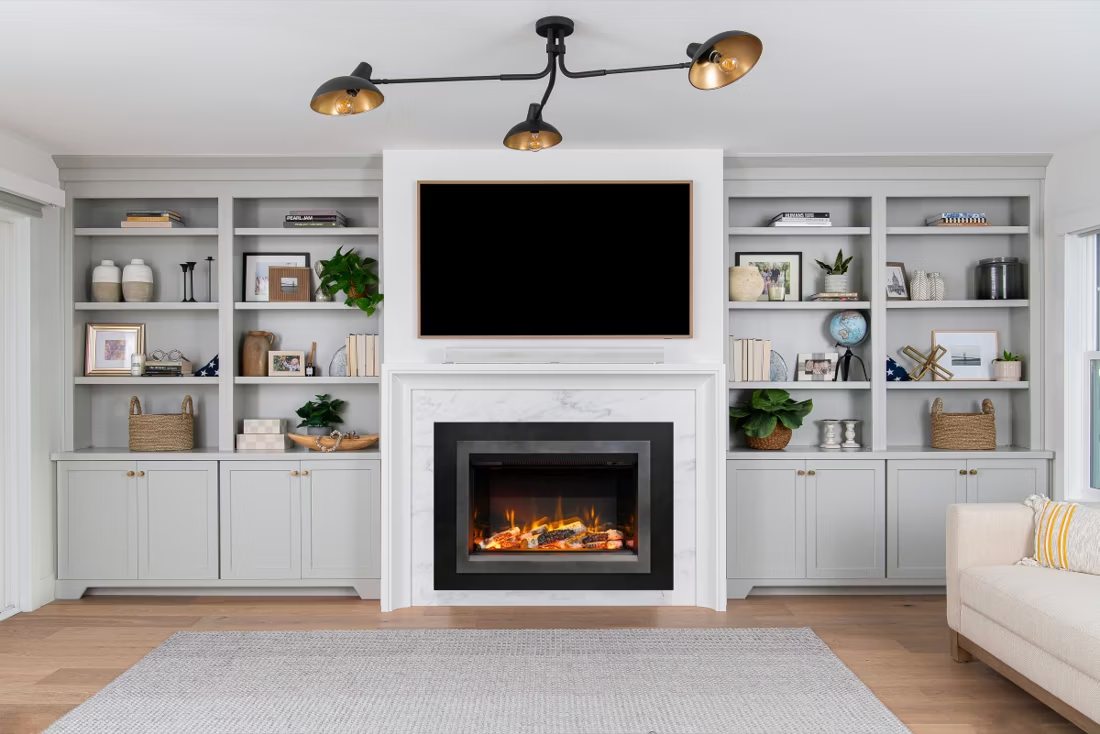
Yes—with an asterisk. Fireplaces are hot and TVs don't like heat. Either put a mantel between them to deflect rising warmth, or choose a fireplace with heat-management technology that creates a cool zone on the wall above—the wall stays around 125 degrees, barely warm, while the room still gets full heat. If you like clean lines and don't want a mantel, heat management is the answer.
Does an electric fireplace need a vent or chimney?
No—that's its superpower. An electric fireplace needs a wall and an outlet, period. No vent pipe, no gas line, no clearances to design around, which is why it works in bedrooms, offices, apartments, and walls where venting a gas or wood unit would be impractical or impossible. Installation is typically the simplest and least expensive of any fireplace type.
How much should I budget for a fireplace?
For an average home—covering the fireplace, the vent pipe, and basic installation—a budget between $3,900 and $5,500 gives you a lot of options across wood, gas, and pellet. By the time you add finish work, gas line, and electrical, the average complete installation lands between $5,000 and $12,000 all-in. In a remodel or new build, a good rule is to put about 2.5% of the total project cost toward the fireplace.
Can I install a fireplace myself?
If you're putting a fire in your house on purpose, it's best to work with an expert. Unless you're genuinely experienced in framing, gas line, vent pipe, and the national code on clearances to combustibles, have a professional do it—and ideally the same company that sells you the fireplace, so warranty, service, and liability all live under one roof.
Find your electric fireplace in Camden County.
Tell us about your room and how you plan to use it, and we'll put together a free Project Guide & Parts List—the right electric fireplace or insert for your space, matched with a trusted local dealer serving Camden County.
Find Your Fireplace →