
Thermostat-Easy Heat for Burke County Homes.
From the Catawba River flats around Morganton up into the Blue Ridge foothills near Linville Gorge, pellet stoves give Burke County homeowners steady, hands-off heat without a wood pile. Find the right unit and get matched with a trusted local dealer.
Every Project Starts From One of These Five Situations
Consistent warmth without the wood pile.
Burke County sits in the foothills of the Blue Ridge, with elevations ranging from around 900 feet along the Catawba River near Morganton to well over 4,000 feet near Linville Gorge and South Mountains State Park. In Climate Zone 4A, with about 3,802 heating degree days and average winter lows near 28°F, the season is real but not brutal—closer to a mild Appalachian foothill winter than the deep cold of the higher mountains to the west. That's exactly the kind of climate where pellet stoves shine: enough heating demand to matter for the budget, but without the need for a stove that has to run flat-out for months straight.
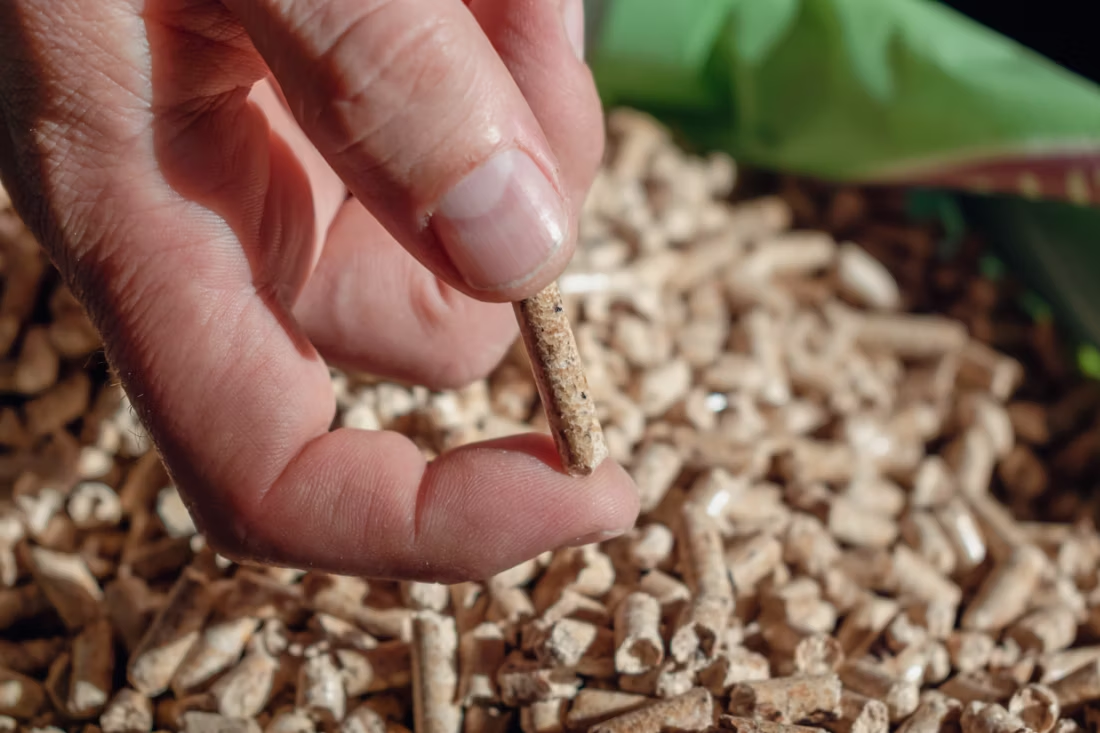
Burke County has no air quality non-attainment designation, so there's no curtailment-period paperwork or smoke-advisory hassle to work around—pellet stoves (and wood stoves, for that matter) burn without the regulatory friction homeowners deal with in some other parts of the country. Regional pellet supply is solid, too: Lignetics, Hamer Pellet Fuel, and Greenway Renewable Energy all distribute into the area, often milling from the same oak, hickory, maple, and pine that fills the county's hardwood forests. For homeowners in Morganton, Valdese, Glen Alpine, or out toward Rutherford College who want real heat without splitting and stacking cordwood, a pellet stove or insert is a practical middle ground between a wood stove and a gas unit.
Three steps. No salesperson until you're ready.
Tell us about your project
Your zip code, your situation, and the fuel you're leaning toward—or let the answers point you to one.
See what's actually available
The brands dealers within 100 miles genuinely carry—real options, never a catalog mirage.
Get your dealer & Project Guide
A trusted local dealer, plus the free Project Guide & Parts List that names every component of the job.
Frequently Asked Questions
How much does a pellet stove installation cost in Burke County?
Most pellet stove installations run in the $3,000 to $6,500 range, with the spread driven by whether you're installing a freestanding stove with a simple wall-thimble vent or a pellet insert that has to be fitted into an existing masonry fireplace with a liner run up the flue. Homes without an existing fireplace or hearth pad will land on the higher end once framing and venting are factored in. A local dealer can give you a firm number after seeing your space, but for Burke County's mild-to-moderate 3,802 HDD climate, most homeowners don't need the largest units on the market, which helps keep both equipment and install costs reasonable.
What size pellet stove do I need for my Burke County home?
With average winter lows around 28°F and a climate that's milder than the higher Blue Ridge counties to the west, most Burke County homes do well with a small to mid-size pellet stove—enough to comfortably heat a main living area or an open-plan main floor, rather than needing a whole-home unit sized for sub-zero nights. Homes at higher elevation near Linville Gorge or the South Mountains foothills, or older farmhouses with less insulation, may want to size up one notch. A local dealer will walk your square footage, ceiling height, and insulation before recommending a specific model.
Where can I find a certified pellet stove dealer near me in Burke County?
Look for a dealer who installs the unit they sell rather than handing you off to a separate contractor—pellet stoves have specific venting and clearance requirements, and the company that sizes the stove should be the one running the vent pipe. Find My Fireplace matches Burke County homeowners with trusted local dealers who know the difference between a Morganton in-town install with easy wall access and a rural property out past Glen Alpine where venting runs may be longer. That local knowledge is worth more than a lower price from a big-box store that doesn't stand behind the install.
What's the difference between a pellet stove and a pellet insert?
A pellet stove is a freestanding unit that sits on a hearth pad and vents through a wall or existing flue—it can go almost anywhere in the house with the right clearances. A pellet insert is built to slide into an existing masonry fireplace opening, turning a drafty open hearth into a sealed, efficient heat source using a liner run up the existing chimney. For Burke County homes with an older fireplace already in place—common in the county's older Morganton and Valdese housing stock—an insert is usually the more cost-effective route since it reuses the chimney you already have.
Do I need a permit to install a pellet stove in Burke County?
Yes, a building permit is generally required for a new pellet stove installation in Burke County, covering the appliance placement, hearth clearances, and venting. Most local dealers handle the permitting as part of the installation, so you typically don't have to file anything yourself. Unlike some western states, there's no air quality curtailment program to navigate here, since Burke County carries no non-attainment designation—the permit process is strictly a building-code matter, not an emissions one.
What pellet brands are available in Burke County?
Lignetics, Hamer Pellet Fuel, and Greenway Renewable Energy all supply the region, and hardwood pellets milled from oak and hickory residue are common given how much of that timber grows locally. Softwood pellets made from regional pine are also available and burn slightly hotter with less ash for some stove models. Pellet pricing across the North Carolina foothills typically runs in the $250 to $300 per ton range, though it's worth checking with feed stores and hearth dealers in Morganton directly, since pricing shifts with the harvest and season. Buying a full season's supply (roughly 2-3 tons for an average home) ahead of cold weather is the usual approach.
Will my pellet stove work during a power outage?
Not on its own—pellet stoves rely on an electric auger to feed fuel and a blower to distribute heat and exhaust, so a power outage stops the stove even with a full hopper. Burke County sees occasional winter ice storms in the foothills that can knock out power for a day or more, so if backup heat during an outage matters to you, plan on a battery backup unit or a small generator sized to run the stove's electronics. Some homeowners in the county pair a pellet stove for daily convenience with a wood stove or fireplace for true grid-down backup—your local dealer can talk through both options.
How often does a pellet stove need to be cleaned and serviced?
Plan on cleaning the burn pot and ash area every few days during regular use, a deeper interior cleaning monthly, and a full professional service annually—typically in late summer before the heating season ramps up. Venting on a pellet stove is smaller-diameter than a wood stove's chimney and can accumulate fly ash, so an annual inspection matters even though the maintenance burden is lighter than wood. Local dealers in the Morganton area generally offer this service, and most recommend scheduling it before pellet stock arrives for the season.
Pellet stove vs. wood stove—which fits Burke County better?
Wood stoves burn cordwood, work without electricity, and pair well with the oak, hickory, maple, and pine available through a cutting permit from the Nantahala-Pisgah National Forests (around $20 per cord, May through October season)—a real advantage if you like the self-sufficiency of cutting your own fuel or want emergency heat that doesn't depend on the power grid. Pellet stoves trade that off for convenience: load the hopper, set the thermostat, and let the auger do the rest, with less ash and no splitting or stacking. For Burke County's relatively mild 3,802-HDD climate, either fuel handles the heating load fine—the choice usually comes down to whether you value the hands-off convenience of pellets or the self-reliance and lower fuel cost of cutting your own wood.
How often does a pellet stove need cleaning?
A clean pellet stove is a happy pellet stove. Plan on cleaning the burn pot about once a week when you're burning regularly—ash and clinkers gum up the air holes just like a pellet barbecue. Most pellet stove problems trace back to skipped cleaning that nobody explained up front. Some designs make it easy with a trapdoor burn pot: pull a lever and the gunk drops into the ash pan.
Why is my open fireplace making my house colder?
Open fireplaces suck—literally. As the fire burns, it consumes air your furnace already paid to heat and pulls it out through the chimney, so the house is actually colder after the fire goes out than before you lit it. An insert fixes this: it seals the chimney, puts fixed glass across the front, and turns that hole in your house into a real heat source.
Can a fireplace actually lower my heating bill?
Yes—by creating a comfort zone. A furnace heats every square foot of the house just to warm the one room you're in; a gas fireplace on low burns roughly a sixth of the gas a typical furnace does. Set the furnace around 55–60 degrees as a baseline, then heat the rooms your family actually uses. Families who heat this way commonly save $20–$60 a month.
Can I install a fireplace myself?
If you're putting a fire in your house on purpose, it's best to work with an expert. Unless you're genuinely experienced in framing, gas line, vent pipe, and the national code on clearances to combustibles, have a professional do it—and ideally the same company that sells you the fireplace, so warranty, service, and liability all live under one roof.
Stove and Fireplace Dealers in Burke County
Pellet Brands Stocked Around Burke County
Manufacturers will point you to the nearest stocking dealer.
Find your pellet stove in Burke County.
Tell us a bit about your home and we'll put together a free Project Guide & Parts List for your Burke County pellet project—the right stove or insert, the vent kit it needs, and a trusted local dealer to install it.
Find Your Fireplace →