
Real fireplace ambiance for Burke County homes—no chimney required.
From Morganton to Valdese to Glen Alpine, electric fireplaces bring zone heat and a real flame look to rooms where venting a wood or gas unit just isn't practical. Find the right unit and connect with a trusted local dealer.
Every Project Starts From One of These Five Situations
Simple heat and ambiance, wherever you need it.
Burke County sits in the foothills of the Blue Ridge, climate zone 4A, with roughly 3,802 heating degree days a year and winter lows averaging around 28°F. That's noticeably milder than mountain towns just an hour west, and nothing close to the deep-freeze winters of a place like Burlington, VT—but it's still cool enough that homes in Morganton, Valdese, Glen Alpine, and Rutherford College run supplemental heat from December through February. That's exactly the gap an electric fireplace fills well.
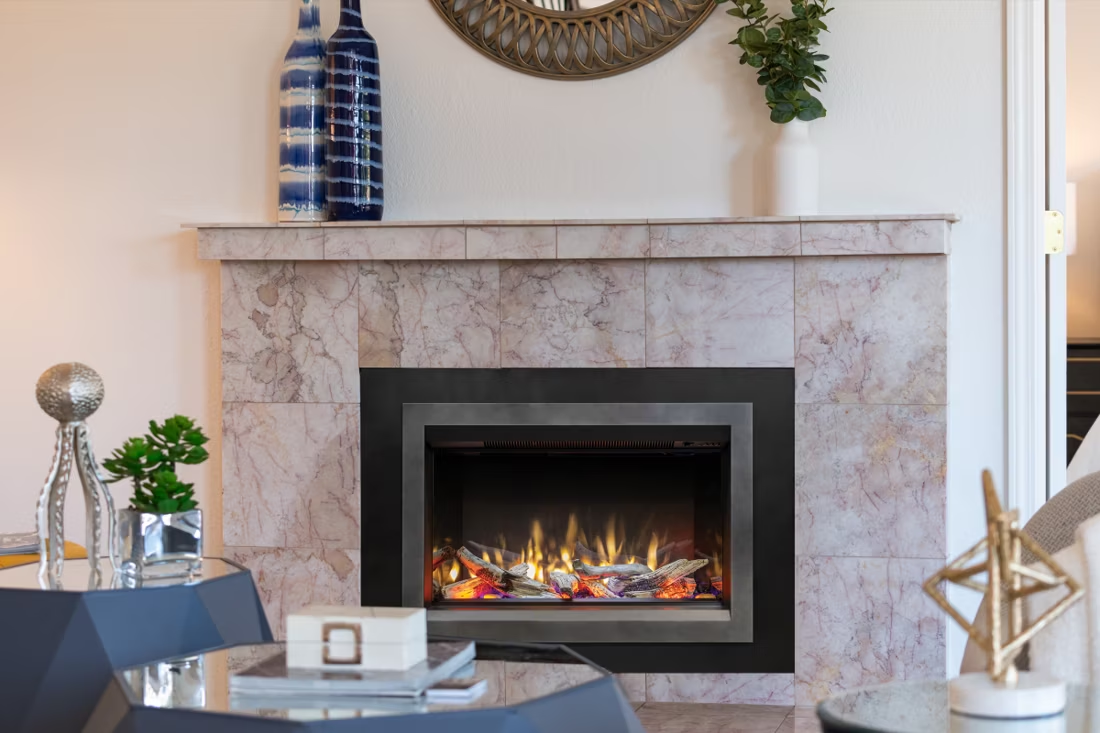
Plenty of Burke County homes still burn wood—oak, hickory, maple, and pine are all common locally, and cutting permits on the Nantahala-Pisgah National Forests run about $20 per cord during the May-to-October season—but electric units solve a different problem: heating a bonus room, a rental unit, a condo, or an addition built without a chimney or gas line. No masonry, no venting, no combustion byproducts to worry about—just plug it in (or have an electrician wire a dedicated circuit for a larger built-in) and you've got instant flame effect and real supplemental warmth the same afternoon.
Three steps. No salesperson until you're ready.
Tell us about your project
Your zip code, your situation, and the fuel you're leaning toward—or let the answers point you to one.
See what's actually available
The brands dealers within 100 miles genuinely carry—real options, never a catalog mirage.
Get your dealer & Project Guide
A trusted local dealer, plus the free Project Guide & Parts List that names every component of the job.
Frequently Asked Questions
How much does an electric fireplace installation cost in Burke County?
Plug-in electric inserts and freestanding stoves typically run $300 to $1,500 installed, since most just need a standard 120V outlet—no electrician required in many cases. Built-in wall units or larger electric fireplaces that need a dedicated circuit and finish carpentry usually land between $1,500 and $3,500, depending on the size of the unit and whether you're framing it into an existing wall or building out a new surround. Local dealers around Morganton and Valdese can walk you through the difference during a home visit.
Do I need a permit to install an electric fireplace in Burke County?
In most cases, no—a plug-in electric fireplace that runs off an existing outlet doesn't require a permit. If you're having a dedicated circuit run for a larger built-in unit, that electrical work typically does require a permit through Burke County's inspections office, and a licensed electrician will usually pull it as part of the job. Unlike wood or gas installs, there's no chimney, venting, or gas-fitter involved, which is one of the reasons electric projects move faster from start to finish.
Can an electric fireplace actually heat a room, or is it just for looks?
Most electric fireplaces include a real heating element—typically a 1,500-watt unit that can comfortably warm 400 to 1,000 square feet, depending on your home's insulation and ceiling height. For a bonus room or converted garage in Burke County's mild-winter climate, that's often enough to skip running central heat to a rarely-used space. For whole-home heating during the coldest stretches, wood or gas remains the stronger option—electric fireplaces are best thought of as zone heat and ambiance rather than a primary furnace replacement.
Electric vs. wood—which makes more sense for my Burke County home?
Wood remains a strong option locally—oak, hickory, and maple are all abundant, and Forest Service cutting permits through the Nantahala-Pisgah National Forests run about $20 per cord in season. Wood also keeps working during a power outage, which matters when ice storms roll through the foothills. Electric wins on convenience: no ash, no chimney sweeping, no permit for a plug-in unit, and it's the only realistic option for a condo, rental, or room with no existing venting path. Many homeowners here use both—wood or gas in the main living area, electric in a bedroom, basement, or bonus room.
Will my electric fireplace work during a power outage?
No—electric fireplaces require power to run both the heating element and the flame effect, so they go dark along with everything else on the circuit. Burke County sees occasional outages during winter ice storms, and homes served by Duke Energy or Blue Ridge Electric Membership Corporation can lose power for hours during the worst events. If backup heat during an outage matters to you, a wood stove or a gas unit with battery-backup ignition is the better call—electric should be considered a daily-use, convenience option rather than emergency heat.
What's the difference between an electric insert, a freestanding stove, and a wall-mounted unit?
An electric insert is built to slide into an existing masonry fireplace opening, instantly upgrading a cold, unused hearth in an older Burke County home into usable heat and light. A freestanding electric stove sits on the floor like a traditional wood stove and can go almost anywhere with an outlet. A wall-mounted or built-in unit sits flush in a wall, often framed into new construction or a remodel, and delivers the cleanest, most modern look. For homes with an existing but unused fireplace in Morganton or Valdese, the insert is usually the simplest upgrade; new builds and additions tend to favor the wall-mount.
Does my electric fireplace need a dedicated circuit?
Smaller plug-in units (most inserts and stoves under 1,500 watts) run fine on a standard household outlet, provided it isn't already loaded down with other appliances on the same circuit. Larger built-in units, or installations where the fireplace will run for extended periods alongside other electronics in the room, often benefit from a dedicated 120V or 240V circuit to avoid tripped breakers. A local electrician or dealer can check your panel and outlet load before installation and tell you whether new wiring makes sense for your specific unit.
Are electric fireplaces cheaper to run than gas or wood?
It depends on usage and local utility rates. A typical 1,500-watt electric fireplace run for several hours a day adds a noticeable but modest amount to a monthly electric bill from Duke Energy or Blue Ridge Electric. Wood is often the cheapest fuel by BTU for Burke County homeowners who cut their own firewood under a Forest Service permit, while propane or natural gas units cost more per hour to run but heat larger areas more effectively. For occasional supplemental use in one room, electric is typically the most cost-predictable option since there's no fuel to buy or store.
What's a good electric fireplace brand for a Burke County home?
Established brands like Dimplex, Napoleon, and Touchstone are widely available through hearth dealers in the area and offer a range of insert, wall-mount, and freestanding options with realistic flame technology. The right pick depends more on where the unit is going and how it will vent heat—an insert for an old masonry opening in a Morganton farmhouse has different requirements than a slim wall-mount for a new addition in Valdese. A local dealer can match the model to your room size and electrical setup rather than guessing off a spec sheet.
Can I put a TV above my fireplace?
Yes—with an asterisk. Fireplaces are hot and TVs don't like heat. Either put a mantel between them to deflect rising warmth, or choose a fireplace with heat-management technology that creates a cool zone on the wall above—the wall stays around 125 degrees, barely warm, while the room still gets full heat. If you like clean lines and don't want a mantel, heat management is the answer.
Does an electric fireplace need a vent or chimney?
No—that's its superpower. An electric fireplace needs a wall and an outlet, period. No vent pipe, no gas line, no clearances to design around, which is why it works in bedrooms, offices, apartments, and walls where venting a gas or wood unit would be impractical or impossible. Installation is typically the simplest and least expensive of any fireplace type.
What is an in-home preview and do I need one?
It's a visit where a hearth professional measures your space, confirms the model you picked actually works in your home, and walks the specs—framing, gas line, venting, finish work—before anything is ordered. Some details you just can't know until you see the house. Never make a down payment without one; it's the single most-skipped step that burns buyers.
Can a fireplace actually lower my heating bill?
Yes—by creating a comfort zone. A furnace heats every square foot of the house just to warm the one room you're in; a gas fireplace on low burns roughly a sixth of the gas a typical furnace does. Set the furnace around 55–60 degrees as a baseline, then heat the rooms your family actually uses. Families who heat this way commonly save $20–$60 a month.
Stove and Fireplace Dealers in Burke County
Find your electric fireplace in Burke County.
Tell us a bit about your home and we'll put together a free Project Guide & Parts List for your electric fireplace project—the right unit, the exact parts, and a trusted local dealer to install it.
Find Your Fireplace →