
Steady mountain heat, without the wood pile.
From the French Broad valley in Asheville up to the ridgelines above Black Mountain and Fairview, pellet stoves give Buncombe County homes thermostat-level heat control without stacking cordwood. Find the right unit and connect with a trusted local dealer.
Every Project Starts From One of These Five Situations
Consistent warmth across the county's shifting elevation.
Buncombe County runs from the French Broad River valley floor around Asheville, at roughly 2,100 feet, up into ridge communities near Black Mountain, Barnardsville, and Fairview where elevation and wind chill push heating needs noticeably higher. With a winter heating season that's real but moderate countywide and an average winter low near 29°F, the season is real but moderate compared to the Rockies or the northern Plains—more Bozeman's shoulder season than its January. What Buncombe doesn't have is the winter inversion or non-attainment air quality problems that force wood-burning restrictions in some western basins. That absence matters for pellet buyers here: you're not choosing pellet to dodge a curtailment order, you're choosing it because it's genuinely the most convenient, precisely controlled heat source for a county with a lot of second homes, retirees, and cabins scattered across steep terrain.
The Southeast has a solid pellet supply chain running right through the region—Lignetics, Hamer Pellet Fuel, and Greenway Renewable Energy all distribute pellets that reach Buncombe County retailers reliably, without the shipping delays that plague more remote markets. That's a real contrast to the county's deep-rooted firewood culture: oak, hickory, and maple stands throughout the Nantahala-Pisgah National Forests are available under $20-per-cord cutting permits from May through October, and plenty of longtime residents still cut their own. But for homeowners who want set-it-and-forget-it heat—especially in mountain cabins that sit empty part of the year, or homes where nobody wants to split hickory before dawn—a pellet stove with an auger-fed hopper and a thermostat is the simpler answer.
Three steps. No salesperson until you're ready.
Tell us about your project
Your zip code, your situation, and the fuel you're leaning toward—or let the answers point you to one.
See what's actually available
The brands dealers within 100 miles genuinely carry—real options, never a catalog mirage.
Get your dealer & Project Guide
A trusted local dealer, plus the free Project Guide & Parts List that names every component of the job.
Frequently Asked Questions
How much does a pellet stove installation cost in Buncombe County?
Pellet stove and insert installations typically run in the $3,000 to $6,500 range in Buncombe County, on the lower end of hearth appliance costs because pellet venting is simpler than wood—most units vent through an exterior wall with PL vent pipe rather than requiring a full masonry chimney or Class A pipe run through the roof. An insert into an existing fireplace, using the chimney as a chase for the vent pipe, is usually the most economical option. Costs run higher for homes without an existing fireplace or exterior wall access, or for installs in the more remote ridge communities around Barnardsville and Fairview where travel adds a modest surcharge.
What size pellet stove do I need for my home in Buncombe County?
Sizing depends on square footage, insulation, and elevation. Valley homes around Asheville and Weaverville at lower elevation generally do fine with a mid-size unit rated for 1,000–1,800 square feet. Homes higher up near Black Mountain or in the ridge communities above Fairview see more wind exposure and colder overnight lows, so the same square footage often calls for the next size up. A local dealer will factor in your home's elevation and layout during an in-home consultation—pellet stoves are less forgiving of major oversizing than wood stoves since they run on a thermostat, but undersizing leaves you running the hopper at max output constantly, which shortens component life.
Where can I find certified pellet stove installers near me?
Look for installers with NFI (National Fireplace Institute) pellet-specific certification. Local hearth retailers serving the Asheville metro and surrounding Buncombe County towns typically employ certified techs who handle both the appliance install and the electrical work pellet stoves require—unlike wood stoves, every pellet unit needs a standard 120V outlet nearby for the auger, igniter, and blower. For homes in outlying areas like Barnardsville, Sandy Mush, or Fairview, factor in a small travel charge, but most retailers cover the full county.
What's the difference between a pellet stove and a pellet insert?
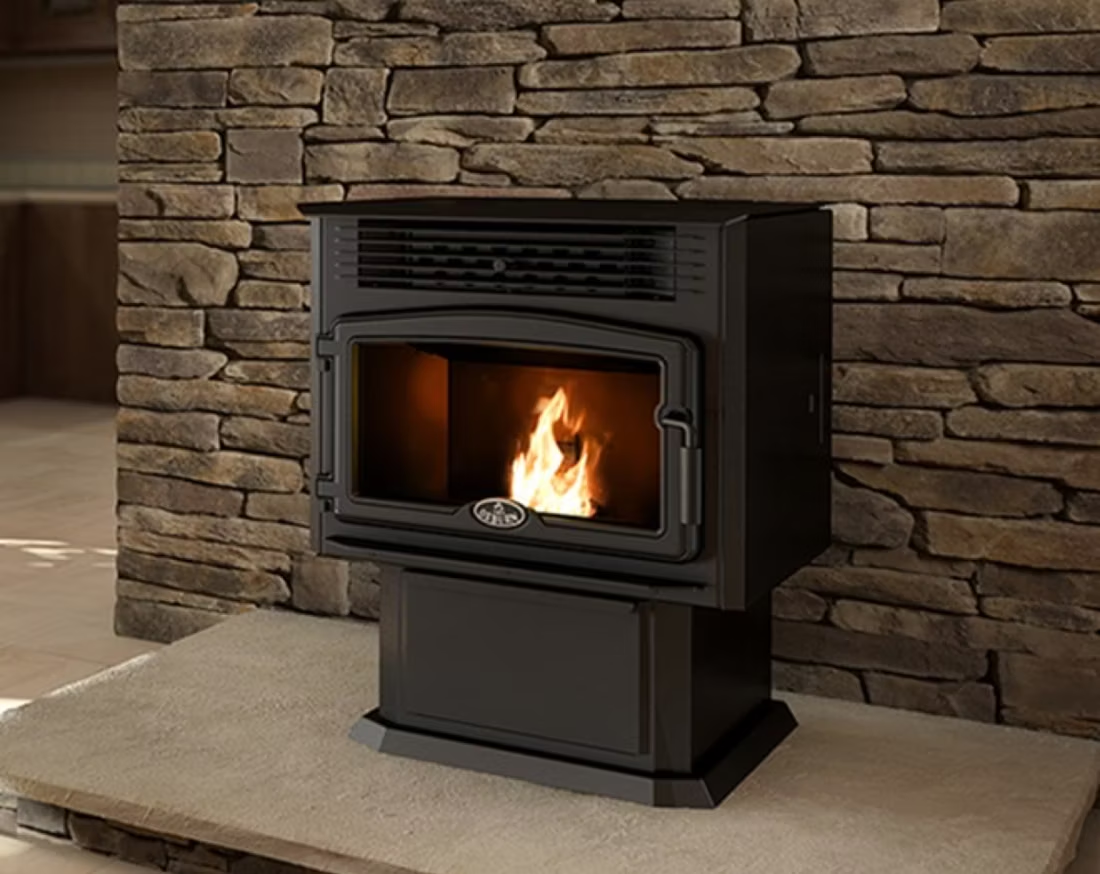
A pellet stove is a freestanding unit that sits on its own hearth pad and vents through an exterior wall or existing chimney—it can go almost anywhere with wall or chase access. A pellet insert is built to slide into an existing masonry fireplace opening, using the old chimney as a path for a smaller vent liner while sealing off the inefficient open firebox behind it. For Buncombe County homes with an existing wood fireplace that rarely gets used, an insert is usually the more cost-effective upgrade. Homes without an existing fireplace, including many newer builds around south Asheville, are better suited to a freestanding stove.
Do I need a permit to install a pellet stove in Buncombe County?
Yes—a building permit is required for a new pellet stove or insert installation through Buncombe County's permitting office (or the City of Asheville's, if you're within city limits). Most local dealers handle this paperwork as part of the installation. One advantage in this county: because Buncombe has no air quality non-attainment designation and no winter inversion issues, there are no seasonal burn curtailment periods that restrict when you can run a pellet or wood appliance—a real difference from western mountain basins where wood smoke advisories are common.
What's the best pellet stove for Buncombe County's climate?
Given the county's moderate heating load—a winter season that's real but not extreme, with lows that hover in the high 20s more often than the single digits—a mid-size pellet stove or insert handles most homes without needing a top-tier BTU rating. What matters more locally is backup power: ice storms occasionally knock out electricity along the ridgelines above Black Mountain and Fairview, and pellet stoves depend on electricity to run the auger, igniter, and combustion blower. Ask a local dealer about models with an optional battery backup so you're not without heat during an outage. For homes closer to the valley floor with reliable power, standard convection models from mainstream pellet stove manufacturers work well.
How often should my pellet stove be cleaned and serviced?
Plan on a full cleaning and inspection once a year, ideally before the heating season starts in the fall. That includes vacuuming the ash pot and burn pot, cleaning the exhaust vent and combustion blower, checking the auger and igniter, and wiping down the glass. Daily users burning through most of a fall-to-spring season should also empty and inspect the ash pot every few days, since ash buildup is the main driver of poor combustion in pellet appliances. Local hearth retailers offer this service, typically for less than a full wood chimney sweep since there's no creosote to remove.
Where can I buy wood pellets in Buncombe County?
Regional brands including Lignetics, Hamer Pellet Fuel, and Greenway Renewable Energy supply the Southeast and are commonly stocked at Asheville-area hardware stores, farm supply retailers, and hearth dealers, especially by early fall before demand picks up. Ton pricing in the region generally runs in the $250 to $300 range depending on brand and softwood versus hardwood pellet blend, though it's worth calling ahead in late summer since stock can tighten during the first cold snap. Buying a season's supply early avoids the scramble that hits stores once temperatures drop.
Pellet stove vs. wood stove—which is right for my Buncombe County home?
Wood stoves work without electricity, which matters during the ice storms that occasionally take out power along the county's higher ridges, and pair naturally with the local firewood culture—oak, hickory, and maple cut under $20-per-cord permits from the Nantahala-Pisgah National Forests. Pellet stoves need electricity to run the auger and blower, but they offer thermostat-level control, less ash, no splitting or stacking, and cleaner glass. For full-time residents in outlying areas who want emergency heat during outages, wood often makes more sense. For in-town Asheville homes, weekend cabins, or anyone who wants heat without the labor of processing firewood, pellet is usually the better fit. Local dealers carry both and can walk through the tradeoffs for your specific property.
How often does a pellet stove need cleaning?
A clean pellet stove is a happy pellet stove. Plan on cleaning the burn pot about once a week when you're burning regularly—ash and clinkers gum up the air holes just like a pellet barbecue. Most pellet stove problems trace back to skipped cleaning that nobody explained up front. Some designs make it easy with a trapdoor burn pot: pull a lever and the gunk drops into the ash pan.
Why is my open fireplace making my house colder?
Open fireplaces suck—literally. As the fire burns, it consumes air your furnace already paid to heat and pulls it out through the chimney, so the house is actually colder after the fire goes out than before you lit it. An insert fixes this: it seals the chimney, puts fixed glass across the front, and turns that hole in your house into a real heat source.
How much should I budget for a fireplace?
For an average home—covering the fireplace, the vent pipe, and basic installation—a budget between $3,900 and $5,500 gives you a lot of options across wood, gas, and pellet. By the time you add finish work, gas line, and electrical, the average complete installation lands between $5,000 and $12,000 all-in. In a remodel or new build, a good rule is to put about 2.5% of the total project cost toward the fireplace.
Can a fireplace actually lower my heating bill?
Yes—by creating a comfort zone. A furnace heats every square foot of the house just to warm the one room you're in; a gas fireplace on low burns roughly a sixth of the gas a typical furnace does. Set the furnace around 55–60 degrees as a baseline, then heat the rooms your family actually uses. Families who heat this way commonly save $20–$60 a month.
Stove and Fireplace Dealers in Buncombe County
Listings include WhyFire partner dealers, dealers we have verified as authorized for the brands we recommend, and established local businesses that carry hearth products. Every listing shows which one it is. The ones marked Preferred run on WhyFire's software, so they can show you real pricing and book your appointment right here. No manufacturer pays for placement. How we verify dealers →
Blossman Gas
Firelight Hearth & Patio
Outdoor Living & More
Black Mountain Stove & Chimney
Mf Masonry, LLC
Cornerstone Hearth & Home
Shaw Lp Gas Inc.
Pisgah Insulation & Fireplace
Pellet Brands Stocked Around Buncombe County
Manufacturers will point you to the nearest stocking dealer.
Find your pellet stove in Buncombe County.
Tell us a bit about your home and elevation, and we'll match you with the right pellet stove or insert—plus a free Project Guide & Parts List with the exact vent kit and parts your local dealer will need, before you ever set foot in a showroom.
Find Your Fireplace →