
Pellet Stoves in Biltmore Forest: A Rare but Real Option.
Most homes in Biltmore Forest run on gas or electric heat, but a handful of homeowners choose pellet stoves for guest cottages, workshops, or supplemental warmth. We'll match you with a trusted Asheville-area dealer who can tell you honestly whether it fits.
Every Project Starts From One of These Five Situations
In Biltmore Forest, pellet stoves are the exception, not the rule.
Biltmore Forest is a small, incorporated town of about 1,700 residents just south of downtown Asheville, laid out in the 1920s with strict architectural covenants that still govern nearly every exterior change homeowners make today. The large historic estates here were built with, and have since been retrofitted with, central gas or electric heating systems. At 2,213 feet elevation with a moderate winter heating season and winter lows averaging 24°F, the climate is real Blue Ridge winter—but noticeably milder than higher mountain towns like Boone or truly cold-climate cities such as Burlington, VT, which faces a far longer, harsher winter each year. That combination—mild-by-comparison winters, existing central systems, and an architectural review board—means solid-fuel biomass heat almost never gets specified as a primary heat source here.
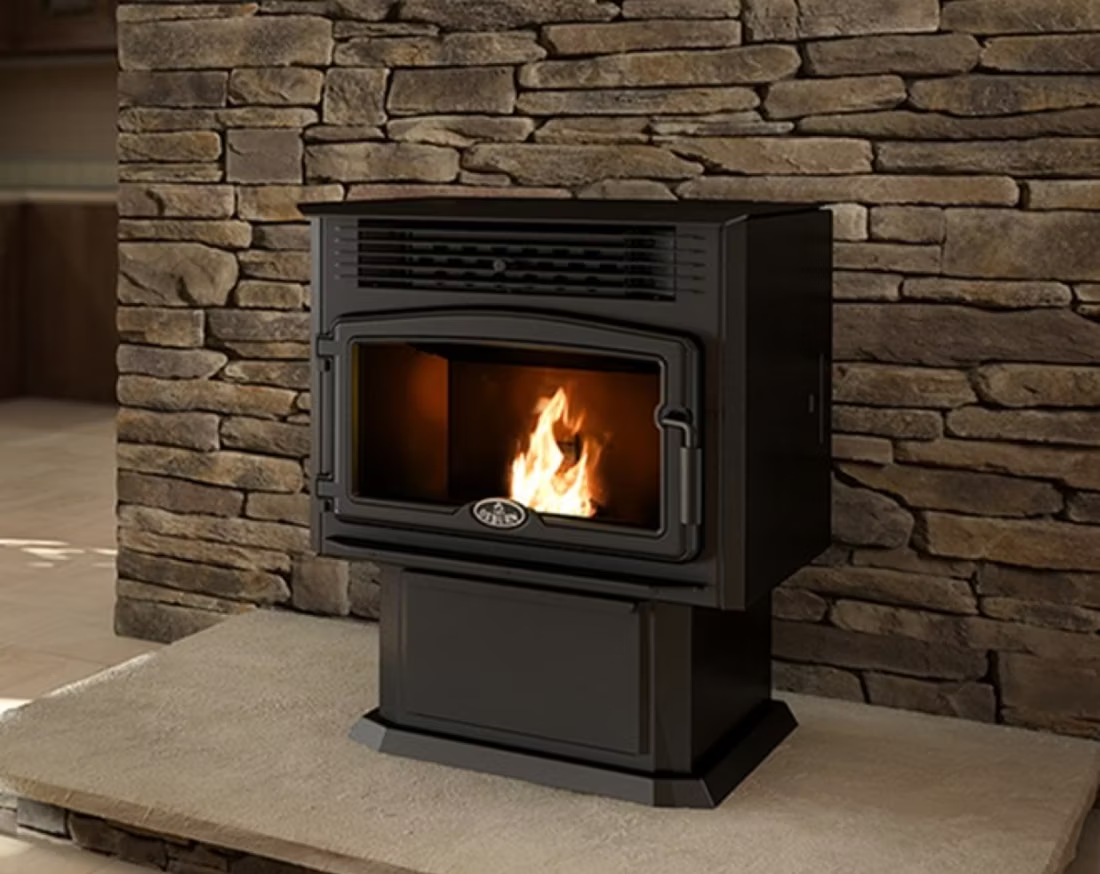
When pellet stoves do show up in Biltmore Forest, it's usually in a detached guest house, a workshop, or a den where a homeowner wants supplemental warmth and lower maintenance than a wood stove without the hassle of splitting and stacking cordwood. Regional pellet brands including Lignetics, Hamer Pellet Fuel, and Greenway Renewable Energy are all produced or distributed within the Southeast and available through hearth retailers based in nearby Asheville. Most Biltmore Forest homes are still primarily heated by Duke Energy Progress, Duke Energy Carolinas, or French Broad Electric Membership Corporation service—so a pellet stove here is almost always a second heat source, not a replacement for the furnace or heat pump already installed.
Three steps. No salesperson until you're ready.
Tell us about your project
Your zip code, your situation, and the fuel you're leaning toward—or let the answers point you to one.
See what's actually available
The brands dealers within 100 miles genuinely carry—real options, never a catalog mirage.
Get your dealer & Project Guide
A trusted local dealer, plus the free Project Guide & Parts List that names every component of the job.
Frequently Asked Questions
Are pellet stoves common in Biltmore Forest?
No—pellet stoves are genuinely rare in Biltmore Forest. The town's roughly 1,700 residents live in large historic homes built with central gas or electric systems, and the town's architectural review board scrutinizes exterior changes closely, including new venting penetrations. Where pellet stoves do get installed, it's typically in a secondary structure—a guest cottage, pool house, or detached workshop—rather than the main residence. If you're considering one, expect your dealer to be based in Asheville proper rather than in town.
How much does a pellet stove installation cost in Biltmore Forest?
Because so few installs happen locally, pricing here tracks regional Asheville-area rates rather than a Biltmore Forest-specific market: expect roughly $3,500 to $6,500 for a freestanding pellet stove with venting, and somewhat less for a pellet insert into an existing masonry fireplace if one exists. Given the town's covenant review process, budget extra lead time—and possibly cost—for exterior vent placement that satisfies the architectural review board's standards for visibility from the street.
Where can I buy pellet fuel near Biltmore Forest?
Pellet fuel isn't stocked in town, but regional brands like Lignetics, Hamer Pellet Fuel, and Greenway Renewable Energy are sold through hearth and hardware retailers in greater Asheville, generally in the $250-$320 per ton range depending on brand and softwood versus hardwood blend. Because demand is thin in Biltmore Forest itself, most owners either arrange delivery from an Asheville supplier or pick up pallets seasonally rather than expecting a walk-in local pellet retailer.
Do I need a permit to install a pellet stove in Biltmore Forest?
Yes, and it's a two-step process here that's stricter than most towns its size. You'll need a standard building permit for the appliance and venting, but Biltmore Forest also requires architectural review board approval for any visible exterior change, including a pellet stove's through-wall vent termination. A local dealer familiar with the town's process can help you submit drawings that clear both the building permit and the covenant review without delay—going in without that experience is the most common way projects stall.
What's the difference between a pellet stove and a wood stove for a home like mine?
Neither fuel is common in Biltmore Forest, but they solve different problems. A wood stove burns cordwood, needs no electricity to run, and is built around species like oak, hickory, and pine that are common throughout the surrounding Nantahala-Pisgah National Forests. A pellet stove burns compressed wood pellets, requires electricity to run its auger and blower, produces far less ash, and can be set on a thermostat. For a guest house or workshop where you want low-maintenance, mostly hands-off heat and don't need it to double as backup power-outage heat, pellet is usually the simpler choice.
Will a pellet stove work during a power outage?
Only with a battery backup, and even then only temporarily. Pellet stoves depend on an electric auger to feed fuel and a blower to circulate heat, so a standard unit goes cold the moment Duke Energy Progress, Duke Energy Carolinas, or French Broad EMC power drops—which does happen during Blue Ridge ice storms. Some pellet stove models offer an optional battery backup that can run the unit for several hours on a charge, but if reliable heat during multi-day outages is a priority, a wood stove or a gas unit with standing pilot ignition is generally the more resilient choice.
Is pellet heat a good fit for Biltmore Forest's climate?
It can work, but it's rarely necessary. With average winter lows around 24°F and a moderate overall heating season, Biltmore Forest's climate is real but mild compared to genuinely cold-climate markets—Burlington, VT faces more than 60% more winter heating demand in a typical year. That's part of why pellet stoves here function as supplemental or ambiance heat in a den or outbuilding rather than as the primary system keeping a home warm through winter, the way they might in a colder mountain or northern climate.
What size pellet stove do I need for a guest house or workshop?
Most pellet stove installs in Biltmore Forest are sized for a single space rather than a whole home, since the main house already has central gas or electric heat. A small pellet stove rated for 1,000-1,500 square feet is usually plenty for a detached guest cottage or workshop with reasonable insulation. Going bigger than the space needs just means more short-cycling and more frequent hopper refills without added comfort—a local Asheville dealer can size it properly during an in-person walkthrough.
Pellet vs. electric heat—which is right for my home?
For most Biltmore Forest homes, electric heat pumps served by Duke Energy Progress, Duke Energy Carolinas, or French Broad EMC (residential rates run roughly 13.9 to 15.5 cents per kWh) already handle the bulk of the heating load efficiently and require no fuel deliveries or hopper refills. A pellet stove makes sense as a supplemental choice when you want a visible flame and radiant heat in one specific room, or when you're heating a detached structure that isn't on the main system. It rarely makes sense as a full replacement for existing electric or gas central heat here.
Can a pellet stove heat a whole house?
It genuinely can. I burned a pellet stove as my only heat source for years after a furnace died, and it kept the entire house warm. Pellets feed automatically from a hopper, so you get wood-heat economics with thermostat-style control. Two honest caveats: it needs weekly cleaning during the season, and most models need electricity to run—ask about battery backup if outages are a concern.
How often does a pellet stove need cleaning?
A clean pellet stove is a happy pellet stove. Plan on cleaning the burn pot about once a week when you're burning regularly—ash and clinkers gum up the air holes just like a pellet barbecue. Most pellet stove problems trace back to skipped cleaning that nobody explained up front. Some designs make it easy with a trapdoor burn pot: pull a lever and the gunk drops into the ash pan.
Can a fireplace actually lower my heating bill?
Yes—by creating a comfort zone. A furnace heats every square foot of the house just to warm the one room you're in; a gas fireplace on low burns roughly a sixth of the gas a typical furnace does. Set the furnace around 55–60 degrees as a baseline, then heat the rooms your family actually uses. Families who heat this way commonly save $20–$60 a month.
Does a fireplace add value to my home?
On average, a fireplace adds back to the home about the same amount you spent installing it. Add the monthly savings from heating the rooms you actually use instead of the whole house—often hundreds of dollars a year—and the value case is strong before you even count what a fire does for how your family uses the room.
Nearby Dealers
Hearth shops serving Biltmore Forest and the surrounding area. Every listing shows whether it is a WhyFire partner, a dealer we have verified as authorized for the brands we recommend, or a local business carrying hearth products. No manufacturer pays for placement. How we verify dealers →
Blossman Gas
Firelight Hearth & Patio
Outdoor Living & More
Black Mountain Stove & Chimney
Mf Masonry, LLC
Pisgah Insulation & Fireplace
Cornerstone Hearth & Home
Shaw Lp Gas Inc.
Pellet Brands Stocked Around Biltmore Forest
Manufacturers will point you to the nearest stocking dealer.
Find your pellet stove option in Biltmore Forest.
Tell us about your home, guest house, or workshop and we'll give you an honest read on whether pellet heat fits—plus a free Project Guide & Parts List with the exact components, vent kit, and a trusted Asheville-area dealer recommendation.
Find Your Fireplace →