
Steady, thermostat-controlled heat for Bertie County winters.
With average winter lows near 33°F and roughly 3,033 heating degree days, Bertie County doesn't need a wood-burning marathon to stay comfortable—just a clean-burning pellet stove that runs itself. Find the right unit and connect with a trusted local dealer.
Every Project Starts From One of These Five Situations
A mild coastal-plain climate that plays to pellet's strengths.
Bertie County sits on the flat, low-lying coastal plain of northeastern North Carolina, bordered by the Roanoke and Chowan Rivers, with roughly 5,980 residents spread across Windsor, Aulander, Colerain, Kelford, Lewiston, Powellsville, and the surrounding farmland. In climate zone 4A, with winter lows that average around 33°F and about 3,033 heating degree days a year, the heating season here is real but moderate—nothing like the sub-zero stretches of Fargo, ND or Duluth, MN. That's exactly the kind of climate where a pellet stove earns its keep: enough cold to justify a dedicated heat source in the living room or den, but not so much that you need a maximum-output catalytic wood stove running around the clock.
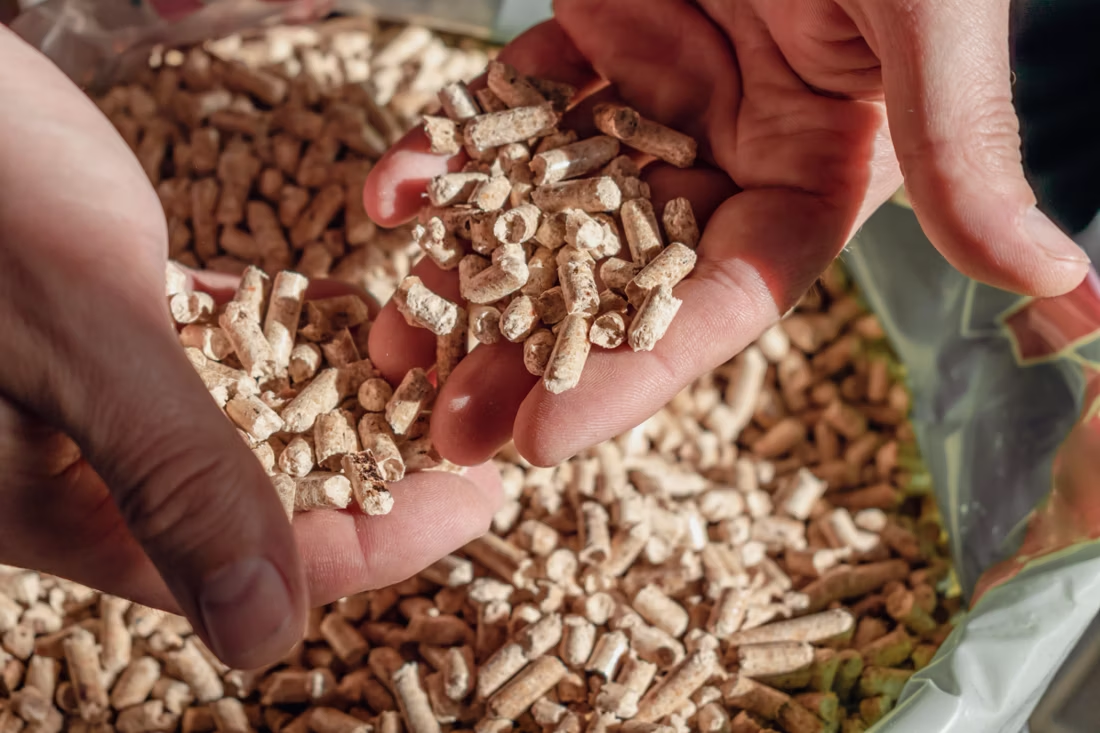
Local retailers carrying pellet stoves for this region typically stock hardwood pellet brands like Lignetics, Hamer Pellet Fuel, and Greenway Renewable Energy, all sold through farm supply and hardware stores in the Windsor and Ahoskie area. Because Bertie County has no local air quality non-attainment issues, there's no burn-curtailment concern to plan around—the appeal here is simpler: set the thermostat, load the hopper every day or two, and get consistent radiant heat with far less ash and creosote than a wood stove. The one caveat worth planning for: pellet stoves need electricity to run the auger and blower, and rural Bertie County—much of it served by Roanoke Electric Cooperative—can see extended outages during nor'easters and tropical systems moving up from the coast. A small battery backup or generator hookup is worth discussing with your installer.
Three steps. No salesperson until you're ready.
Tell us about your project
Your zip code, your situation, and the fuel you're leaning toward—or let the answers point you to one.
See what's actually available
The brands dealers within 100 miles genuinely carry—real options, never a catalog mirage.
Get your dealer & Project Guide
A trusted local dealer, plus the free Project Guide & Parts List that names every component of the job.
Frequently Asked Questions
How much does a pellet stove installation cost in Bertie County?
A freestanding pellet stove installation in Bertie County typically runs $3,000 to $6,500, depending on the model, whether a new hearth pad is needed, and whether an existing electrical outlet is within reach or needs to be run. A pellet insert into an existing masonry fireplace usually falls in a similar range, since the vent pipe is smaller and simpler than what a wood stove requires. Because pellet stoves need a nearby 120V outlet in addition to venting, installs in older farmhouses around Windsor or Colerain sometimes run slightly higher if electrical work is needed. Local dealers will give you a firm number after seeing the room and the existing chimney or wall situation.
What size pellet stove do I need for my Bertie County home?
Given the county's mild winter lows—averaging around 33°F, well short of the extreme cold that drives oversizing decisions farther north—most Bertie County homes don't need a maximum-output unit. A small to mid-size pellet stove (rated for 1,000 to 1,800 square feet) handles a single-story home or the main living area of a larger one comfortably. Many homes in Bertie County are manufactured or single-story site-built houses, where a mid-size stove placed centrally can supplement or largely replace baseboard or heat-pump heat during the coldest weeks of January and February. A local dealer can size based on your square footage, ceiling height, and insulation rather than guessing from a box label.
Where can I find pellet stove dealers near Bertie County?
Bertie County itself is small and rural, so dealers carrying pellet stoves and the Lignetics, Hamer Pellet Fuel, or Greenway Renewable Energy pellet lines are often based in nearby hubs like Ahoskie, Williamston, or Elizabeth City, with installers who travel into Windsor, Aulander, and the surrounding communities. Look for NFI-certified installers rather than a general contractor—pellet venting has specific clearance and termination requirements, and a certified installer will also register the unit properly for warranty purposes. Expect a modest travel charge added to quotes for installs in the county's more outlying areas like Powellsville or Roxobel.
What's the difference between a pellet stove and a pellet insert?
A pellet stove is a freestanding unit that sits on a hearth pad and vents through a wall or existing chimney—it can go almost anywhere in a room with the right clearances, which makes it a good fit for the many Bertie County homes without a masonry fireplace at all. A pellet insert is built to slide into an existing fireplace opening, using the chimney as part of the vent path and closing off the drafty, inefficient open hearth. If your Windsor or Aulander home already has a wood fireplace you rarely use, an insert converts it into an efficient, thermostat-controlled heat source. If there's no fireplace to work with, a freestanding stove is the simpler path.
Do I need a permit to install a pellet stove in Bertie County?
Yes—a building permit is generally required for a new pellet stove or insert installation through the Bertie County Inspections Department, covering the venting and any electrical work for the unit's power supply. Most local dealers handle the permit application and inspection scheduling as part of the installation, so it's rarely something the homeowner has to manage directly. Because Bertie County has no non-attainment or wildfire-smoke air quality restrictions, there's no burn-curtailment paperwork to worry about—permitting here is strictly about safe installation, not emissions compliance.
What's the best pellet stove for Bertie County's climate?
Because winter lows here average around 33°F rather than the deep-negative temperatures that push installers toward maximum-BTU units, a mid-output pellet stove is usually plenty—the priority is efficiency and quiet, reliable operation over raw heat output. Look for a model with a decent-sized hopper (40+ pounds) so you're not refilling constantly during cold snaps, and ask your dealer about units with a battery backup option, since rural Bertie County's power can go out for stretches during hurricane season and a pellet stove without power is just an ash box. Models compatible with the hardwood pellet brands already sold locally—Lignetics, Hamer Pellet Fuel, Greenway Renewable Energy—will be the easiest to keep fed year-round.
Where can I buy pellet fuel in or near Bertie County?
Hardwood pellets are sold through farm supply and hardware retailers in Windsor and Ahoskie, with Lignetics, Hamer Pellet Fuel, and Greenway Renewable Energy the most common regional brands carried in this part of northeastern North Carolina. Pellets typically run in the range most Southeast dealers quote per ton, sold by the bag or the pallet—buying a season's supply (roughly 2-3 tons for a typical Bertie County home given the county's moderate heating season) ahead of cold weather avoids the scramble that can hit stores in December and January. Store pellets somewhere dry; humidity off the Roanoke River lowlands can cause bagged pellets to swell and crumble if left in an unheated shed.
How often does a pellet stove need cleaning and maintenance?
Pellet stoves need the ash pot emptied every few days to weekly depending on use, and the burn pot scraped periodically to keep the auger feeding cleanly—far less work than tending a wood fire, but not zero-maintenance. Plan on a full professional cleaning and inspection once a year, ideally in late summer before the first cold snap hits Bertie County in November or December. Because pellet stoves burn cleaner than wood, the venting rarely builds up creosote the way a wood stove's chimney does, but the exhaust fan and gaskets still need periodic attention to keep the unit running efficiently.
Pellet stove vs. wood stove—which is right for my Bertie County home?
Wood is genuinely abundant here—oak, hickory, maple, and pine are all common locally, and a wood stove works without electricity, which matters when a tropical system knocks out power for days at a time. A pellet stove trades that off-grid independence for convenience: load the hopper, set the thermostat, and get consistent heat with a fraction of the ash and none of the splitting and stacking. Given Bertie County's mild winter lows around 33°F, most homes don't need wood's higher raw heat output, so the choice usually comes down to lifestyle—pellet for hands-off daily convenience, wood if you want a heat source that still works when the co-op lines go down. Some Bertie County homeowners install both: pellet for the main living space, a small wood stove or fireplace as backup.
What's the difference between an insert and a zero-clearance fireplace?
An insert is a fireplace that slides into a pre-existing wood-burning fireplace—if you don't have one, there's nothing to insert it into. A zero-clearance fireplace is built into a framed wall, which makes it the answer for remodels and new construction. Simple test: existing masonry fireplace means insert; blank or framed wall means zero-clearance.
Why is a fireplace insert so efficient?
An insert does two things: it seals the chimney completely, so you stop losing air you already paid to heat, and it radiates warmth into the room through the firebox and glass. Most add a heat-exchange fan that pulls cool room air underneath, wraps it around the hot firebox, and pushes it back out warm. Your home is more efficient before you've even lit the first fire.
Does a fireplace add value to my home?
On average, a fireplace adds back to the home about the same amount you spent installing it. Add the monthly savings from heating the rooms you actually use instead of the whole house—often hundreds of dollars a year—and the value case is strong before you even count what a fire does for how your family uses the room.
Can I install a fireplace myself?
If you're putting a fire in your house on purpose, it's best to work with an expert. Unless you're genuinely experienced in framing, gas line, vent pipe, and the national code on clearances to combustibles, have a professional do it—and ideally the same company that sells you the fireplace, so warranty, service, and liability all live under one roof.
Pellet Brands Stocked Around Bertie County
Manufacturers will point you to the nearest stocking dealer.
Find your pellet stove in Bertie County.
Tell us a bit about your home and we'll match you with the right pellet stove or insert, plus a free Project Guide & Parts List—your recommended parts, vent kit, and a trusted local Bertie County dealer, ready to go.
Find Your Fireplace →